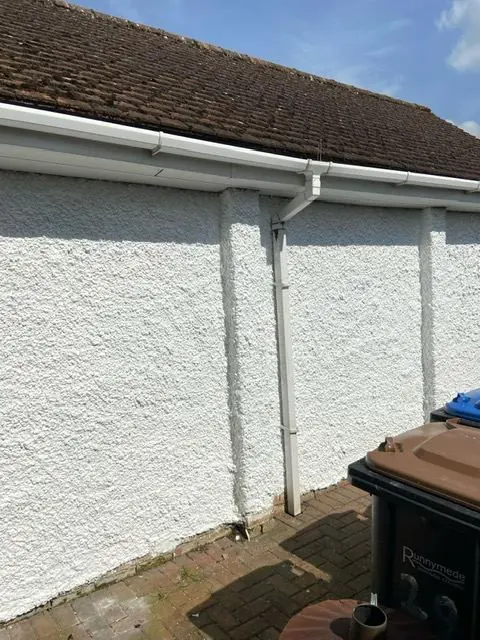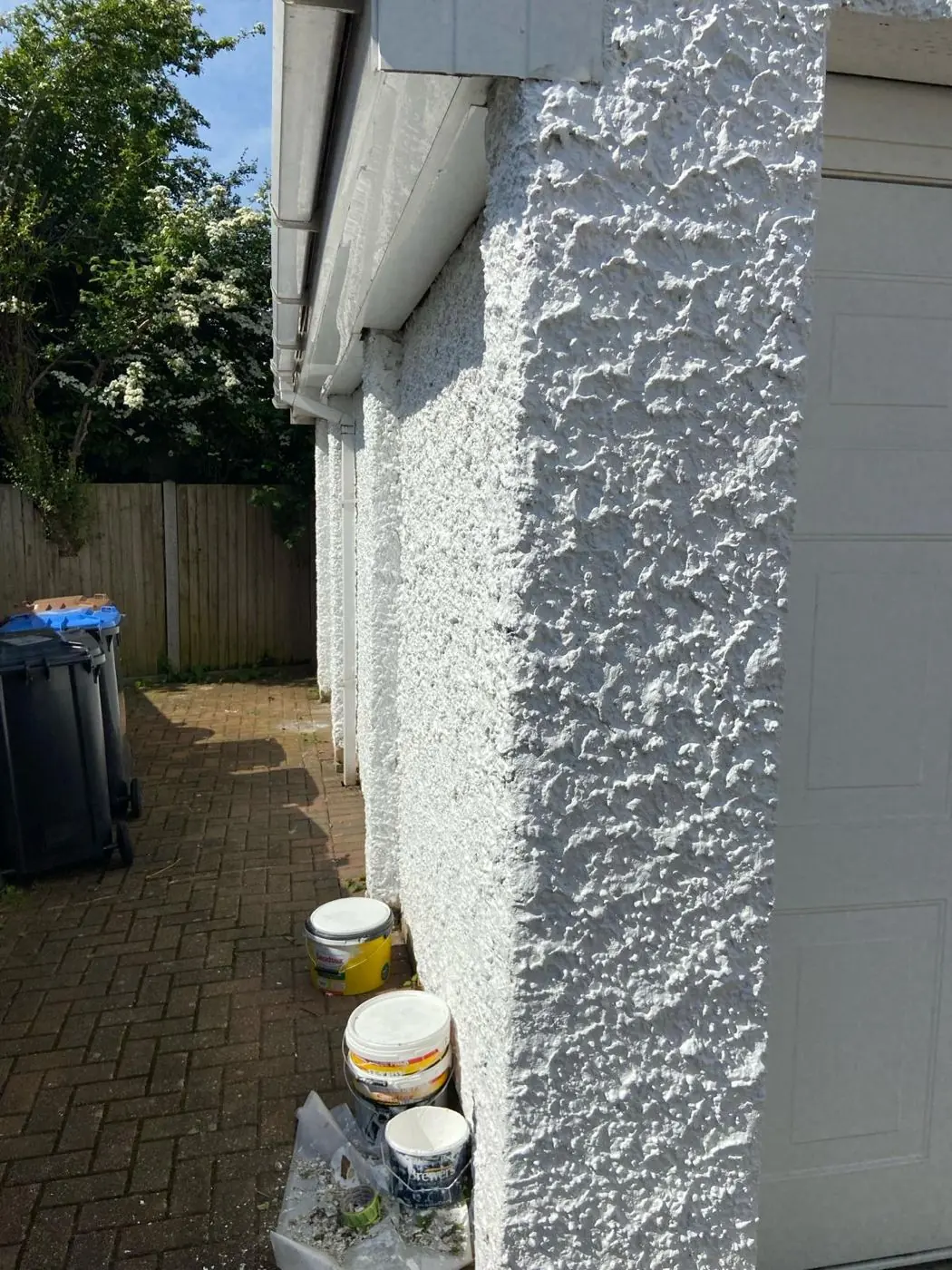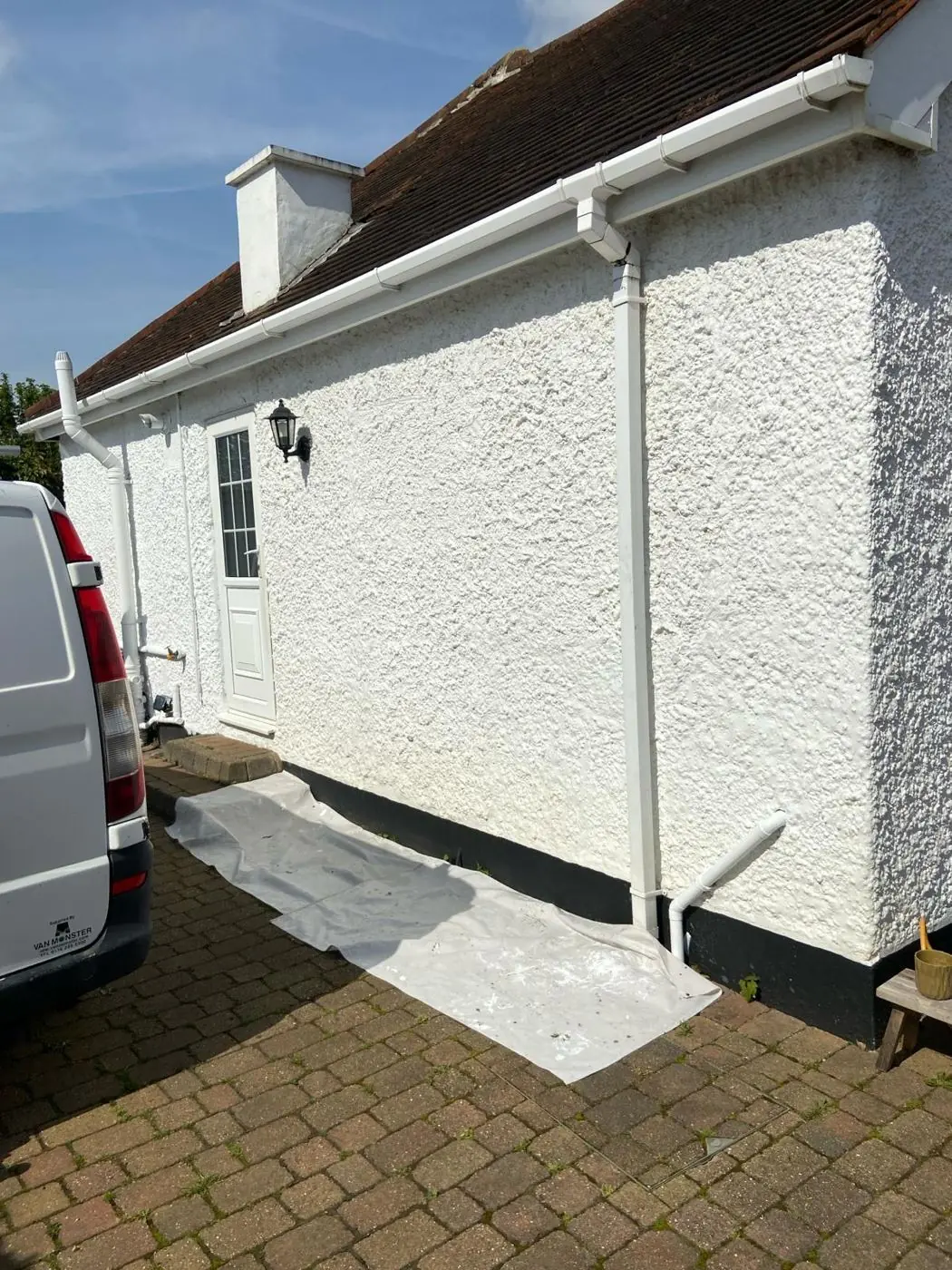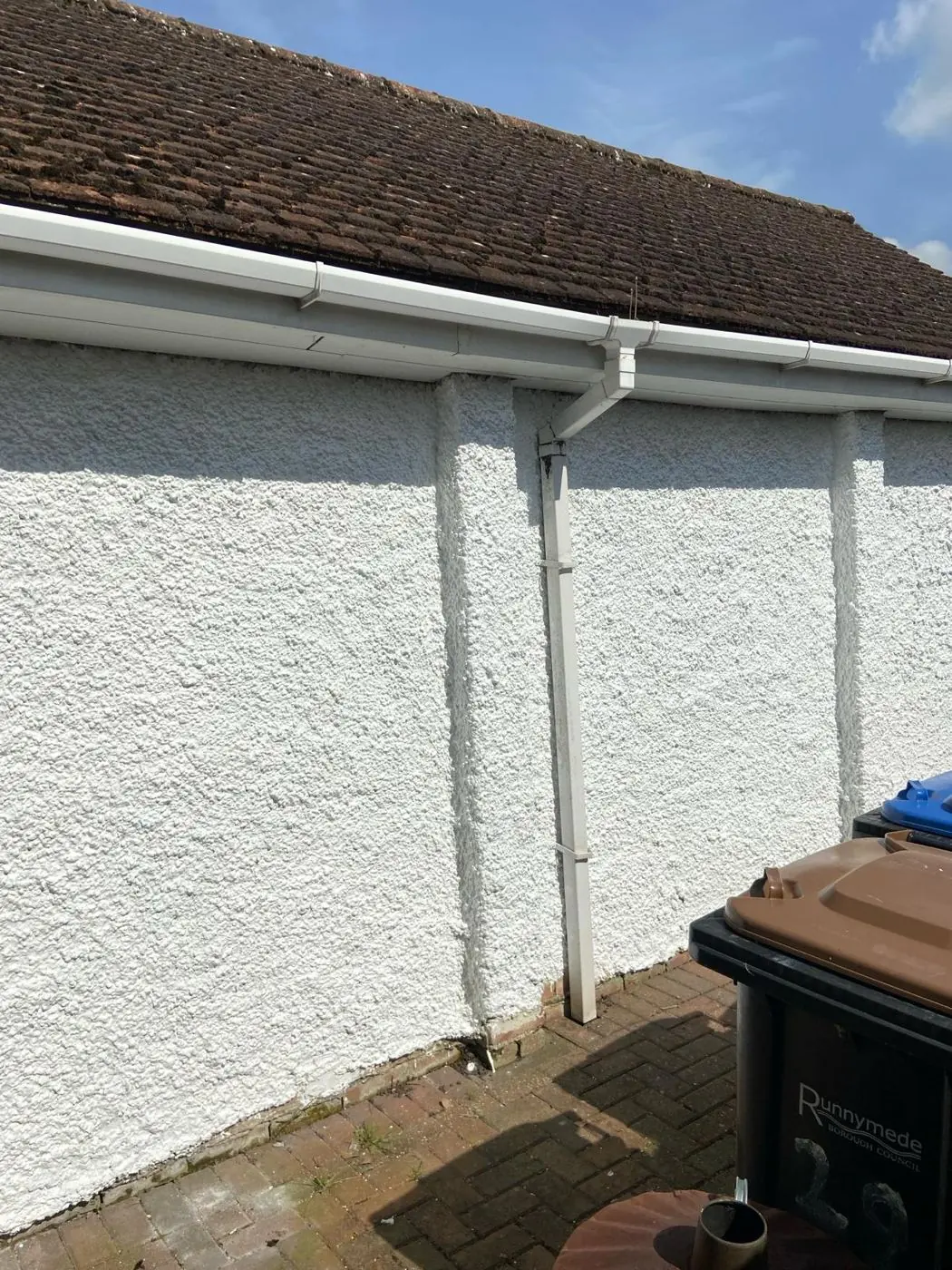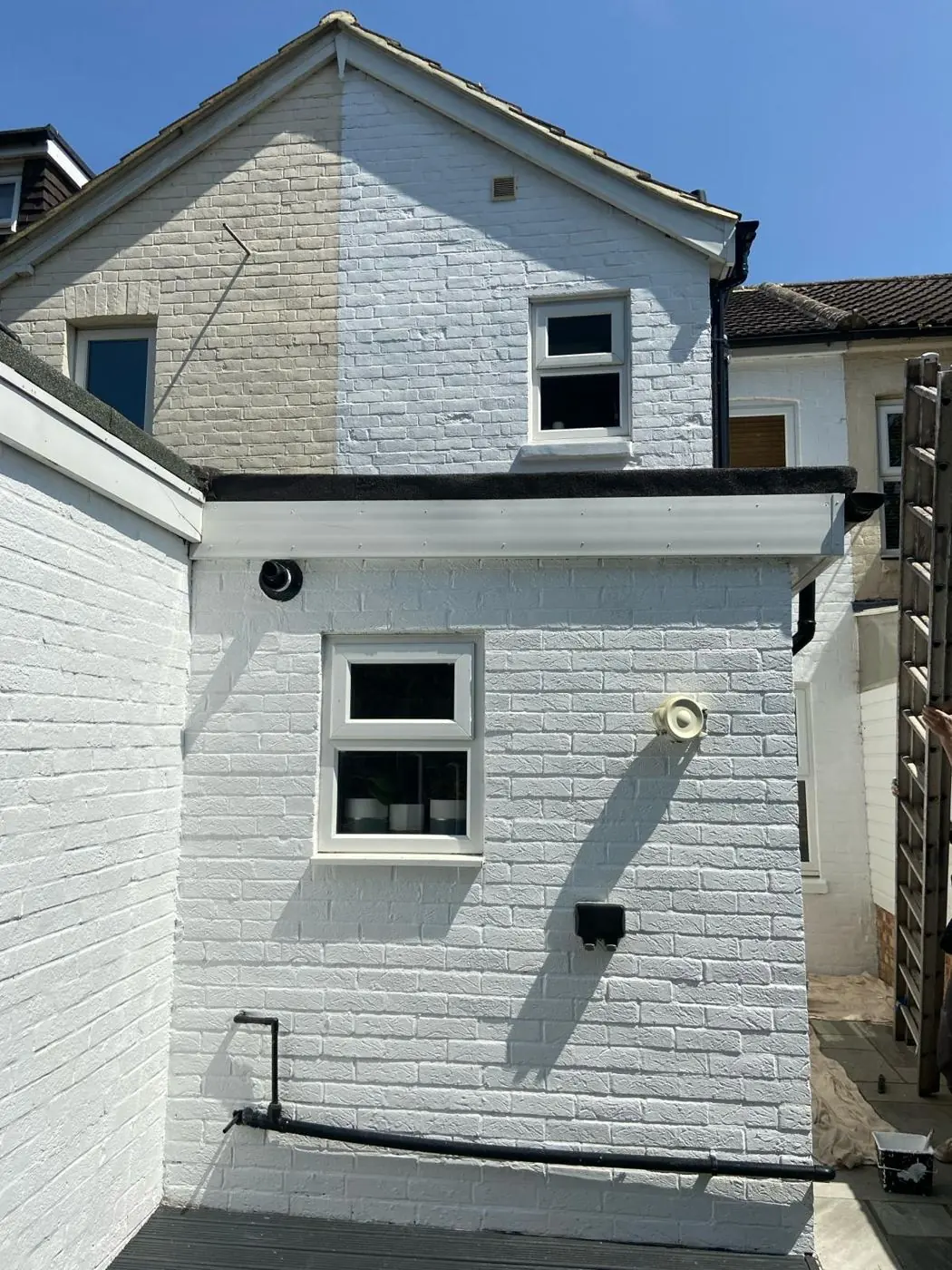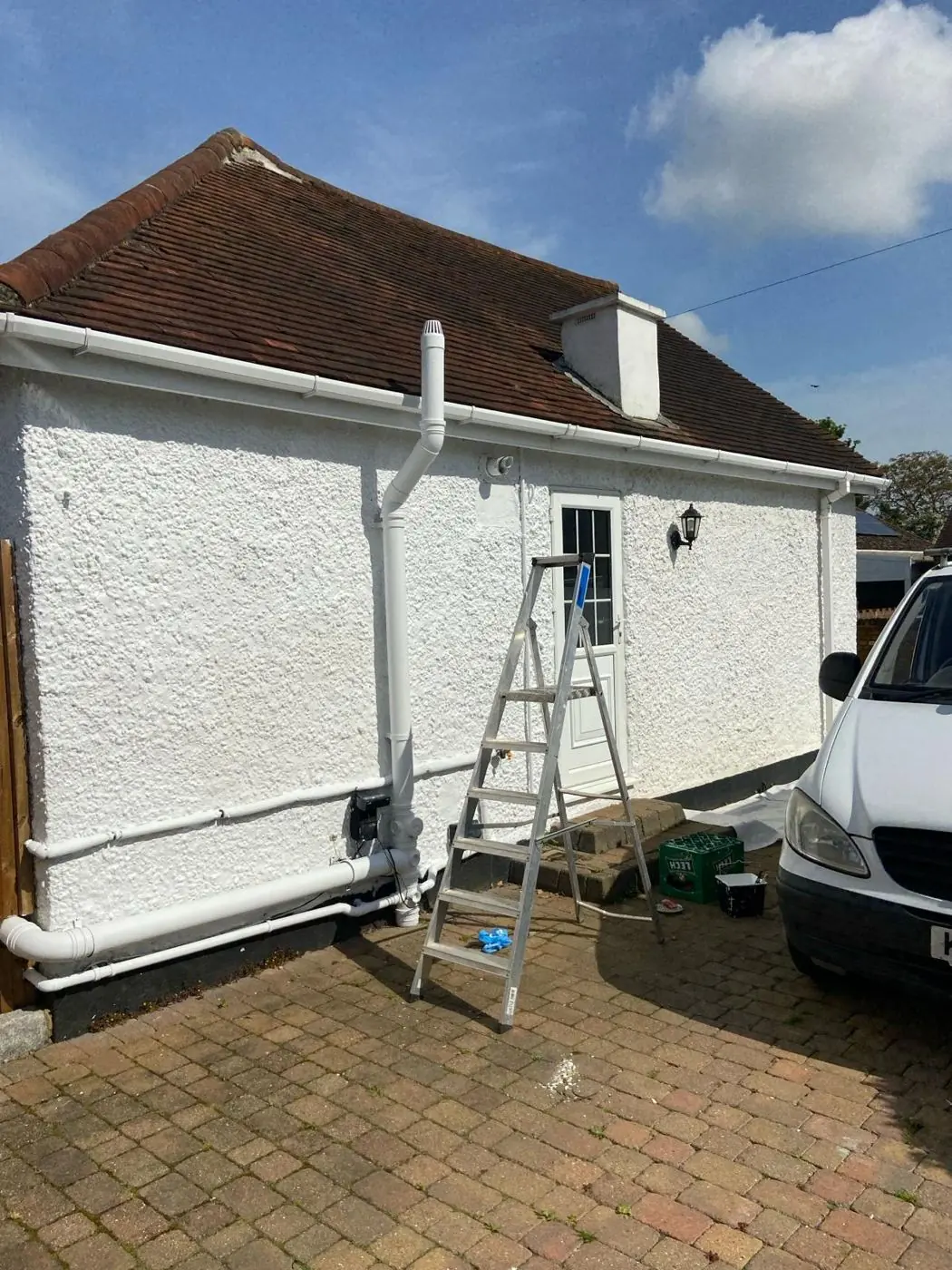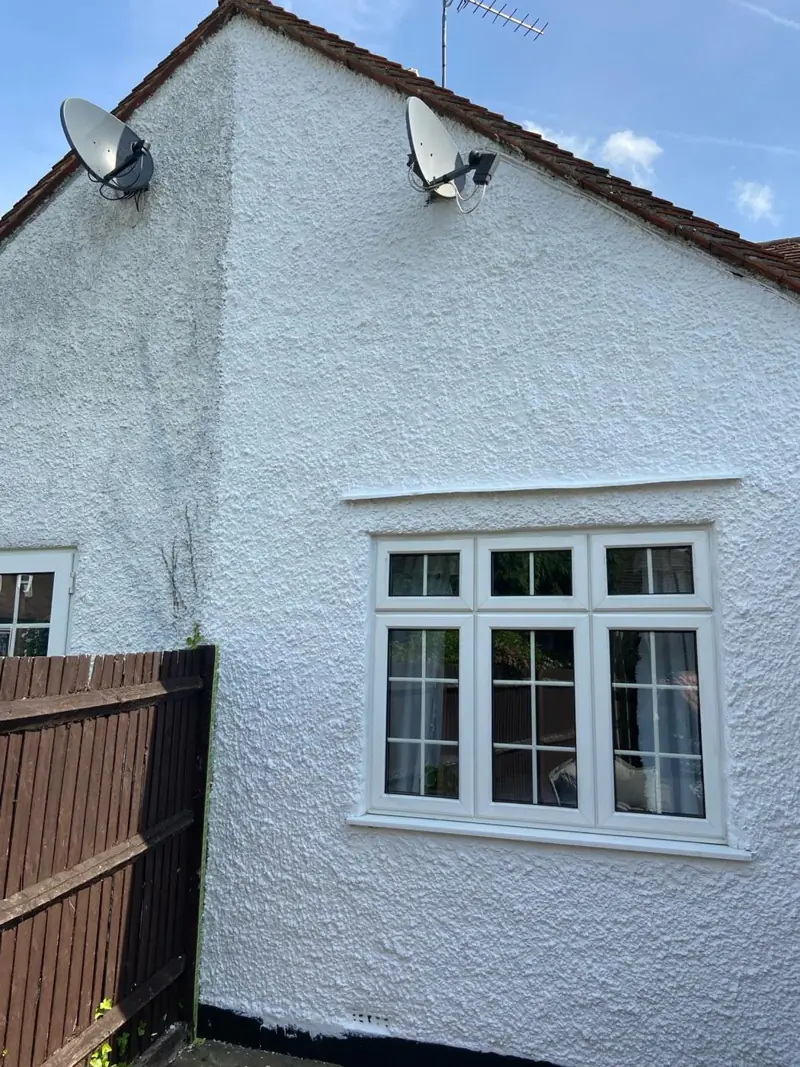
DH Painter & Decorator paints fascias, soffits and bargeboards in Cogenhoe, NN7, about 4.6 miles east of Northampton town centre. We cover the village from our Northampton base, and Dean prices the roofline once he has seen its condition and how it can be reached.
Decorative eaves on the boot-and-shoe houses
The most demanding rooflines in Cogenhoe belong to the houses built during its shoemaking years. After the Mann family started their footwear business on Church Street in 1887, they built Nene View, Rocklands and Gladstone Terrace, the run of 1-17 Station Road that locals call Kidney Bean Row. Houses of this period carry bargeboards, cresting and dentil eaves: shaped timber with plenty of edges, joints and end grain where water sits.
Painting these is slow, careful work. Flaking paint is scraped back by hand around the profiles rather than flattened with a power sander, so the detail is not lost. Open joints are raked out and filled with an exterior filler, bare timber is spot-primed, and each dentil block or cut-out is coated on every face. Old paint on Victorian woodwork can contain lead, so we keep the dust down and clear the ground below as we go.
Gladstone Terrace porches
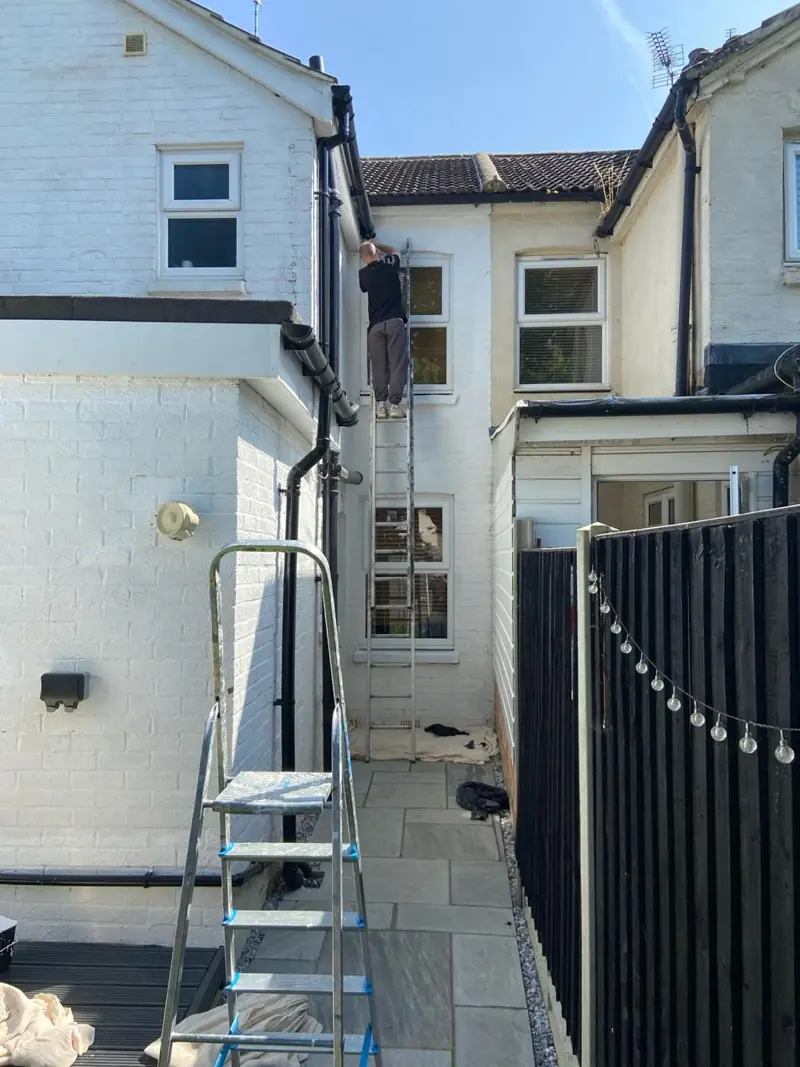
The terrace’s decorative porches are timber-framed and topped with small hipped tile roofs. The small fascias, posts and brackets on these are as exposed as the main eaves but easier to overlook, and they are a large part of what gives the terrace its character. Where a joint has rotted we splice in matching timber rather than box it in, then build up primer, undercoat and gloss or a microporous system so the porch matches the bargeboards above it.
What the hillside does to a roofline
Cogenhoe stands on the valley slope with an open view north across the Nene. Eaves on the north- and west-facing sides take wind-driven rain and the brunt of the winter weather, and that is where we usually find the worst of the flaking: the bottom edge of the fascia board, the ends of bargeboards and the joints where boards meet. Sheltered elevations can be in reasonable shape on the same house.
Trees add to the wear in some spots. Around Sharmans Close, St Peter’s churchyard and the south side of Whiston Road, protected and important trees drop leaves and sap and keep woodwork in shade, which encourages algae on boards beneath them.
Estate fascias on Station Road and York Avenue
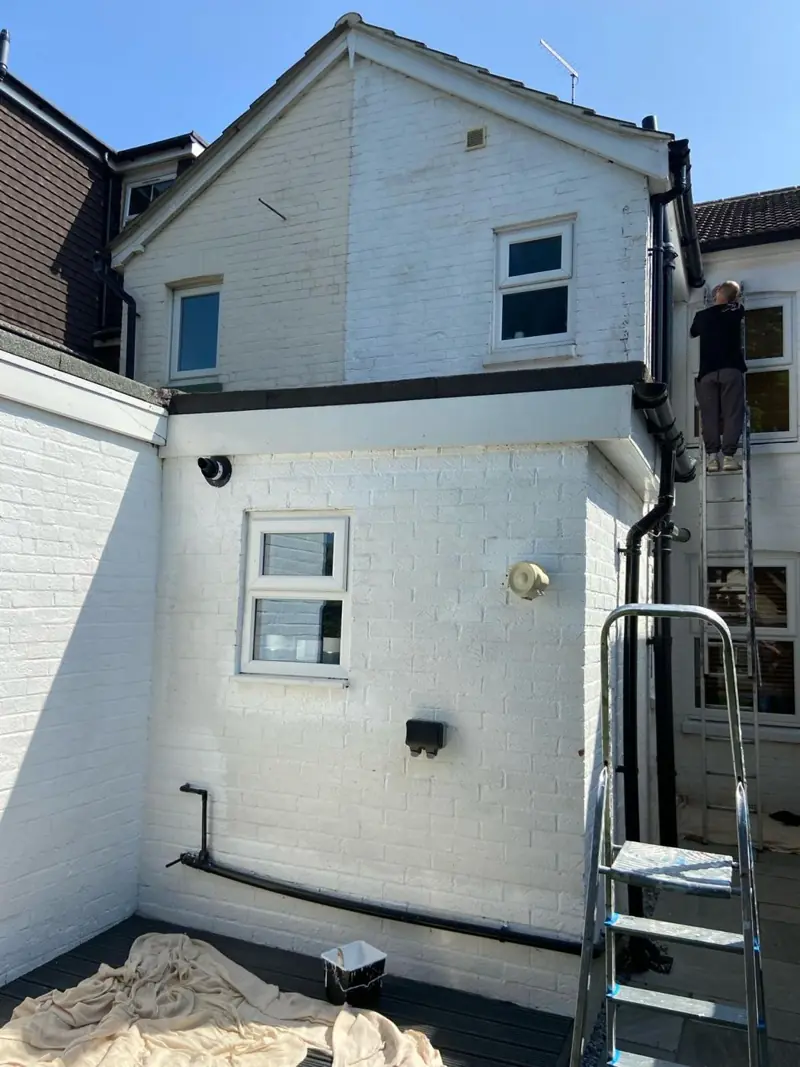
The 20th century estates built west of the old village carry most of the plain timber and uPVC fascias here. Timber boards take a standard exterior system after sanding, filling and priming. Weathered uPVC can be painted too, but it needs thorough cleaning, a key and a primer made for plastic. We will tell you plainly if a board is too far gone and needs a carpenter before paint is worth applying.
Getting up to the eaves
| Situation in Cogenhoe | How we plan for it |
|---|---|
| Cottages and terraces with no front garden | Ladder footing on the pavement edge, kept guarded and cleared at breaks |
| Overhead wires along Church Street | Set-up position chosen to keep clear of lines, with a tower or alternative where needed |
| Busy traffic on Station Road and Whiston Road | Barriers at the ladder base and work timed with you |
| No off-road parking | Van position and deliveries agreed before the start date |
Dean will confirm at the survey whether ladders are enough or a tower is needed, and he includes that in the quote. For how we prepare and paint rooflines in general, see the main fascia and soffit painting page; the cost guide explains what affects the price, and our Cogenhoe page covers other work in the village.
Last updated by Dean, DH Painter & Decorator.