Dean takes on commercial and community painting in Great Billing, NN3, about 3.9 miles east of Northampton town centre. The village has no shops, so the premises here are a listed pub, churches and a chapel, the parish pavilion and the holiday park at Billing Aquadrome, each with its own constraints.
The premises Great Billing actually has
No source records a shop or business park in Great Billing; the Old Post Office is a house now, and residents shop at Weston Favell. Commercial painting here means a small, unusual set of buildings:
- The Elwes Arms, 37 High Street: a grade II listed 17th/18th-century pub and the village’s only thatched building.
- Places of worship: St Andrew’s Church, the white-painted Church of Our Lady of Perpetual Succour and St Anselm on High Street, and the 1835 brick Methodist Chapel.
- The Bernard Weston Pavilion at Great Billing Pocket Park, off Penfold Lane.
- Billing Aquadrome, a 235-acre holiday park with lodges, caravans and a marina on the Nene floodplain.
Each needs a different plan, which is why we quote per building. The way we run commercial jobs in general is on our main commercial painting page.
A listed, thatched village pub
Painting the Elwes Arms, or any listed pub, starts with consent. Changing colours or stripping historic finishes on a listed building can need listed building consent, so the owner or brewery should confirm what is allowed before we price. Inside, a pub needs hard-wearing finishes on bar fronts, doors and corridors, and the work has to fit around trading hours, typically in the mornings before opening or across a planned closure.
A thatched roof changes how we work outside. We keep heat guns and any naked flame well away from the building and remove old paint by hand or with chemical strippers instead. Ladders are set so they never rest against or disturb the thatch.
Churches, chapel and community buildings
Church and chapel work is usually arranged through a churchwarden, steward or committee, and scheduled around services, weddings and funerals. Our Lady’s church is painted stone and brick, and the right approach there is a like-for-like repaint in a breathable masonry finish, not a modern acrylic that would trap moisture. The Great Billing Conservation Area appraisal treats painting previously bare brick or stone as harmful, so on St Andrew’s and the Methodist Chapel any exterior work is about joinery, doors and ironwork, not the walls. The appraisal also asks that railings and lamp posts in the conservation area be painted black.
The Bernard Weston Pavilion sits beside the sports field on land the Development Corporation gave to the parish council, now Great Billing Pocket Park. Anything inside it that players walk through in boots needs a washable, hard-wearing coating, and any decorating has to be fitted around the parish council’s own bookings.
Holiday-park lodges on the floodplain
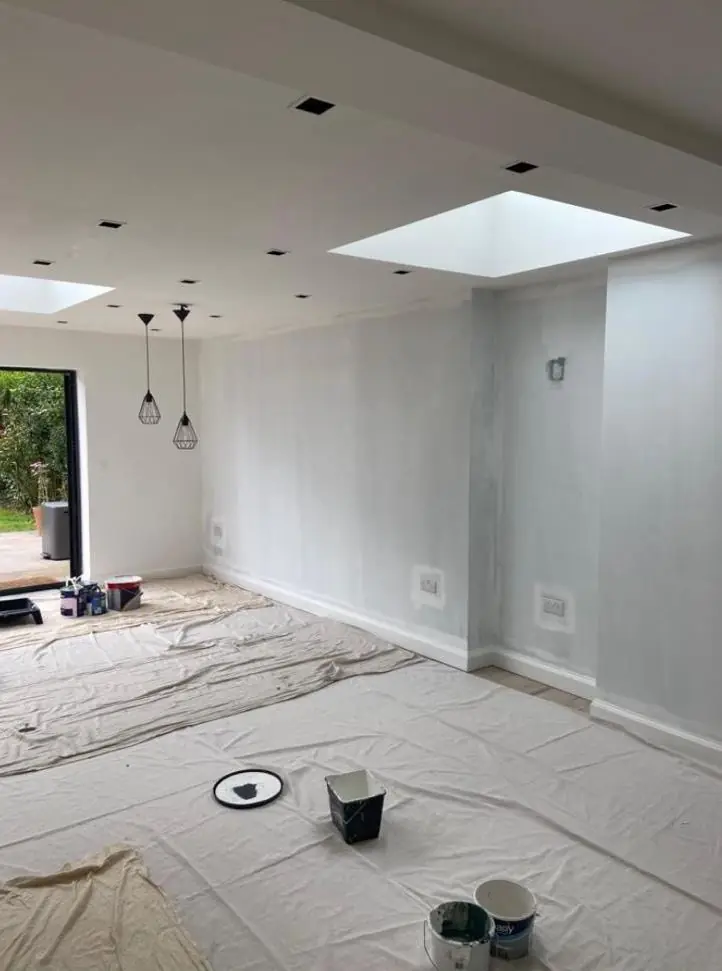
Billing Aquadrome sits on the Nene’s natural floodplain and was evacuated for flooding three times in 2024. After a flood, timber and boarded interiors need to dry out properly before any paint goes on, and a moisture meter check comes first. Moisture-tolerant primers and finishes are the sensible choice for lodges that may flood again. Exterior lodge cladding is usually a stain or microporous paint job, and lodge work is easiest outside the main holiday season. Our guide to timing exterior painting explains why autumn and winter windows are short.
Access and timing
High Street has road humps and little through traffic, but Elwes Way, Pound Lane and Cattle Hill are narrow and several buildings stand right on the edge of the road. Mature and protected trees in the conservation area also limit where ladders and access towers can go, since work on trees over 75mm diameter needs six weeks’ notice. We agree van parking and working hours with the building’s manager in advance. More on the village is on our Great Billing area page.
Last updated by Dean, DH Painter & Decorator.