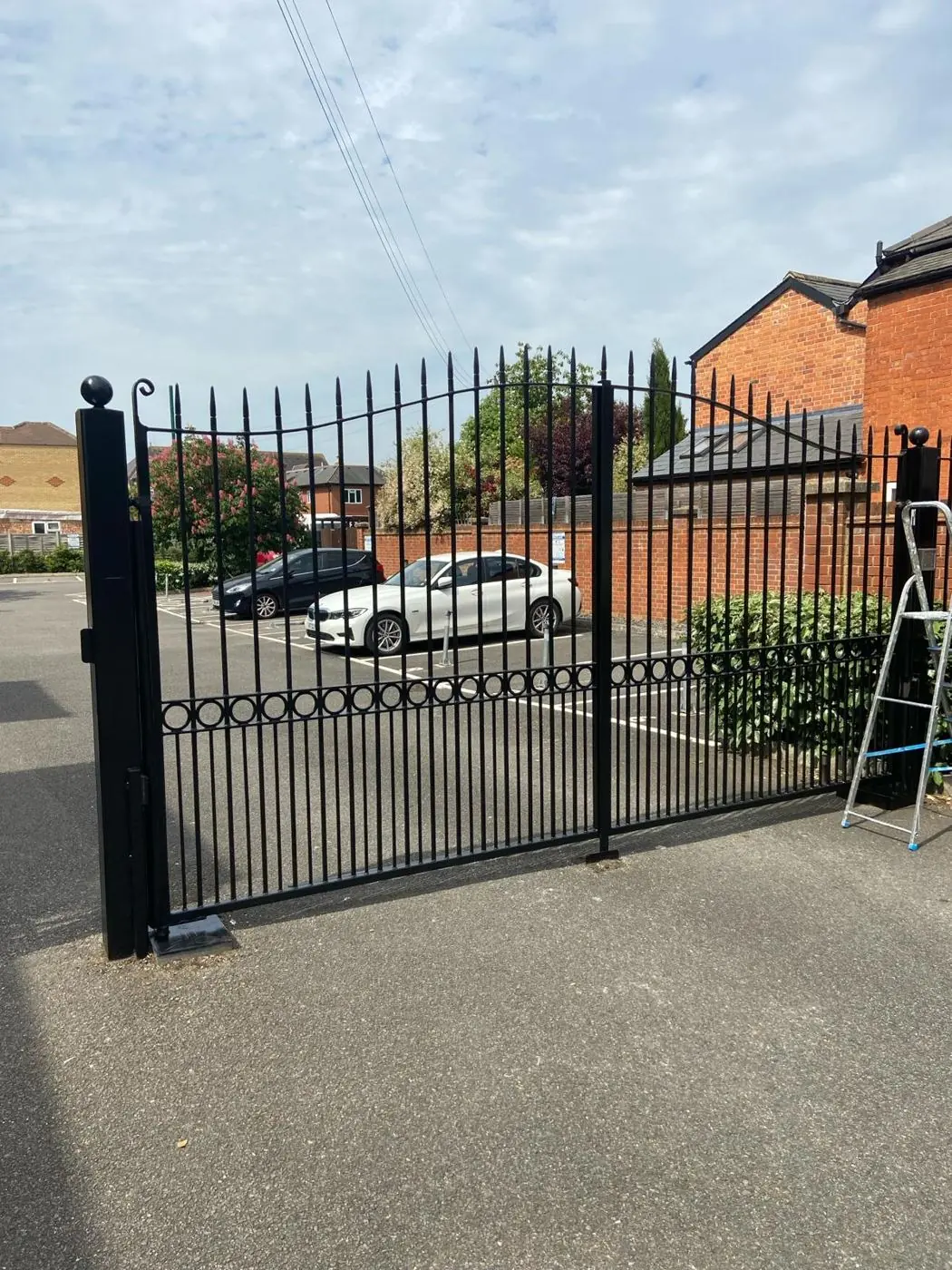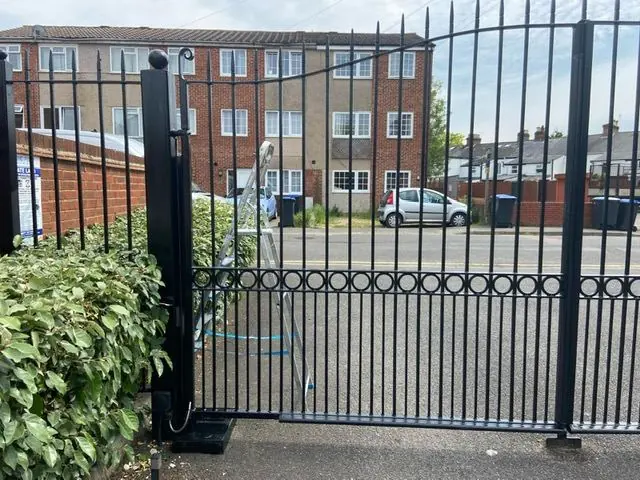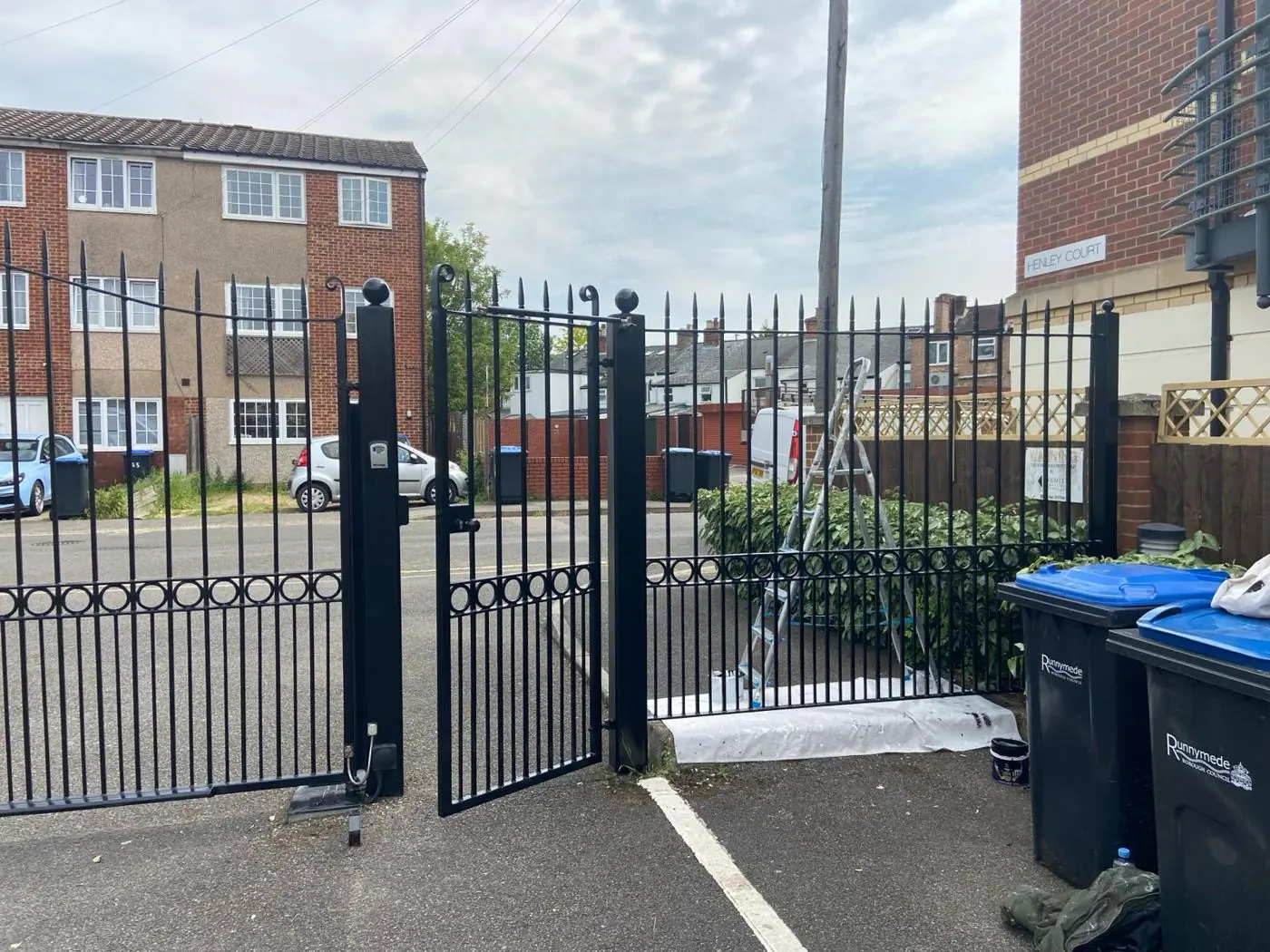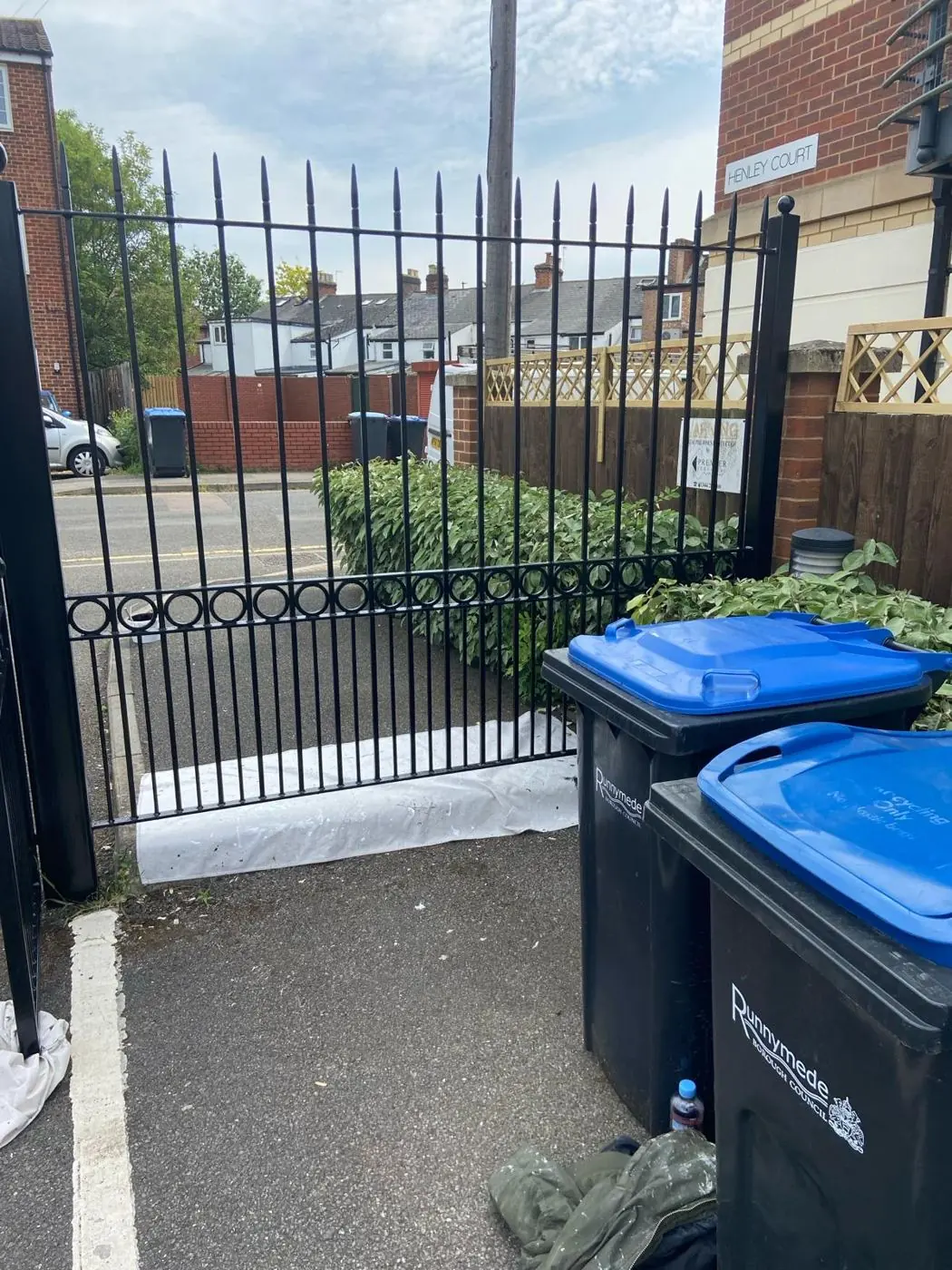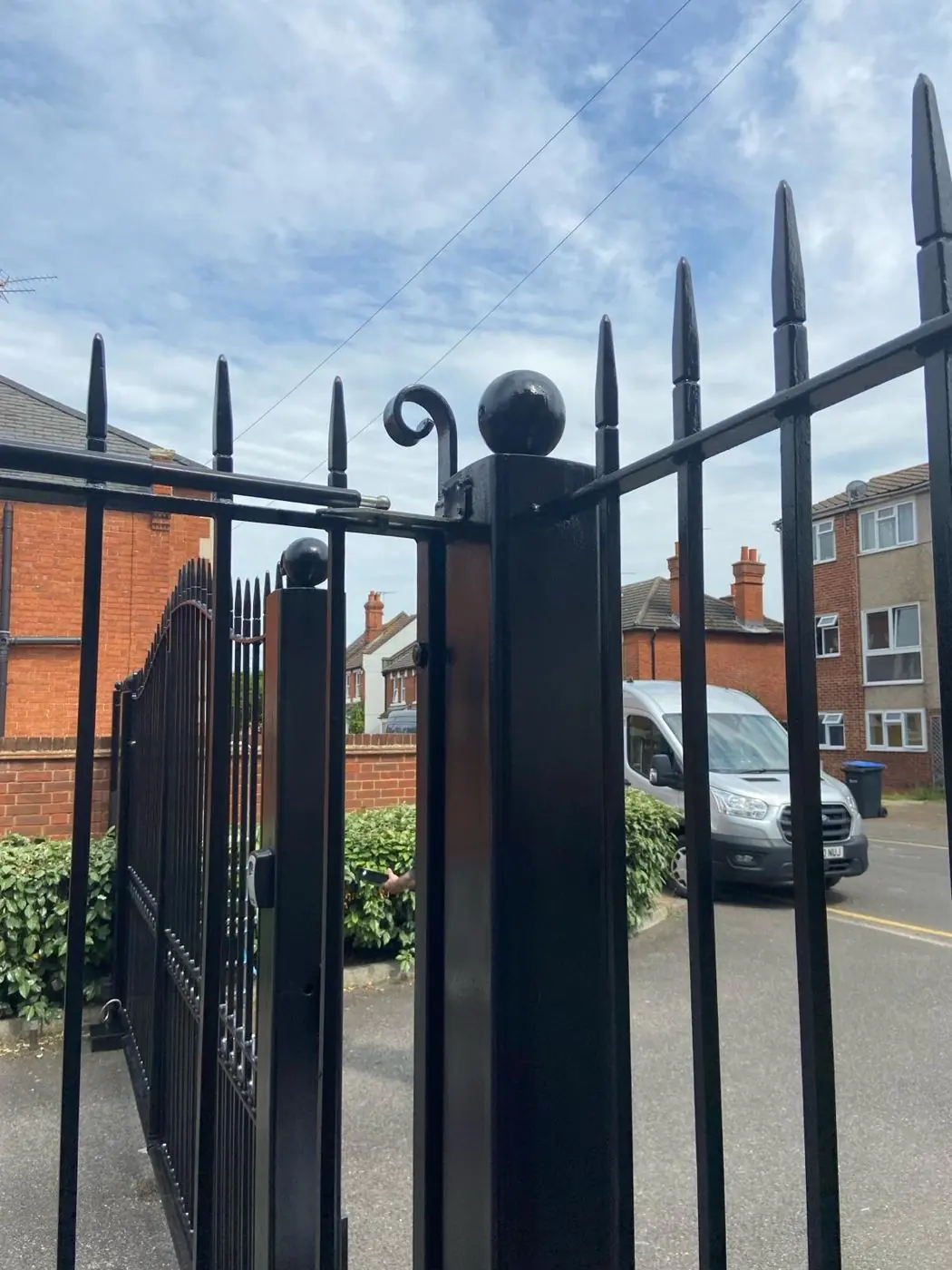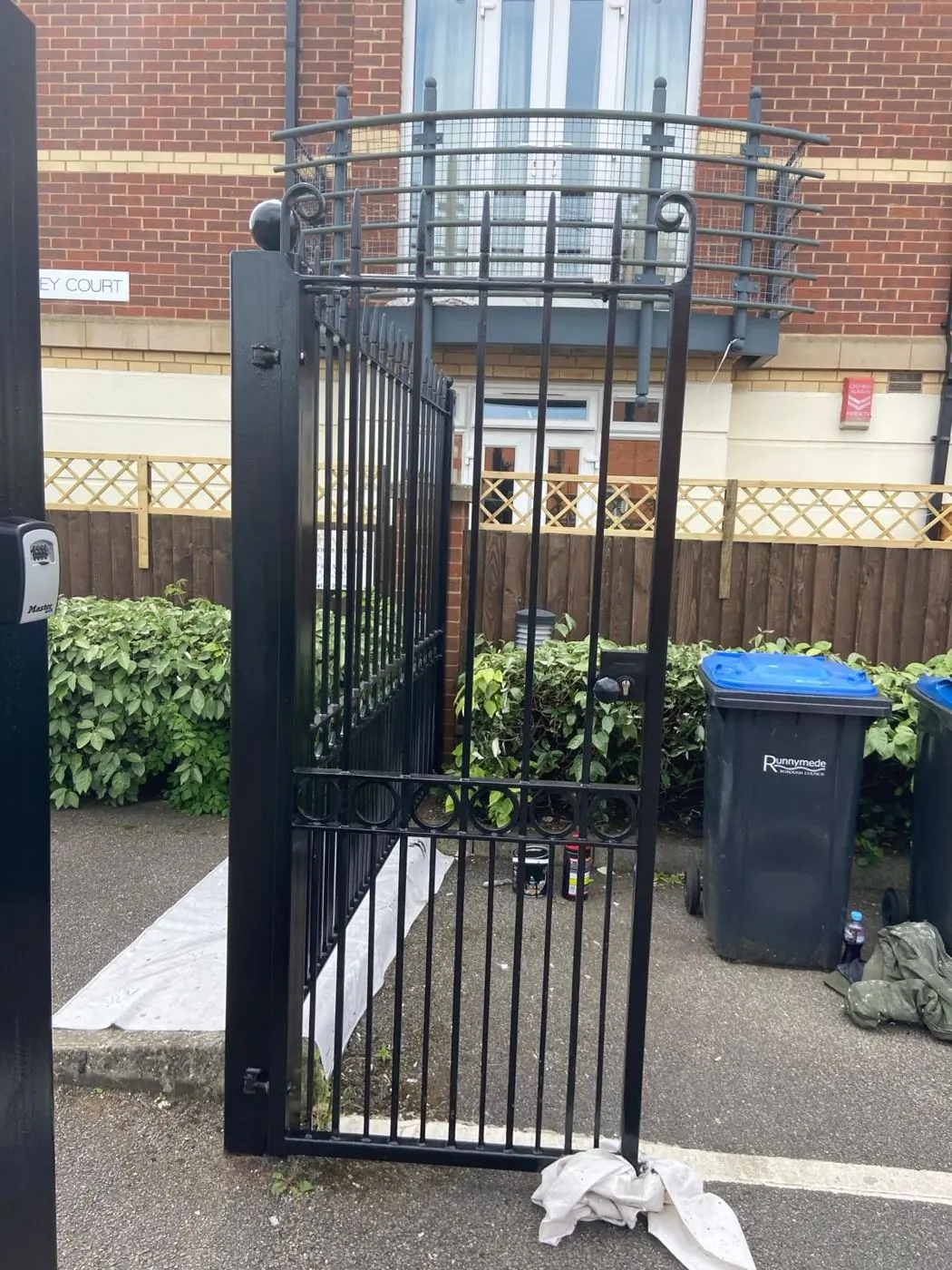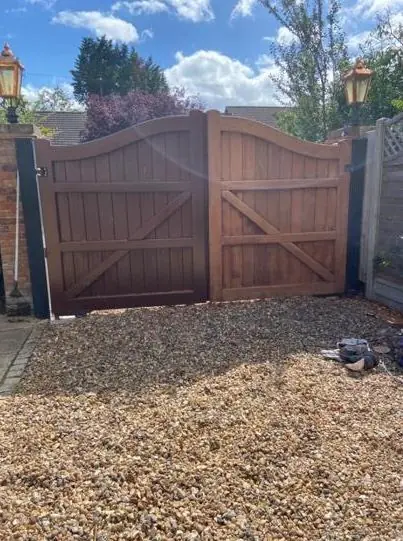
We stain and paint garden fences and timber gates in Cogenhoe, about 4.6 miles east of Northampton town centre. Most fence work in the village is on the 20th century estates, and Dean quotes after seeing the timber and how much shade and weather it gets.
Where the fences are
The old core of Cogenhoe is not fence country. Cottages on Church Street and upper Mill Lane sit on the front of their plots with yards behind, and boundaries in the conservation area are mostly limestone walls, which the appraisal says should be kept. Timber fencing belongs to the newer village: the estates built along Station Road and York Avenue, mainly from the 1960s onward, on what had been allotments and orchards. Those back gardens are where most lap panels, feather-edge boards and side gates are found.
A lot of that fencing is now old enough to have been treated several times with different products, so the first job is finding out what is already on it. A spirit-based stain over a water-based one, or a clear oil over a coloured paint, can give a patchy result, and we test a section before committing.
Shade, sap and algae under protected trees
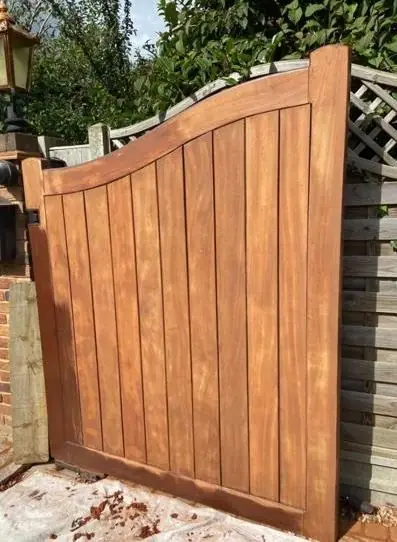
The conservation appraisal records Tree Preservation Orders on Church Street, Sharmans Close among them, and marks the trees of St Peter’s churchyard and the south side of Whiston Road as important. A fence or gate beneath that canopy has a hard life. Leaf litter piles up against gravel boards, sap spots the panels, and constant shade keeps the timber damp so green algae takes hold.
Protected trees cannot simply be cut back to let light in, so the finish has to cope with the conditions instead. Our approach for these plots:
- Clear leaf build-up from the base of the fence and gravel boards so the bottom of the panels can dry.
- Wash the timber and apply a biocide to kill algae, then leave it until it is properly dry.
- Choose a product with good water repellence for the shaded side, and accept that it will need recoating sooner than a fence in full sun.
Timber gates set into stone and brick
Gates in Cogenhoe are often hung between limestone walls with ironstone or tile copings, or, on the Victorian houses, behind low brick front walls of five to ten courses. Stone and old brick are porous, and a dark stain splashed onto limestone soaks in and is very hard to remove. So before a gate is stained we mask the pier faces and copings, sheet the ground, and brush the stain on rather than spraying it. Hinge plates and latches come off where we can, so the edges of the gate are coated properly and the hardware is not glued in with stain.
Weather on the open slope
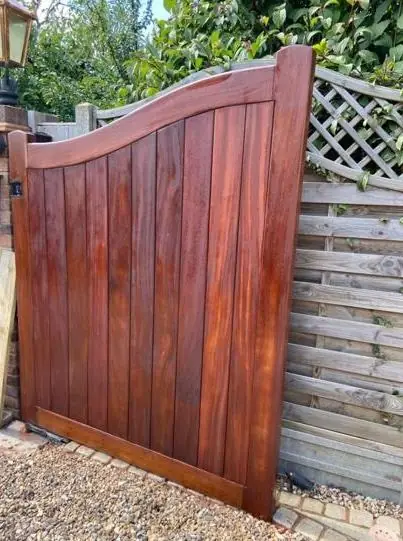
The village sits high on the side of the Nene valley with an open outlook north. Fences on north- and west-facing boundaries take wind-driven rain and dry slowly, and end grain at the top of posts and boards suffers most. We work a generous coat into those ends and pick a dry spell, since stain applied to damp timber does not soak in. Our guide to timing outdoor painting covers the conditions that suit it.
Stain or paint is your choice. Stain lets the grain show and wears away gradually; paint gives a solid colour and can tidy up a tired, mismatched run of panels. Dean will give a view once he has seen the fence. For more on products and preparation, read our main fence and gate staining page, and for other services in the village, see our Cogenhoe page.
Last updated by Dean, DH Painter & Decorator.