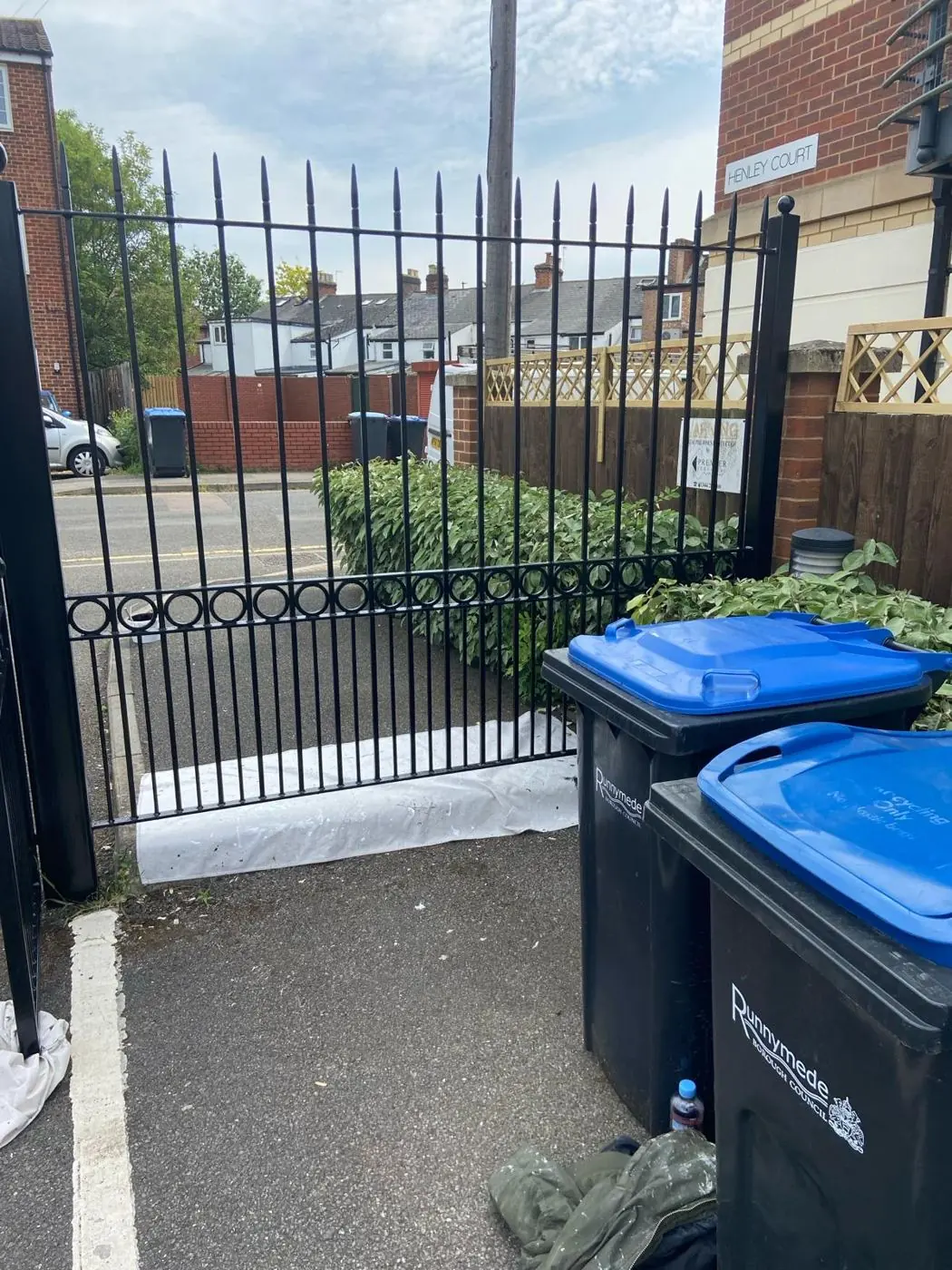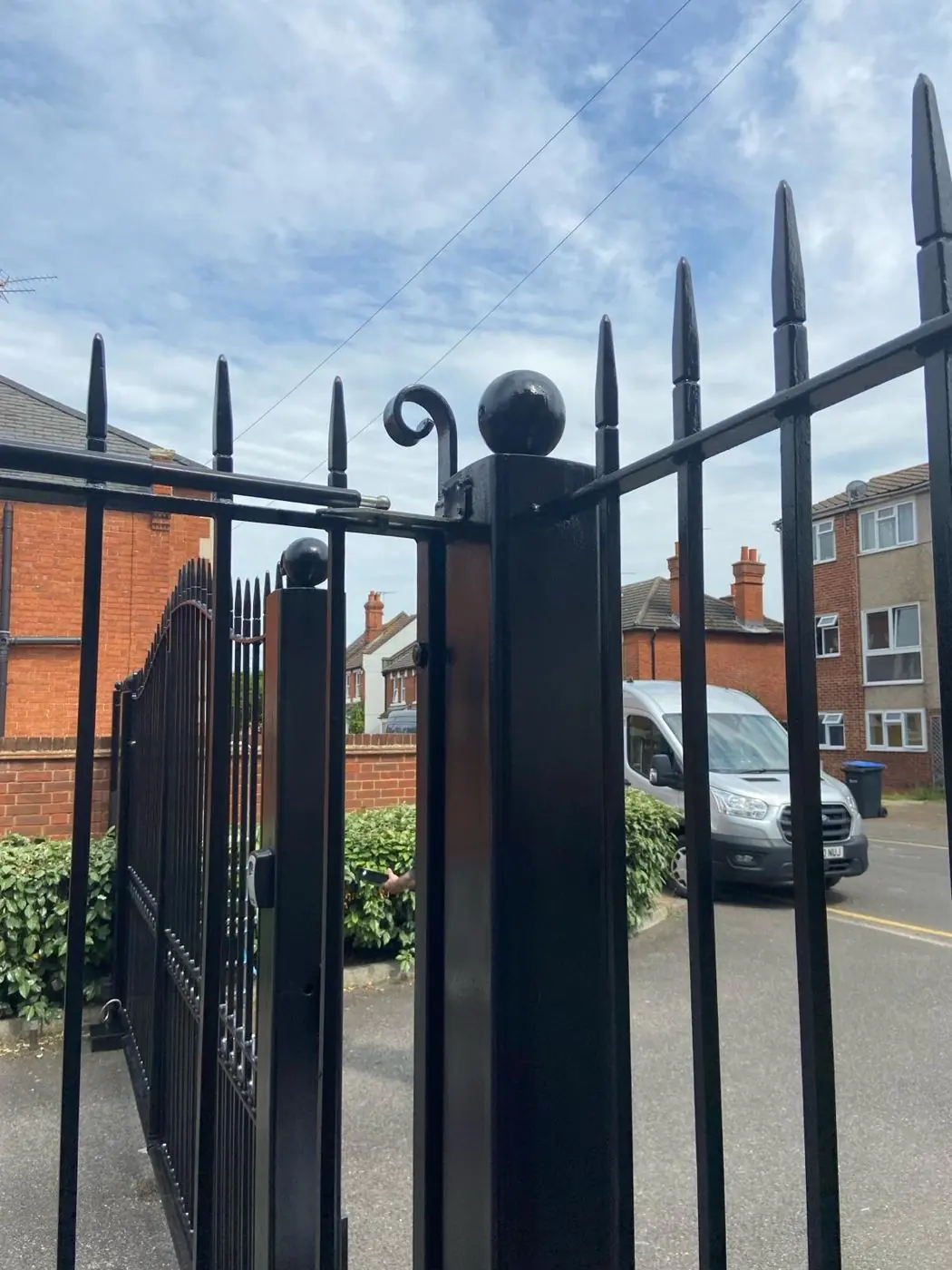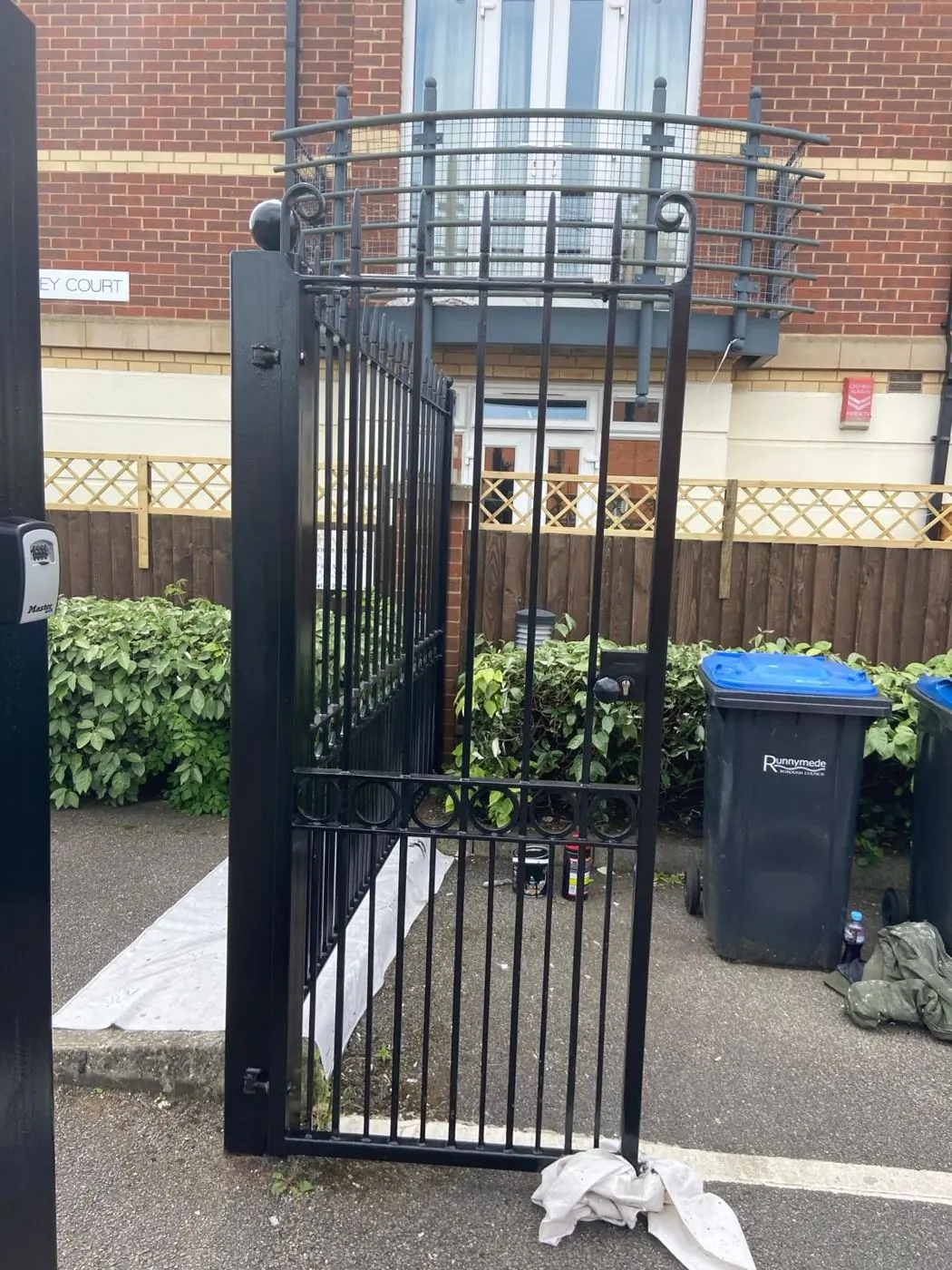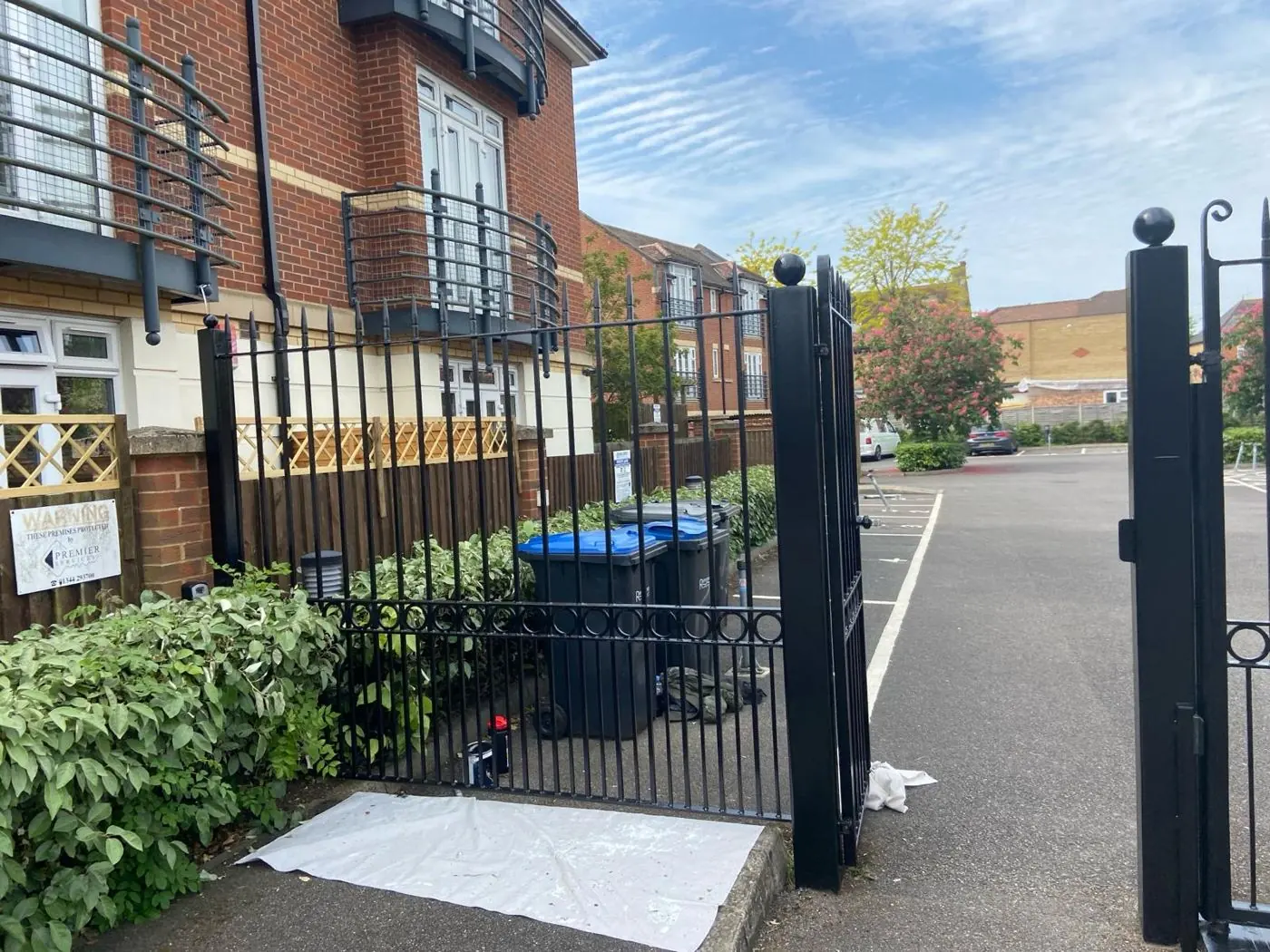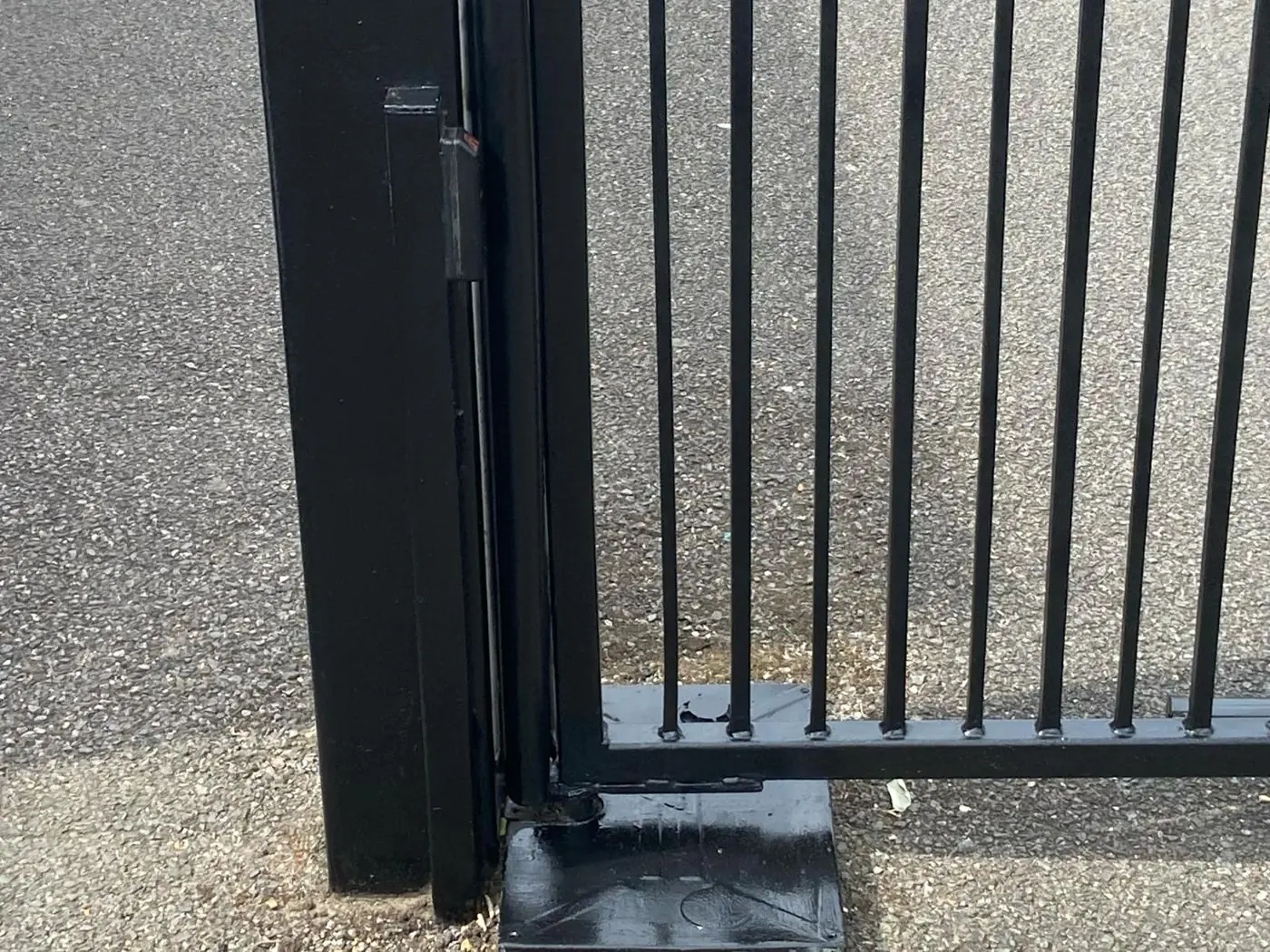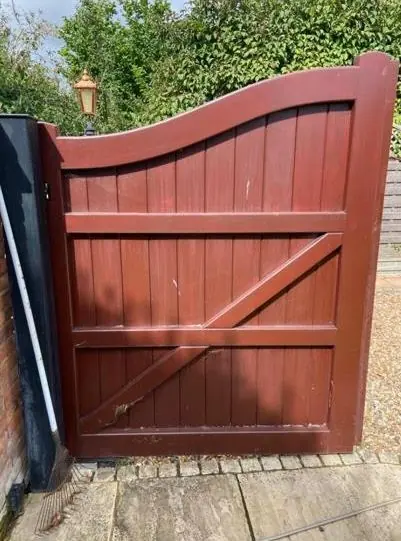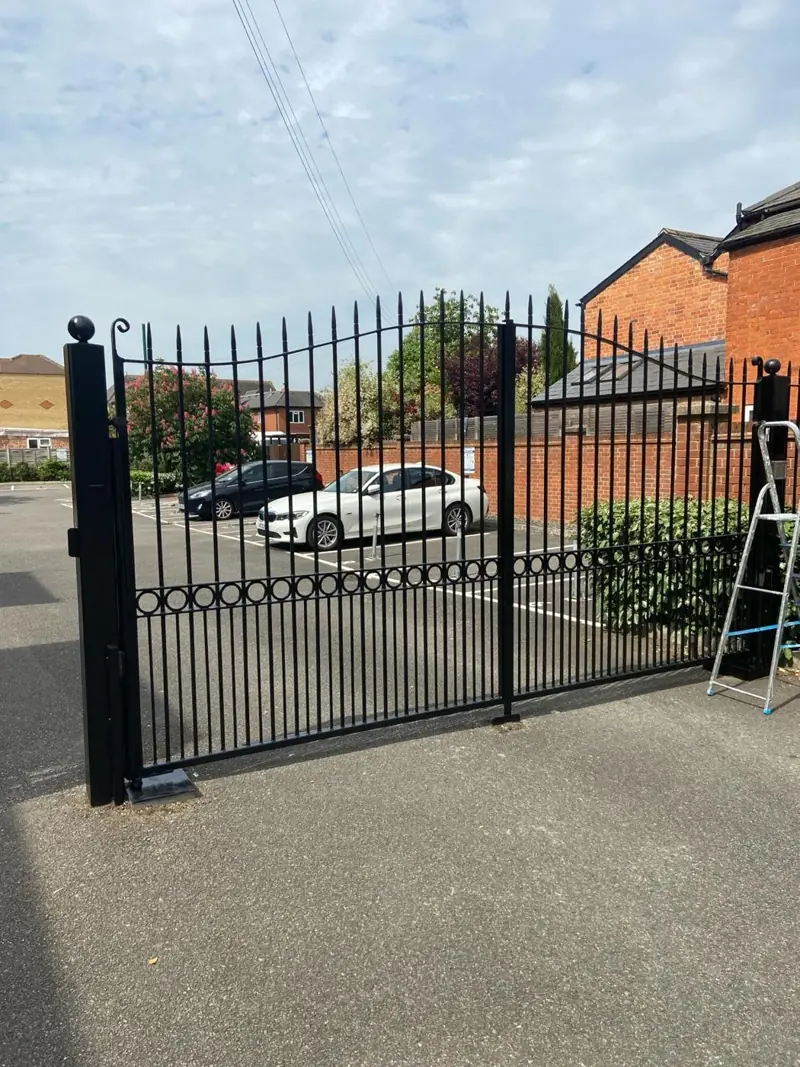
DH Painter & Decorator paints metal gates, railings and metal window casements in Cogenhoe, about 4.6 miles east of Northampton town centre. Metalwork is not plentiful in the village, so Dean looks at each piece in its setting before quoting.
Where the metalwork is in the village
Cogenhoe has nothing like the long runs of front railings found in some town streets. Its historic boundaries are mostly limestone walls, often finished with ironstone or tile copings, and on the Victorian red-brick houses along Station Road and lower Church Street, low brick front walls of five to ten courses. Metal in the village mostly means the gates set into those walls, the occasional section of railing, and one less obvious item: the metal casement windows fitted into ironstone mullions on some of the larger historic houses and at the school.
Because there is less of it, each piece tends to be a one-off, and the surroundings matter as much as the metal.
Protecting the walls a gate hangs on
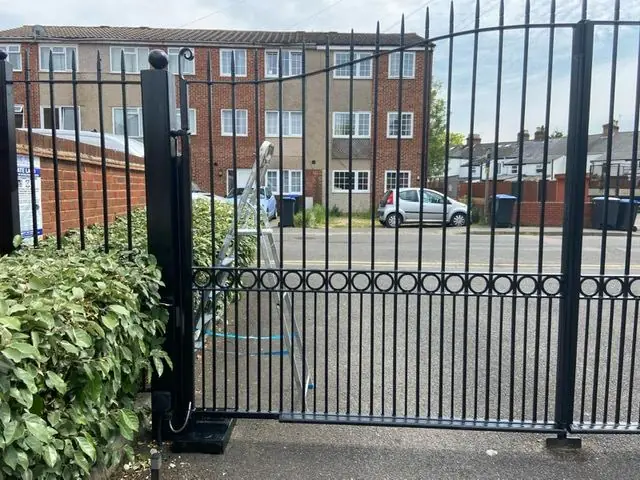
The conservation appraisal says limestone boundary walls are to be retained, and some are listed in their own right, such as the limestone wall around the old rectory orchard and kitchen garden on Mill Lane. Wire brushing, rust converter, primer and gloss all mark stone easily, and rust-stained stone is very hard to clean. Before we touch a gate we:
- Mask the stone or brick around hinge pins, latch keeps and any posts set into the wall.
- Sheet the coping and ground so loose rust and paint flakes are caught.
- Check where the hinge pins are leaded or set into the stone, as corrosion there can crack the masonry; we will point this out if it needs a mason.
Where a gate can be lifted off safely, working on it away from the wall gives the cleanest result and lets us reach the back of every bar.
Metal casements in ironstone mullions
Several of Cogenhoe’s larger 17th and 18th century houses have ironstone mullions holding metal casement windows. These are part of what the conservation area is meant to protect, and on listed houses, such as those in the village’s group of 19 listed buildings, any change of colour should be checked with West Northamptonshire Council first. The work is fine: flaking paint is removed, rust spots are taken back to bright metal and primed, and the frames are recoated without getting paint on the stone or the glass putty line. The ironstone mullions themselves stay unpainted.
Rust on an exposed slope
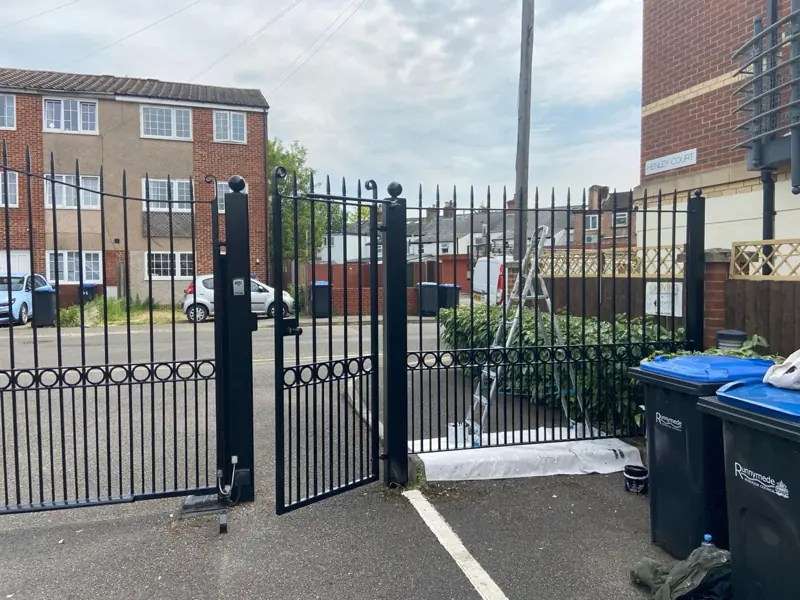
The village sits high on the limestone valley side with an open outlook north over the Nene. Gates and railings on north- and west-facing boundaries stay wet longer after wind-driven rain, and rust tends to start where water collects: the bottom rail, the joints between bars and rail, and around hinges. We wire brush or abrade to sound metal, treat the remaining rust, spot-prime bare areas with a metal primer and build up the finish coats. Galvanised gates on newer properties need their own primer, as ordinary paint will not grip zinc.
Practical points on access
Many older properties front straight onto the pavement and have no off-road parking, and Station Road and Whiston Road can be busy. Gate work is fairly compact, but we still keep the footway clear, put out wet-paint notices and agree where the van will sit. If you are comparing quotes, our guide on choosing a painter and decorator lists what to ask. The full preparation process is on our main metal gate and railing painting page, and other services in the village are on our Cogenhoe page.
Last updated by Dean, DH Painter & Decorator.