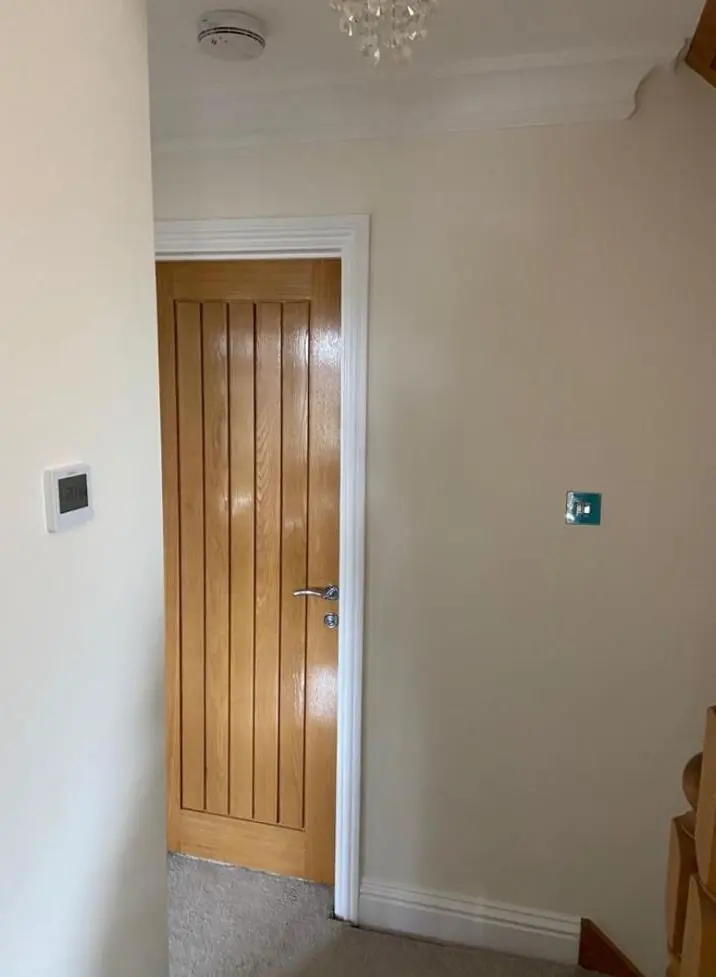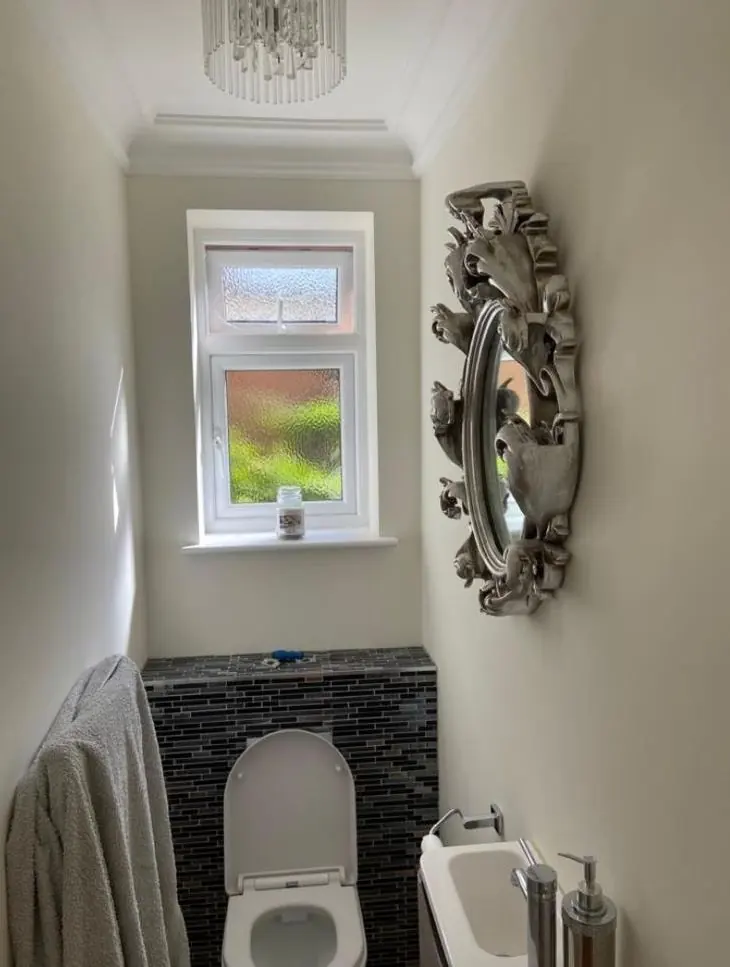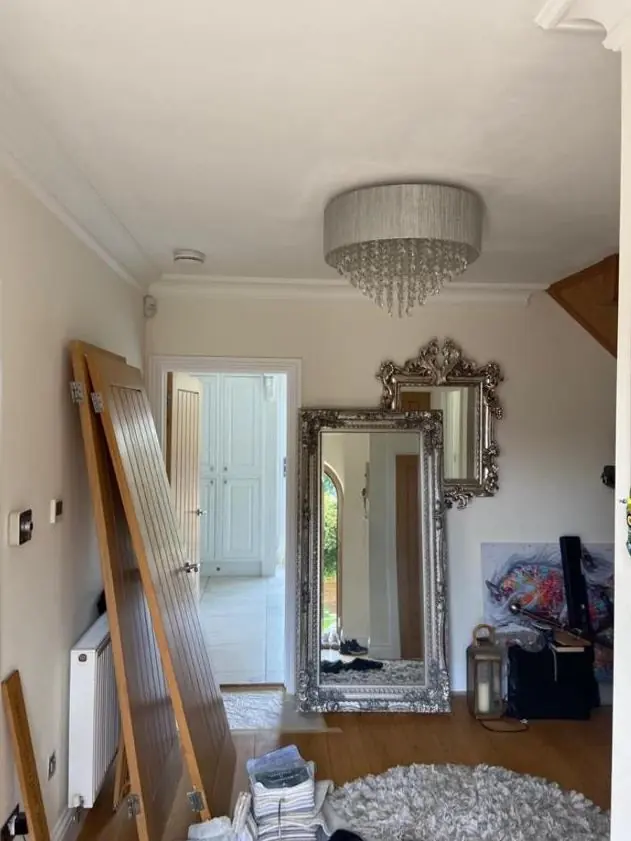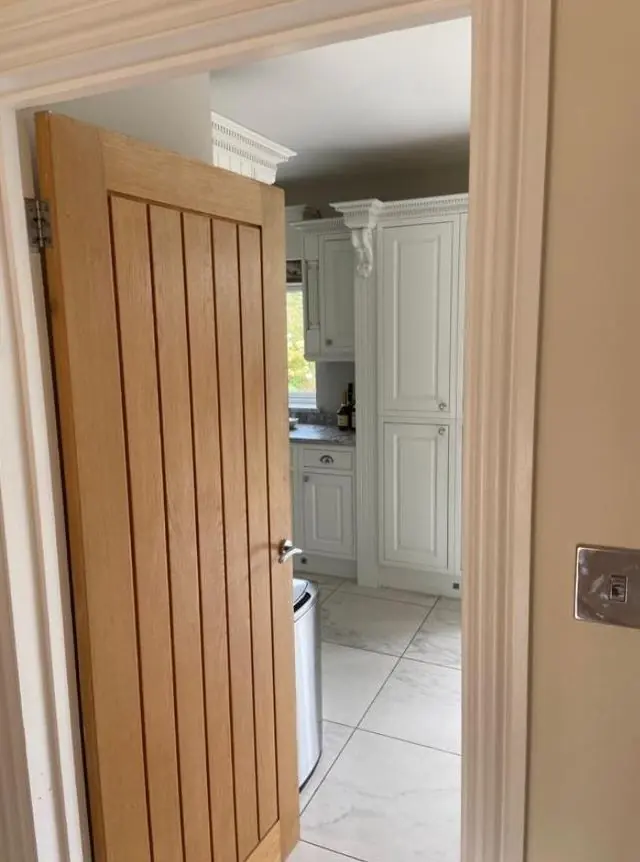
Dean gives colour and finish advice to Cogenhoe homeowners as part of a decorating job, 4.6 miles east of Northampton. In the village that means joinery colours that sit with limestone, ironstone and Victorian red brick, extra care around listed buildings, and room colours suited to light off the Nene valley.
Let the walls choose the woodwork colour
Most colour decisions in Cogenhoe start with what the house is built from, because in the older parts of the village the walls are not painted and should stay that way. The cottages on Church Street and upper Mill Lane are coursed limestone rubble, and the larger houses add darker ironstone in bands, quoins and mullions. Down Station Road, the Mann family houses are red brick in English bond with limestone window dressings, and some use contrasting light and dark brick bands. Your windows, doors and bargeboards are seen against those materials every day, so we match the paint to them rather than to a colour card on its own.
| Wall material | Joinery shades that usually sit well | Shades to think twice about |
|---|---|---|
| Limestone rubble | Soft off-whites, stone, muted sage, grey-green | Brilliant white, which can make the stone look dirty |
| Limestone with ironstone detail | Deep greens, warm greys, dark brown-reds that pick up the ironstone | Cool blue-greys, which fight the rust tones |
| Victorian red brick with stone dressings | Cream or off-white sashes, dark green, black or deep blue doors | Pale greys, which can look washed out against strong brick |
Checks inside the conservation area
The village’s conservation area dates from 1991, with its appraisal and management plan following in January 2015. It takes in the historic street, the green, Cottons Farm and the frontages of 1 to 19 Station Road. Because that plan ranks the swap from timber joinery to uPVC as a major threat, keeping and repainting original windows and doors is the expected route, and colour is how that joinery is seen. Its Action 2 floats Article 4 directions to protect architectural features, but none appeared to be in force when we checked, so a quick call to West Northamptonshire Council before a bold exterior change is sensible.
Nineteen buildings inside the boundary are listed, from the 1672 Manor House to Manor Farmhouse with its stone dormer panel inscribed 1684. If your home is listed, a change to the external joinery colour may need listed building consent, and we would advise checking before any paint is bought.
Light from the valley and the trees
The village sits high on the slope with wide, open views north over the Nene valley. Rooms that face that view get cool, even daylight, which tends to pull greys towards blue and make pale neutrals look flat. Whites and stones with a little warmth in them usually hold up better there. Homes near the protected trees along Church Street, around Sharmans Close, the churchyard and the south side of Whiston Road also get filtered green light in summer that can turn some creams sour. We suggest large sample boards, viewed in the morning and evening for a few days.
Free rein on the estates, sensible sheens everywhere
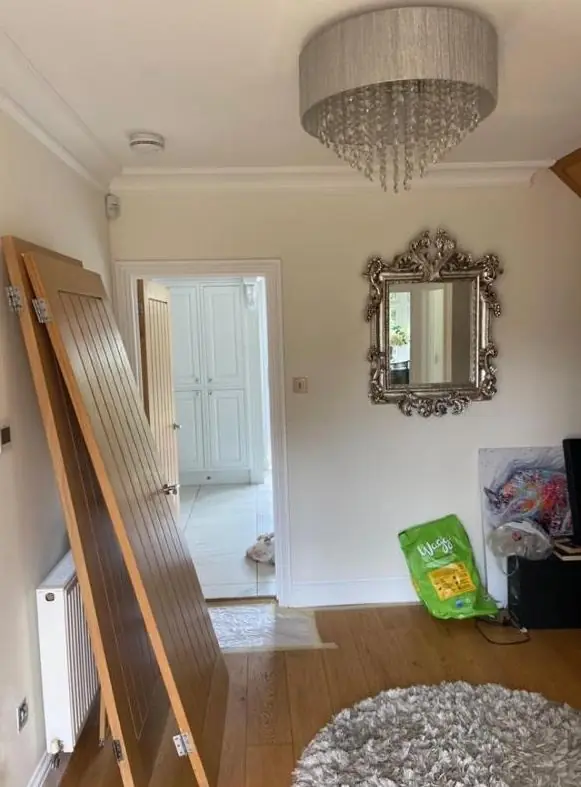
The 20th century homes around Station Road and York Avenue sit outside the conservation area, so you have a free hand with colour there. The advice we give is more about finish: matt for calm living rooms, a scrubbable matt or eggshell for hallways that take muddy boots off the Nene Way, and satin or gloss on woodwork depending on how traditional you want it to look. Our wider approach is on the colour and finish advice page. For everything else we cover in the village, see the Cogenhoe area page.
Last updated by Dean, DH Painter & Decorator.