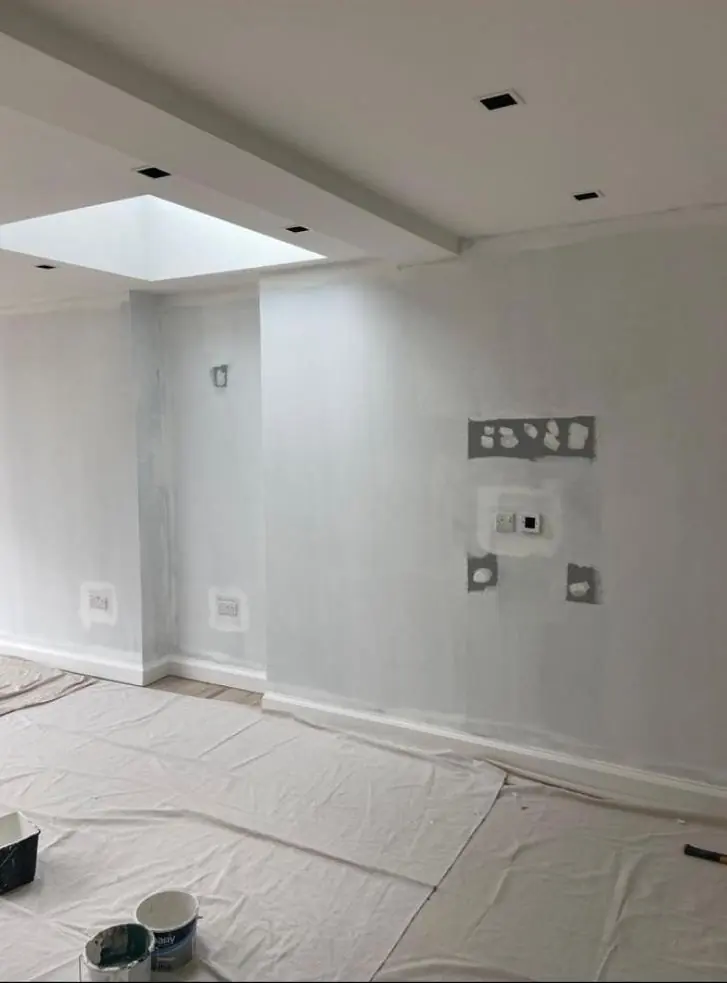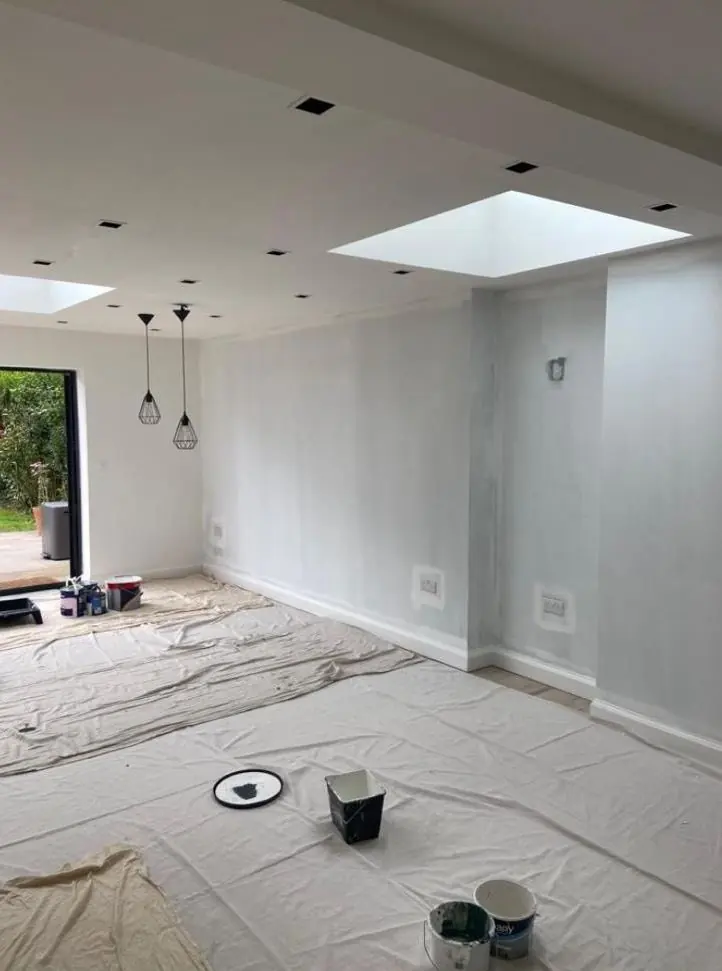
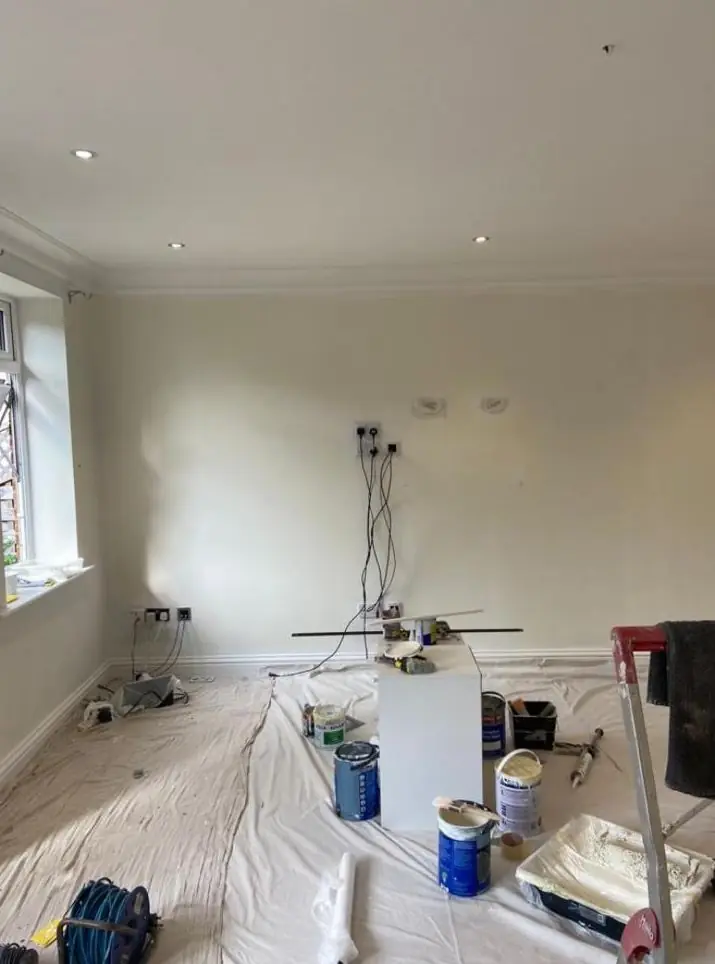
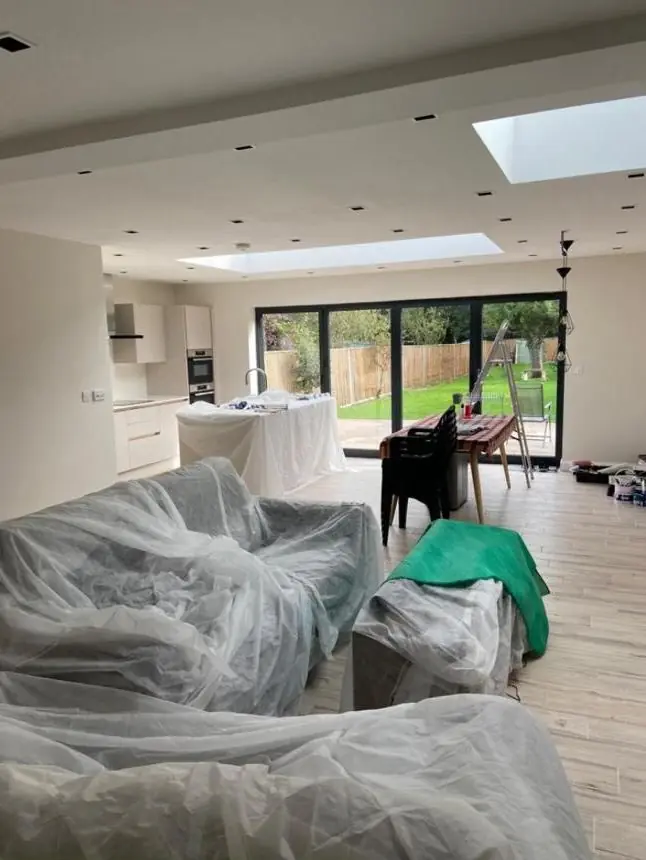
Dean decorates freshly plastered rooms, extensions and converted barns and outbuildings in Cogenhoe, about 4.6 miles east of Northampton. The key question in this village is what the plaster is made of, because new gypsum and the lime plaster in older stone buildings need different first coats.
Why so much new plaster here is in old buildings
Cogenhoe’s planning context limits new building in the historic core to restricted infill. As a result, much of the new plaster in the village goes into extensions to existing homes and into conversions of barns and outbuildings, rather than into whole new houses. The old village along Church Street and upper Mill Lane still has farmsteads, barns and outbuildings from the 17th and 18th centuries, built from local limestone rubble.
That affects our first visit. In a converted barn, one wall may be newly dry-lined and skimmed in gypsum, while the next is the original stone, finished in lime. Paint that is right for one can be wrong for the other, so we check each wall before quoting.
Gypsum, lime, or both in one room
| Surface | What it needs first | Finish |
|---|---|---|
| New gypsum skim on board or blockwork | Full drying, then a thinned mist coat that soaks in | Two coats of emulsion |
| Lime plaster on solid limestone | Full carbonation and drying; no sealing coat | Breathable mineral or clay-based paint |
| Junction where new meets old | A movement gap or bead agreed with the plasterer | Usually the breathable product on both sides |
Fresh lime plaster goes off slowly and should not be sealed under vinyl paint, which traps moisture in the solid wall behind. Where gypsum and lime sit in the same room, we often recommend a breathable paint across both. That way the colour and sheen match, and the old wall can still dry out. A hairline crack along the junction is common as the two materials settle at different rates. We would rather fill it after the first season than hide it under heavy caulk on day one.
Extensions on the 20th-century houses
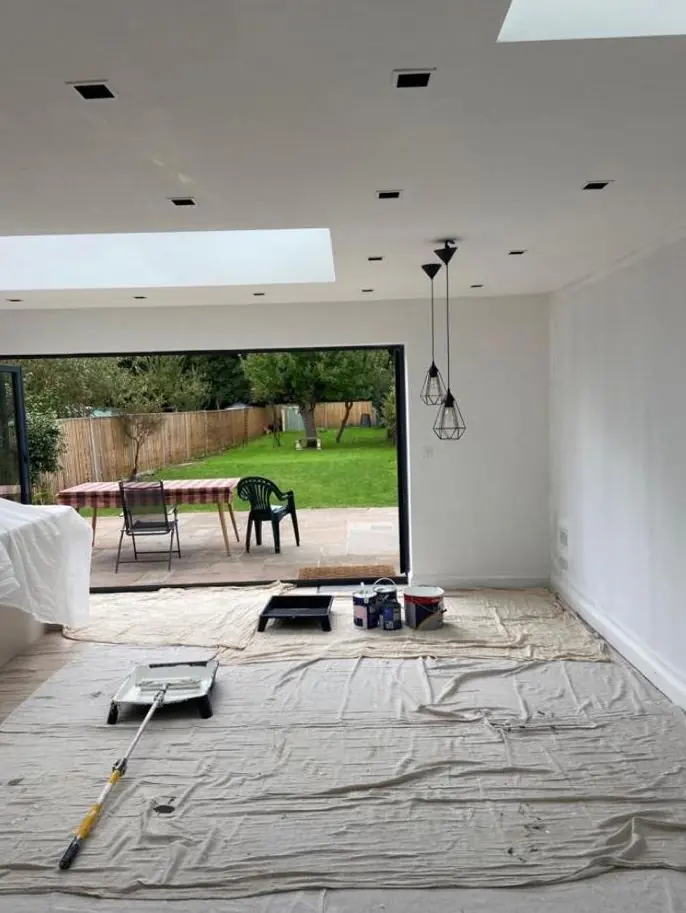
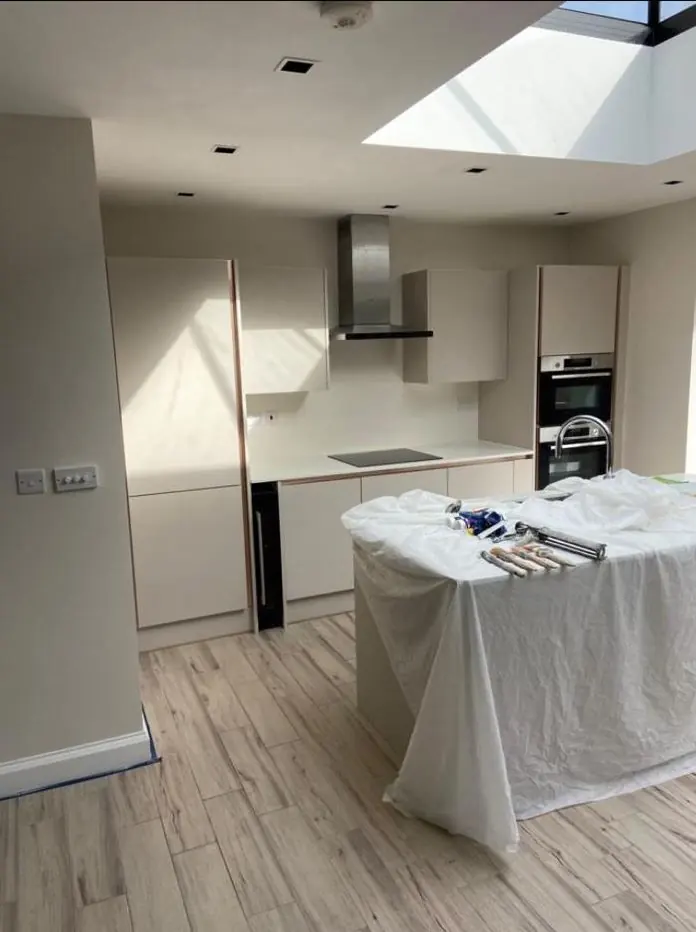
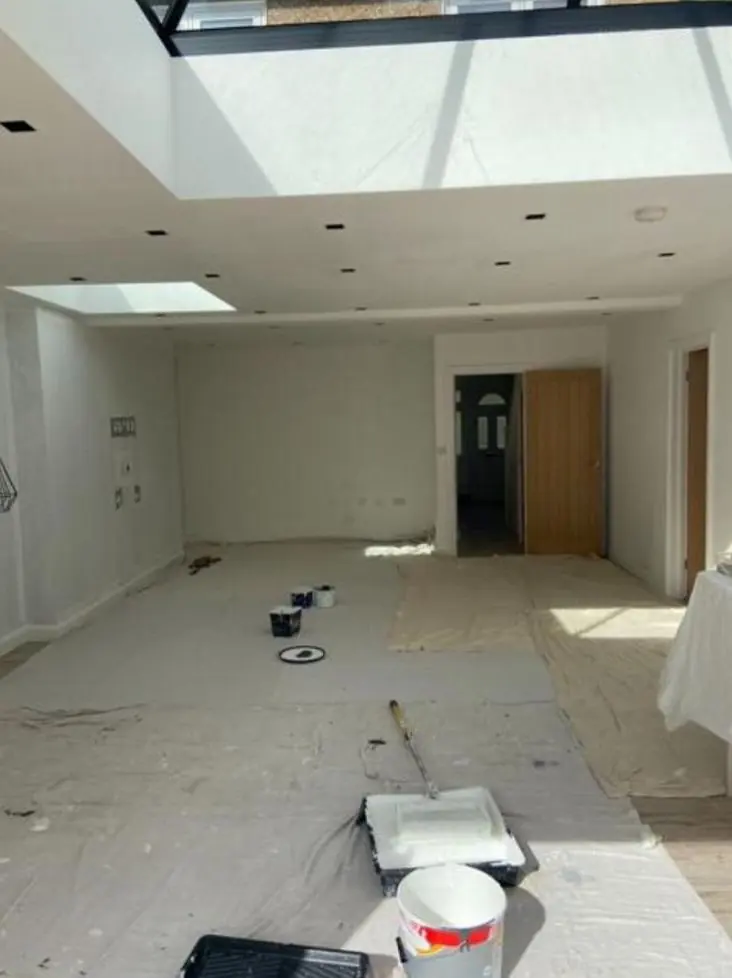
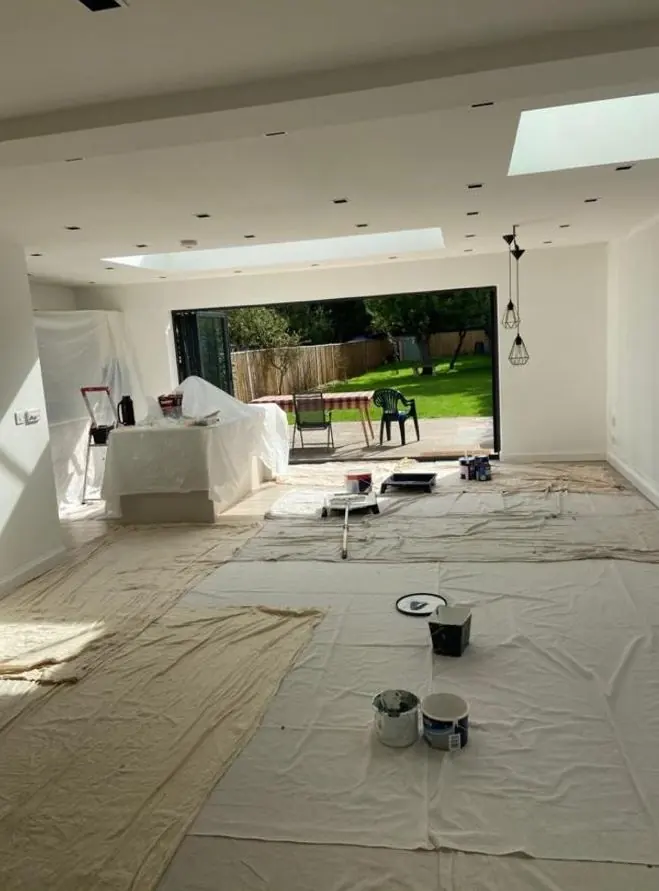
On the estate houses off Station Road and York Avenue, mostly built from the 1960s on, extensions are usually simpler jobs: a gypsum skim over new blockwork or plasterboard, new MDF skirtings and architraves, and sometimes a vaulted ceiling or roof light. The standard approach applies. We wait for the plaster to dry evenly to a pale colour, apply a mist coat, snag the defects it shows up, then apply the finish coats. Our guide to mist coats on new plaster covers drying times and mixing in more detail.
Things that change the timing in Cogenhoe
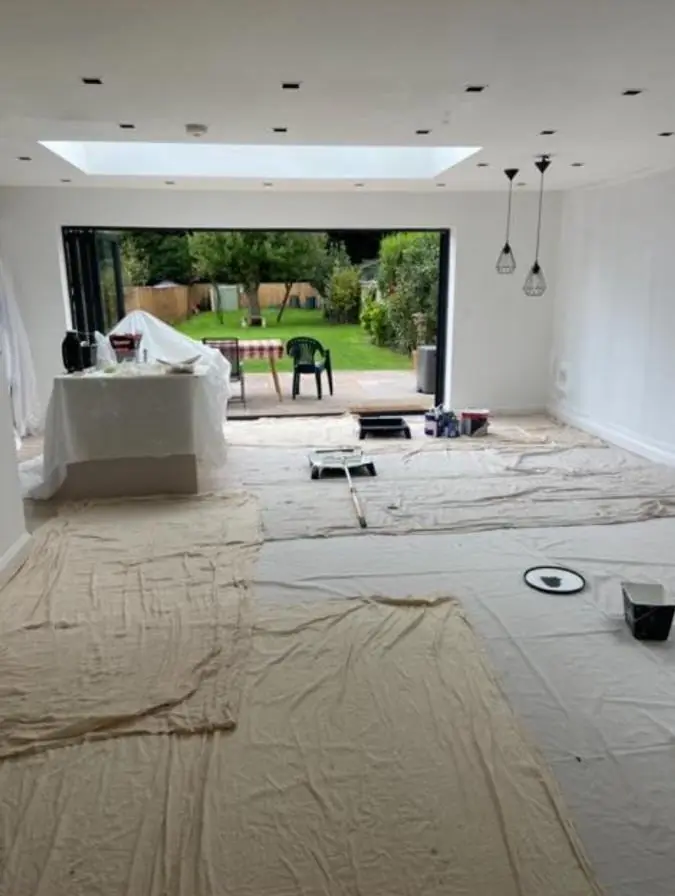
- Thick walls dry slowly. Where a converted outbuilding has been re-plastered on the inside of solid stone, drying can take a lot longer than a skim on board. We do not rush the first coat.
- Listed buildings. Nineteen buildings in the conservation area are listed. If yours is one of them, the materials used in the conversion may already be set by the consent, and we follow that.
- Getting materials in. In the old part of the village, many properties have no off-road parking. On larger conversion jobs we drop materials off once and store them on site.
- Low ground by the mill. The land near Cogenhoe Mill is prone to flooding in heavy rain. Any building down there may hold more moisture in its walls, so we take extra care with drying checks before painting.
The full list of what we include when decorating a new room is on the main new plaster and extension page. For an overview of the village, see the Cogenhoe area page.
Last updated by Dean, DH Painter & Decorator.