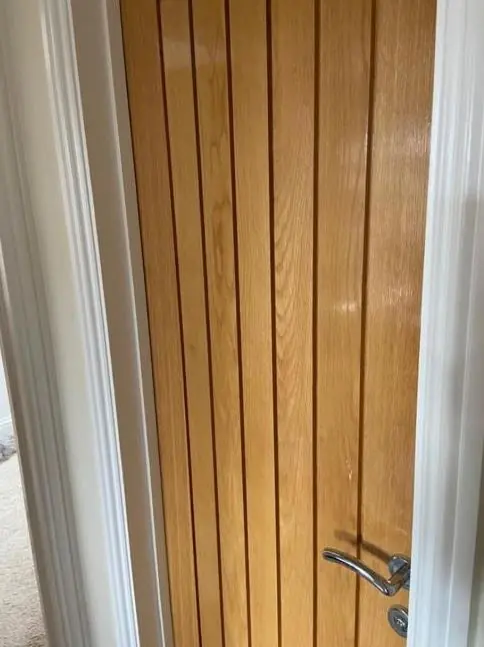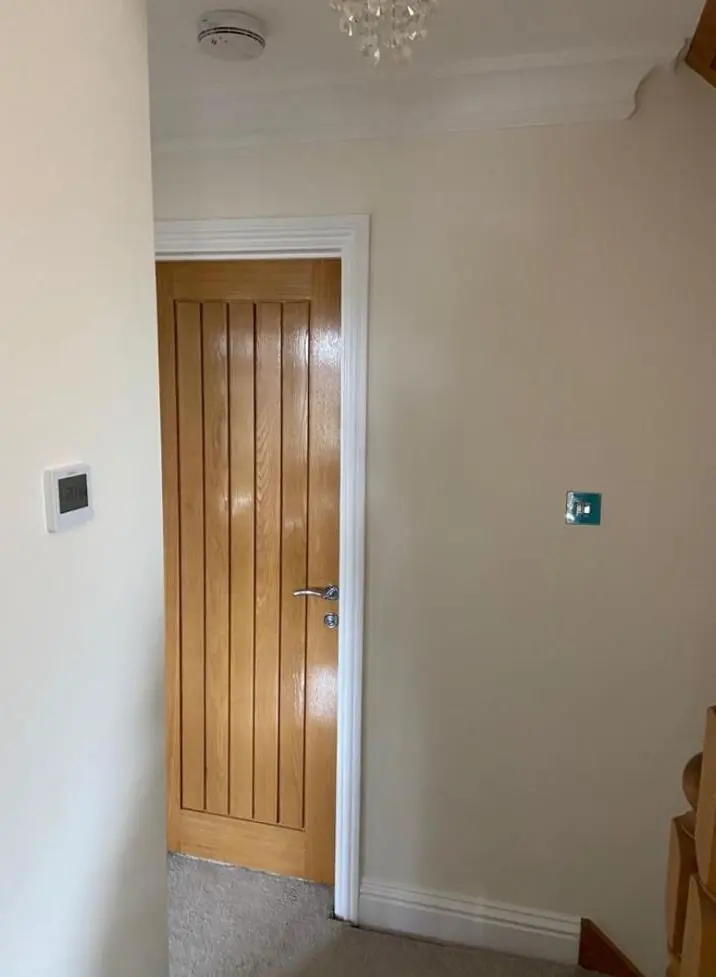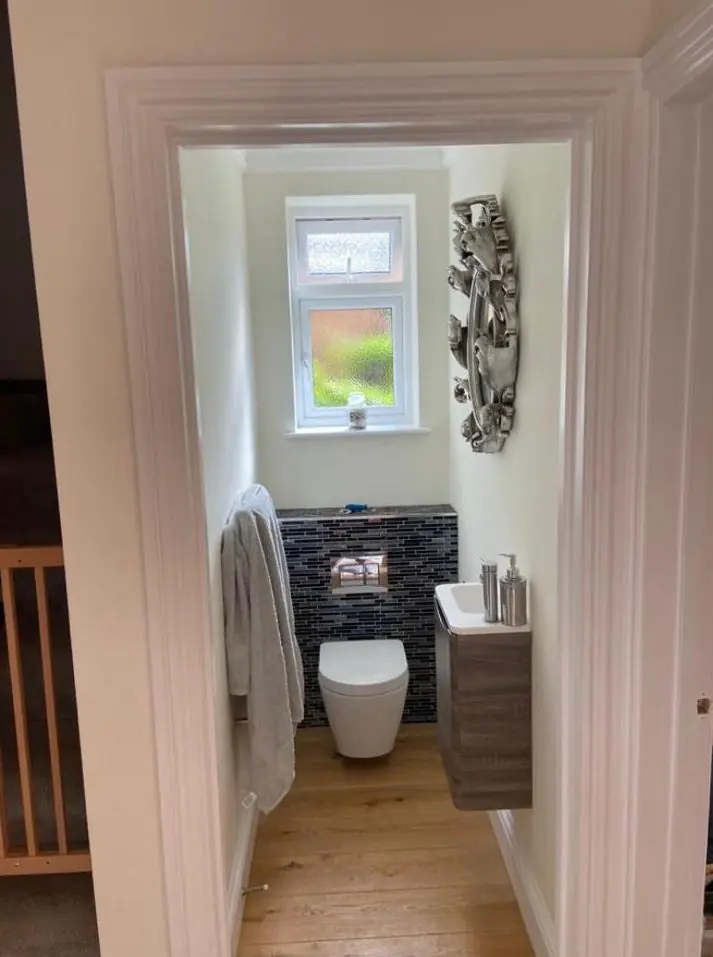
Dean paints doors, skirtings, architraves and other joinery in Cogenhoe, a hillside village about 4.6 miles east of our Northampton base. The work ranges from repairing and repainting old timber plank doors in the conservation area to refreshing woodwork in the 20th-century houses off Station Road and York Avenue.
Old timber doors that the conservation appraisal wants kept
The Cogenhoe Conservation Area appraisal, adopted in January 2015, picks out timber plank and panelled doors as part of what gives Church Street and upper Mill Lane their character. It names the swap from traditional timber doors and windows to uPVC as one of the main threats to the area, and it suggests the council could consider Article 4 directions to protect those features. None was in force in the sources we checked. Even so, the direction of travel is clear: an old door here is worth repairing and repainting rather than replacing.
A ledged plank door in a 17th or 18th century limestone cottage is a different job from a modern flush door. The boards move with the seasons, so the joints open and close. Filling every gap with a rigid filler just leads to cracks along each board line by the next winter. We clean out loose material, fill only what needs filling with a flexible product, and use a paint that can move with the timber. Old doors often carry many layers of paint, and some will be old enough to contain lead, so we test before sanding and use wet abrading or careful stripping where it is present.
Several houses in the village are listed, including Manor Cottage, Honeysuckle Cottage, Stonelea Cottage and numbers 49 and 62 Church Street. If you own a listed building and want to change the colour of an external door or other joinery, check with West Northamptonshire Council first, because listed building consent can apply.
Front doors that open straight onto the street
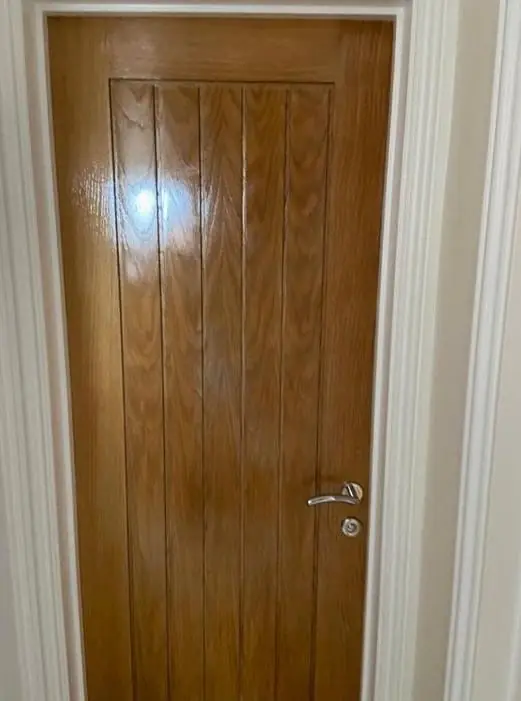
Many of the older cottages were built hard up to the street, with nothing between the front door and the footway. The front door faces the pavement, and on the higher part of the village it also faces the weather blowing up from the Nene valley. North and west-facing doors here take wind-driven rain, so bottom rails and the lower edges of panels are usually the first to go. We pay most attention to those areas: cutting back soft timber, letting it dry, priming end grain and building up enough coats on the bottom edge, where water sits.
Because the doorstep is the pavement, we keep the working area tight, with dust sheets inside the threshold and the door wedged safely while coats dry. Parking along Church Street is limited, so we plan an exterior door job around fewer trips to the van.
Deep skirtings and architraves in the Mann houses
The red-brick houses built during the boot-and-shoe years, including Gladstone Terrace and Rocklands on Station Road, have the deep skirtings and moulded architraves you would expect of the period. After a century of repainting, the detail in those mouldings is often blurred under thick paint. Where the profile has clogged badly, we strip it back in sections so the shape shows again before repainting, instead of adding another coat on top.
- Skirtings are washed and keyed, and any gaps where a solid wall has moved away from the board are filled and sanded.
- Architraves are cut in cleanly against the plaster, which in these houses is rarely perfectly flat.
- Panelled internal doors get panels first, then muntins, rails and stiles, so wet edges do not overlap.
Estate homes west of the old village
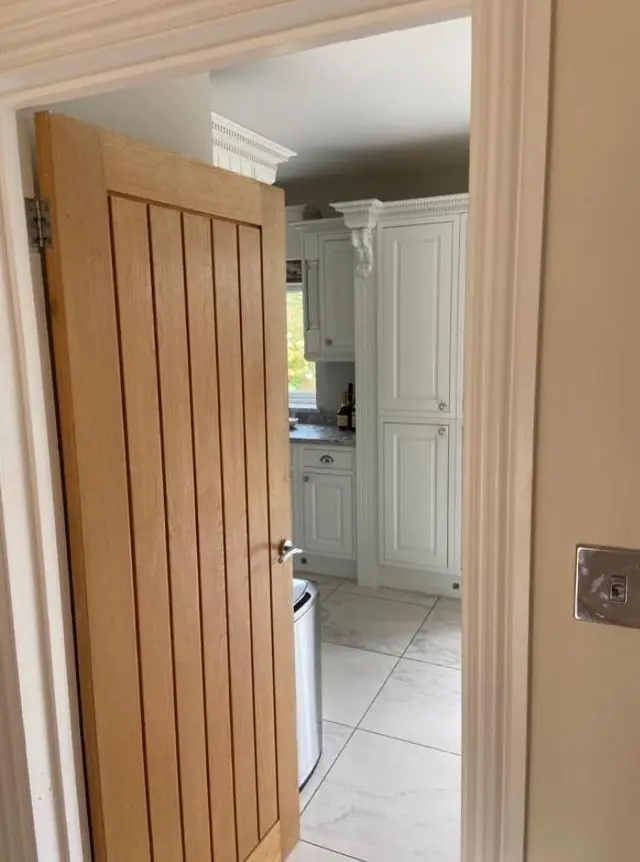
Most homes in Cogenhoe today are 20th-century houses on the estates along Station Road and York Avenue, many from the 1960s onwards. Their joinery is plainer, with flush or moulded doors and machined softwood or MDF skirtings, and it suits a standard modern system. We usually recommend water-based satin or eggshell for these. It goes on with less smell, dries the same day and does not yellow the way oil gloss does on skirtings in darker hallways.
Our general method for preparation, primers and finishes is on the main door and skirting painting page. For other work in the village, see the Cogenhoe area page.
Last updated by Dean, DH Painter & Decorator.