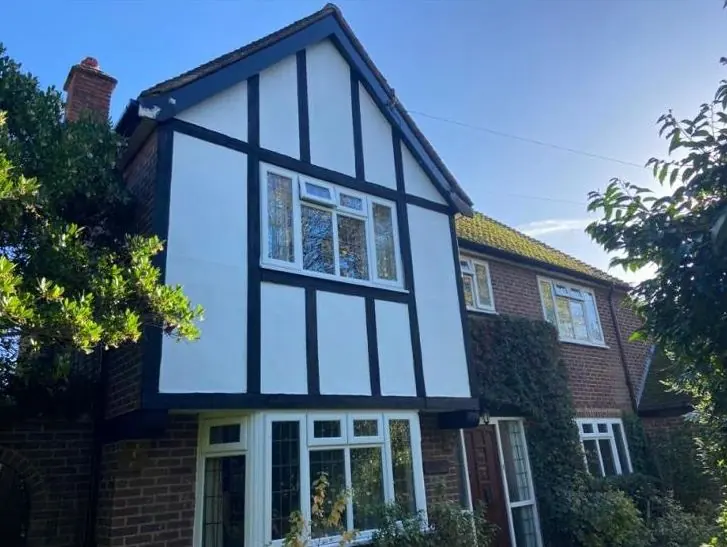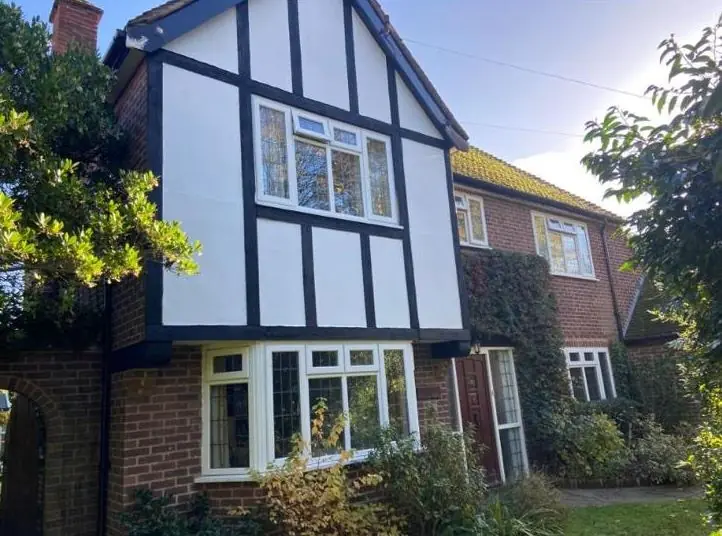
DH Painter & Decorator paints the outside of houses in Spratton, a conservation-area village on the A5199 about 6.5 miles north of Northampton town centre. Most of the older houses here are bare ironstone or lias, so Dean's exterior work in the village centres on casements, sashes, doors and outbuilding timber.
Why exterior work in Spratton is mostly joinery
Walk the historic core along Yew Tree Lane, Church Road and Manor Road and you see very little painted wall. The 17th and 18th century cottages and farmhouses are squared, coursed lias limestone with ashlar dressings or coursed ironstone rubble. That stone was laid to be seen, and it should stay uncoated. So when a Spratton owner asks for the outside doing, the paint goes on the timber: casement windows set in stone mullions, plank front doors, Georgian sashes, and the big doors on coach houses and outbuildings.
That changes how a job is planned. Instead of a few days of rollering masonry, the time goes into scraping, filling and cutting in a lot of small, fiddly surfaces. It is slower work per square metre, and the quote reflects the joinery count far more than the size of the house. For the wider service, including painted render on newer homes, see our main exterior painting page.
Mullioned casements, leaded lights and Georgian sashes
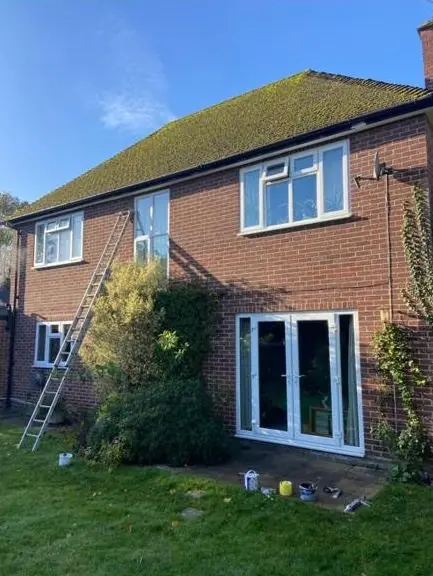
The listed cottages on Yew Tree Lane, such as number 2 (datestone 1684) and The Fir Tree at number 10 (datestone 1725), pair timber casements with stone mullions, and some are glazed with leaded lights. Each casement sits tight against stone, so cutting in has to be clean without getting paint onto the mullion. Lead cames are masked rather than painted over. Crumbling putty and any rot in the lower rails get repaired first, because primer over failing putty only lasts a season or two.
The late Georgian houses ask for something else. Spratton House, put up by the Butlin family in 1793, and the Grade II Northbank House are sash-windowed, and their sashes are divided into small panes by slim glazing bars. Each of those bars is sanded and cut in by hand inside and out, and the paint on the sliding faces has to stay thin enough that the sashes still run once it has cured. We take them one at a time and leave every window able to shut at the end of the day.
Thatch, height and the coach houses
Four of the listed houses are still thatched: two on Yew Tree Lane, Home Farmhouse, and 7 Manor Road. On these we keep ladders off the thatch, and we use no heat guns or flame for paint removal anywhere near the roof. Old paint on the upper windows of a thatched house comes off by scraping and sanding only.
Height is the other issue. Holly House, the red brick house at 7 Church Road, rises to three storeys, which means a tower or scaffold for the top-floor windows rather than a long ladder. Outbuildings bring large surfaces of their own. Spratton House kept its own coach house, and the wide doors on outbuildings like that suit a microporous wood paint or stain that lets the timber move and dry out.
Colours and consent in the conservation area
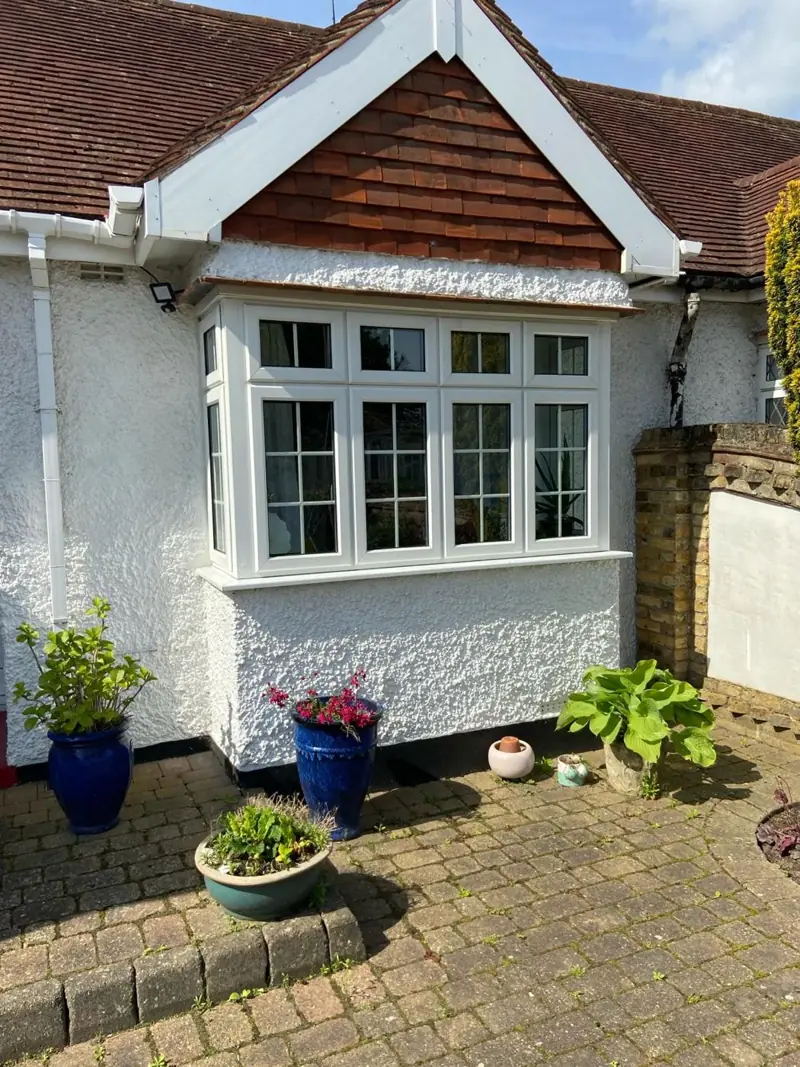
The old centre of Spratton lies inside a conservation area, and the 2021 appraisal adopted by West Northamptonshire Council put 19 buildings and structures on a local list. Like-for-like repainting is ordinary maintenance. Swapping to a new colour on a front that faces the street is different, so ask the council before committing; we have not seen anything confirming whether an Article 4 direction is in force in the village. The Grade II houses need listed building consent for more than a straight repaint in the existing colours, and the owner should settle that before we book in.
In practice, heritage colours tend to sit most comfortably against orange-brown ironstone, grey lias and thatch: off-whites, stone tones, muted greens and deep reds or blues for doors. The village page at painting and decorating in Spratton covers interiors and other services, and our guide to timing outdoor painting sets out why late spring to early autumn suits joinery like this.
Last updated by Dean, DH Painter & Decorator.