DH Painter & Decorator paints the outside of homes in East Haddon, the NN6 village about 7.3 miles north-west of Northampton town centre. Most of the work here is timber casements, doors and rendered elevations on older stone and cob houses, done in breathable paints. Dean visits, looks at each surface and gives a free quote.
What actually gets painted on an East Haddon house
A lot of East Haddon is built of things that should never see a paintbrush. The older houses along Main Street are coursed lias and limestone, some in lias ashlar, and the village sits on a ridge of Northampton Sand ironstone that gives much of its building stone. Mullioned windows with leaded lights, moulded stone surrounds and quoins are part of that fabric too. On a typical exterior job here, the bare stone is left exactly as it is.
What does need paint is a shorter list, and each part of it has its own demands:
- Timber casements under wooden lintels, common on the 17th and 18th-century cottages. Centuries-old frames like these are scraped and sanded by hand and finished in a flexible microporous or linseed-type coat.
- Front and back doors, often plank or panelled, carrying many layers of old paint.
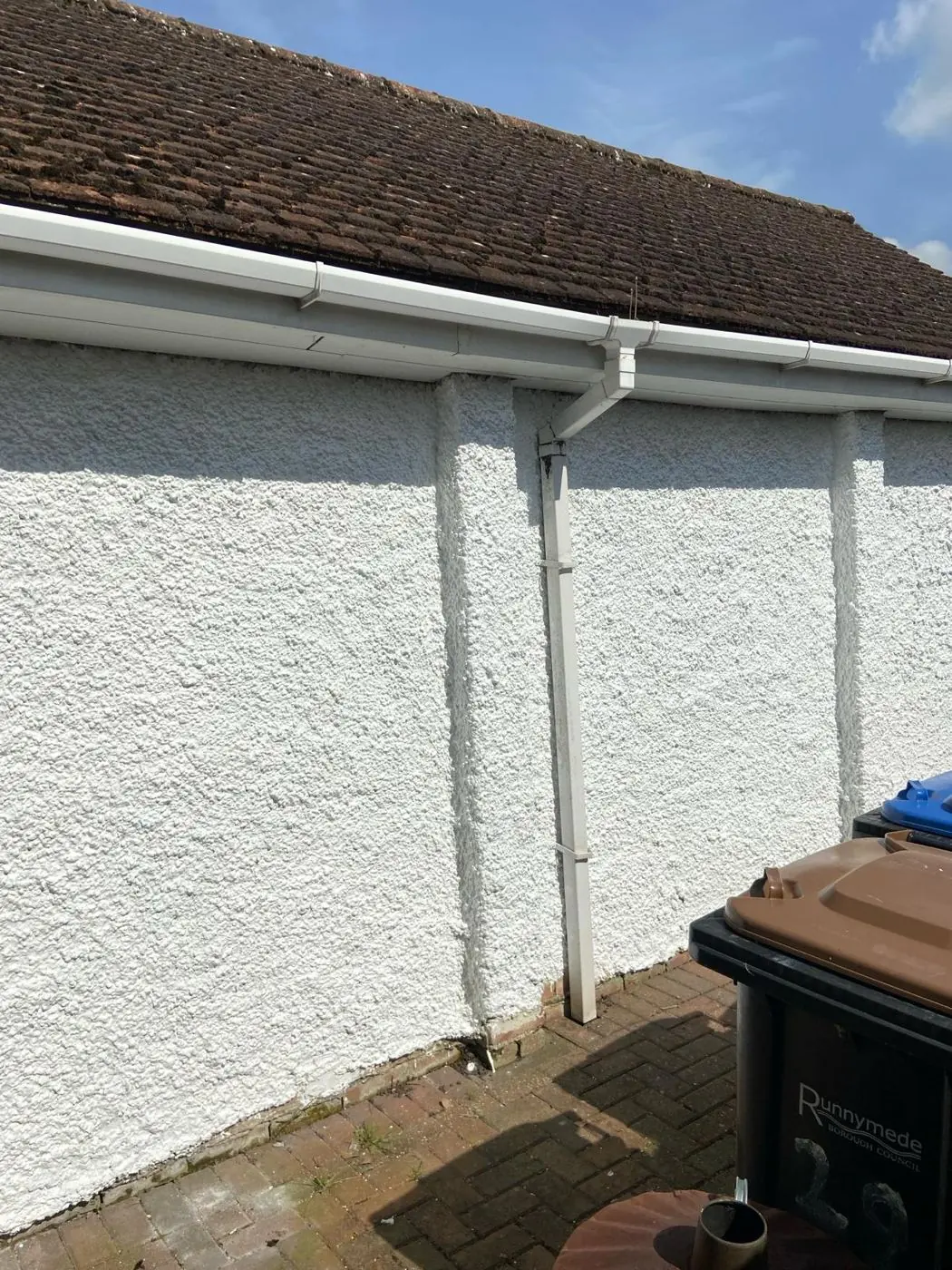
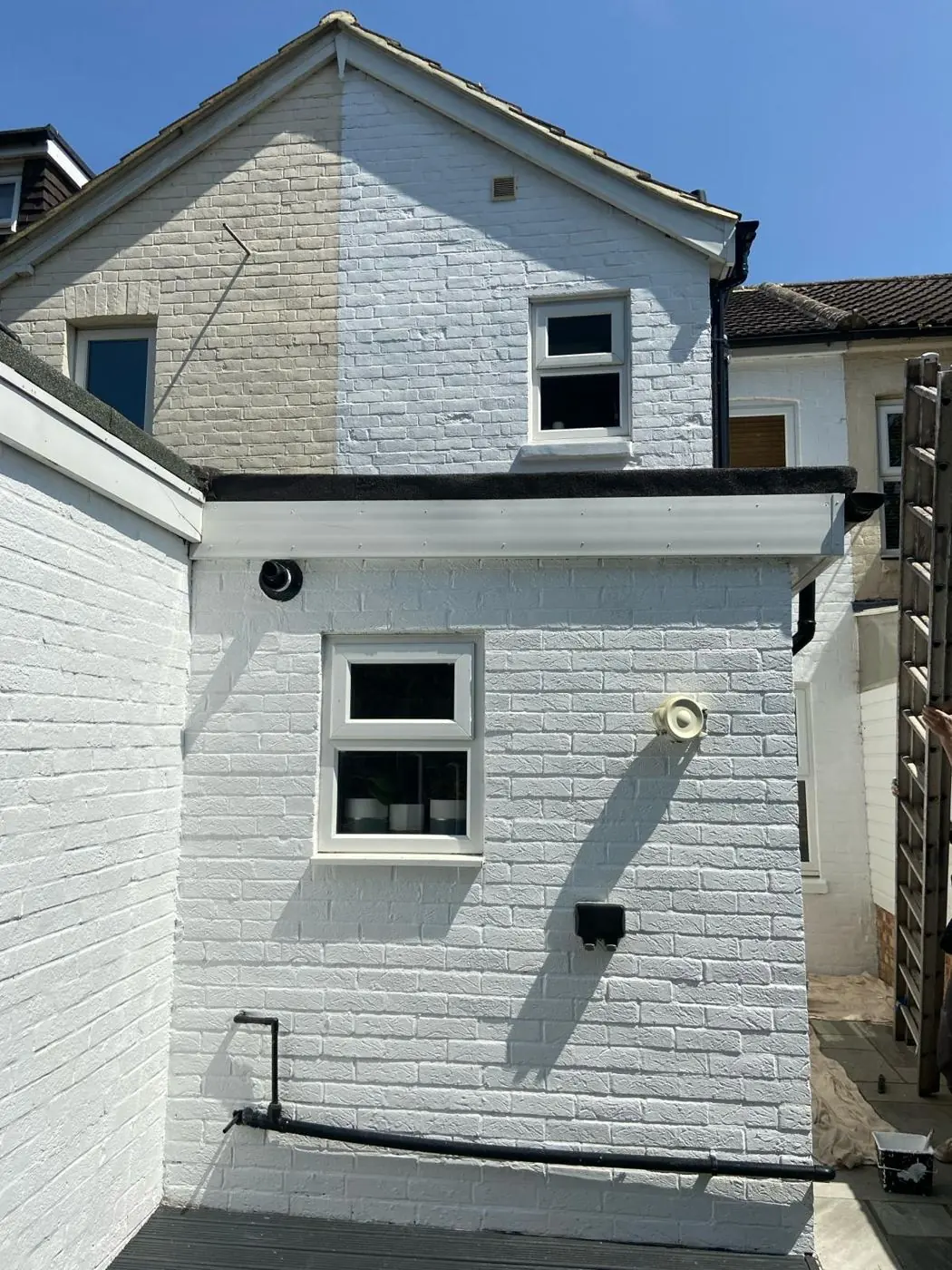
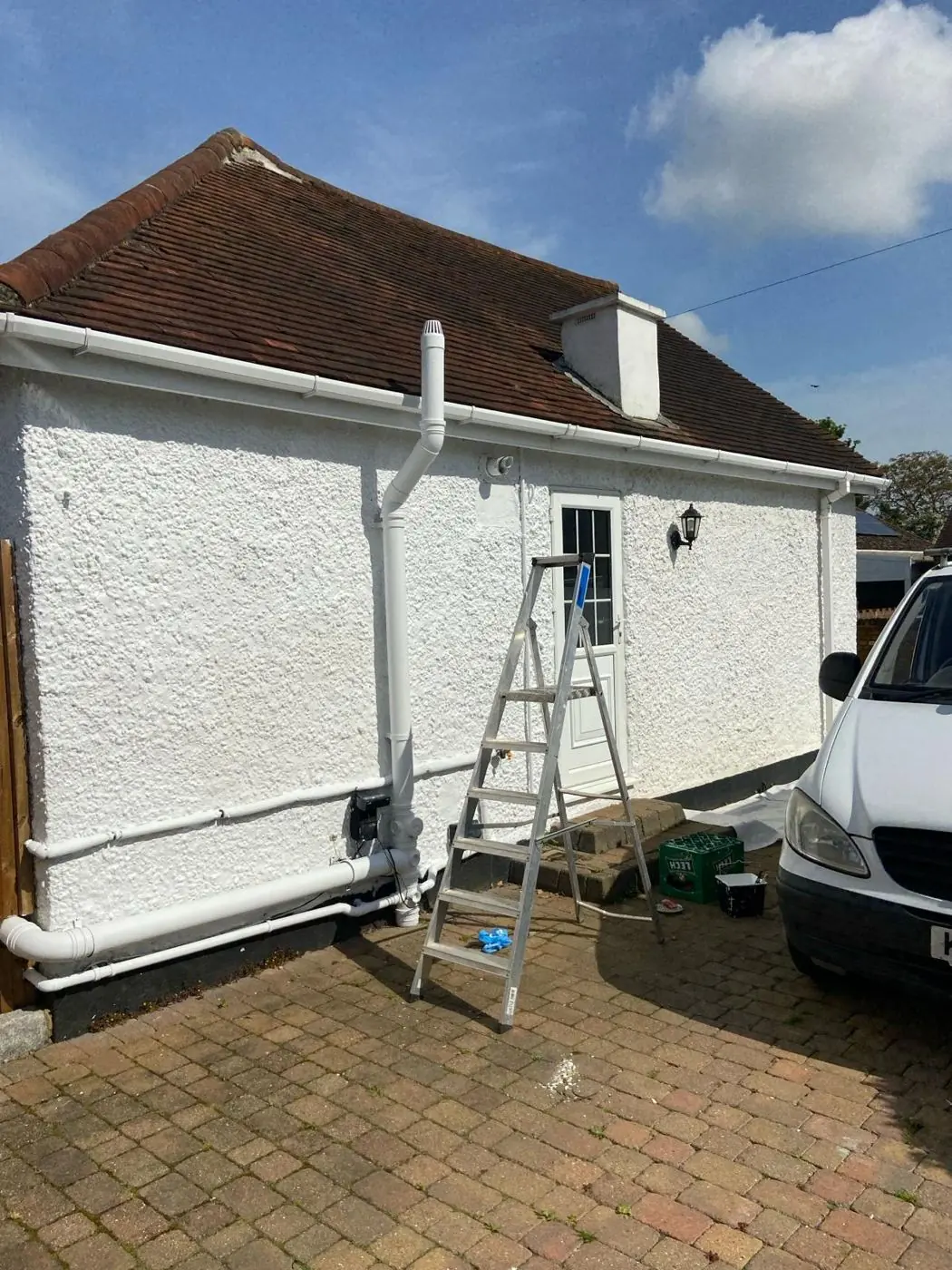
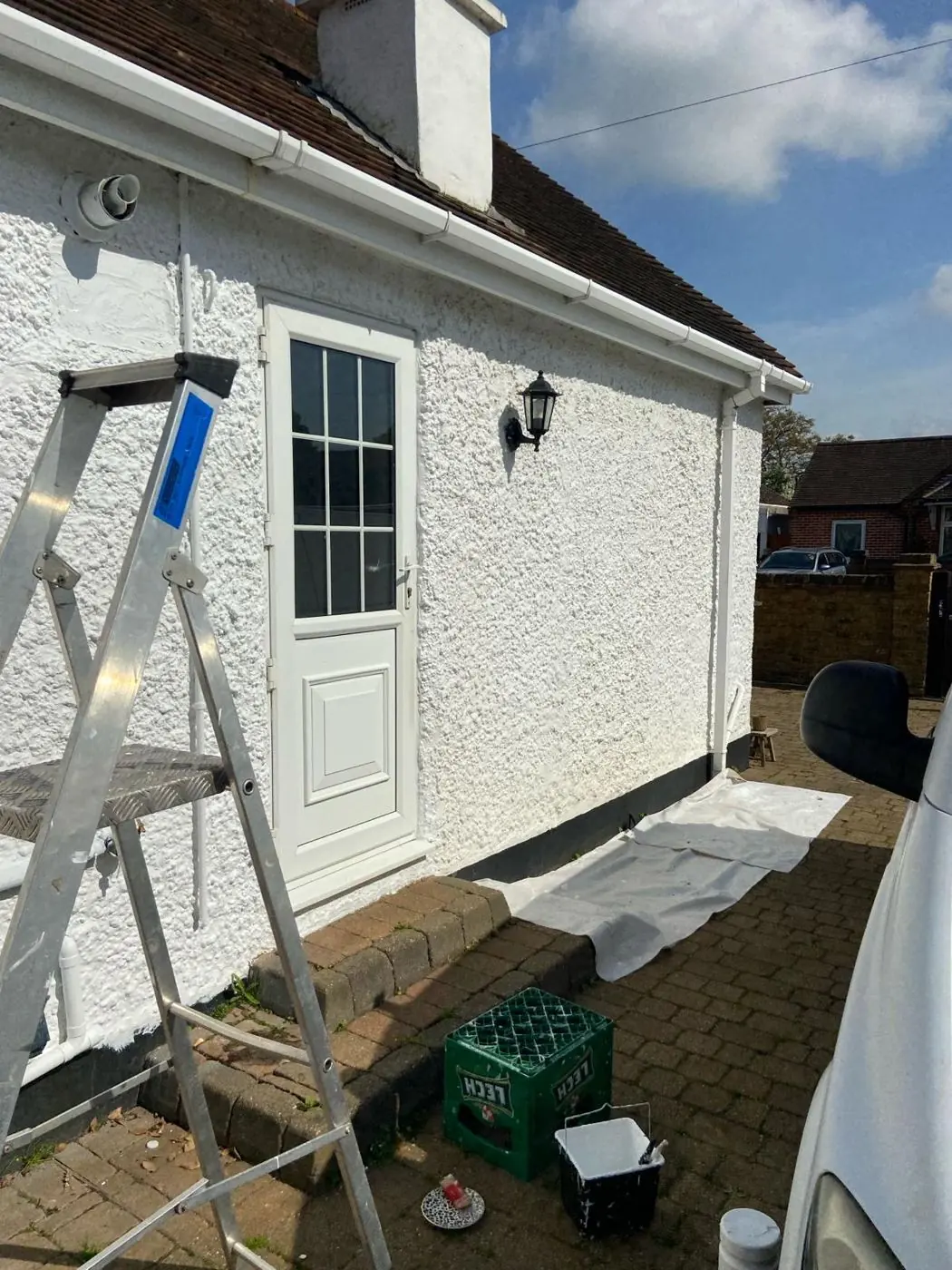
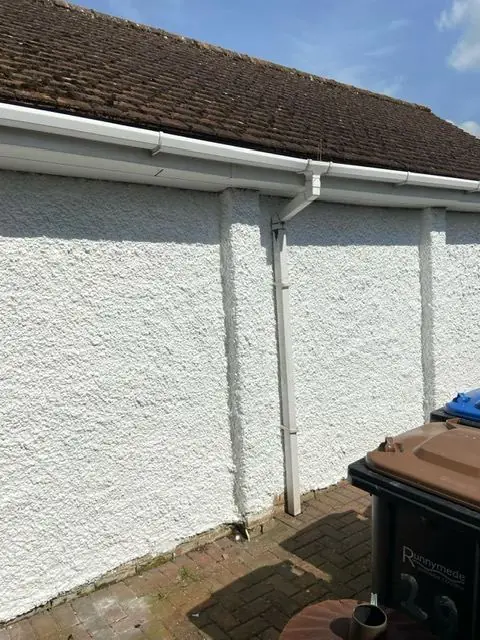
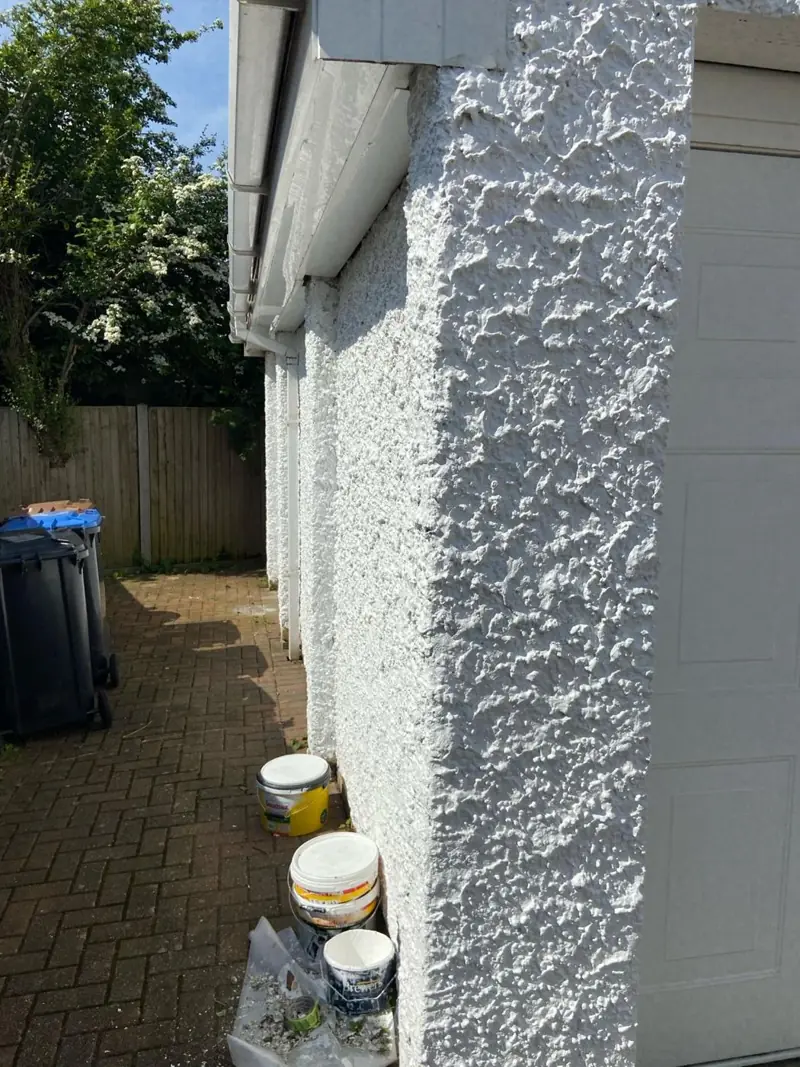
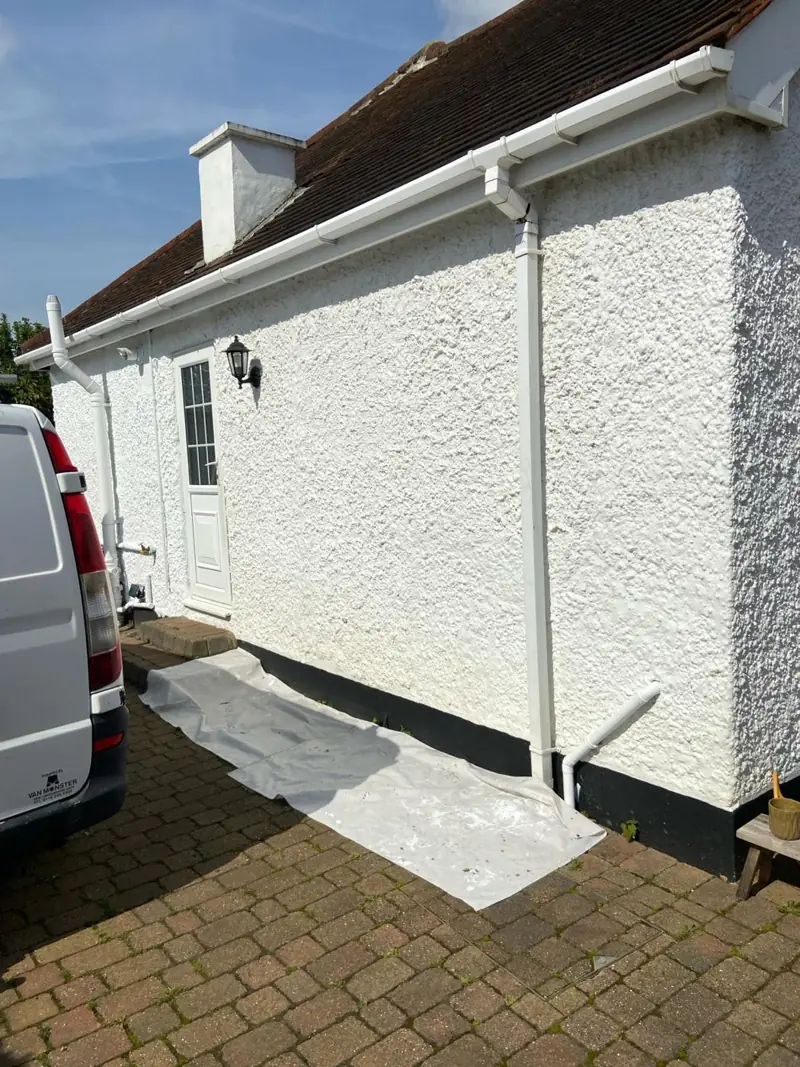
- Rendered fronts and upper floors, including rendered cob, which must stay breathable. Our render and masonry page covers that in more depth.
- Bargeboards and eaves timber on slate-roofed houses, such as the 1856 Gothic Vicarage on Vicarage Lane.
- Sash windows with glazing bars on the larger 18th-century houses, East Haddon Hall being the obvious example, which is specialist heritage joinery work.
Before anything is quoted, Dean walks round the house and separates the surfaces that take paint from the ones that should be protected from it. That list decides the price far more than the size of the house.
Painting on the Northamptonshire Uplands
The parish stands between roughly 90 and 180 metres above sea level, on open ground with the Althorp estate close by. That is noticeably more exposed than a sheltered street in Northampton itself. Wind-driven rain reaches the windward elevations harder, paint dries faster on the surface in a breeze but can stay damp underneath, and frost arrives earlier in autumn.
In practice that changes three things. Exterior work is planned for settled spells, and we read the forecast for the village rather than for the town. Weather-facing elevations are often given priority in the schedule while conditions are good. And owners should expect shorter repaint cycles on the most exposed sides than on the sheltered ones, which is why we sometimes suggest doing one or two elevations rather than the whole house. Our guide on timing exterior painting explains the temperature and humidity limits we work to.
Thatch, low eaves and working from the roadside
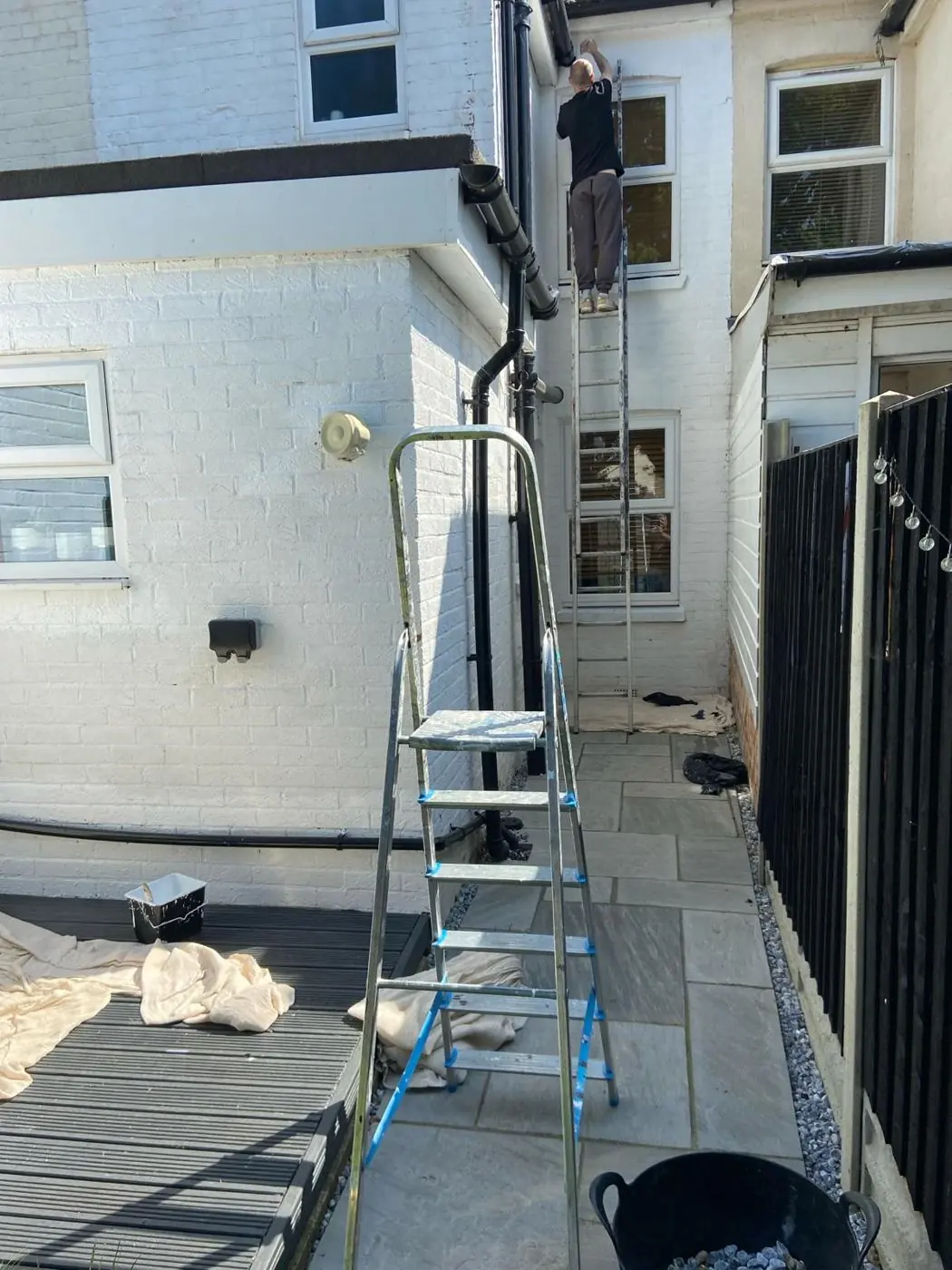
Thatch changes how the upper floor of a cottage is reached. On houses like The Thatched House or Walcott House the roof comes down over the wall line, leaving the first-floor casements with very little clearance above them. Ladders and staging have to be set so nothing presses into or drags against the thatch, and in some cases a small tower is safer than a ladder for reaching those windows.
Along Main Street the listed houses sit right on the street line, with nothing between front wall and road. Any front-elevation job is therefore a roadside job: warning signs out, kit kept to a tight footprint and the way left clear for anyone passing St Mary’s or the Red Lion. Rear elevations and garden sides are usually easier to reach.
Listed buildings and changing an outside colour
East Haddon has around 15 listed structures, from the Grade I Hall and the Grade II* Church of St Mary to Grade II cottages such as The Thatched House, Walcott House and Red Lion Cottage. If your home is listed, a change of exterior colour or finish may need listed building consent from West Northamptonshire Council. Repainting like for like is a different matter from changing a door from white to a dark green, so it is worth checking with the council before choosing a new scheme. We can talk through colours that sit with lias and ironstone, but the consent decision is the council’s.
For more on how we work with older village houses generally, see our exterior painting service, and for everything else we cover in the parish, the East Haddon area page.
Last updated by Dean, DH Painter & Decorator.