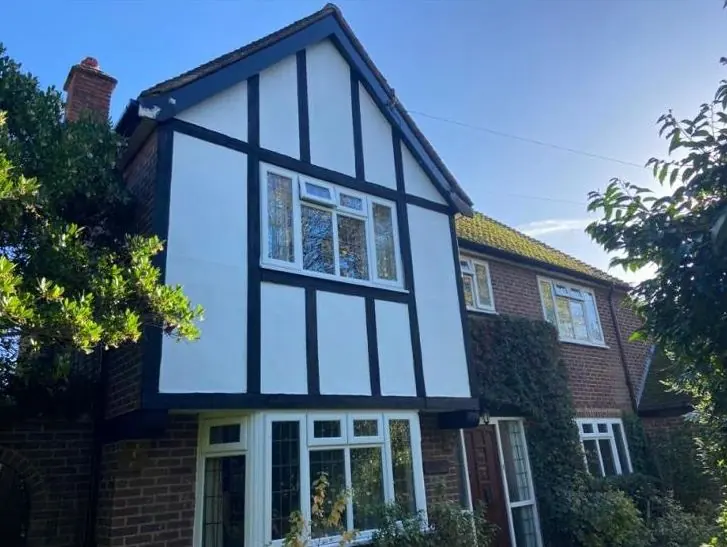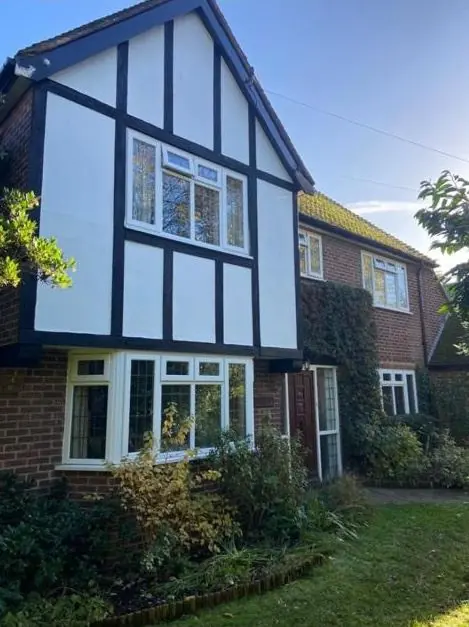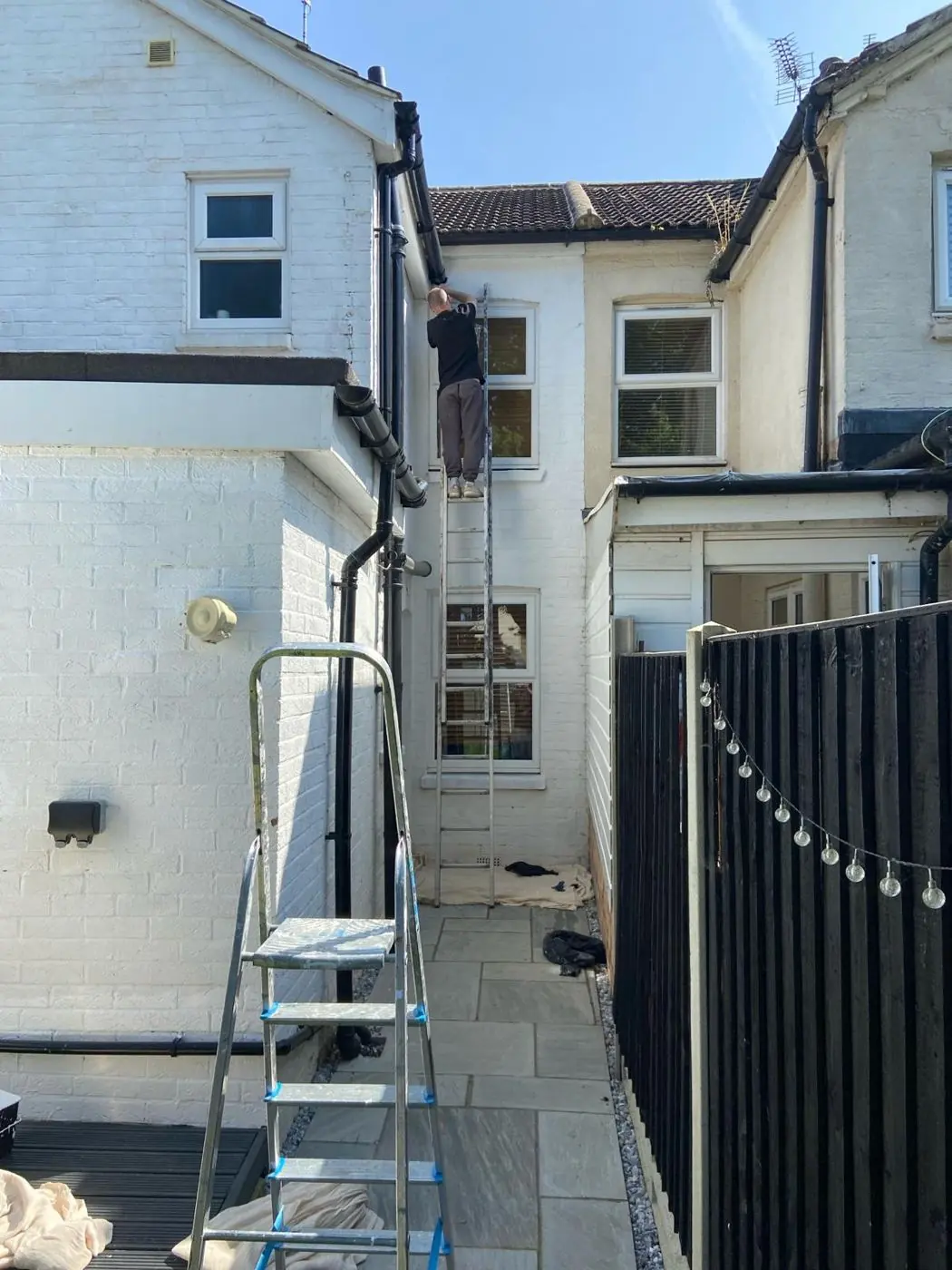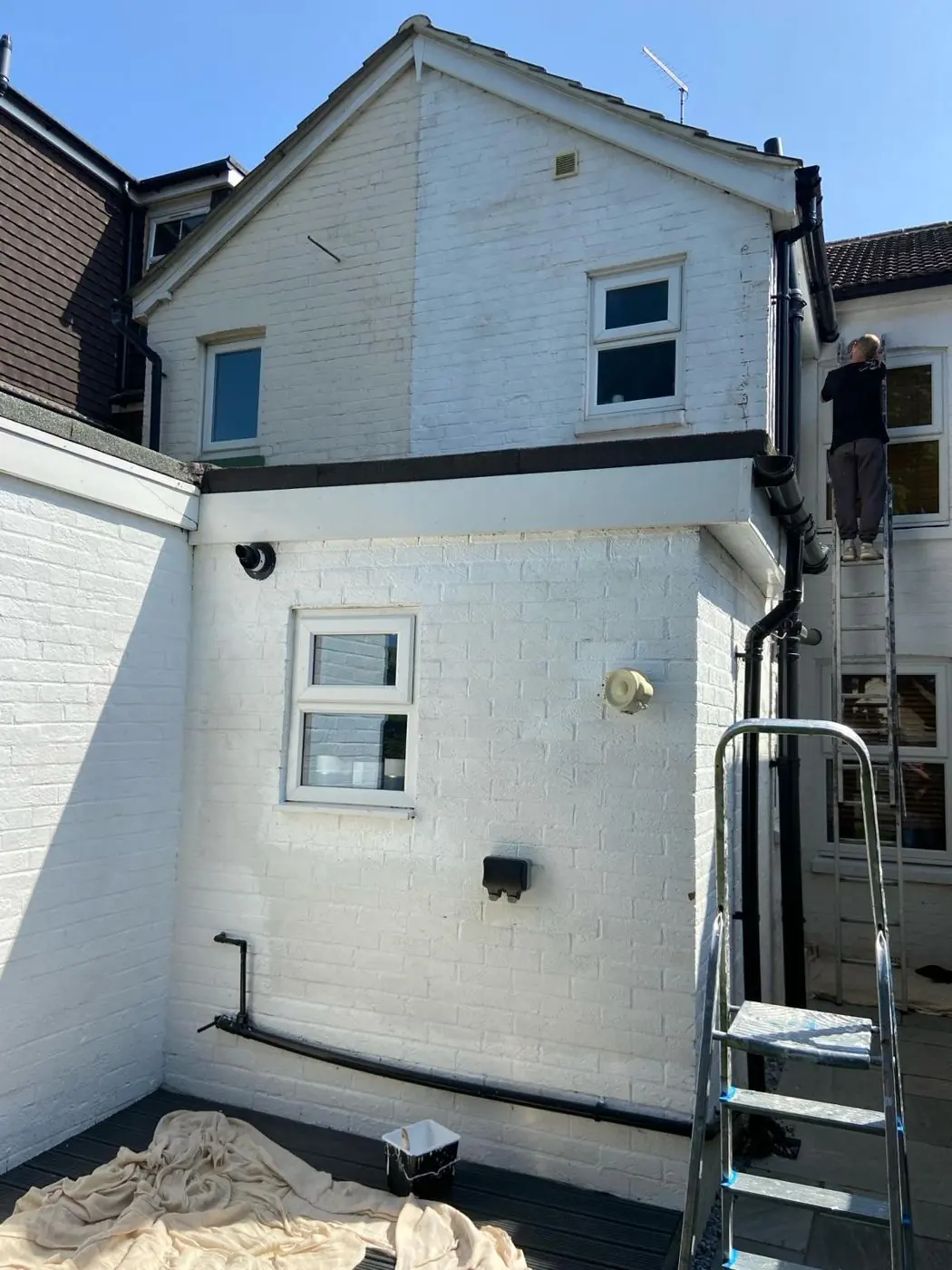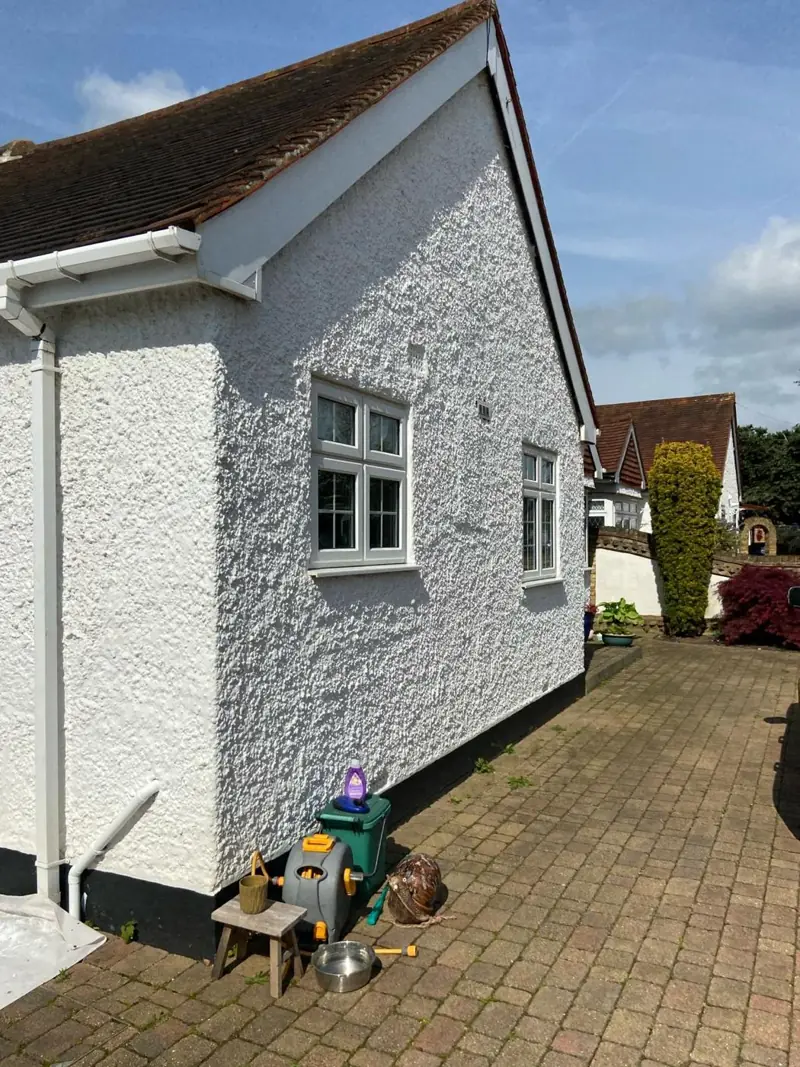
DH Painter & Decorator takes on exterior painting in Guilsborough, the NN6 village about 9.3 miles north-west of Northampton town centre. In the historic core that usually means sashes, casements, doors and eaves on listed lias and brick houses, while later homes at Church Mount take a standard repaint. Dean visits and quotes for free.
Joinery first, walls rarely
On most streets an exterior repaint means walls as well as woodwork. Guilsborough is different. The High Street is lined with listed houses from the 17th to the 19th century built in squared coursed lias, lias ashlar and brick, and that stone and brick was never meant to be painted. The outside work here is mostly the timber and the ironwork set into those walls: sash windows, leaded casements, wood mullions, panelled doors, eaves and the odd railing. That changes how a quote is built. We price by the number of windows and doors and how hard they are to prepare, not by square metres of wall.
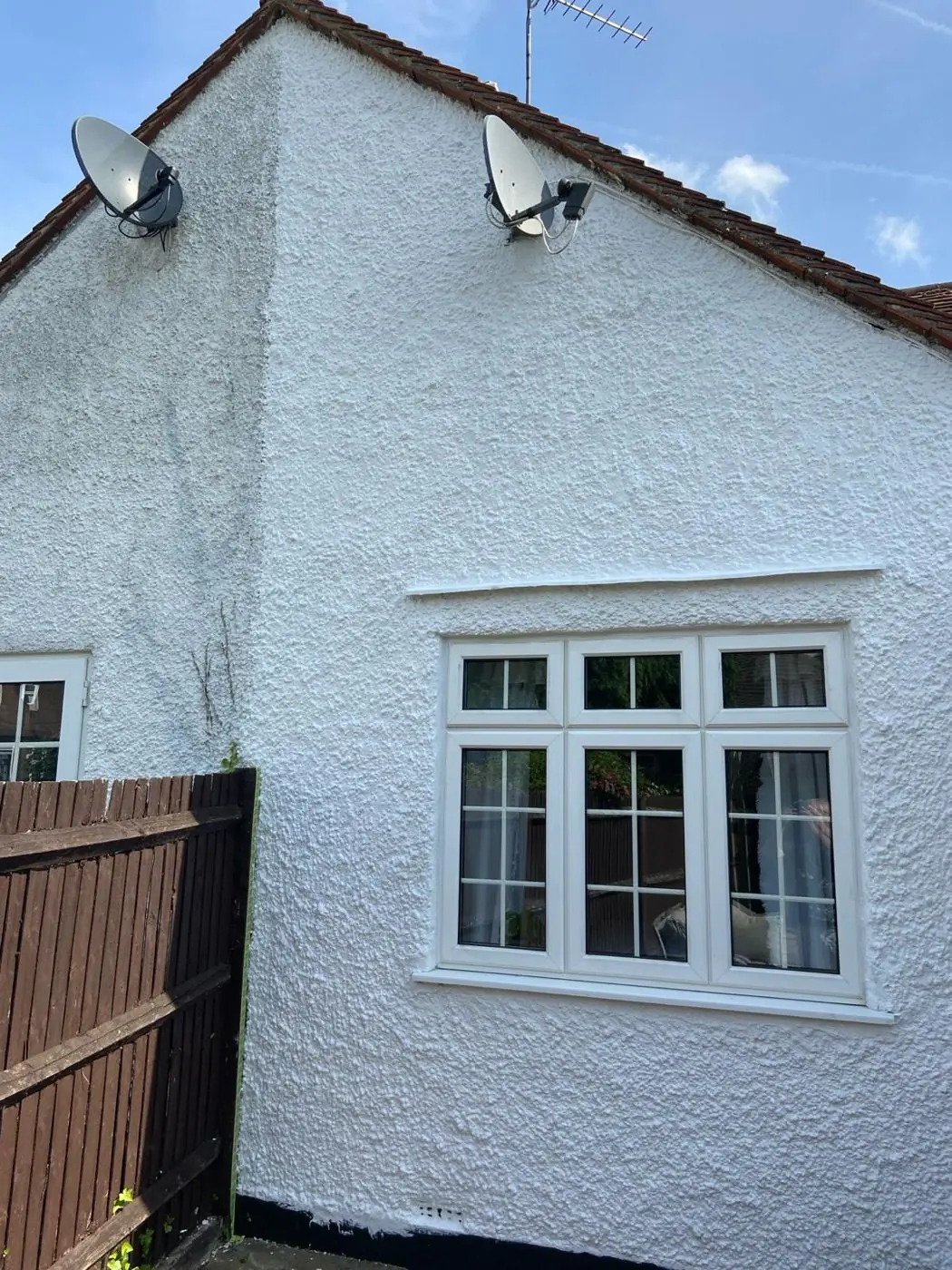
Where a wall has been painted in the past, or a later house has a rendered panel, the masonry side is covered on our render and masonry page instead.
Window by window along the High Street
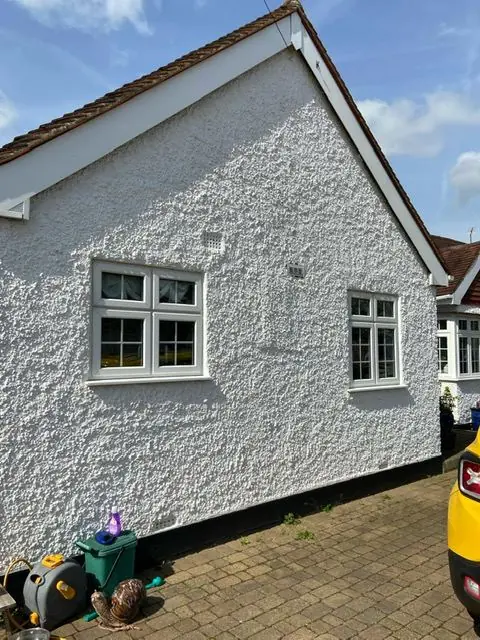
The window types in the village vary a lot, and each one is handled in its own way.
- Sashes with glazing bars, as at Guilsborough House, The Old Manse, The Red House and Nortoft House. Old sash timber is often dense and resinous, but it dries out at the bottom rails and the meeting rails. We rake out failed putty, consolidate soft spots and use a linseed or oil-based system that moves with the wood. Sashes are eased so they are not painted shut.
- Leaded lights with original glass, at The Glebe House, The Sun and Rose Manor. Old glass is thin and uneven, so heat guns stay well away from it. Paint is cut back by hand, the leads are masked, and any scraping is done slowly with a sharp blade.
- Wood-mullion casements and stone-mullion windows, at Rose Manor and at the Old Grammar School. They need a fine bead along the edge where timber meets stone, and a microporous finish so moisture in the frame can still escape.
Listed buildings and shared frontages
Guilsborough has twelve listed buildings, including the Grade II* Church of St Etheldreda on Coton Road. Painting like for like is maintenance, but a change of colour or finish on a listed house may need listed building consent from West Northamptonshire Council, so we suggest checking with them before a new colour goes on. We can tell you what is on the joinery now and what a matching system would be.
The Old Grammar School at Nos. 1-5 High Street needs extra planning. It was founded around 1688, remodelled into five separate homes in the 20th century, and still reads as one listed frontage. If one owner repaints in a slightly different white, the whole elevation looks patched. Where neighbours agree, it makes sense to book the frontage together, or at least to share the exact paint reference so every door and window matches.
Working at the roadside and in a rural setting
Many of the older High Street houses stand right on the road, with no front garden. Ladders and towers have to sit on the pavement edge, so we plan the work around passing traffic, use barriers and signs, and keep the job short on each elevation. Parking for a van can be tight in the old core, and we sort that out at the survey rather than on the first morning.
The village sits on the edge of open farmland, reached by country roads such as West Haddon Road, Cold Ashby Road and Coton Road. Elevations facing the fields catch more wind-driven rain than those in the middle of the village, and pale joinery near the farmland picks up dust in dry, windy spells. We wash down before we sand, and we check the forecast closely, because a gloss coat on an exposed sash needs a clear day either side. Our guide on which months suit outside painting explains why spring to early autumn suits this work.
Church Mount and later houses
Church Mount stands where Guilsborough Hall once was, and it is later housing than the historic core. Without the listed constraints, a modern exterior system of primer, undercoat and gloss or a microporous satin is usually right for its doors, frames and eaves. The full process for that kind of house is on our main exterior painting page, and the Guilsborough area page covers everything else we take on in the village.
Last updated by Dean, DH Painter & Decorator.