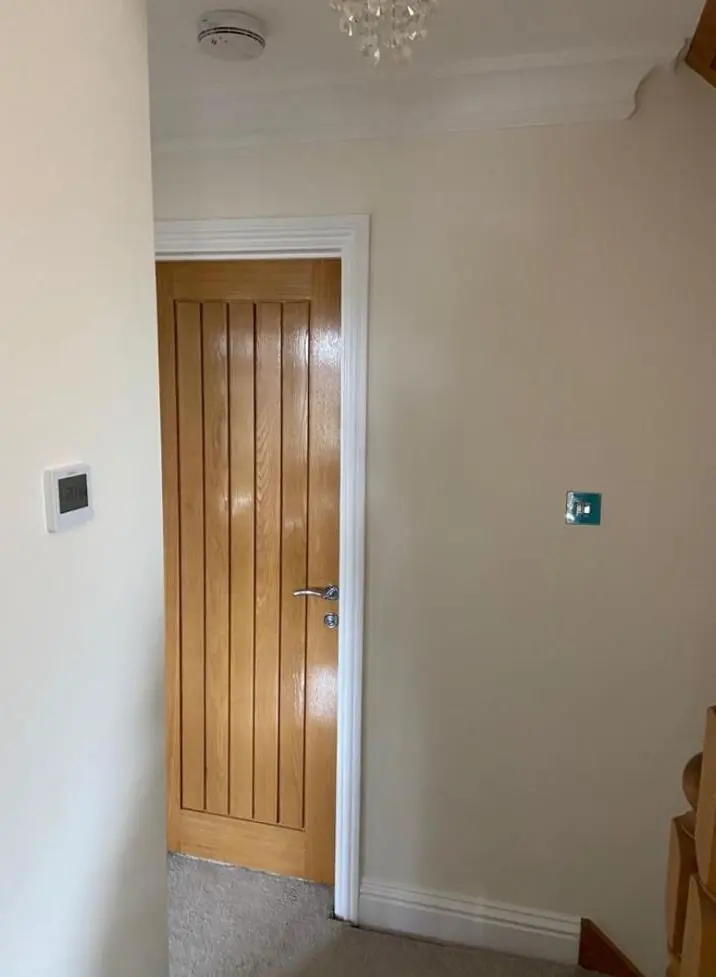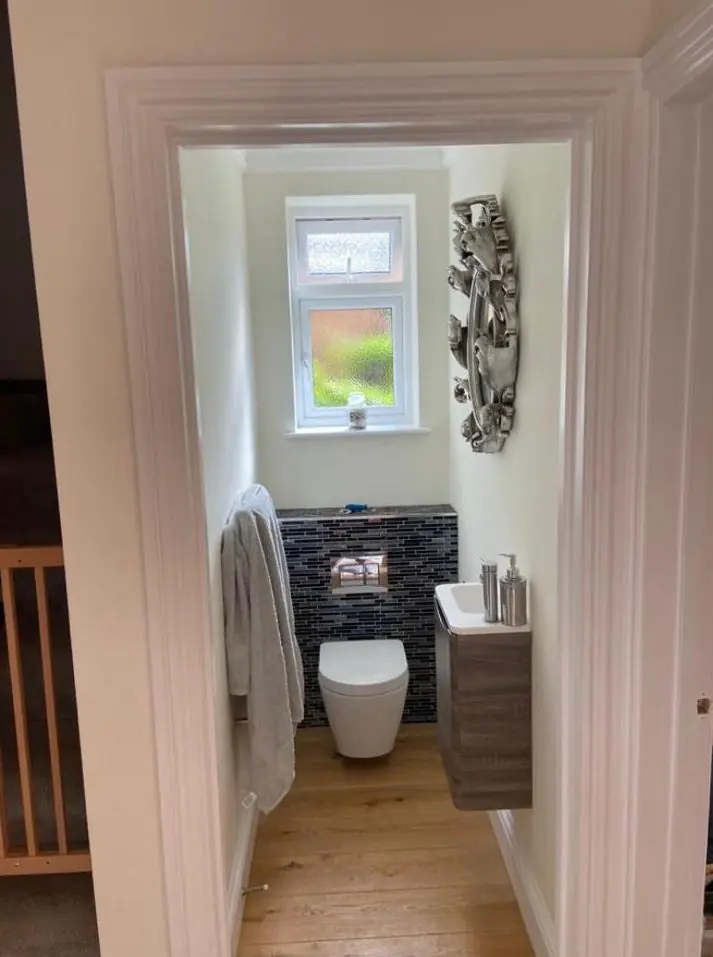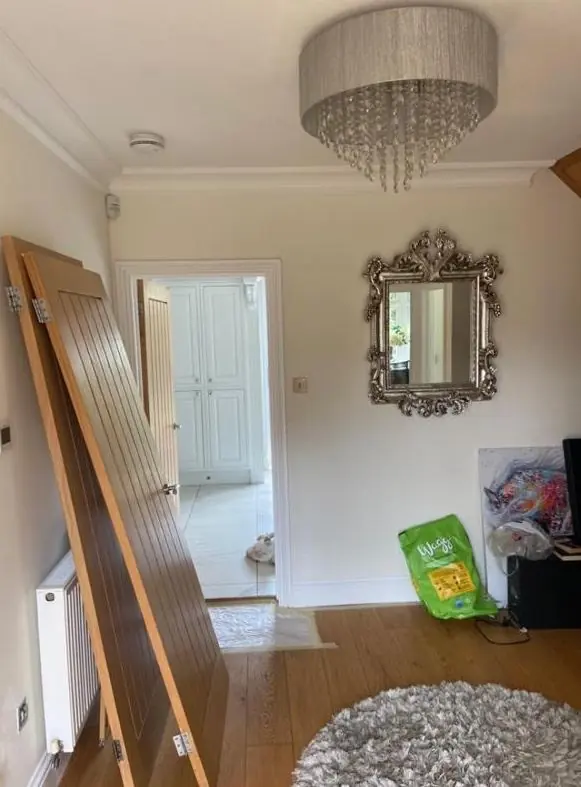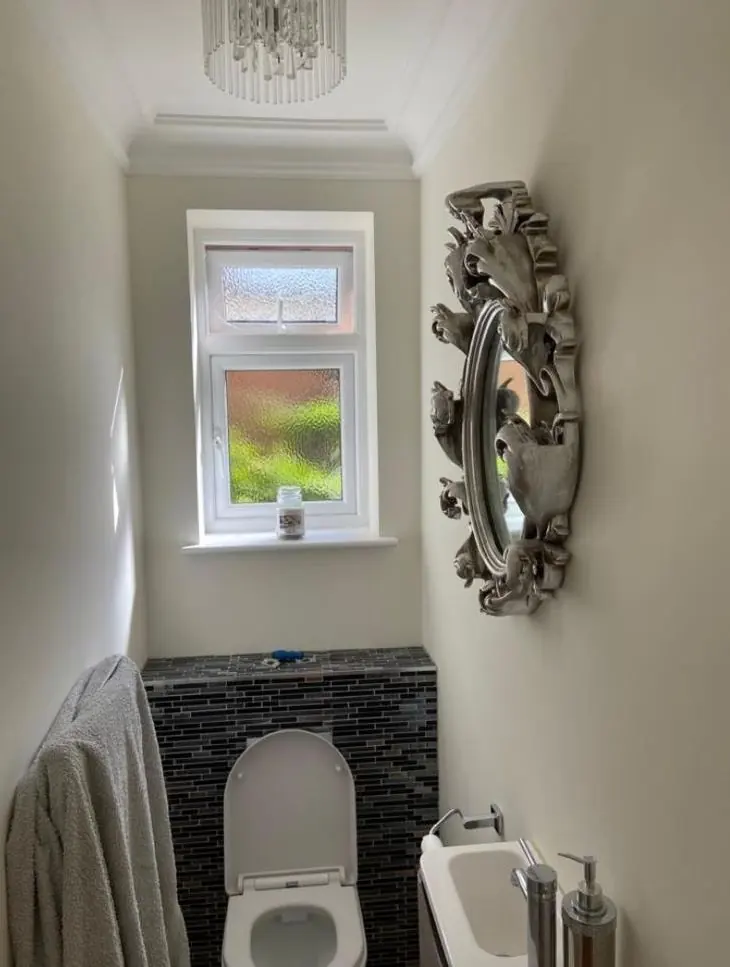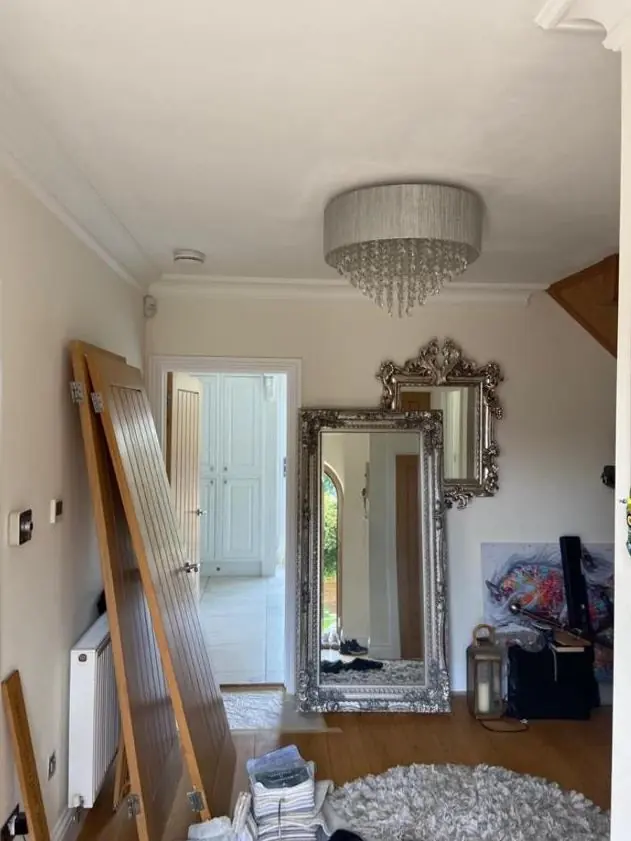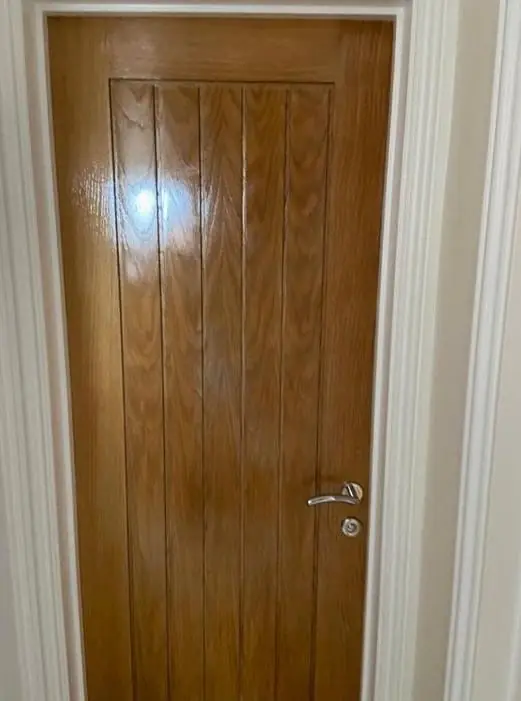
Dean paints doors, frames, skirtings, architraves and window joinery in Hackleton, a village on the B526 about 4.7 miles south-east of Northampton town centre. Work runs from careful repainting of traditional six-panel doors on Main Road's limestone houses to refreshing internal woodwork in the estate homes built behind it.
Six-panel doors with pediments and hoods
The front doors on Hackleton’s oldest houses are a big part of how the village looks from the road. The listing descriptions note a six-panel door in a pedimented wood surround at 76 Main Road, dated 1763, and a six-panel door under a gabled hood on brackets at the White Hart. Hackleton House, dated 1754, has a six-panel part-glazed door with an overlight. Doors and surrounds like these have mouldings, panel beads and projecting cornices where old paint builds up and water collects.
On this kind of joinery most of the time goes on hand preparation. We rake out failed paint from the panel edges, cut back any soft timber on the bottom rail and the top of a hood, prime bare end grain, and keep enough definition in the mouldings that the door doesn’t end up looking blunt under layers of new paint. The finish is a traditional satin or gloss in oil or a waterborne equivalent, depending on what is already on the door and how exposed it is. Seven Grade II buildings stand on Main Road, and repainting them for maintenance should match what is there. If you are thinking of a different colour on a listed door, speak to West Northamptonshire Council before we start, because listed building consent can apply.
Casements under wood lintels, and the 12-pane sashes
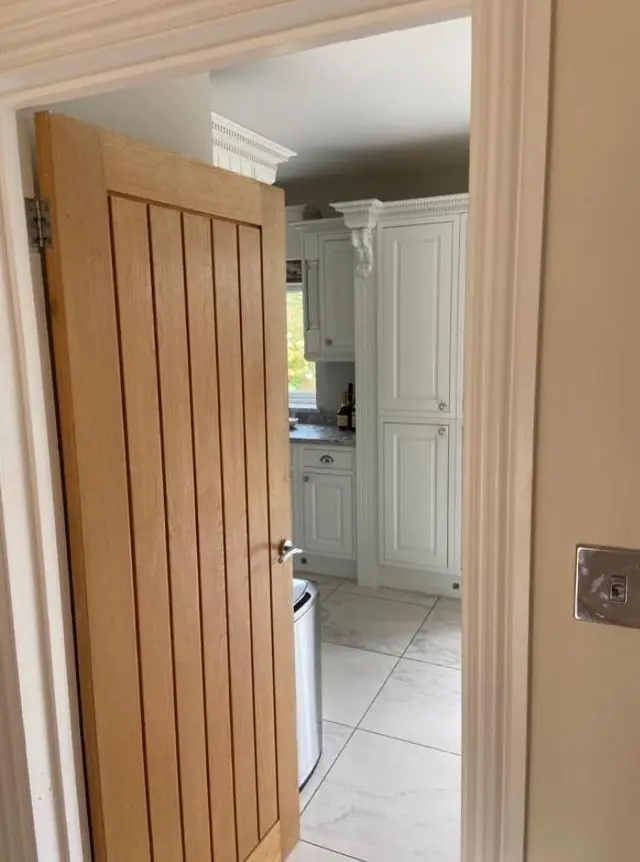
Most exterior woodwork in the old core is window joinery: timber casements set under wood lintels in the limestone, and the 12-pane sashes at Hackleton House. Before any paint goes on, we probe sills and lintels for rot, because a lintel that has been painted over for decades can hide soft timber. Where the joinery sits in ironstone heads and sills, as at Yew Tree Cottage, we mask the stone and cut in by hand so none of it gets painted. Paint on the stone around a window would spoil the look of the cottage and holds moisture against the joint.
Many of these cottages stand on the back edge of the footway beside the B526, so a front door or ground-floor window is worked on from the pavement. We keep a tight, clearly marked work area, watch for pedimented surrounds and hoods sticking out over walkers’ heads, and time drying coats so the door can still close safely. On the south side, where some cottages sit below the road, the lower rails and sills take spray and run-off from passing traffic and are washed down properly first.
Inside the old cottages
Inside the 17th and 18th-century limestone cottages, the woodwork rarely runs straight. Skirtings follow walls that bow and floors that slope, and the gap between board and wall changes along the run. We fill those gaps with a flexible caulk rather than trying to force a hard line, and we cut the wall colour to the board by eye. The Jetty Cottages, thought to date from around 1720, also bring old timbers into the picture. Older layers of paint on cottage woodwork may contain lead, so we test before sanding and use wet abrading where it is present.
Estate homes: skirting, architrave and door refreshes
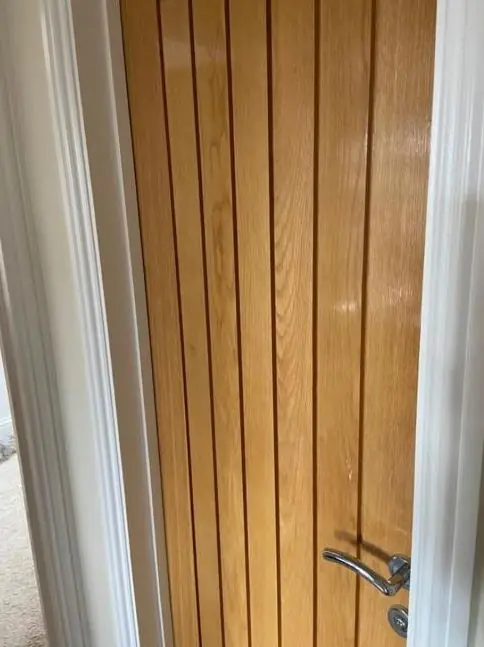
In the semis, detached houses and bungalows built between 1939 and 2000 on the cul-de-sacs north of the main road, the work is usually simpler and more about wear. Yellowed gloss on skirtings, chipped door edges, and architraves knocked by vacuum cleaners and pushchairs. Switching from old solvent gloss to a waterborne satin that stays white is worth considering in these houses. That needs a proper key and an adhesion primer over the old gloss, or the new coat can peel. Bungalows have a lot of doors off one hallway, so doing every door and frame in one visit keeps the finish consistent.
Our main door and skirting painting page covers the full preparation process. For more about the village, see our Hackleton area page. For guidance on budgets, read the painter and decorator cost guide.
Last updated by Dean, DH Painter & Decorator.