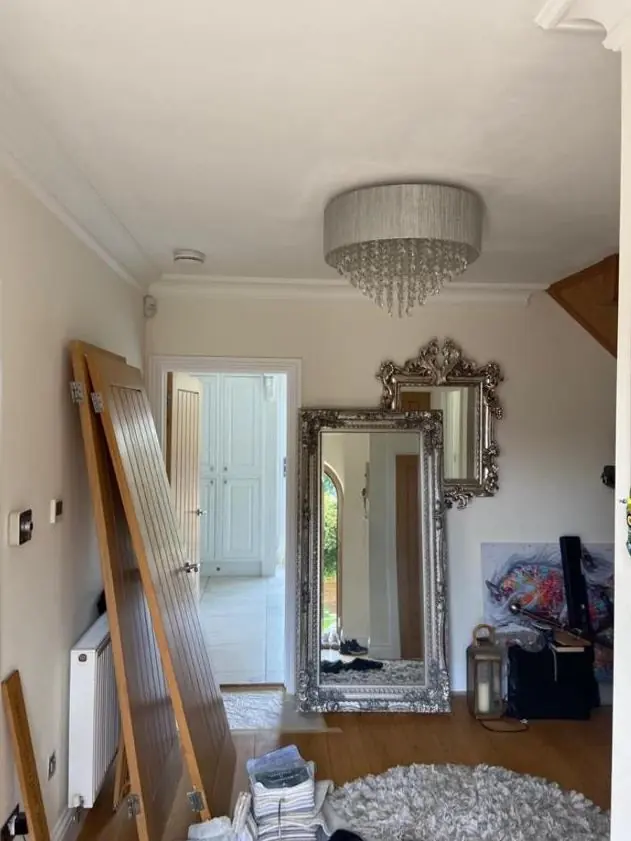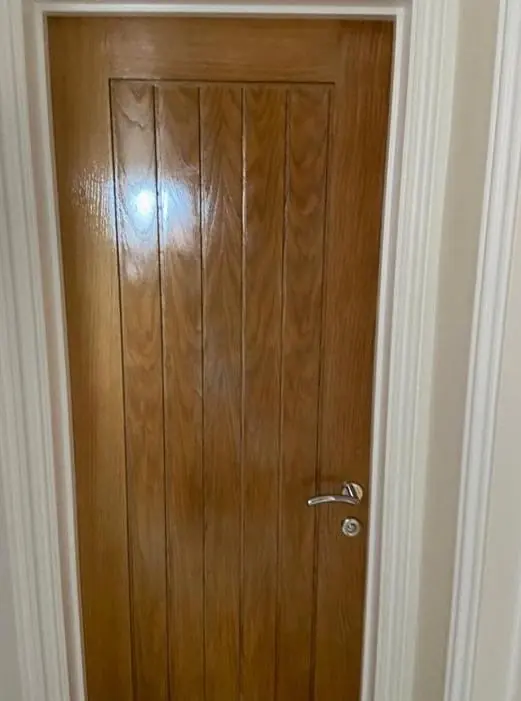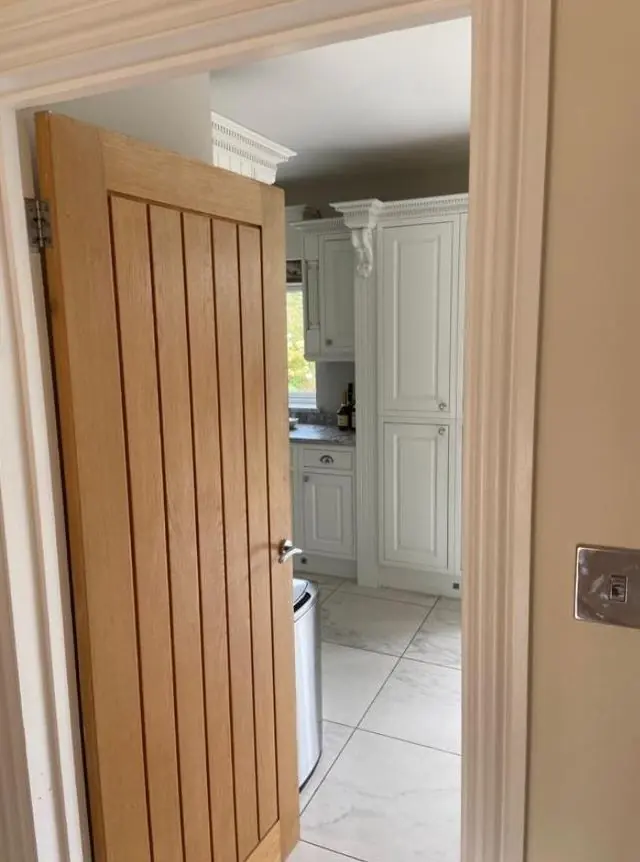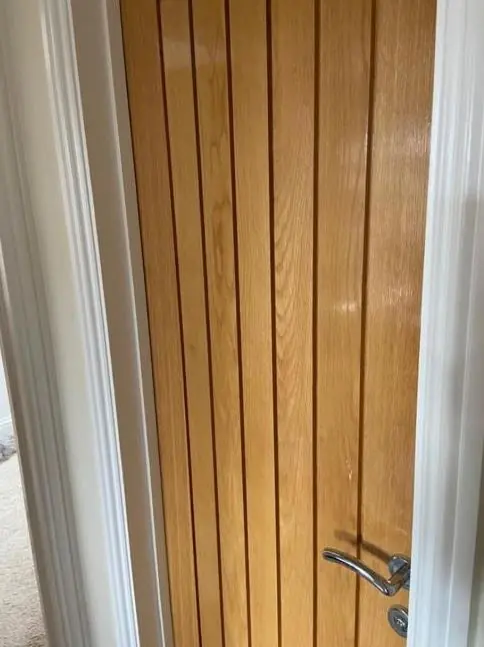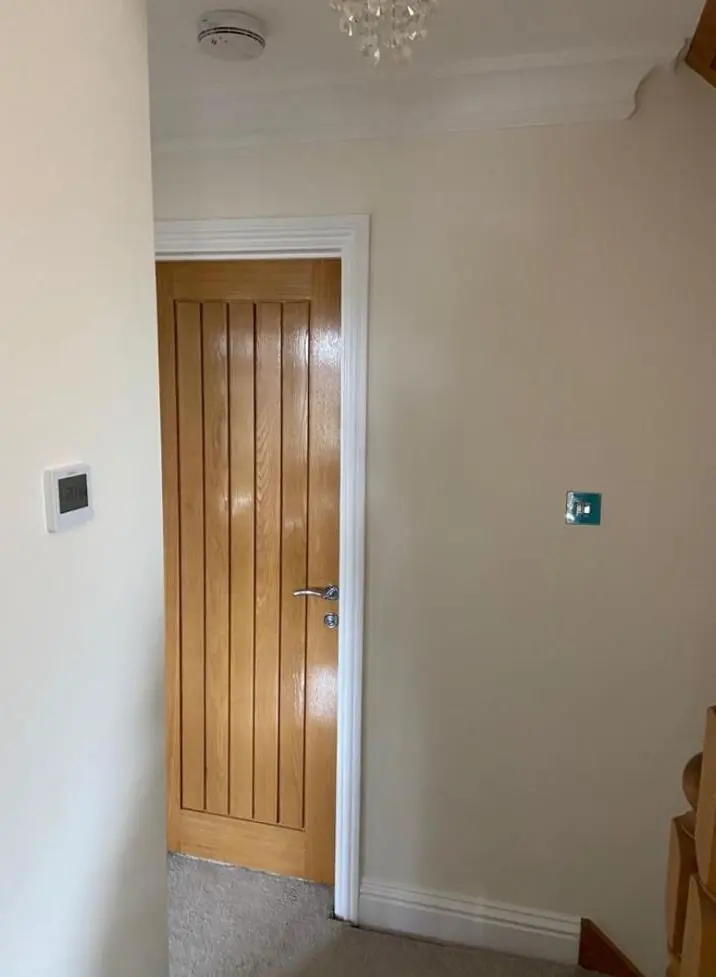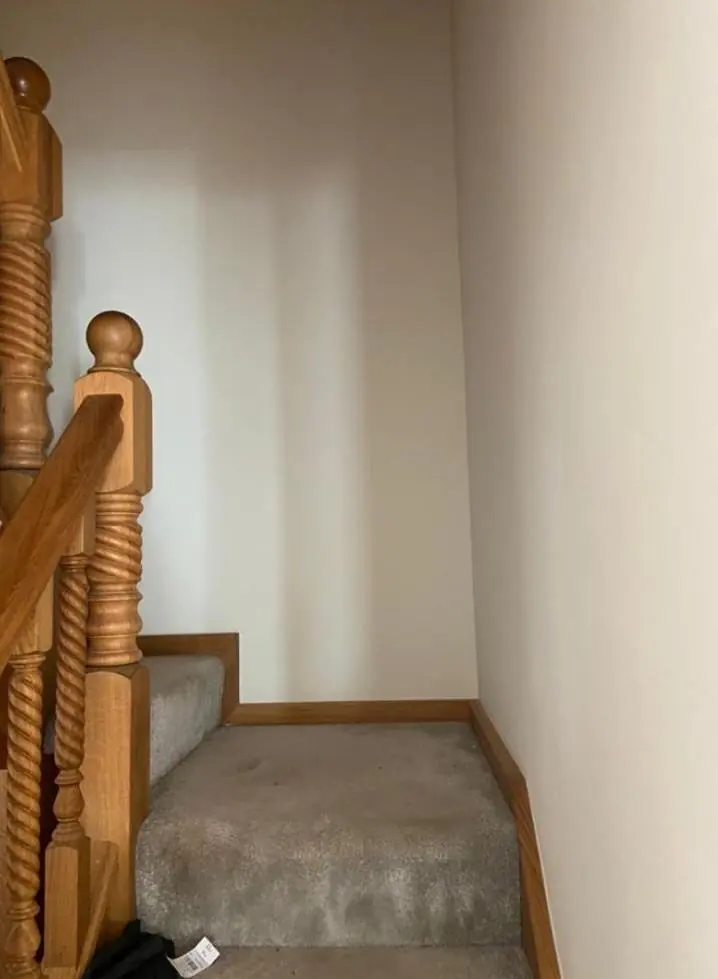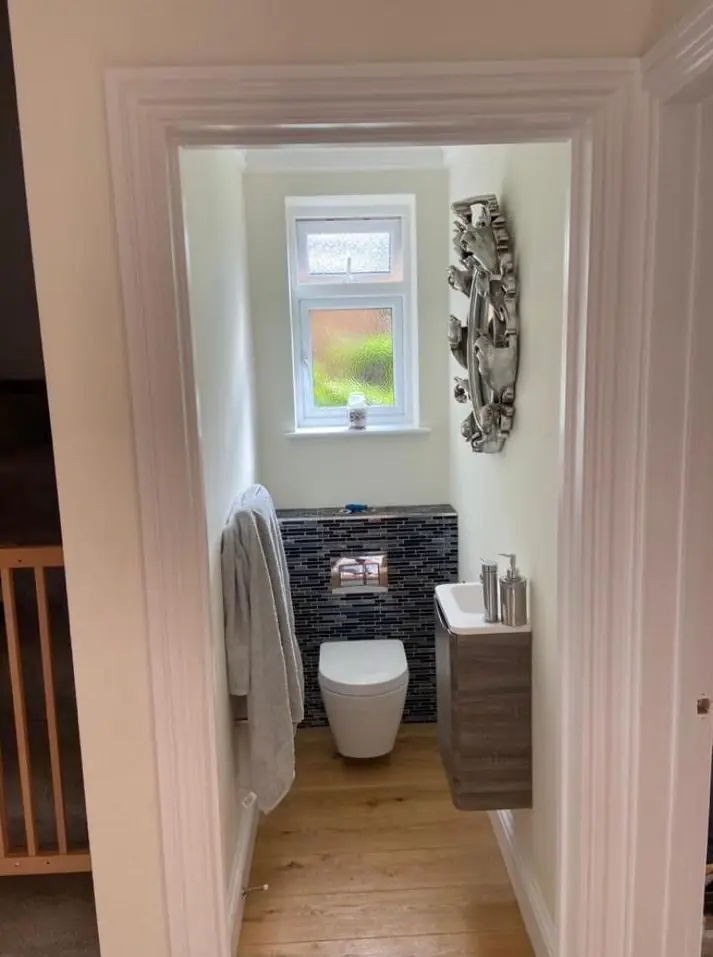
Dean paints doors, frames, skirtings, casements and other joinery in Yardley Hastings, driving 7.3 miles east from our Northampton base along the A428. In the old limestone cottages that usually means returning stained timber to paint, and in the newer homes it is a straightforward repaint.
Plank doors, white casements and the stain question
Walk down High Street and the joinery follows a clear pattern: small timber casement windows, mostly painted white, set into coursed limestone rubble, with plank and panelled doors at the road edge. The 2015 conservation area appraisal is direct about what spoils that pattern. It calls dark brown stained windows and doors inappropriate on traditional properties and asks for them to be painted in traditional colours instead. On a High Street or Little Street cottage, the most useful woodwork job is often that one change: taking a stained door and frame back to a painted finish that sits with the pale stone and red Castle Ashby tiles.
Plank and panelled doors move with the seasons, so we use either a traditional oil-based gloss or a flexible microporous system. Both cope with the movement better than a hard, brittle coat, and both let us match the white casements next to them.
Getting from stain to paint without trouble
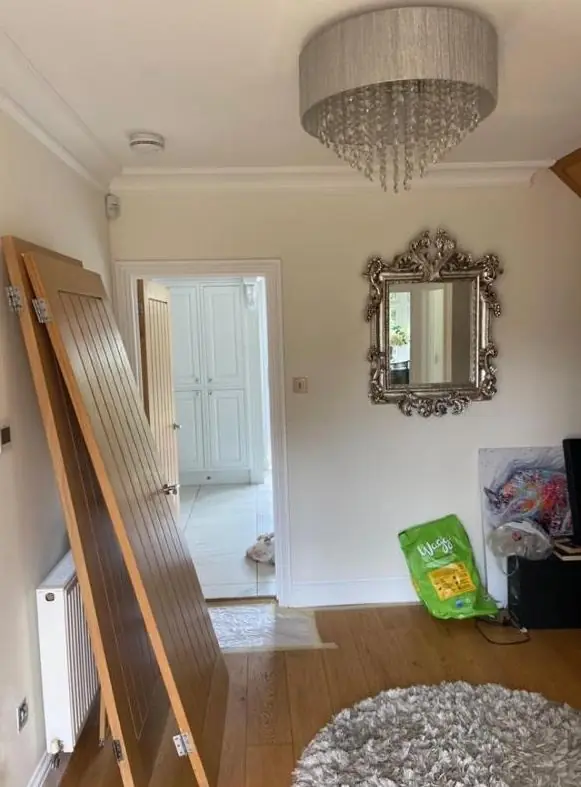
Paint does not hold well on a thick, glossy woodstain. We scrape off anything flaking, abrade the rest to a key, and test for adhesion before priming. Knots that have bled through old stain get sealed with knotting solution. Bare patches and end grain on door bottoms and casement sills get primed separately, as they take on the most water.
One thing we never use here is a blowlamp or hot-air gun near the eaves. Two or so thatched roofs survive in the village, and its own history is a warning: the blaze of 1813 swept through every thatched building near where it started. Where old coatings need to come off, we use chemical strippers or steam and take longer over it.
Low doors and old skirtings indoors
Inside a 17th or 18th-century cottage, the woodwork is rarely square. Ledged doors, deep window reveals and skirtings run along walls of solid limestone finished in lime plaster. The walls need breathable emulsion, but the joinery can take a harder finish, so we cut the two in carefully and avoid sealing the plaster at the skirting line with anything that traps moisture. Where years of gloss have built up on mouldings and lost the detail, we may suggest stripping a door or a run of skirting rather than adding another coat.
Some cottages have been extended into the attic, with gable windows or roof lights, and those rooms often have short doors and boxed-in timber under the slope. We include all of that in a written quote so nothing is left half done.
Listed fabric and estate-owned cottages
The village has 23 listed entries, from the Grade I Court Parlour down to individual Grade II cottages. On a listed door or window, a new colour or a switch to a different type of paint can count as an alteration needing consent, so please clear it with West Northamptonshire Council before we go further than repainting what is there. About a third of buildings belong to the Castle Ashby estate, and for those cottages the exterior colours and paint specification will probably come from the estate. Tell us if your home is estate-owned and we will work to what they ask for.
Easier joinery on the post-war streets
Newer homes in the village, from the 1935 council-built Leys to the dark-brick Highfield Way houses and the 1962 bungalows, have more standard internal doors, frames and skirtings, and external doors with easier access. A whole-house woodwork repaint there is often done in a few days, and we can use a low-odour waterborne satin if you would rather avoid the smell of oil-based paint. For our general approach to preparation and paint choice, see the main door and skirting painting page, and for everything else we do in the village, our painter and decorator page for Yardley Hastings.
Last updated by Dean, DH Painter & Decorator.