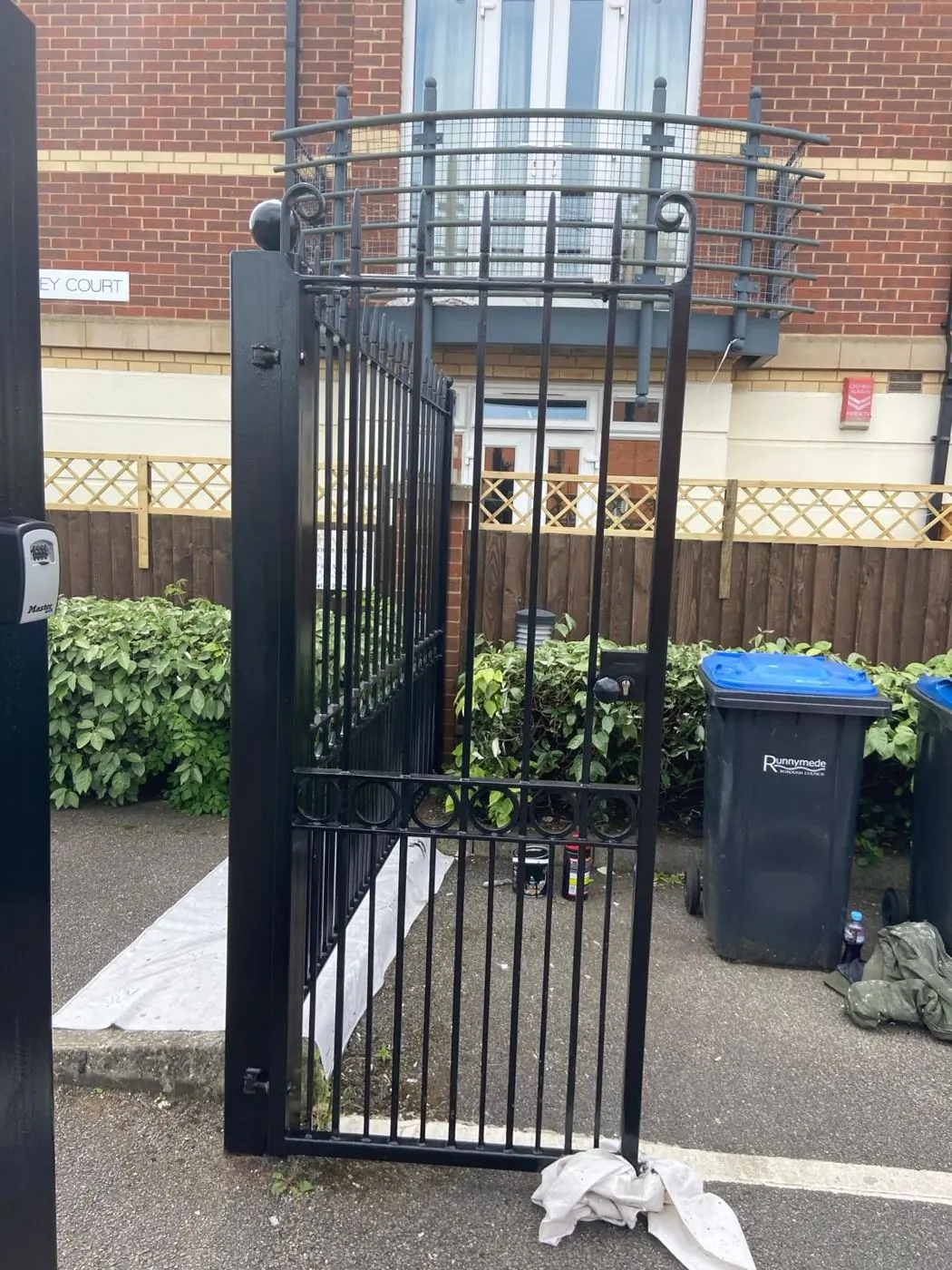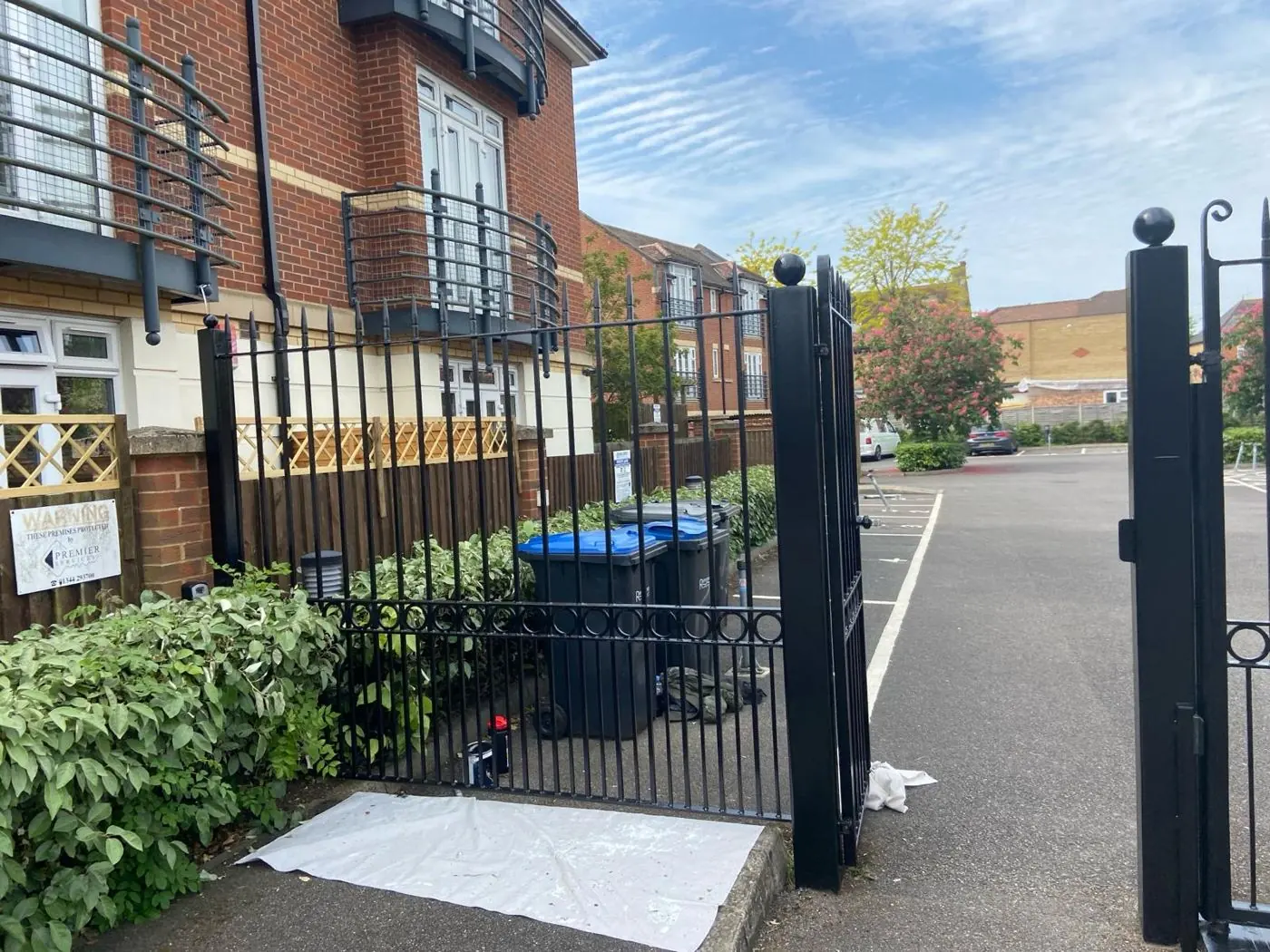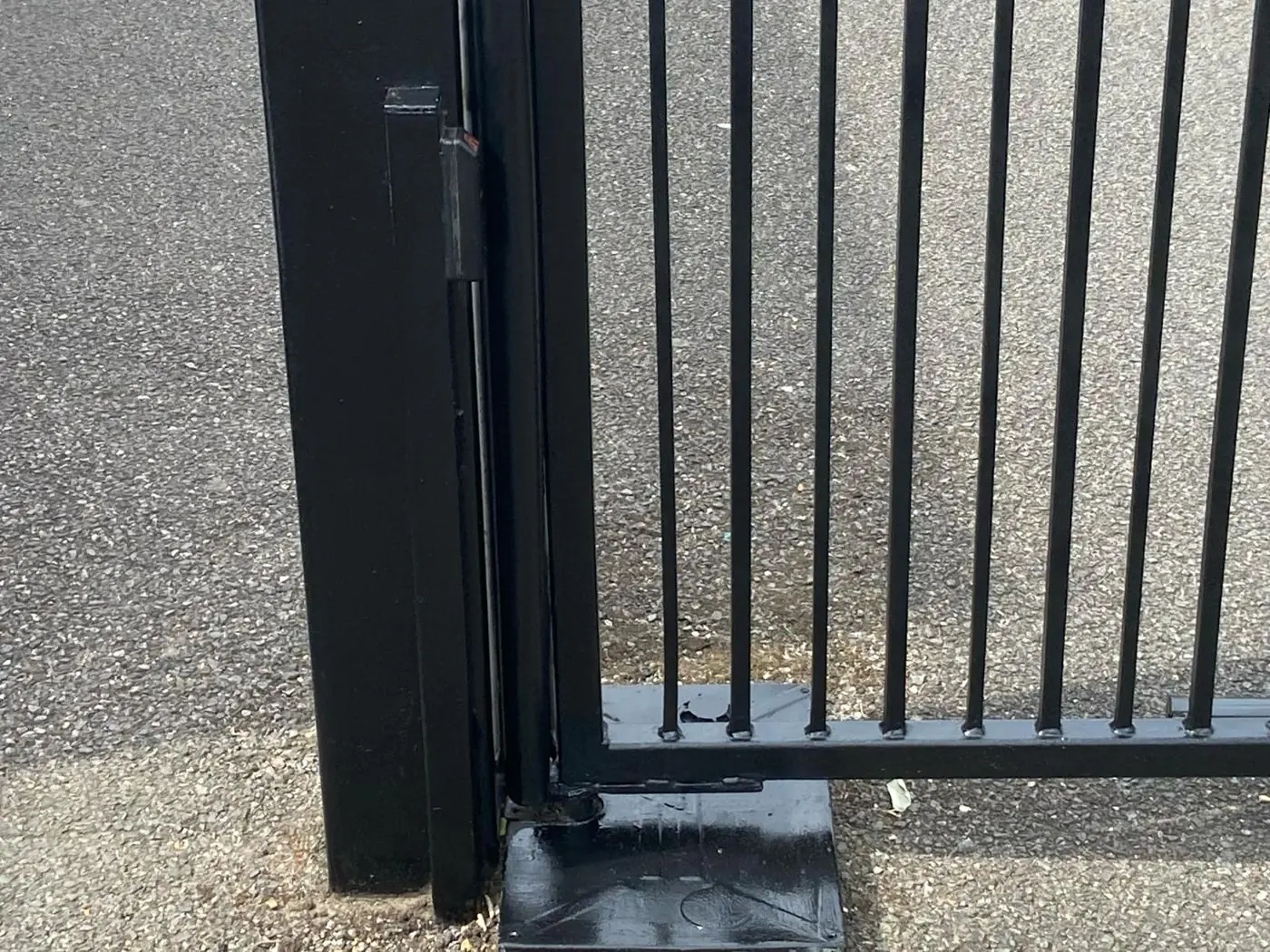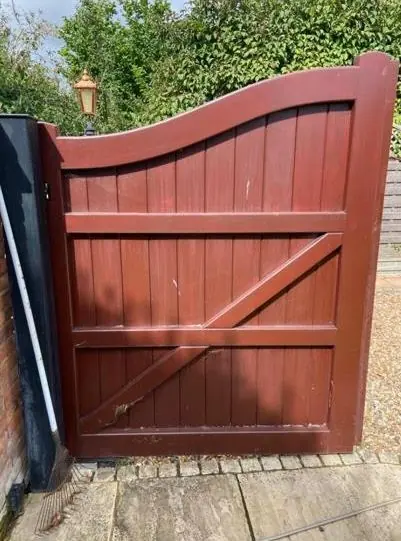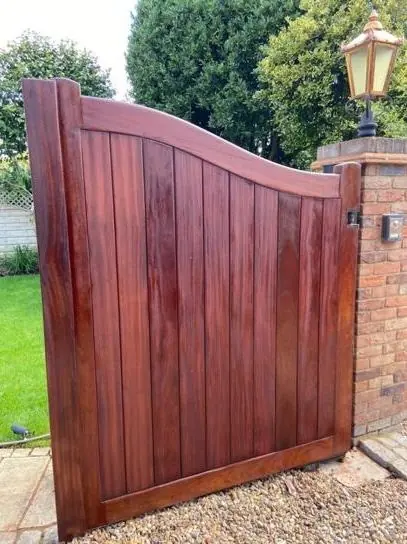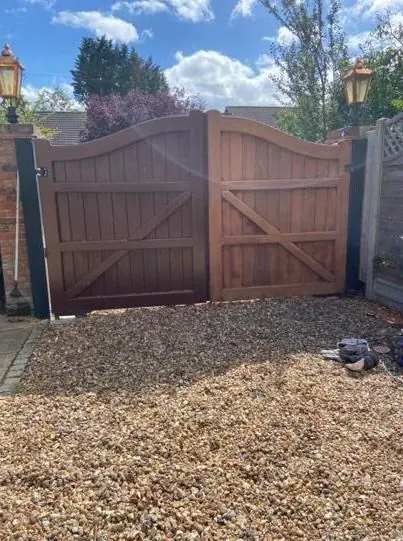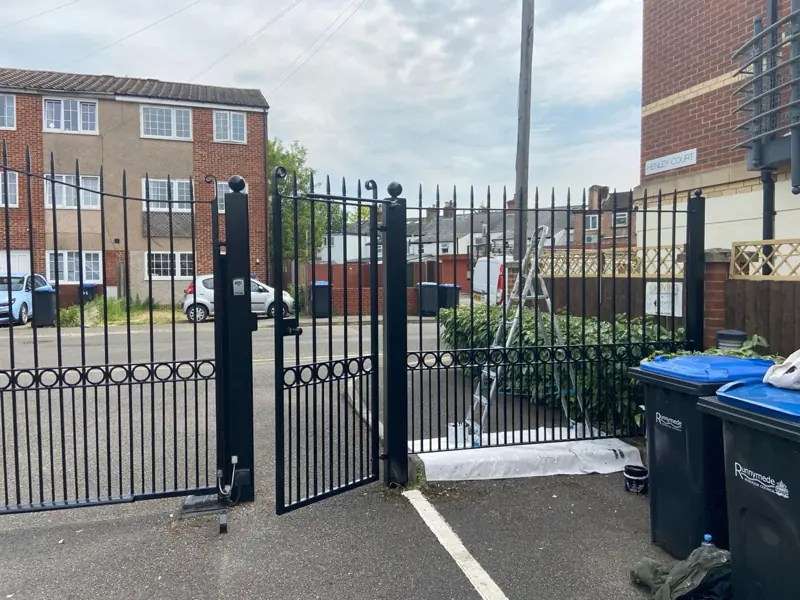
We treat and repaint iron railings, fencing and metal gates in Yardley Hastings, about 7.3 miles east of Northampton town centre in NN7. The village's period ironwork is often fixed into limestone walls, so protecting the stone matters as much as stopping the rust.
Ironwork in a stone village
The 2015 conservation area appraisal picks out the iron fencing at 22 to 28 Castle Ashby Road as a feature of the village, and metal gates set into limestone rubble walls turn up along the older streets. Within the parish, the Avenue Lodges and entrance screen to Castle Ashby Park and the entrance screen to Chase Park opposite are listed in their own right.
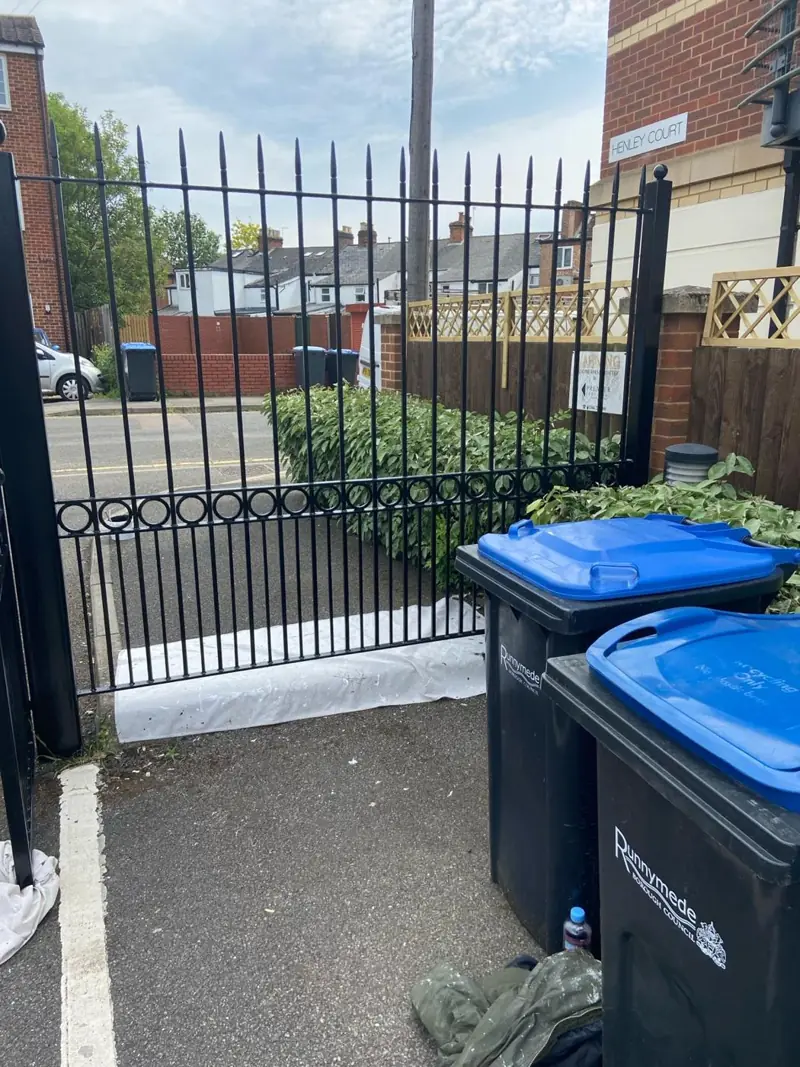
Ironwork like that usually fails in the same places: the feet where the bars meet the ground or the wall coping, the hinge pins and latch, and the underside of rails where water collects. Where a bar is leaded or set into stone, rust can swell inside the joint and crack the stone around it, so catching it early saves masonry repairs later.
Matching the treatment to the rust
| Condition | Approach |
|---|---|
| Sound paint, light surface rust spots | Wire brush the spots, spot-prime with a rust-inhibiting metal primer, then full topcoat |
| Widespread flaking and orange bloom | Scrape and wire brush back to firm paint or bare metal, treat remaining rust, prime all bare areas |
| Thick old paint built up over decades | Remove loose layers by hand so decorative detail is not lost under more paint |
| Rust at the base or wall fixings | Clear out the joint, treat the metal back as far as reachable, seal before painting |
Once the metal is stable, we finish in a metal paint suited to the surface. Older wrought or cast iron usually gets a traditional primer and gloss or satin system; galvanised gates on newer houses need a primer made for zinc. The main metal gate and railing painting page explains the primers and finishes in more depth.
Keeping paint and rust off the limestone
Pale coursed limestone shows every drip and every rust run. Before wire brushing a railing that sits on a stone wall, we mask the coping and the face below with tape and sheeting, and collect rust dust rather than letting it wash into the stone. Painting is done with brushes small enough to cut in tight where the bar enters the wall. Any paint that does touch the stone comes off while it is wet.
It also matters which way the weather runs. Water running down a newly treated rail carries any residue onto the wall below, so we avoid working when rain is forecast and leave enough drying time before the next shower. Walls over a metre high next to a highway are protected from demolition in the conservation area, which is another reason to treat the stone around old fixings gently.
Colours for period ironwork
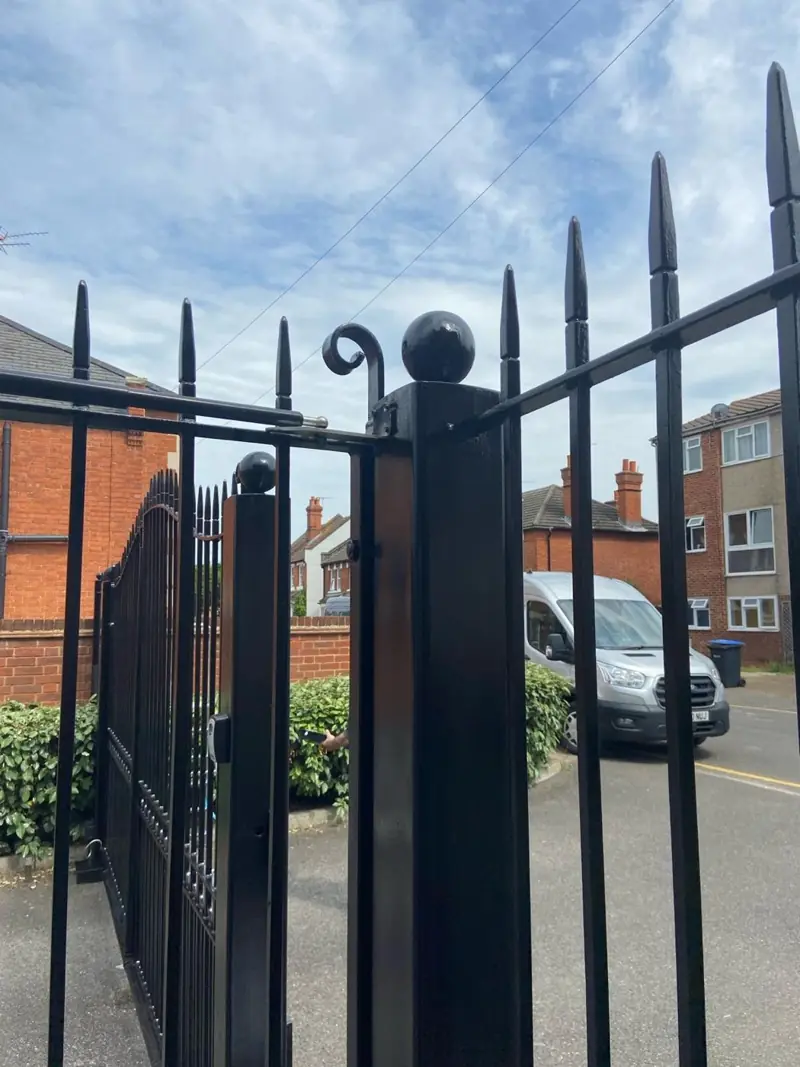
Sympathetic dark colours suit the village: black, very dark green or a dark grey sit well against limestone and red tile. Bright or pale colours on period railings draw the eye away from the buildings. If the railing belongs to a listed building, or the Compton family’s estate owns the property, the colour may not be yours alone to choose, and consent or the estate’s approval should come first.
Gates at the newer homes west of the old core, on The Leys and Highfield Way, or at the 1962 bungalows, are more likely to be modern steel and can be done in whatever colour suits the house. For a quote, call Dean or browse decorating in Yardley Hastings for related jobs.
Last updated by Dean, DH Painter & Decorator.