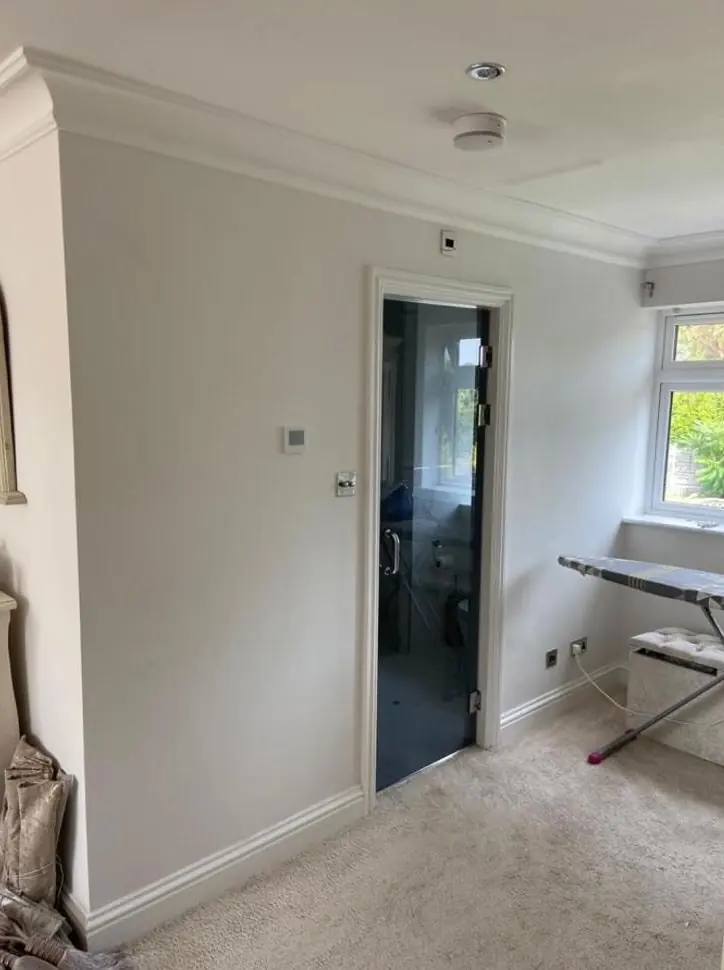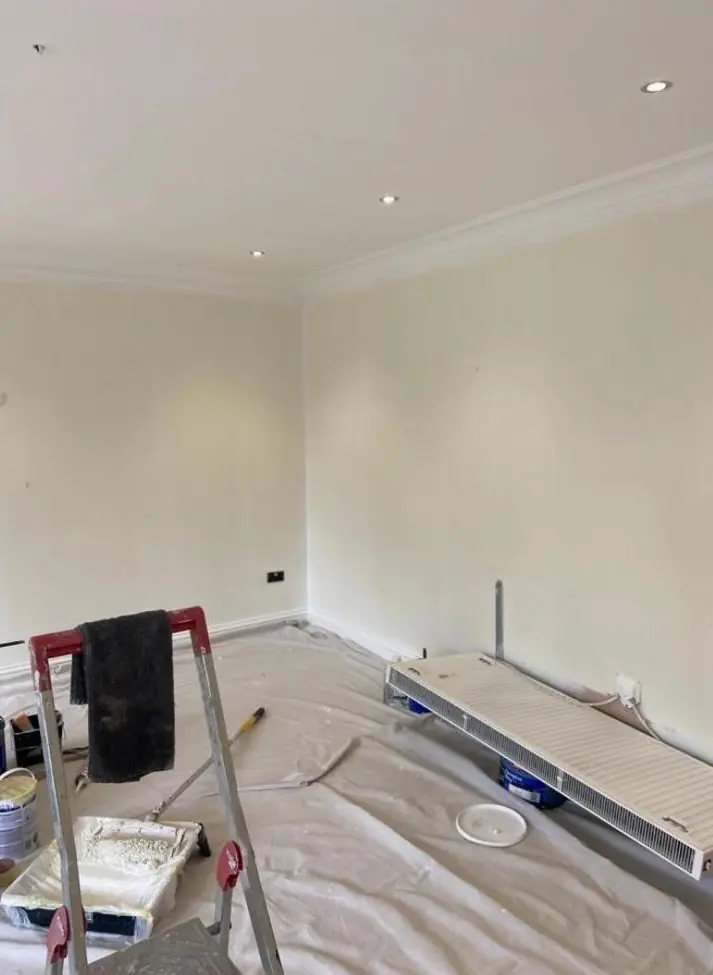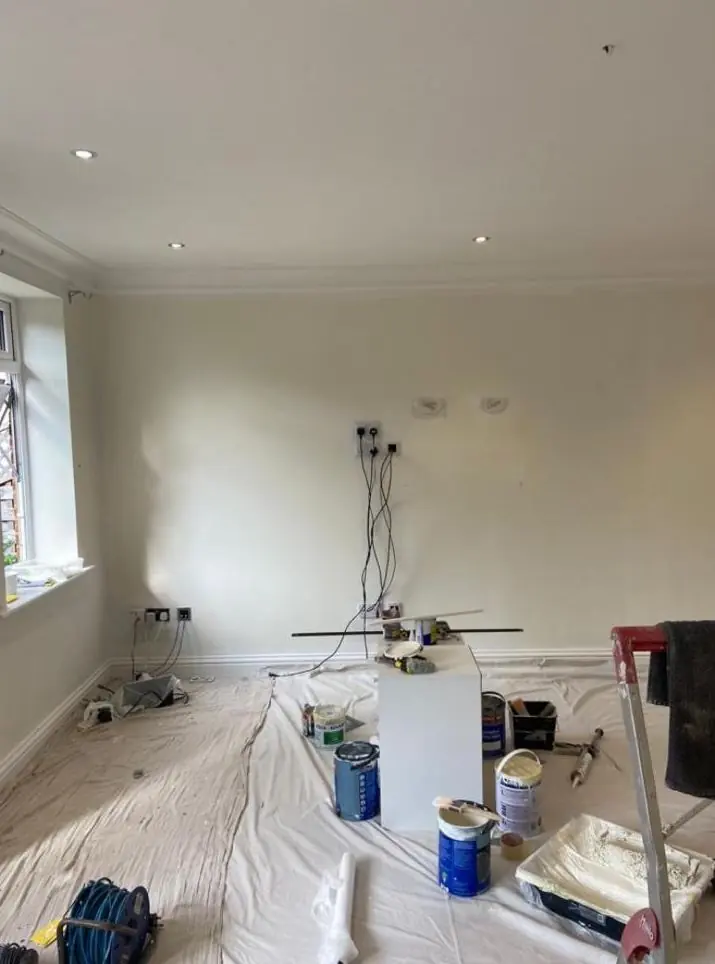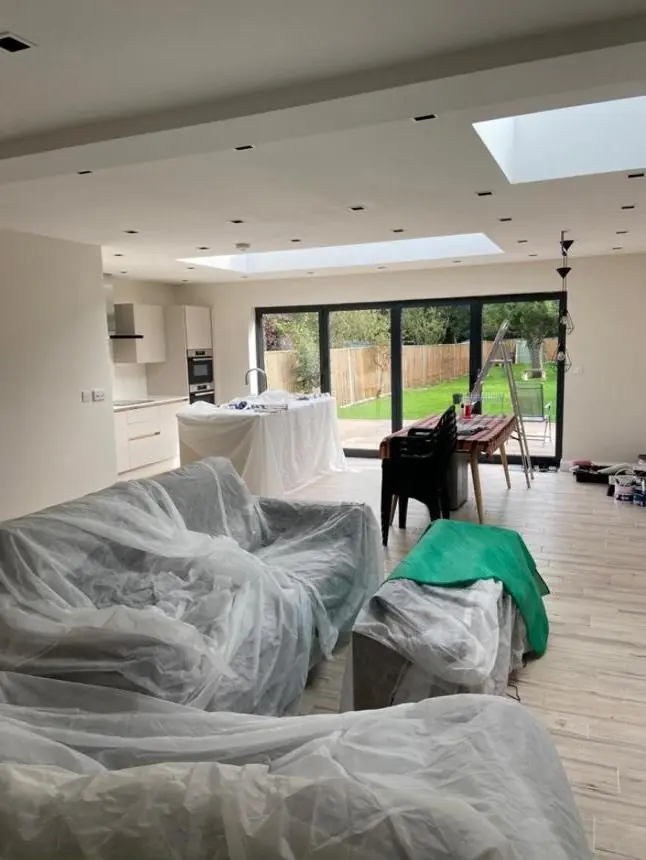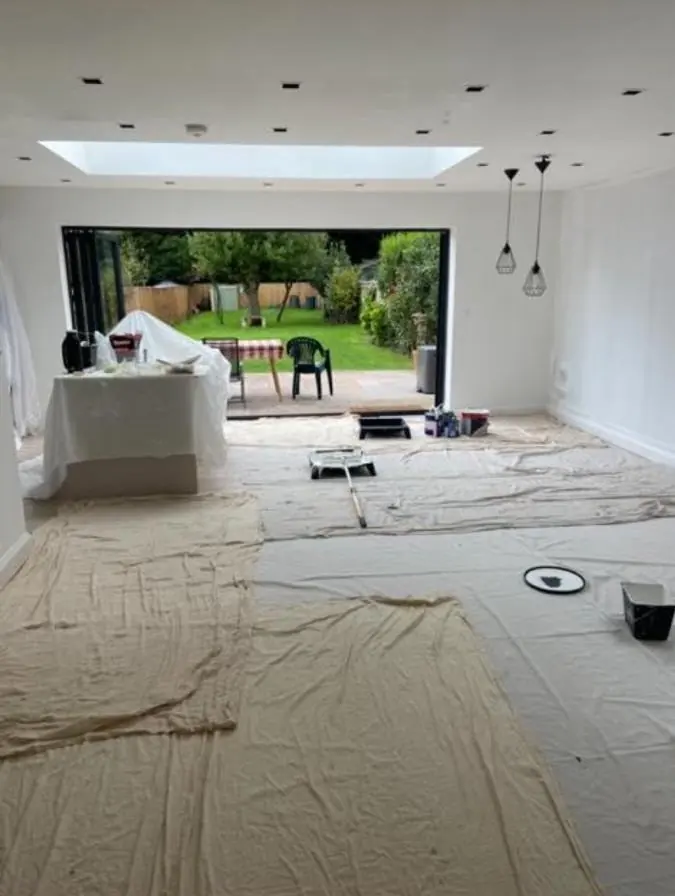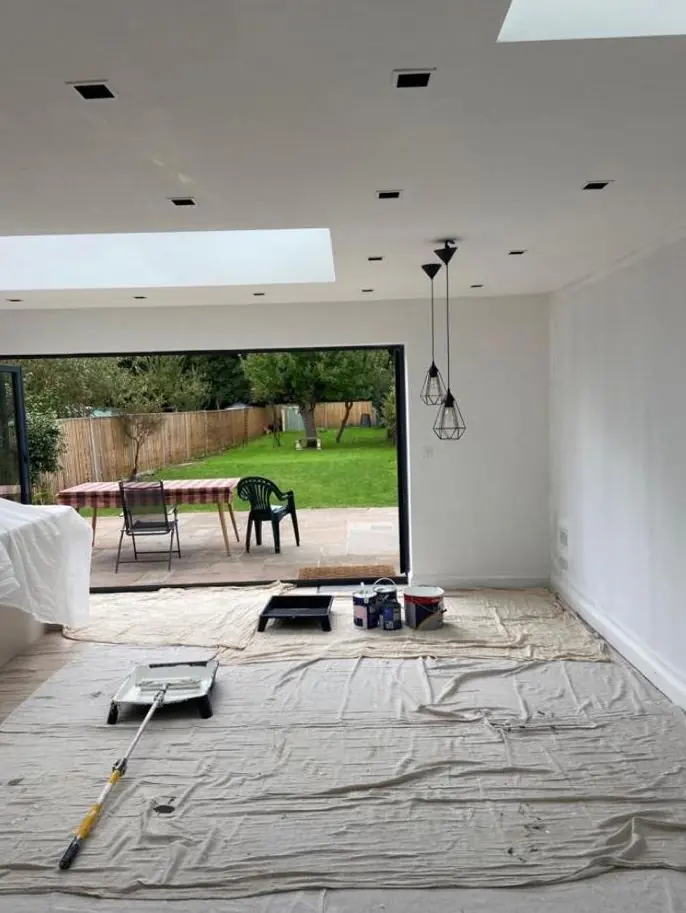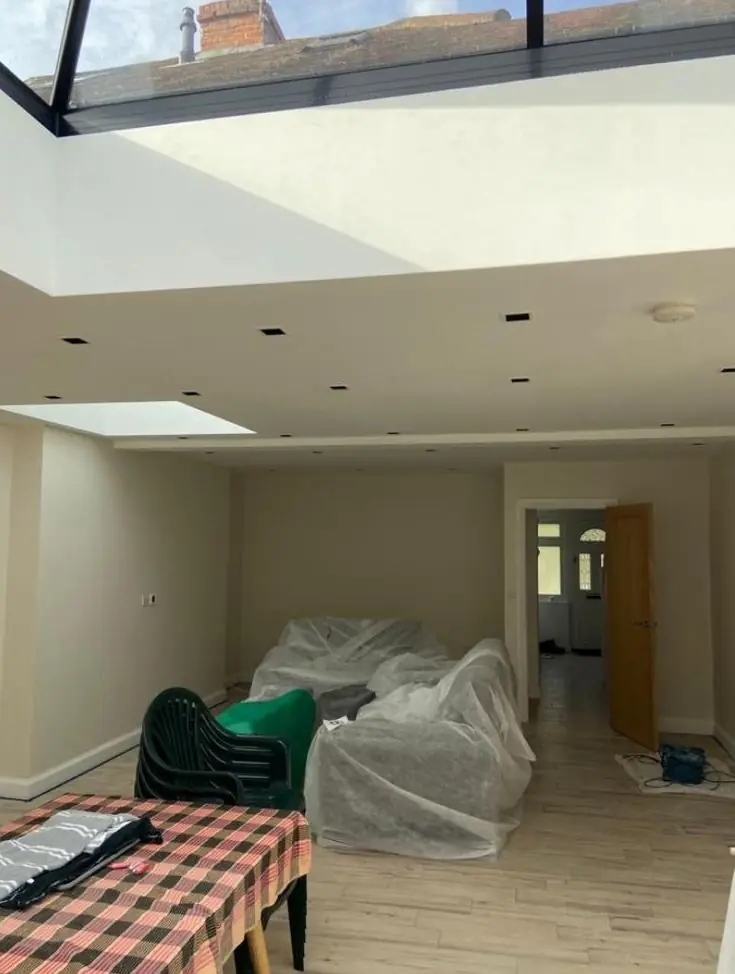
Dean decorates new plaster in Yardley Hastings, 7.3 miles east of Northampton: extensions, infill houses, barn conversions and lime plaster repairs in older cottages. The paint depends on which plaster you have, so we check that first and plan the mist coat or breathable finish to match.
Where new plaster turns up in the village
Yardley Hastings is a Restricted Infill Village, so large new estates are not part of the picture. New plaster here mostly comes from single extensions to existing homes, the odd infill house, and conversions of farm buildings, such as the barns at Greenyard, known as Hay Barn, The Silo and Barn End. The other source is repair work inside the old limestone cottages, where patches of failed lime plaster are taken off and redone. These are very different surfaces, and painting them the same way causes problems.
Gypsum skim or lime: the first thing we check
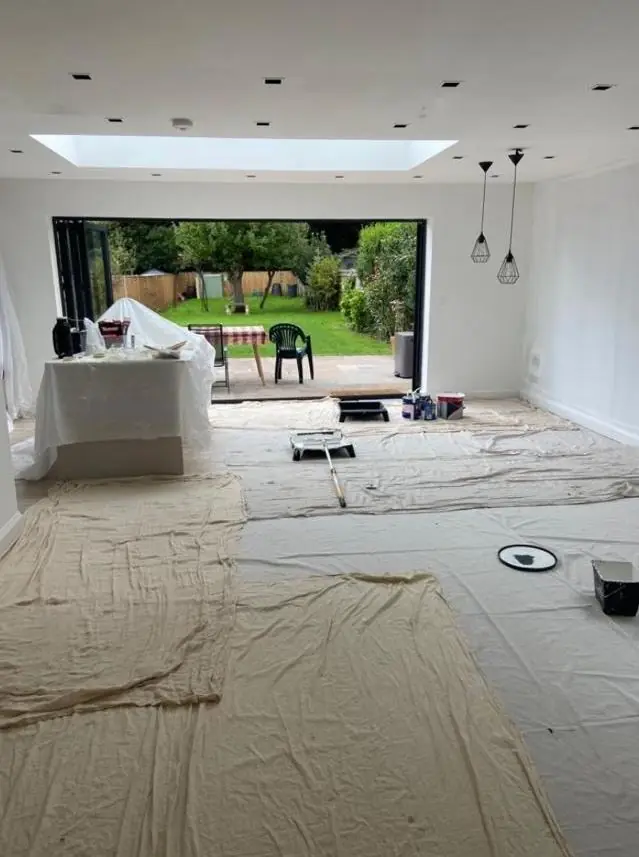
Fresh gypsum skim on an extension wall is very absorbent. Once it has dried evenly to a pale colour, it needs a diluted mist coat so the first full coat bonds rather than sitting on the surface and peeling. Our mist coat guide explains why.
Lime plaster is another matter. It cures slowly, stays slightly damp for longer, and needs to let moisture move through it, because the solid limestone walls behind it do the same. We use breathable mineral or clay-based paints on lime and never seal it with a vinyl or acrylic emulsion. If a builder has patched an old cottage wall in gypsum next to original lime, we will point out the difference before painting, as the two parts can behave differently over time.
| Surface | Typical place | First coat |
|---|---|---|
| New gypsum skim | Extensions, infill homes, converted barns | Diluted mist coat once fully dry |
| New lime plaster | Repairs in 17th to 18th-century cottages | Breathable mineral or clay paint, after a longer cure |
| Mixed patching | Older cottages repaired over many years | Assessed wall by wall |
Where the extension meets the cottage
The join between a new extension and an old stone house is where hairline cracks often appear. The new structure settles while the old wall stays put, and the plaster on either side takes up paint at different rates. We fill and flex-seal that junction once it has had time to move, and we often paint the join line a second time so it does not flash through. If your extension opens into a listed cottage, and the village has 23 listed entries, check whether any change to the old part needs listed building consent before the decorating is planned.
Barn conversions, new ceilings and the builder’s programme
Converted farm buildings can have tall walls, large openings and exposed timbers that need masking before any spraying or rolling begins. We work out access for those heights during the quote visit, usually with a tower rather than ladders, and agree which beams and boarded areas are to stay natural so no stray mist coat lands on them. Old timbers can also bleed tannin or resin through a fresh coat, so any painted boarding gets a stain-blocking primer first.
New ceilings in an extension are where flaws show most, because light from roof lights or a long window rakes across them. We check the skim in that light before the mist coat, fill and sand any trowel marks or nicks, and spot-prime before the topcoats. Window boards, door linings and skirtings in new timber are knotted, primed and caulked at the same time, so the woodwork can be finished to match the white casements found on so many of the village’s older homes.
A gap of a few weeks between plastering and decorating usually helps. On any new-build work we prefer to be booked after the plasterer and before the flooring, with second fix and kitchen fitting agreed in advance.
The main new plaster and extension painting page covers drying times, snagging and how we fit around trades in more depth. Our Yardley Hastings page lists the other work we take on in the village.
Last updated by Dean, DH Painter & Decorator.