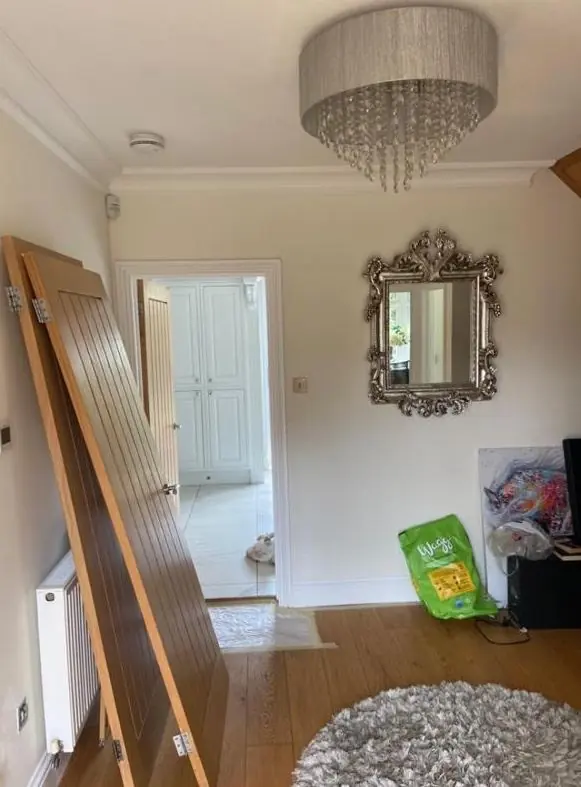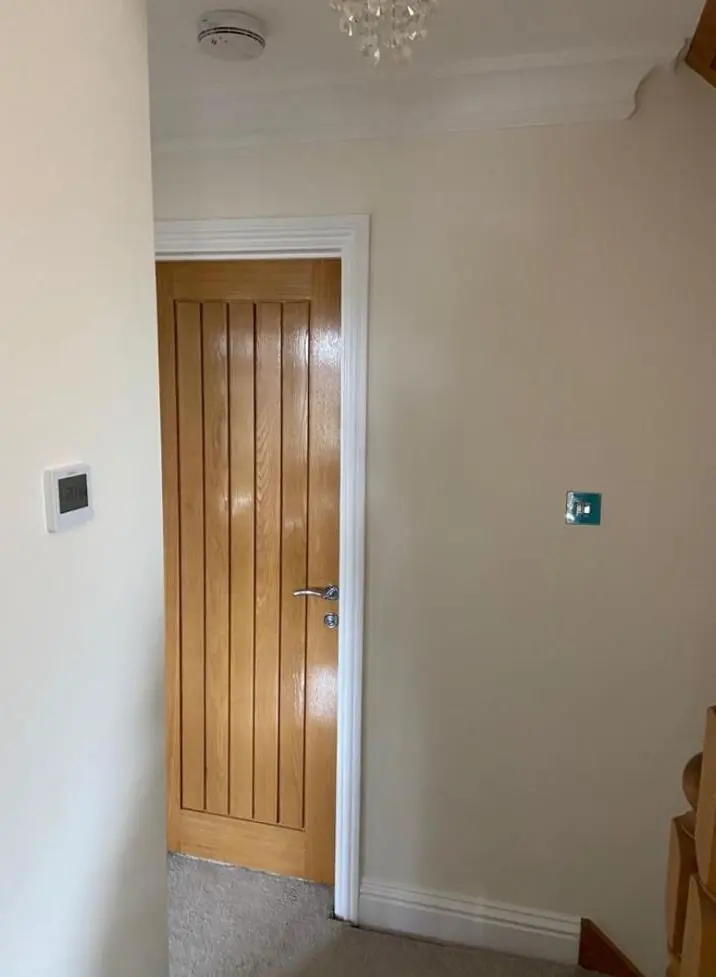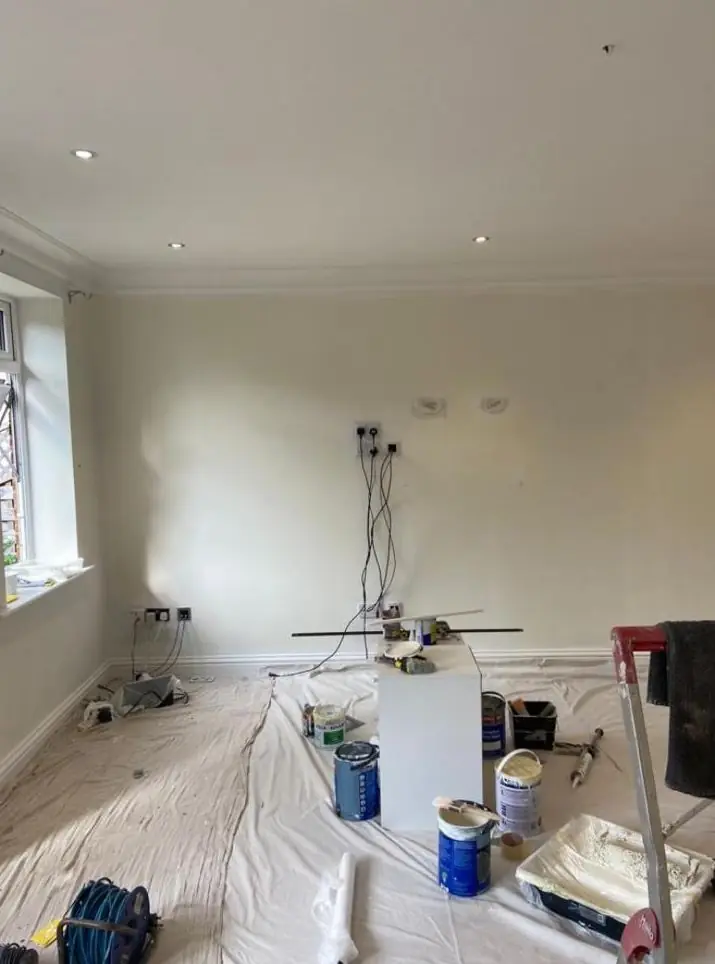
Dean hangs wallpaper in Bellinge homes, on the 1970s-80s estate between Little Billing and Great Billing, about 3.5 miles east of Northampton town centre. Feature walls in compact living rooms and bedrooms suit these houses, though walls often need stripping and repair after earlier occupants first.
Feature walls in plain estate rooms
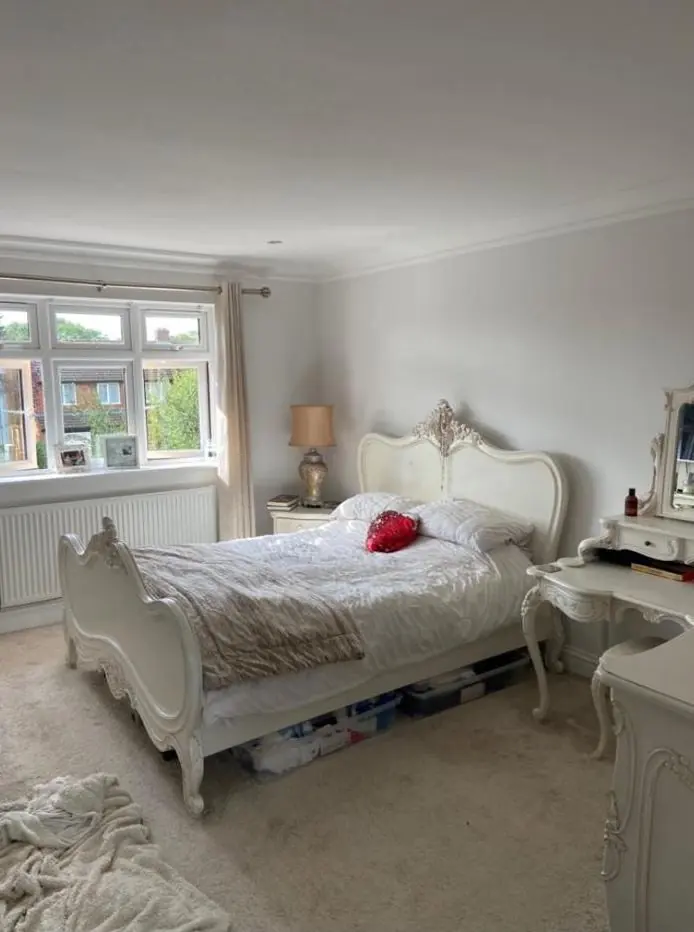
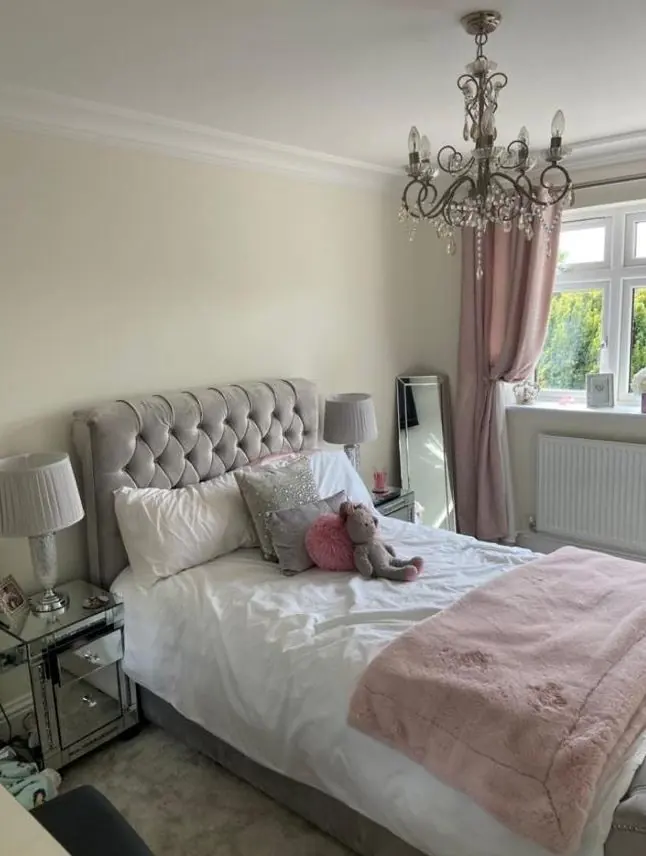
Papering in Bellinge’s estate houses tends to mean a single feature wall: the wall behind the sofa, an end wall in a living room, or the wall behind a bed. Development Corporation houses from the 1970s and 1980s were built with plain plastered walls and no period detail, so a patterned or textured paper is one of the simplest ways to give a room a focal point. Full rooms of paper are possible, but in a compact terraced house, a busy pattern on four walls can close a room in, while one papered wall with the rest painted in a matching shade keeps it light.
What earlier occupants leave on the walls
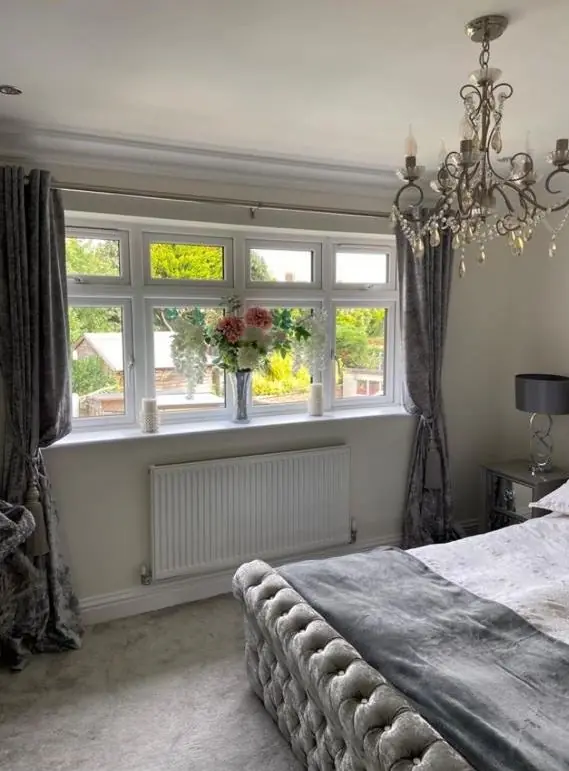
Walls in houses of this age are generally flat and true enough for modern non-woven papers, which is good news. The work lies in what came before. Bellinge has a high share of rented homes, with over 300 of the core estate’s households renting at the 2021 Census, and houses that have changed hands several times often carry painted-over woodchip, layers of vinyl, or patches where paper was torn off and took the plaster face with it. Before hanging anything we:
- strip the old paper fully, including any painted-over layers, rather than papering on top;
- seal torn plaster facing so the paste does not lift it further;
- fill old fixing holes and sand them flat, because a thin paper shows every dent;
- apply size or a wallpaper primer so lengths can be slid into position and later removed cleanly.
Where a wall is too patched to give a good finish, lining paper goes up first. The full process, from stripping to trimming the last length, is on our main wallpaper hanging service page.
Papers that suit how the house is used
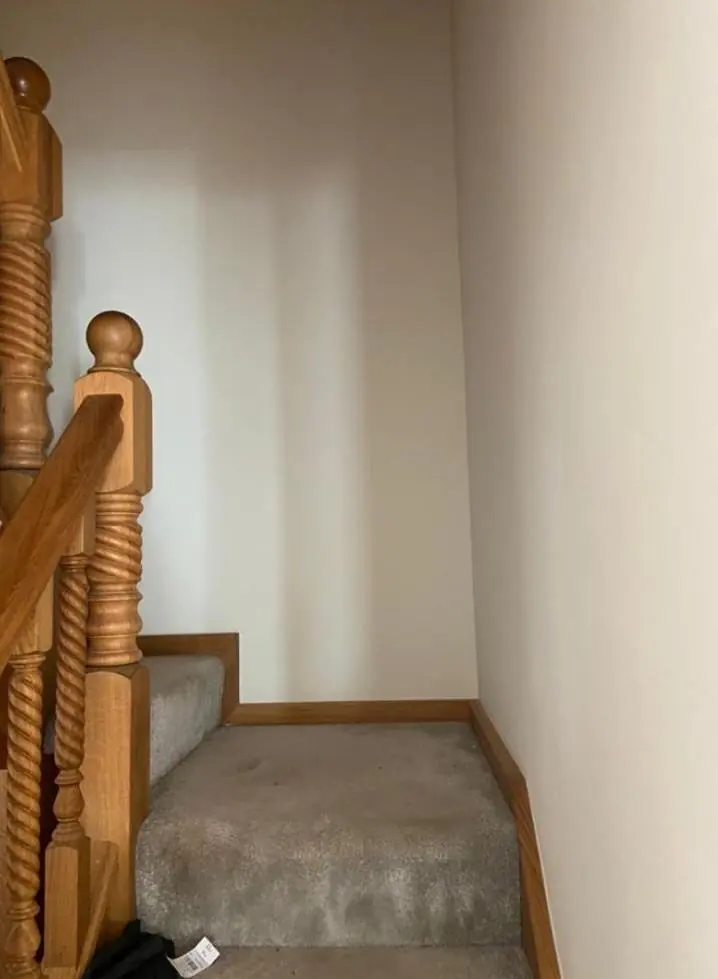
Narrow hallways with stairs rising from the front door are hard on wallcoverings, since bags and shoulders rub the same strip every day. If you want paper in a Bellinge hall, a washable vinyl or a robust non-woven is the sensible choice, ideally above a painted lower section. Bedrooms and living rooms can take more delicate papers, including textured and embossed designs that hide minor wall imperfections. Landlords who want a feature wall in a let should think about replacement: a paste-the-wall non-woven strips off dry in whole sheets, so the next refresh between tenants is quicker. Tenants in council or housing-association homes usually need their landlord’s agreement before papering, so check before ordering rolls.
Bringing rolls and a pasting table into the courts
Homes on the estate are arranged in courts and squares, such as Gallfield Court, Hanemill Court and Palmer Square, built on Radburn lines with front doors onto footpaths. A pasting table, rolls, steps and buckets all come in by hand from the shared parking, so we bring everything in one trip where we can and set up inside, in the room being papered, not on the shared path. Rolls are checked for matching batch numbers on arrival, before any are cut, and offcuts and old paper go back out to the van at the end of the day rather than sitting in the court. Bellinge is around 3.5 miles out on the east side of town, and the Bellinge area page has more on the estate’s houses.
Last updated by Dean, DH Painter & Decorator.