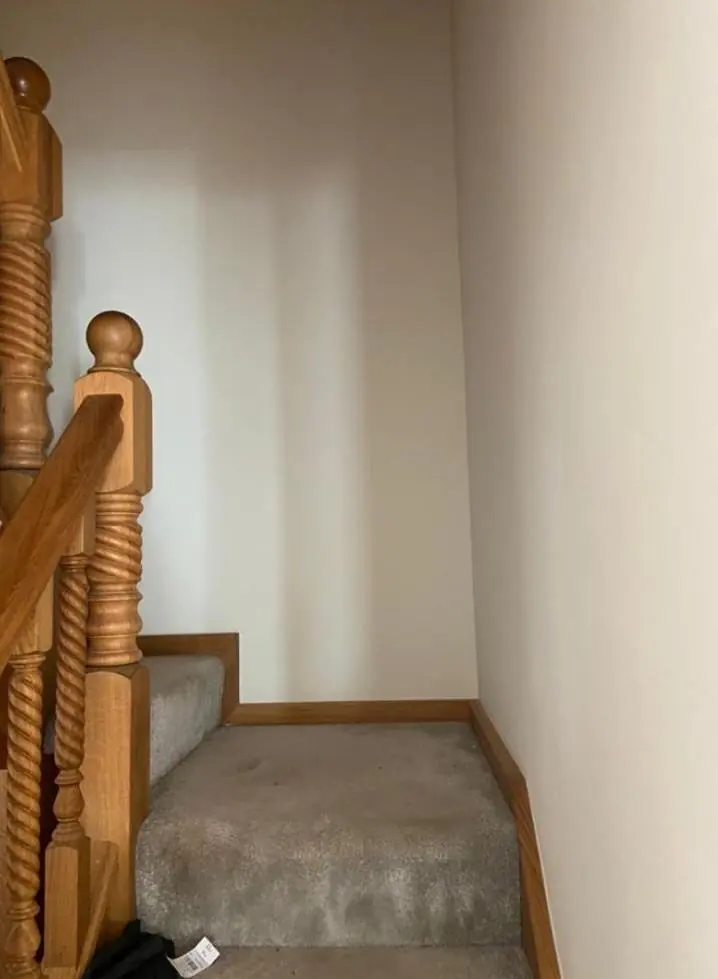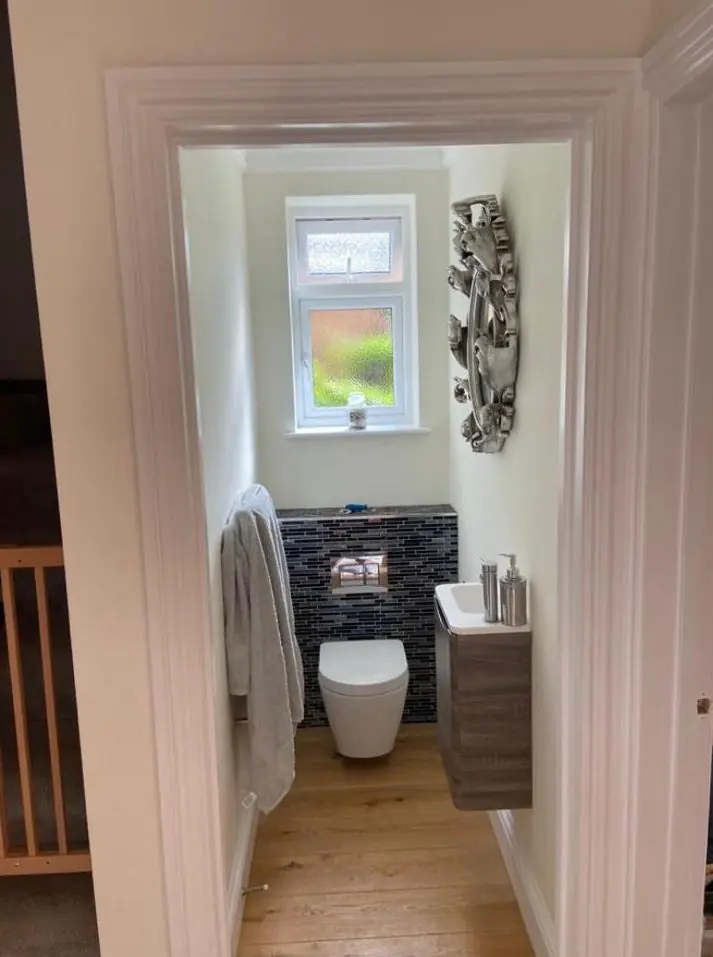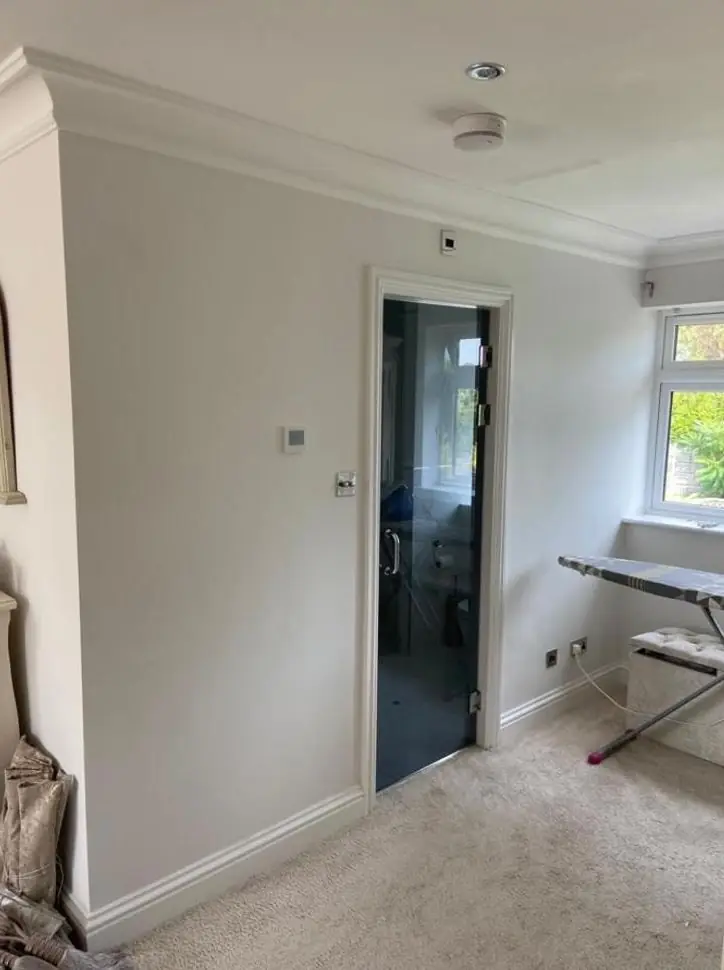
Dean hangs wallpaper and lining paper in Yardley Hastings, about 7.3 miles east of Northampton. Most walls in the old limestone cottages need lining first and suit breathable papers, while the houses on The Leys and Highfield Way usually take straightforward hanging.
Papering walls that were never built straight
Wallpaper shows up every fault in a wall, and the walls in Yardley Hastings’ older cottages have plenty. Coursed limestone rubble laid in the 17th and 18th centuries, then finished by hand in lime plaster, gives a surface that bows, leans and dips. Corners are rarely square, and reveals cut through thick stone taper towards the window. Hung straight onto that, a patterned paper picks out every wave, and seams open where the plaster moves.
So on most cottage walls along High Street, Little Street and Little Lane, Dean hangs lining paper first. It evens out small undulations and hairline cracks, gives the finish paper a consistent surface to grip, and takes up minor movement. Lining goes on horizontally, so its joints never sit under the joints of the paper above. Where old lime plaster is loose or hollow, it should be repaired by a plasterer who works in lime rather than papered over, and we will say so if we find it.
Sloping ceilings in converted attics
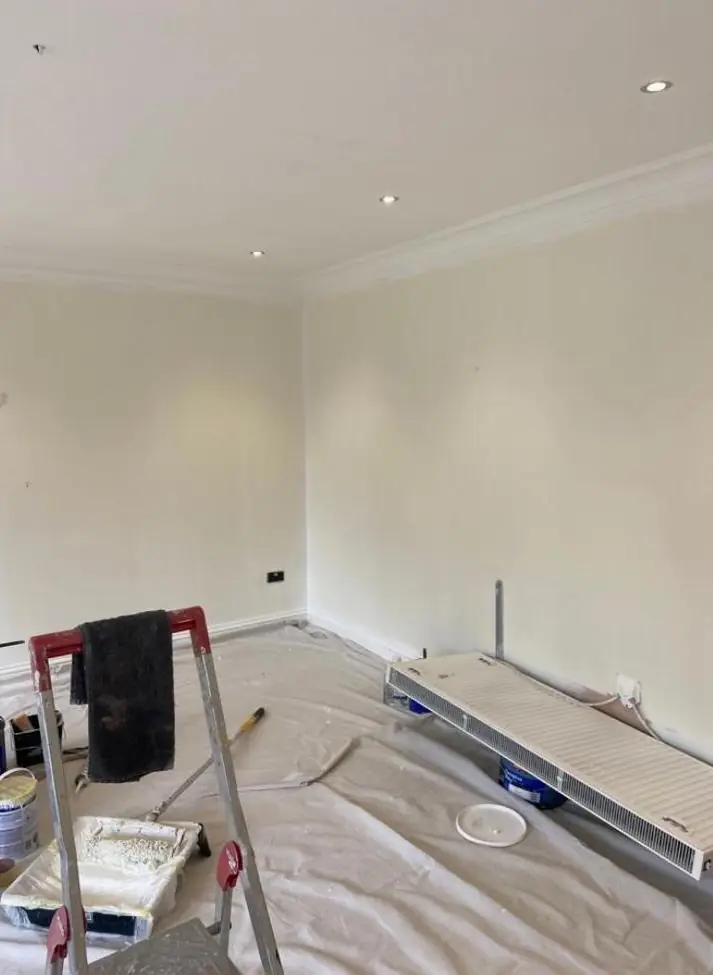
Many cottages in the village were extended into the roof, using the steep pitches left behind when 19th-century owners replaced thatch with Castle Ashby pantiles, plain clay tiles or slate. Those attic rooms, lit by gable windows or roof lights, are some of the trickiest spaces to paper. A pattern running straight up a wall then has to carry on across a slope, and the eye notices if the motif drifts. Short, irregular drops around roof lights and into dormer reveals add time.
For these rooms a small or non-directional pattern, or a plain textured paper, is usually easier to live with than a large repeat. Some people paper the upright walls and paint the slopes, which avoids the problem entirely. We go through those options at the quote, standing in the room.
Which papers suit solid stone walls
Solid limestone walls have no cavity and need to release moisture, particularly in houses near the Grendon brook or shaded by the trees along High Street. A heavy vinyl paper behaves much like a plastic sheet on the wall surface. On those walls Dean tends to suggest paper-based or non-woven papers with a suitable paste, and he checks for damp before anything is hung. Paper that lifts at the skirting after one winter usually points to moisture, not poor hanging.
In the village’s listed cottages, putting new paper over existing lining is normally straightforward, but stripping historic layers or removing original finishes may count as altering listed fabric and is worth raising with the council first.
Easier walls on The Leys and Highfield Way
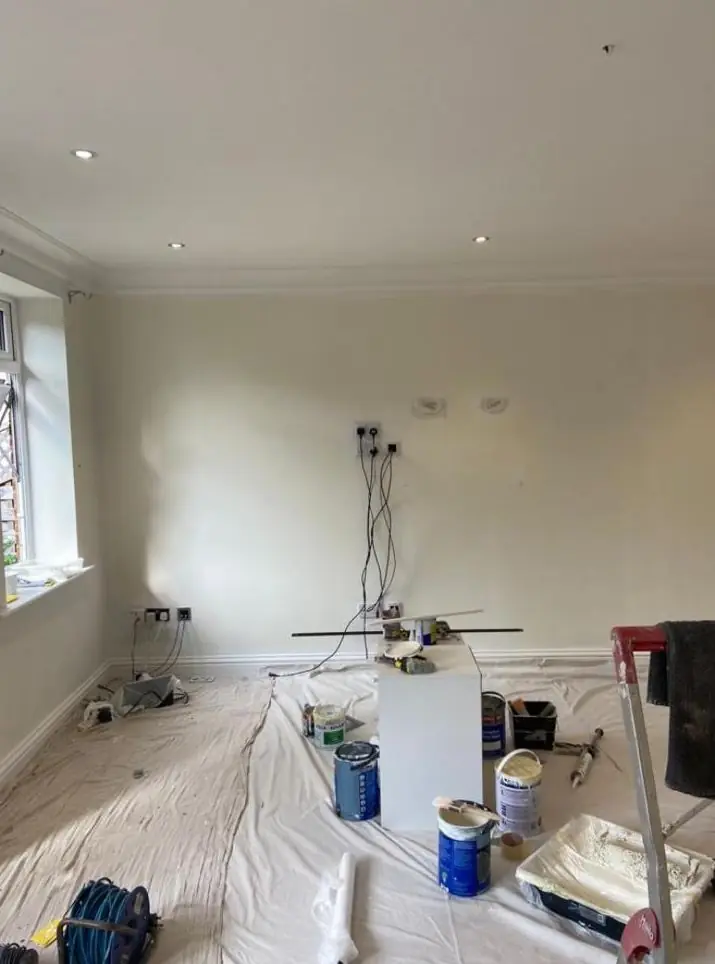
The 1935 local authority houses on The Leys, the dark brick homes on Highfield Way and the Castle Ashby Road bungalows have plastered walls much closer to true. Straightforward hanging is the norm there: strip, fill, size and hang, with lining only where old paper has damaged the plaster. These rooms also suit bolder feature walls and large prints, because the pattern stays level from ceiling to skirting.
Arranging the work
We cover Yardley Hastings from our base in Northampton. Old paper is stripped and taken away, floors and furniture are protected, and a pasting table needs floor space, so in small cottage rooms we sometimes set up next door. Our full method, from stripping to trimming the last length, is on the wallpaper hanging page. Other services we cover in the village are on the Yardley Hastings page.
Last updated by Dean, DH Painter & Decorator.