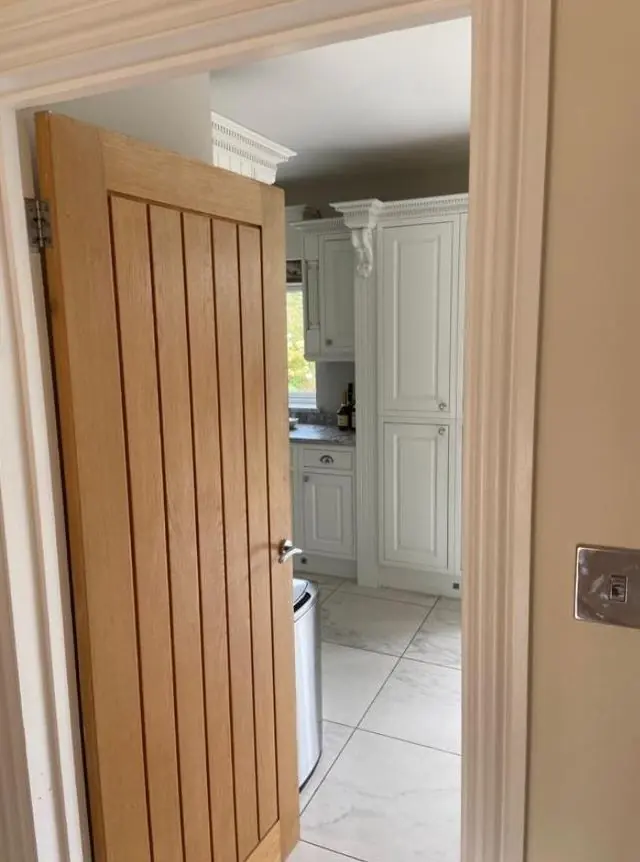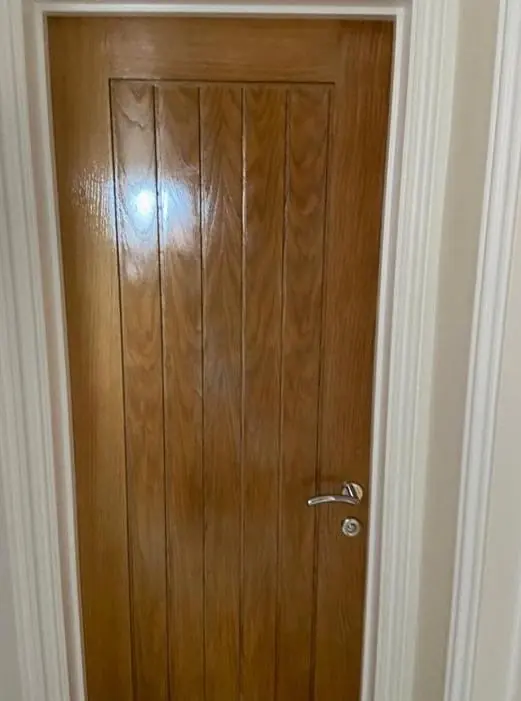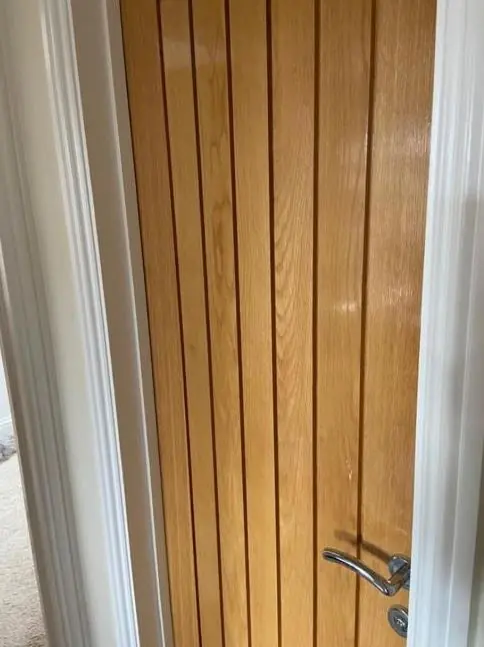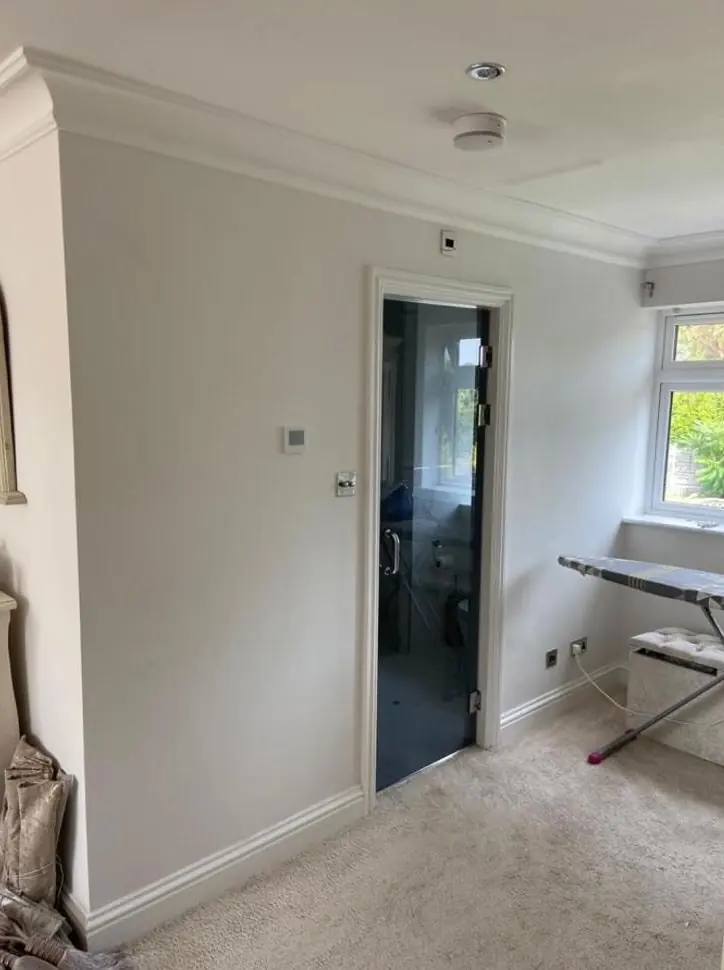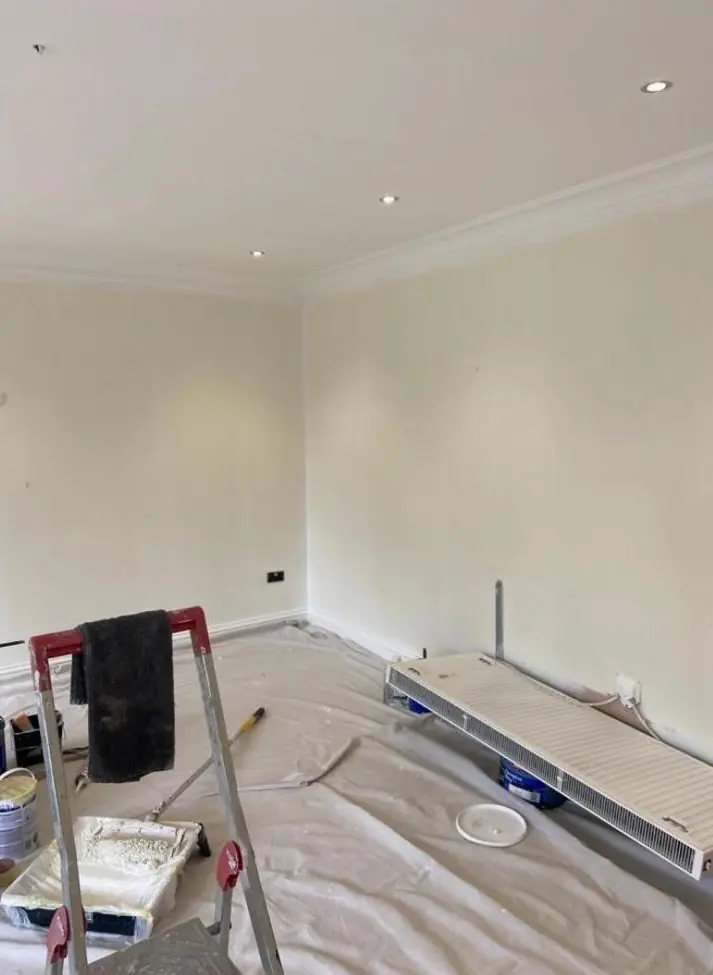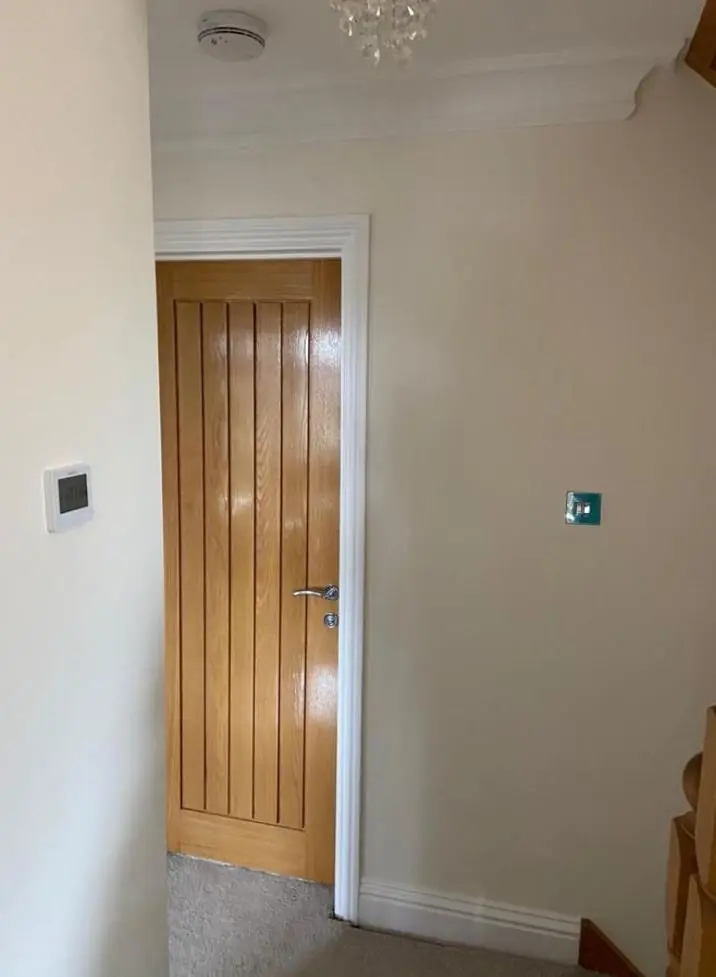
DH Painter & Decorator hand-paints decorative finishes in Dallington, about 1.3 miles north-west of Northampton town centre. Dean picks out period mouldings and panelling in the listed Georgian hall and the older cottages, and adds painted panelling or two-tone schemes to give new Dallington Grange houses some character.
Georgian detail inside Dallington Hall
Dallington Hall was built in 1720-30 and is listed Grade II*. Its listing describes sash windows with glazing bars set in eared architraves and pedimented eight-panel doors, and inside there is a panelled staircase with twisted balusters. Now that the hall is divided into apartments, some flats may keep period joinery of this kind.
That kind of joinery suits traditional decorative treatment rather than flat white over everything:
- Eggshell on panelling, which gives a soft, even sheen that shows off raised and fielded panels without the glare of gloss.
- Two-tone architraves and doors, where the moulding is picked out a shade darker or lighter than the field.
- Heritage colour schemes that suit the period of the room rather than modern greys.
Twisted balusters and panelled stair strings are slow, careful brush work, not a job for a spray gun. Because the building is listed, we will not strip historic paint layers or alter original joinery without the conservation officer’s agreement. Repainting existing surfaces in the same manner is maintenance; changing them may need consent.
Cottage joinery round the green
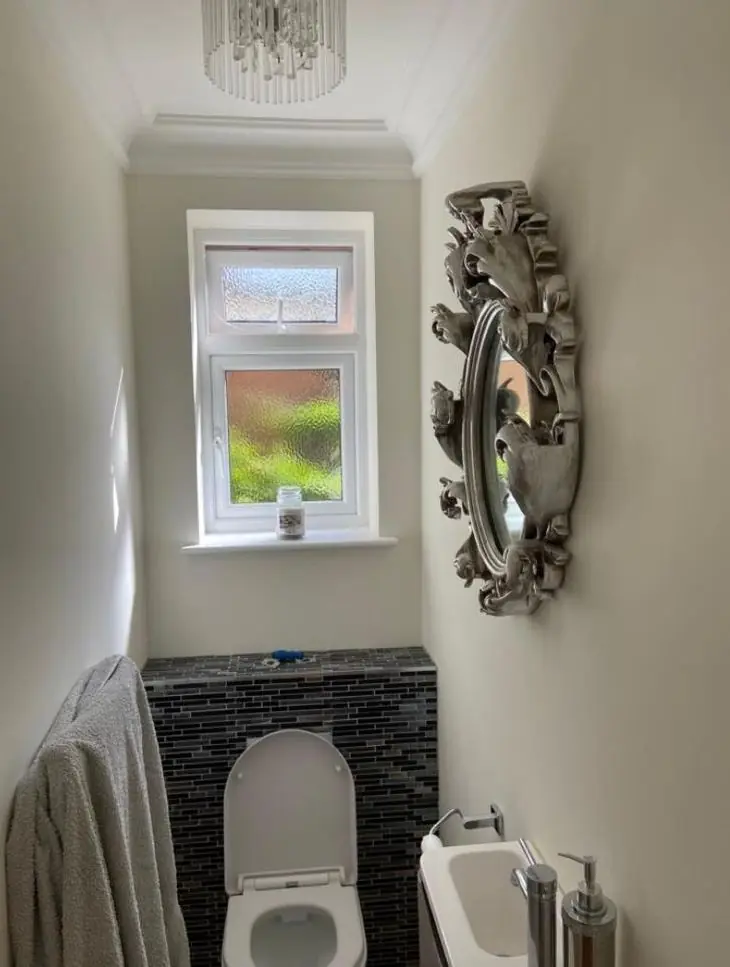
The 17th and 18th century houses in the old village are plainer than the hall but have their own detail: timber or metal casements behind stone mullions on the almshouses, box dormers and a bracketed door hood on Dallington Weir, and deep window reveals in thick sandstone walls. Decorative work here is usually about restraint, such as picking out a front door or door hood in a heritage colour, rather than elaborate paint effects.
Old timber in these houses can carry many layers of paint, some possibly lead-based. We test before sanding and use wet abrading or chemical strippers where needed. And close to thatch, such as on the Wheatsheaf, there is no heat gun or blowlamp at all.
Adding character to a Dallington Grange new build
The Persimmon and Charles Church houses at Dallington Grange have plain, modern rooms inside. That is a good base for decorative work that older houses do not need, for example:
| Feature | Where it works in a new build |
|---|---|
| Painted wall panelling (MDF strips or full panels) | Hallways, under the stairs, the bottom half of a dining wall |
| Two-tone split at dado height | Stairs and landings, where scuffs gather low down |
| Colour-drenched room (walls, ceiling and woodwork in one shade) | A small study or snug |
| Feature wall in a deep colour | A chimney-less living room that needs a focal point |
New plaster still needs its mist coat before any of this, and new MDF panelling needs filling, caulking and priming so the pins and joints disappear under the paint.
How we plan a decorative job
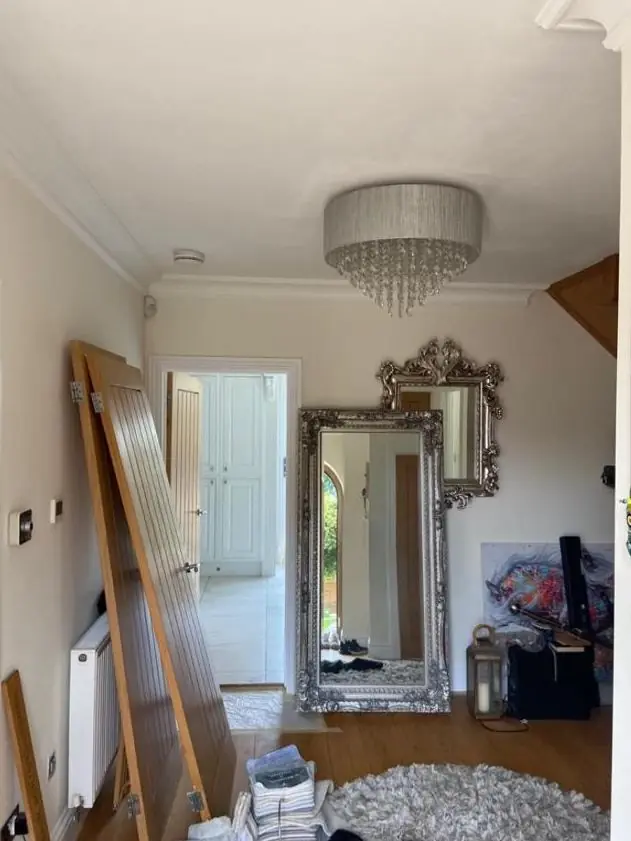
Dean visits, looks at the joinery or walls, and talks through what fits the house. On a listed property that includes a frank view of what may need consent. For a two-tone or picked-out scheme we can paint sample boards or a small test area first, because a contrast that looks subtle on a card can look heavy on a tall Georgian door, or vanish altogether on a dark cottage landing.
Timing is worth knowing about too. Traditional eggshells and oil-based finishes need longer between coats than everyday emulsion, and detailed joinery takes several visits to the same room, so a decorative job is planned over days rather than squeezed into one. In an occupied apartment at the hall, we agree in advance which rooms are out of use and when. You then get a written quote, and our cost guide explains what affects the price. Our main decorative finishes page explains the types of effect we offer, and our Dallington area page lists the other work we cover in NN5.
Last updated by Dean, DH Painter & Decorator.