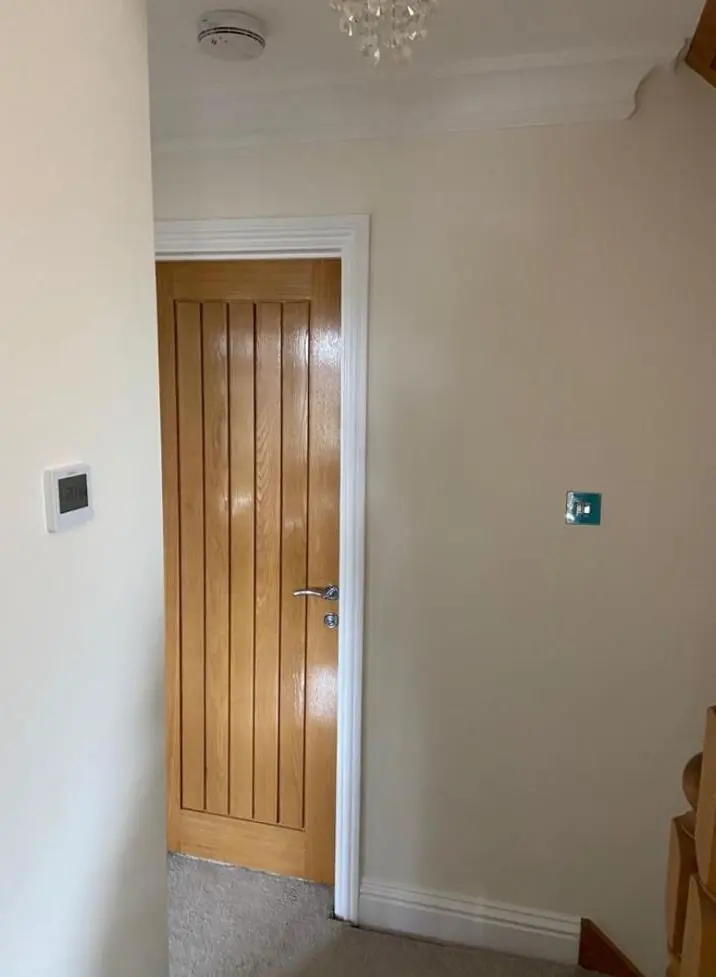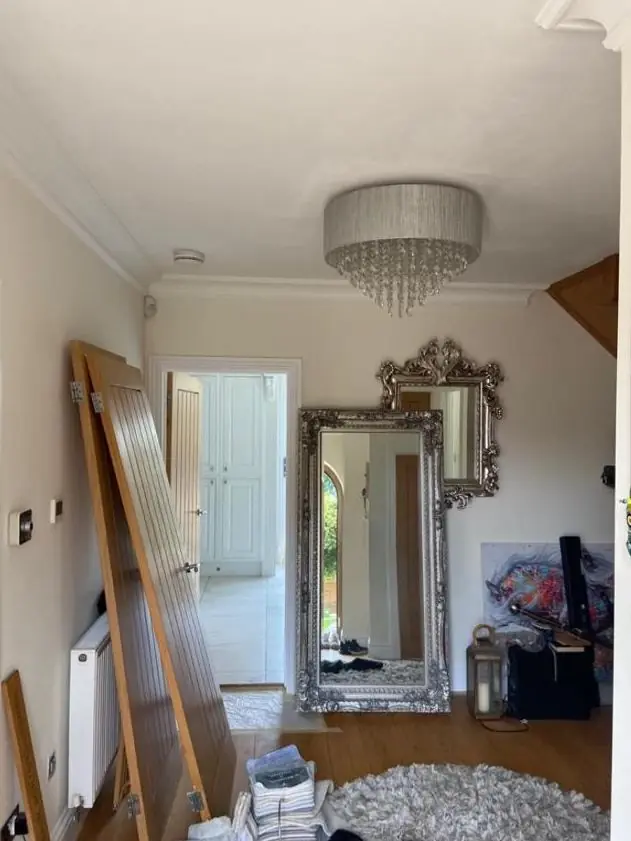
DH Painter & Decorator decorates hallways, stairs and landings in East Haddon, 7.3 miles north-west of Northampton. Dean handles both the tight, steep stairs of the village's thatched lias and cob cottages and the taller stairwells of its larger 18th-century houses, using stair platforms or towers and paints that suit old lime plaster.
Two very different kinds of staircase
Stairs in East Haddon fall into two broad groups. The first belongs to the two-storey cottages built between the mid-17th and mid-18th centuries along Main Street, Church Lane and Ravensthorpe Road. Some have attics with small dormers, and their stairs are often narrow, steep and boxed in, with low headroom at the turn. The second group is the larger houses: Walcott House, Hall Farmhouse and, at the top of the scale, East Haddon Hall, whose listing records a wrought-iron stair balustrade inside a house of about 1780.
The trade method for a stairwell is the same wherever you are, and our main hallway, stairs and landing decorating page explains it. What changes here is how we get access, how we treat the walls and how much woodwork sits in a small space.
Steep flights, low beams and tight turns
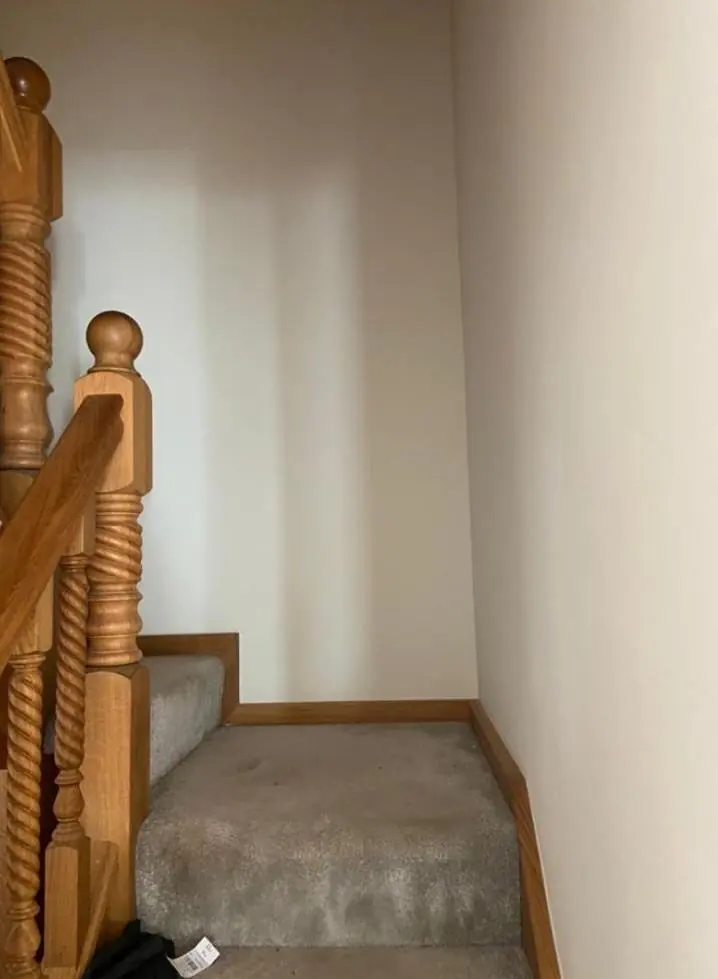
In an old cottage the challenge is rarely height. It is space. A short, steep flight with a winder at the top leaves little room to stand a ladder, and a low beam or ceiling at the landing can stop a standard stair platform from opening fully. We use compact combination ladders with independently adjusting legs, short boards and, where needed, decorate the winder area in stages so the stairs stay usable between coats.
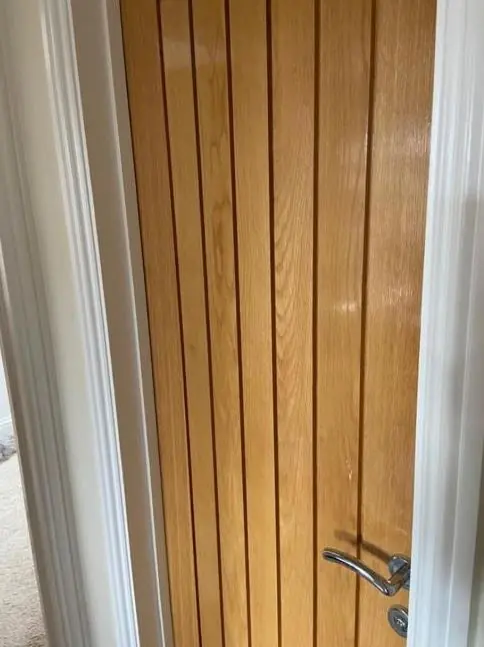
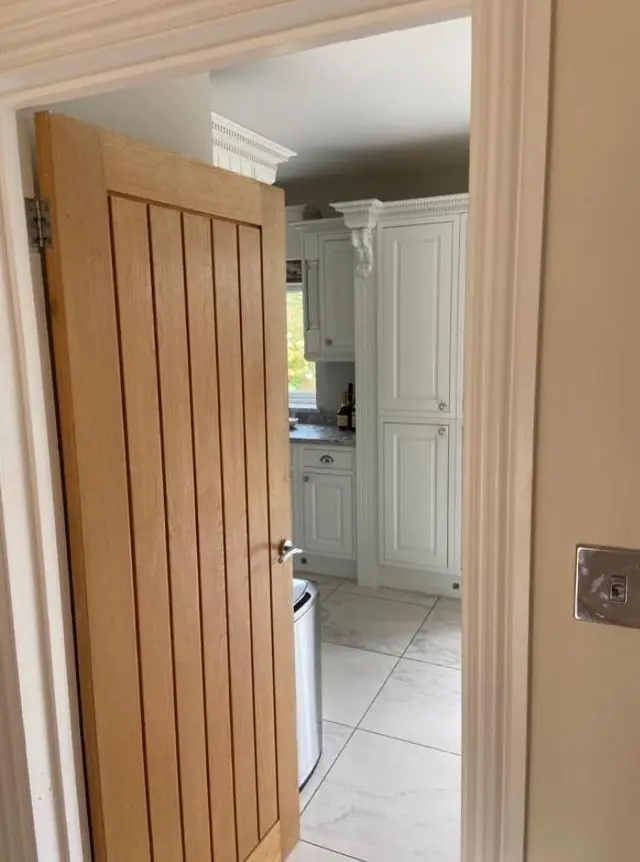
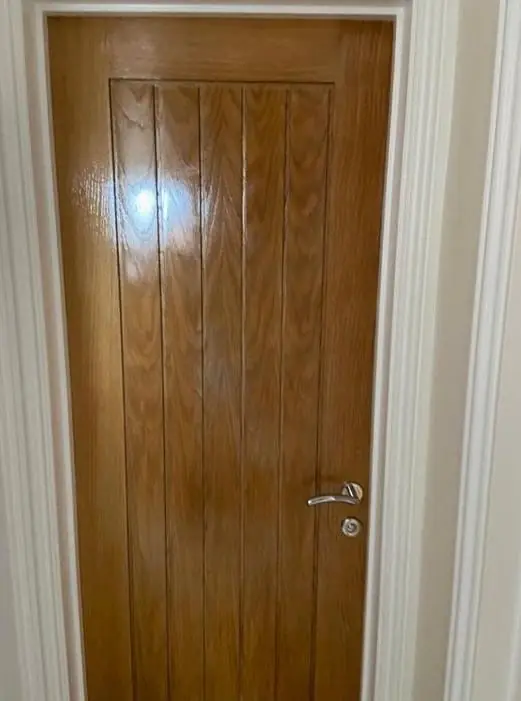
Woodwork is concentrated in these hallways. Boarded doors open straight off the stairs, strings and handrails are often painted, and skirtings follow uneven treads. Cutting in neatly along a wall that bows in and out is slower than on a straight modern stud wall, and we allow for that.
Tall stairwells in the larger houses
Where a staircase rises through a full-height hall, the reach over the stairwell is the main issue. In the larger 18th-century houses the drop from the landing to the hall floor can call for a small scaffold tower set up in the hall, alongside stair platforms on the flight itself. We plan the order carefully: ceiling and high walls first from the tower, then the lower walls and woodwork once the tower is out of the way.
Ornamental ironwork such as a wrought-iron balustrade needs its own treatment. Where it is already painted, it is rubbed down by hand, spot-primed where any rust shows and finished with a brush, with treads and carpet protected underneath. If the house is listed, we keep to the existing colour unless the owner has confirmed any change with West Northamptonshire Council.
Walls that move and breathe
Stairwell walls in the older cottages are usually lime plaster on stone or cob. They are uneven and they need to let moisture through. That affects the materials:
- Paint: a breathable mineral or clay-based emulsion, or a distemper where one is already on the wall, rather than a vinyl matt that can trap damp and blister.
- Repairs: cracks in lime plaster are filled with a compatible lime-based filler, not a hard gypsum one that will shrink away from the edges.
- Wallpaper: on a bowed stairwell wall, lining paper first gives a far flatter result.
- Woodwork: handrails and spindles take the most hands, so they get a hard-wearing satin or eggshell.
Hallways in houses that open straight onto Main Street also see a lot of traffic in wet weather from boots and coats, so a scrubbable but breathable finish on the lower walls makes sense.
Planning the job around the household
East Haddon sits about 7.3 miles from Northampton town centre, and we cover it from our Northampton base. Because the stairs are usually the only route between floors, we agree with you which days the stairs will be partly blocked and keep a clear walkway at the end of each day. Our East Haddon area page covers the village’s houses as a whole, and the guide to choosing a painter and decorator covers what to ask before booking.
Last updated by Dean, DH Painter & Decorator.