Dean gives colour and finish advice in East Haddon as part of a decorating job, about 7.3 miles north-west of Northampton in NN6. Much of the village is built of lias, limestone and Northampton Sand ironstone, and 15 structures are listed, so choices start with the stone and with whether a colour change needs consent.
Three stones set the starting point
In East Haddon the wall is usually the biggest coloured surface on the house, and you cannot repaint it. The listed buildings are described as coursed lias, lias ashlar and limestone, and many cottages are of local Northampton Sand ironstone. Each stone pulls paint colours in a different direction.
| Stone | Its tone | Joinery colours that usually work |
|---|---|---|
| Blue lias | Cool grey, sometimes with a buff weathering | Soft greys, muted greens, off-whites with a grey base |
| Limestone ashlar | Pale cream | Stone whites, warm greys, deep traditional greens on doors |
| Northampton Sand ironstone | Rusty orange to brown | Creams, olive and sage greens, dark browns; bright white can look stark |
On a house that mixes stone with rendered sections, as Walcott House and The Old House do, the render colour has to sit with both. A warm limewash tint tends to read better against lias than a flat brilliant white.
Consent before a colour change on a listed house
With the Grade I Hall, the Grade II* church and a long run of Grade II cottages, a noticeable share of the village is listed. Moving a listed house from white to a strong door colour, or from limewash to a modern masonry paint, is the sort of change the council may want to approve first, so ask West Northamptonshire Council before you commit. We can give you two or three options to put to them, with a note of the paint type, so the discussion is about specifics.
On an unlisted house the choice is usually yours, but it still pays to look along the street. Where cottages sit side by side on Main Street, a front door or window colour is seen against the neighbours’ stone and paint as much as your own, and a shade that works on a sample card can jar in that row.
Metalwork, gates and the Hall’s listed piers
Colour questions are not only about walls and doors. The gates and gate piers to East Haddon Hall are listed, and many village gardens have wrought or cast iron gates and railings. On listed metalwork the colour should match what is already there. On your own gates, a deep green, black or dark grey usually sits more comfortably against lias and ironstone than a bright or glossy shade.
Working with low light under thatch
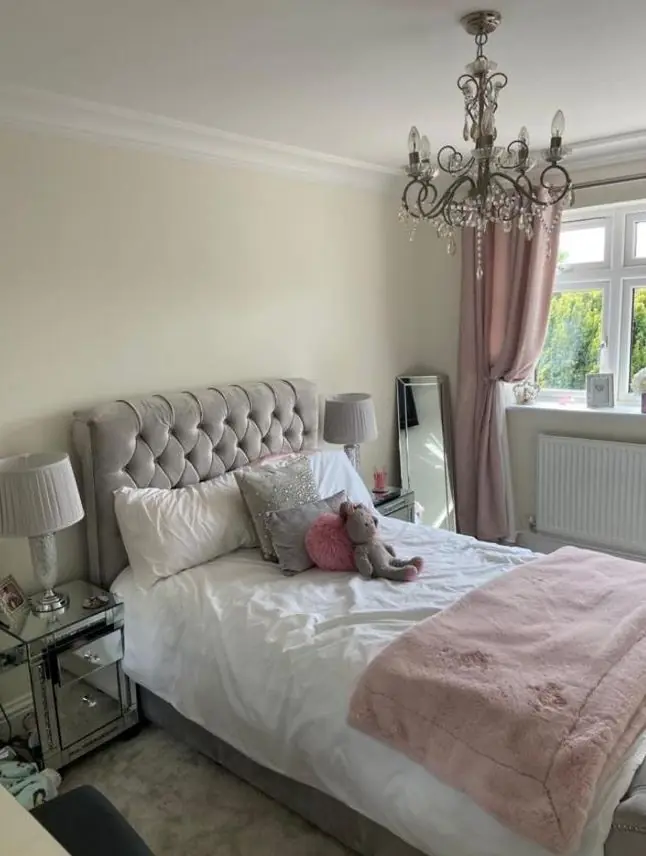
Inside, the thatched cottages pose a different question. Deep thatched eaves come down low over first-floor windows, and the walls are thick, so bedrooms and landings can be dim for much of the day. Pale colours with a warm base help, but a stark white in a low cottage room often looks grey and flat. We test sample patches on two walls and look at them in the light you actually use the room in.
Finish matters as much as colour here. A flat or chalky breathable paint softens uneven lime plaster, while a sheen picks out every dip. On old plank doors and casements, an eggshell or a traditional oil-based finish keeps a period look.
What you get from Dean
- A walk round inside and out, looking at stone, render and light direction.
- Sample patches applied on the actual surfaces.
- A short written list of colours, finishes and paint types to go with the quote.
Our main colour and finish advice page explains how we read light in a room. If the colours are for the outside of the house, see the exterior painting service, and for the village overview, our East Haddon page.
Last updated by Dean, DH Painter & Decorator.