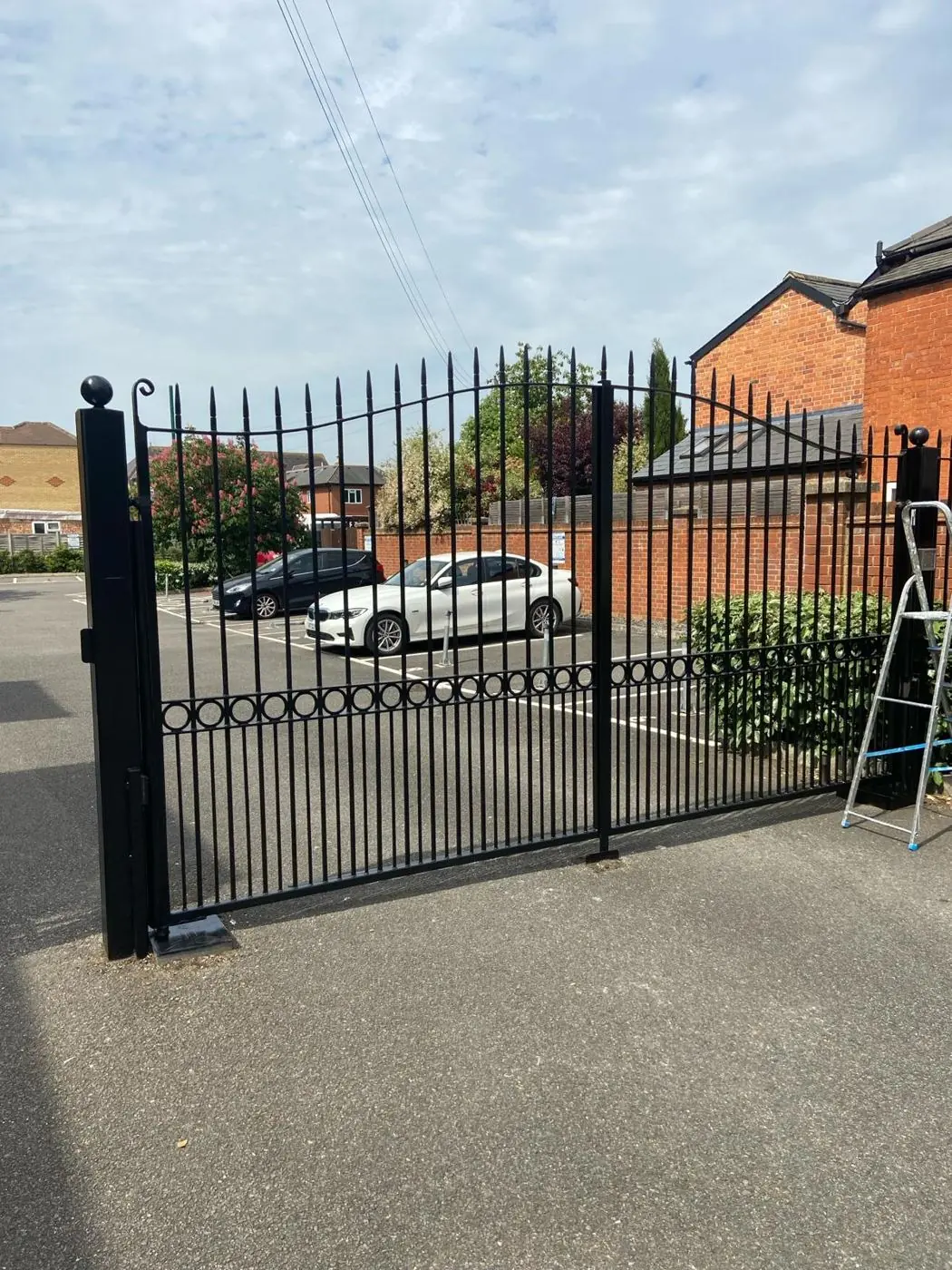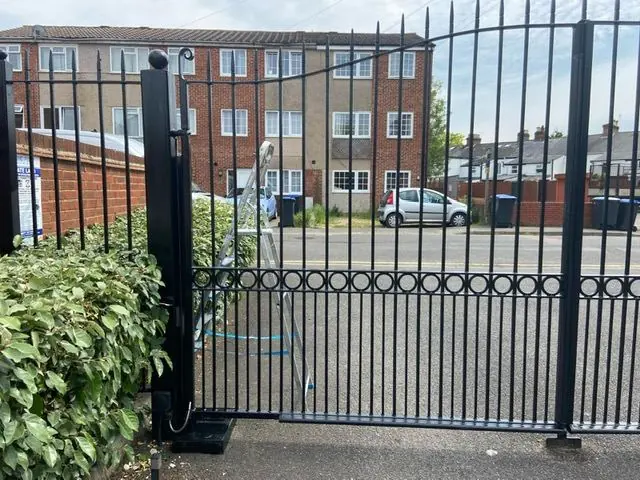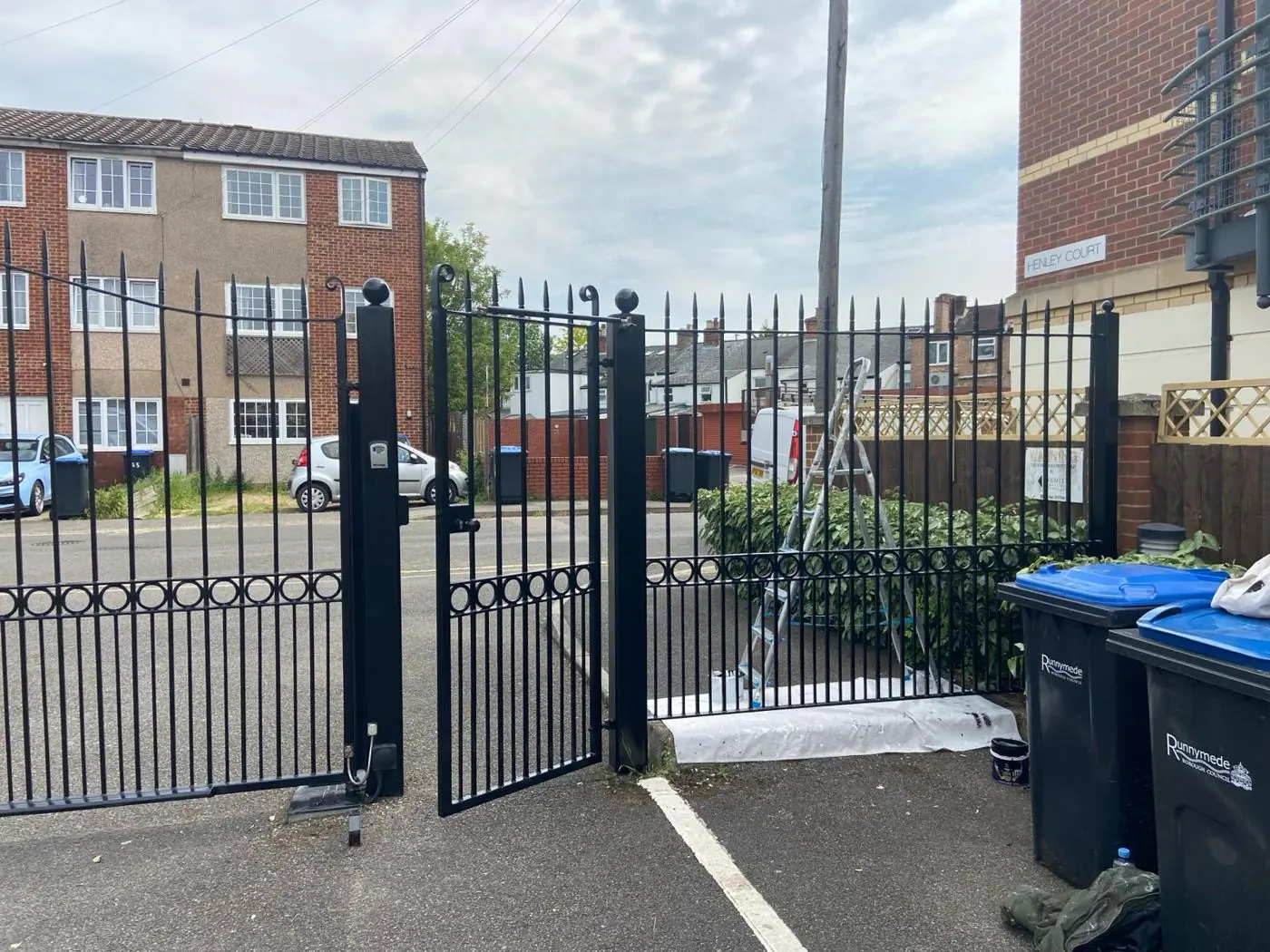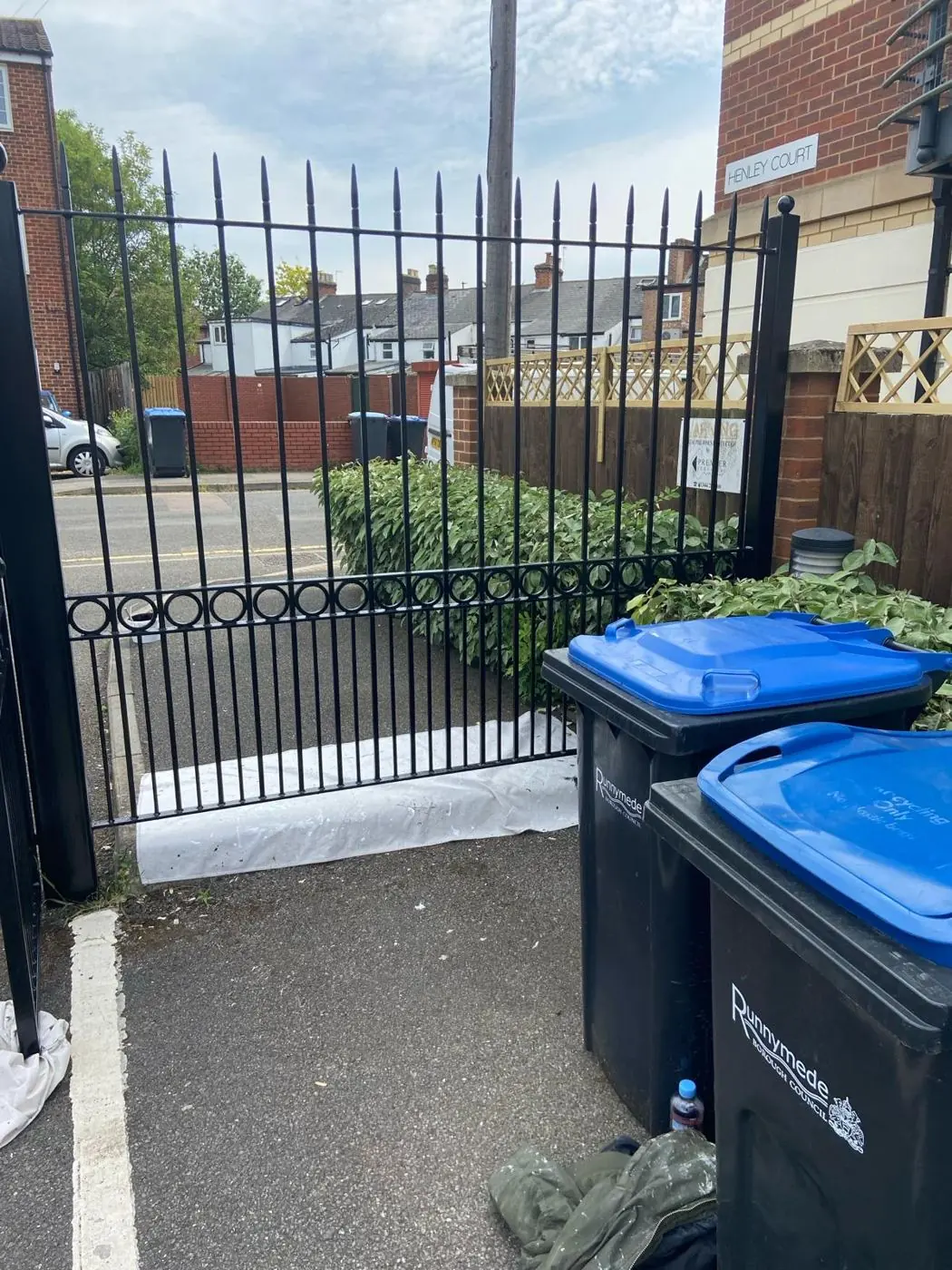
DH Painter & Decorator stains and paints timber fences and gates in East Haddon, the NN6 village 7.3 miles north-west of Northampton. Village gardens here are often large, and timber sits beside lias, ironstone and cob boundary walls, so preparation includes protecting stone. Dean visits and gives a free quote.
Long boundaries and big plots
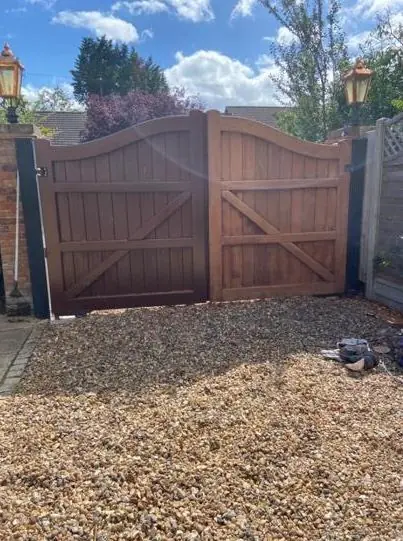
East Haddon is a rural village with generous gardens. The parish holds an open garden day, Haddonstone keeps show gardens here, and the grounds around the Hall are mature and well planted. For garden timber, that usually means more of it than on a town plot: long runs of fencing, field-edge boundaries, side gates, driveway gates and the odd timber outbuilding or bench.
Long runs change how a job is planned. Rather than staining everything in one go, it can make sense to start with the boundary that takes the most weather, or the gate people use every day, and work round the rest. Dean walks the whole boundary at the quote stage, notes which panels are sound, which are grey and dry, and which are soft at the base, and prices only what is worth finishing.
Timber that meets stone and cob
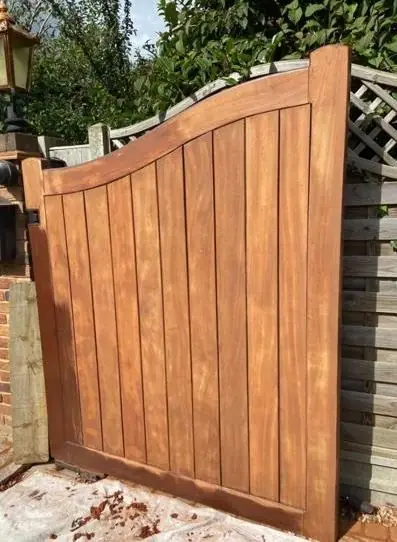
A feature of East Haddon is how much timber is hung on or against old masonry. Gates sit between stone piers, fences butt up to lias and ironstone walls, and on Tilsbury Road a listed cob wall with lias gatepiers is part of the street scene. Wood stain is designed to soak in, and it soaks into porous stone just as readily. A splash of dark stain on a limestone pier or a lime-rendered cob wall cannot be wiped off later.
So where timber meets masonry we mask the stone, brush the last few centimetres of the gate or fence by hand rather than spraying, and keep sheets under the work. On a cob wall the masking itself is chosen with care, as cob and lime render can be soft enough to lift with a strong tape.
Exposure at 90 to 180 metres
The village sits on open upland, higher than most of Northampton. On a boundary that faces open fields, sun and wind dry timber out quickly and rain arrives sideways. Stain on those sections fades and erodes sooner than on a fence sheltered by a house or a hedge.
- On the most exposed runs, a stain with more pigment usually lasts longer than a pale or clear one.
- Gates take wear at hinges, latches and the bottom rail, so those get extra coats and attention to end grain.
- Timber needs to be dry before staining, which on high ground means watching for dew that lingers on shaded sides into late morning.
Spring and early autumn often work well, with summer reserved for the boundaries that are slowest to dry. Our guide to the right seasons for outdoor painting sets out the temperature and moisture limits we keep to.
Colours that sit next to lias and ironstone
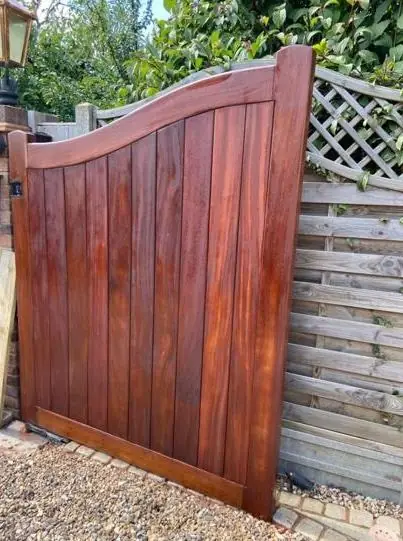
In a village of honey and grey stone, very bright fence colours can look out of place. Warm browns, muted greens and soft greys tend to sit comfortably next to ironstone and lias, and an opaque paint in a heritage shade can suit a gate at the front of an older house. If the gate or wall belongs to a listed building, a change of colour on that structure may need listed building consent from West Northamptonshire Council, so it is worth asking before switching from a natural stain to a strong painted colour.
Shared boundaries are only done on the neighbour’s side with their agreement. The general method we use for staining and painting garden timber is on our main fence and gate staining page, and the rest of our work in the village is listed on the East Haddon page.
Last updated by Dean, DH Painter & Decorator.