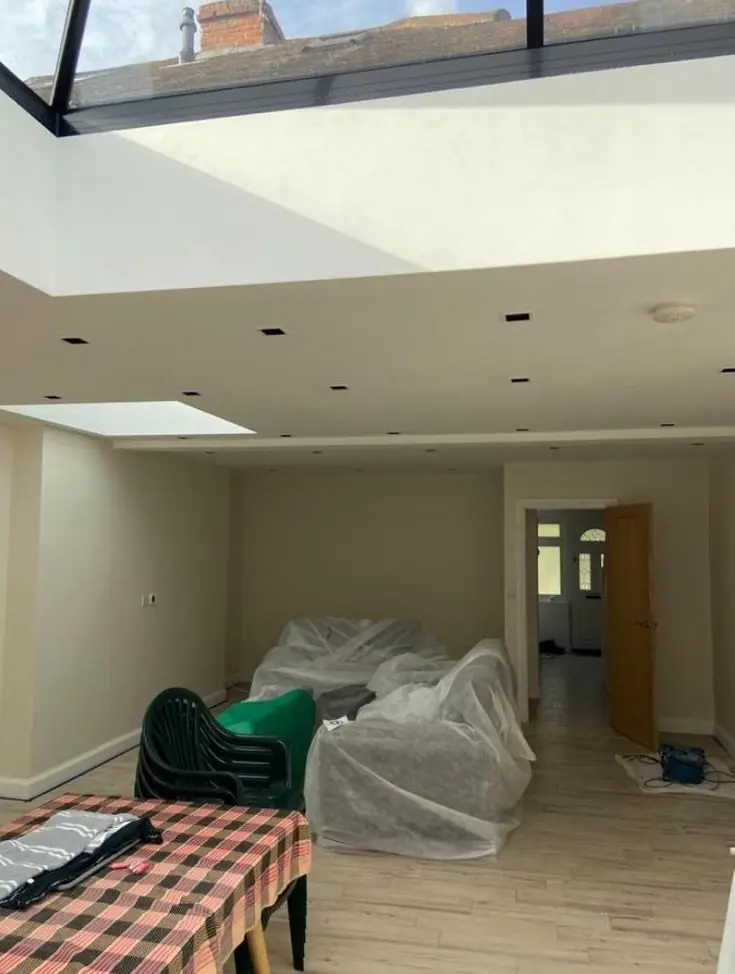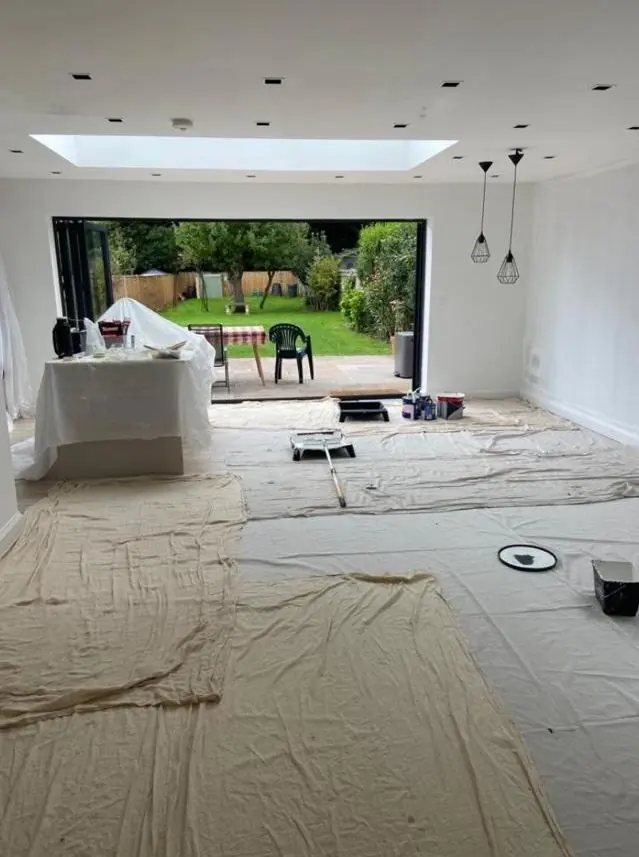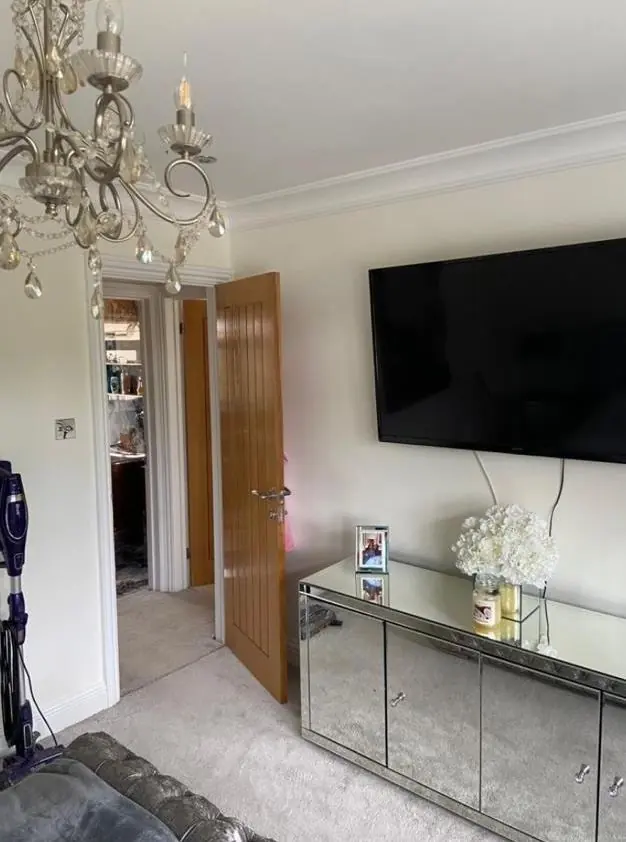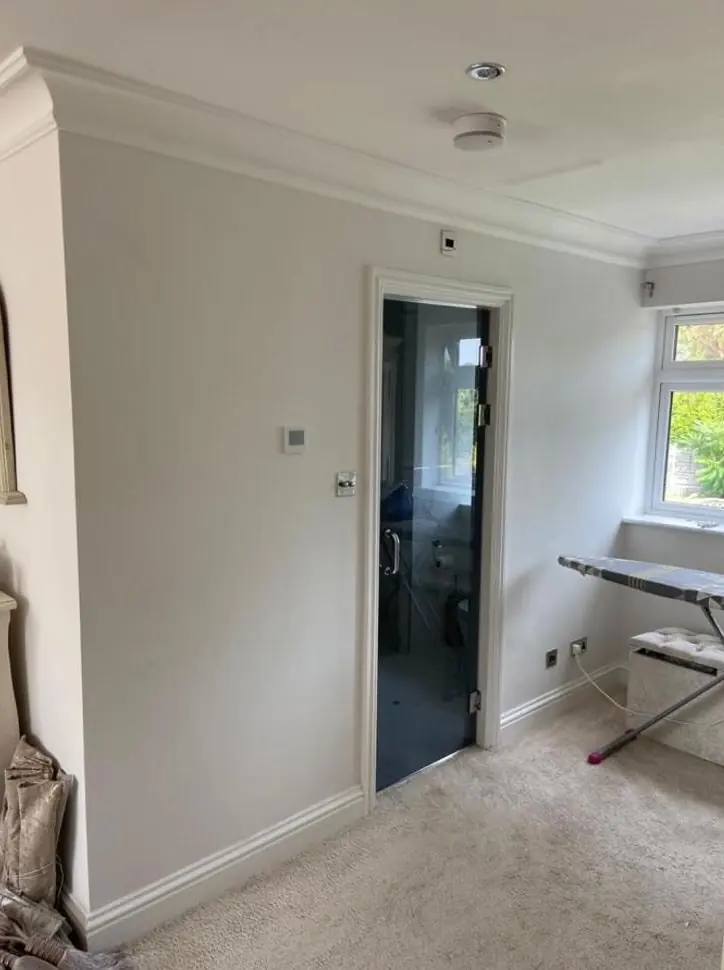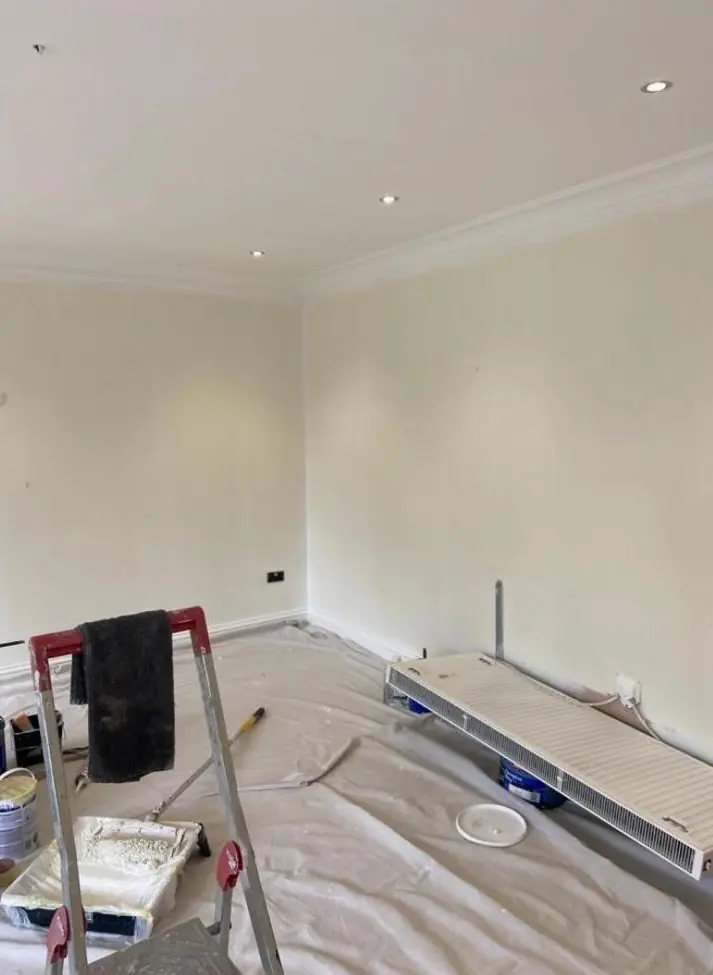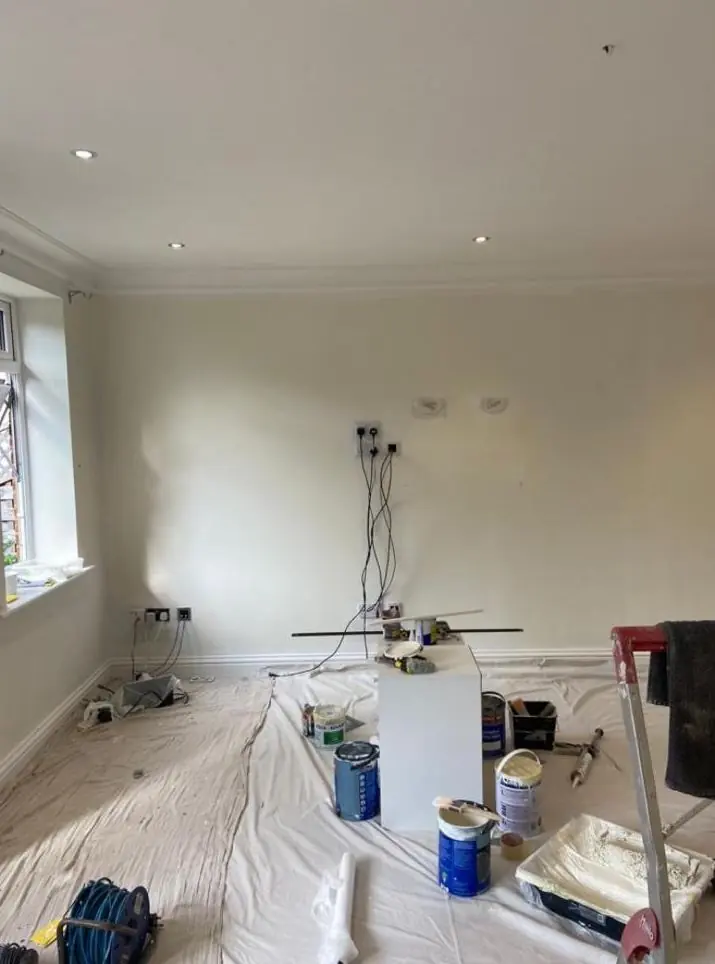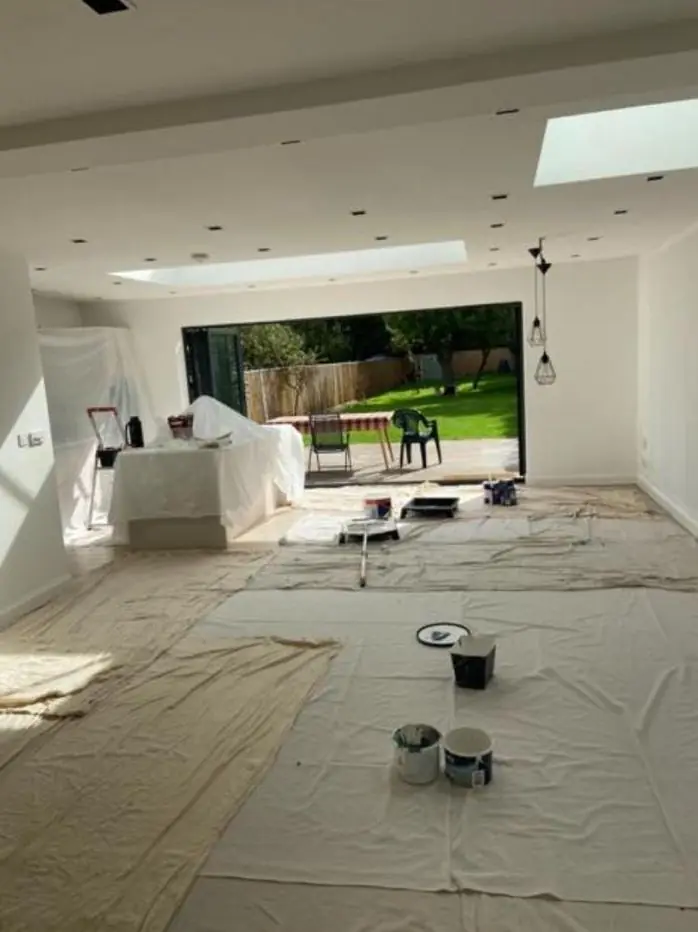
DH Painter & Decorator paints new plaster, extensions and conversions in East Haddon, a village 7.3 miles north-west of Northampton. Dean seals fresh gypsum plaster with a mist coat and treats lime plaster repairs in the village's older stone and cob houses with breathable paints, allowing longer drying times on lime.
Gypsum or lime: the first thing to establish
In a newer house, new plaster almost always means a gypsum skim. In East Haddon that is not a safe assumption. The village’s listed cottages and houses date from the mid-17th century onward and are built of coursed lias, limestone and rendered cob, with lime plaster inside. When a wall in one of those houses is repaired, a good plasterer will usually use lime again, while a rear extension or a converted outbuilding is likely to be finished in gypsum. A single house here can easily have both.
The two need different treatment. Fresh gypsum is sealed with a diluted mist coat and then finished; our guide to painting new plaster and mist coats covers that step by step. Lime plaster cures slowly by taking up carbon dioxide from the air, stays slightly alkaline for a long time and has to remain breathable for life, so it should not be sealed with a standard vinyl emulsion at all.
Drying times on high, open ground
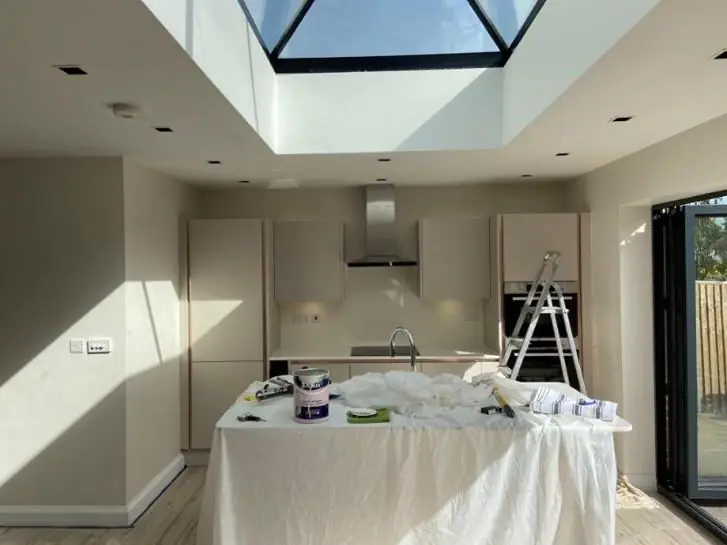
The parish lies on the Northamptonshire Uplands, between 90 and 180 metres above sea level. That height brings cooler temperatures than the town, which slows drying, particularly in thick-walled stone cottages that hold cold and damp through winter. As a rough guide:
| Surface | What we look for before painting | First coat |
|---|---|---|
| Gypsum skim in a new extension | Even, pale colour with no dark patches, including behind radiators and in corners | Mist coat of thinned breathable matt |
| Gypsum on plasterboard in a conversion | Dry joints and no shadowing at tape lines | Mist coat, then spot-fill and sand |
| Lime plaster repair in an old cottage | Fully cured and hard, which can take weeks rather than days | Limewash, distemper or mineral paint, no sealer |
Running heating hard to speed things up tends to cause cracking, especially at the junction with old masonry. Steady ventilation works better, and we will tell you plainly if a wall is not ready.
Where the new extension meets the old house
The weak point of any extension on a lias or cob cottage is the junction. Old walls move a little with the seasons; a new block-and-gypsum extension does not move in the same way. A hairline crack along that line in the first year is common. We fill and decorate it once it has settled, using a flexible filler on the gypsum side and a lime-compatible repair on the old wall. Painting the junction with one hard, sealed coating across both materials is what usually leads to flaking.
New woodwork in an extension also needs to sit comfortably beside old joinery. New MDF or softwood skirtings are sealed, knotted and primed, then finished to match the sheen of the original woodwork in the older rooms, so the two parts of the house read as one.
Conversions and listed houses
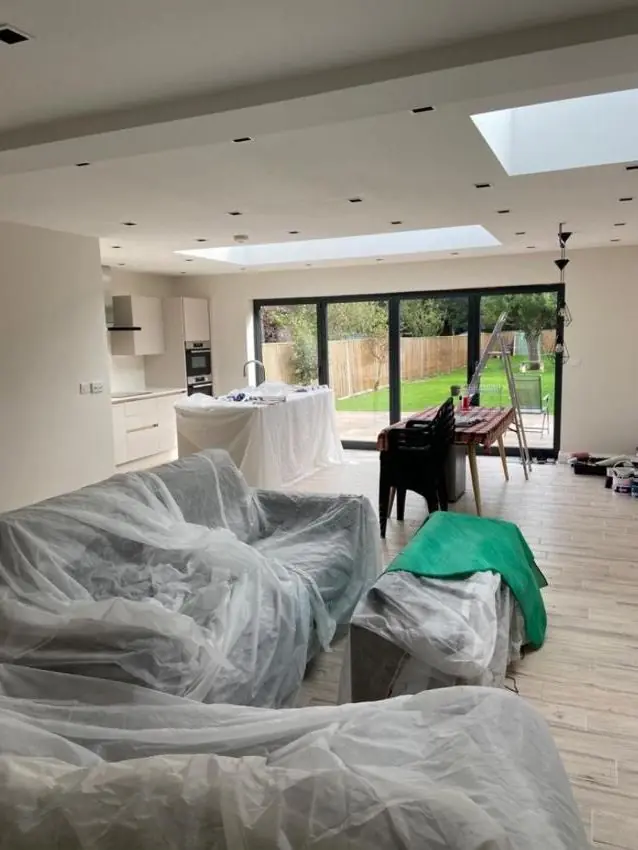
Where a converted building or an extension is attached to a listed house, the planning or listed building consent for the works may set out materials or finishes, including for internal plaster in the historic part. We work to whatever the consent specifies. With some 15 listed structures in the village, it is worth having that paperwork to hand when we quote.
We cover East Haddon from Northampton, around 7.3 miles away, and the standard sequence for decorating a new extension is set out on our new plaster and extension painting page. For more about the village itself, see our East Haddon page.
Last updated by Dean, DH Painter & Decorator.