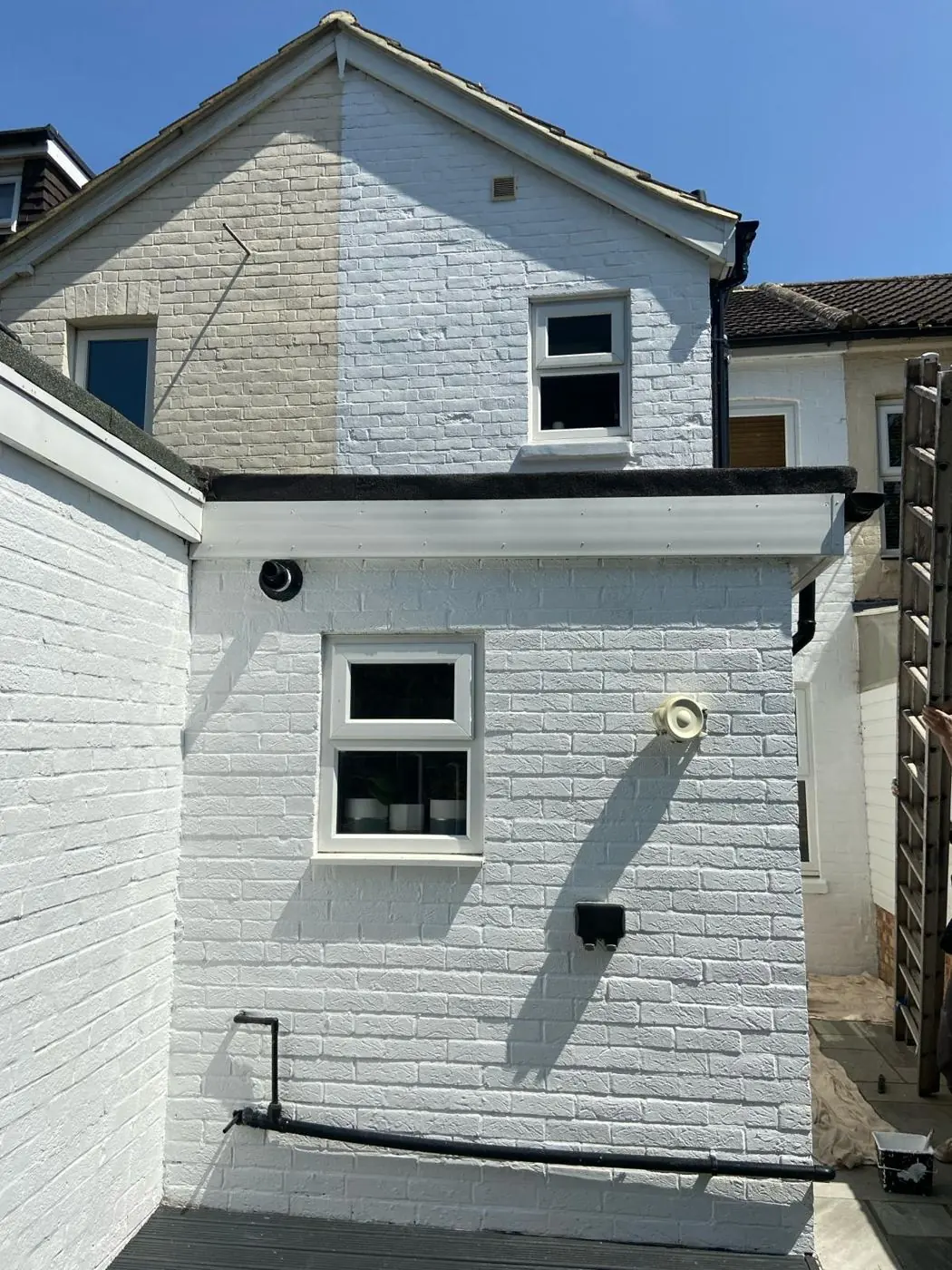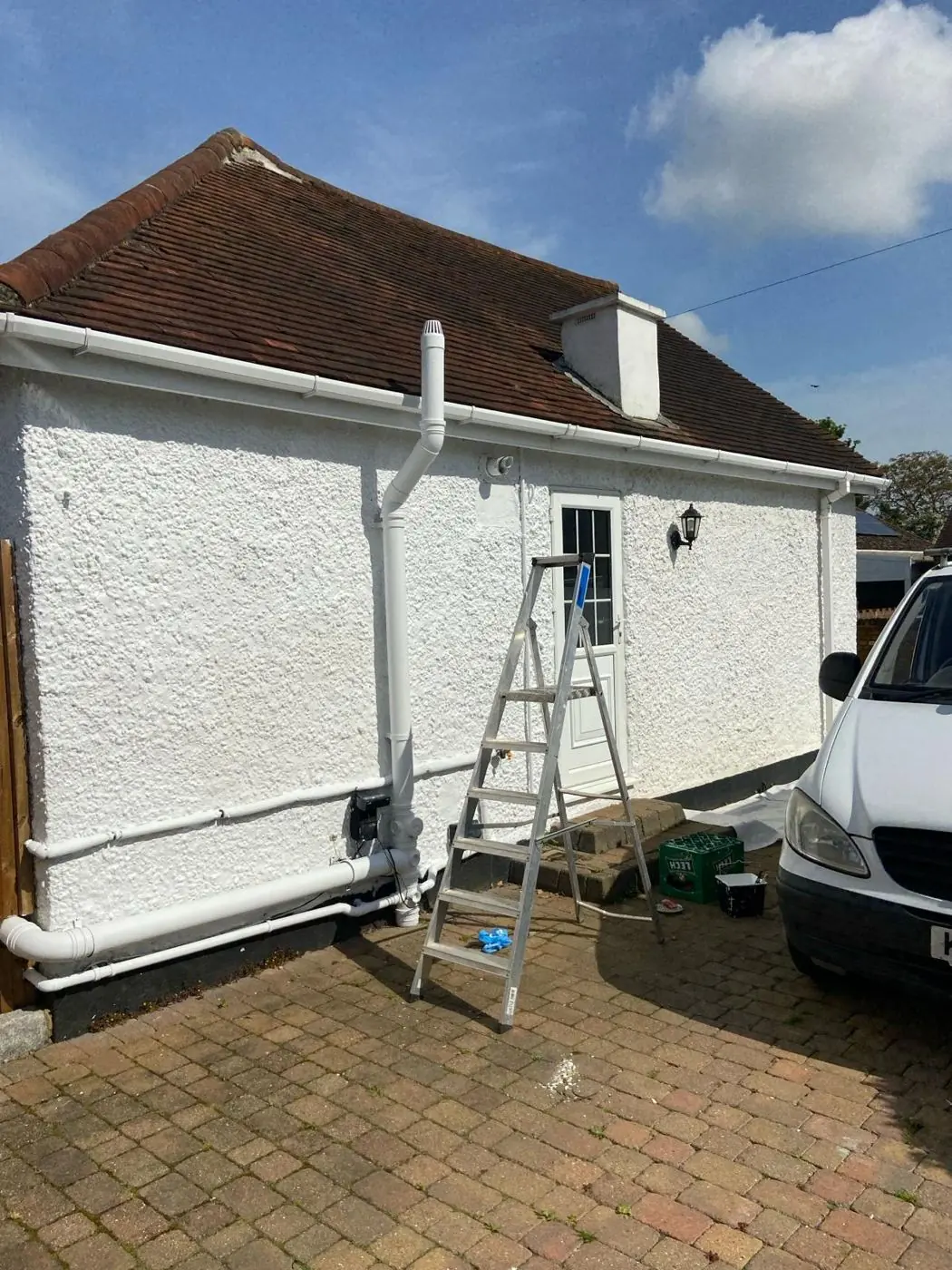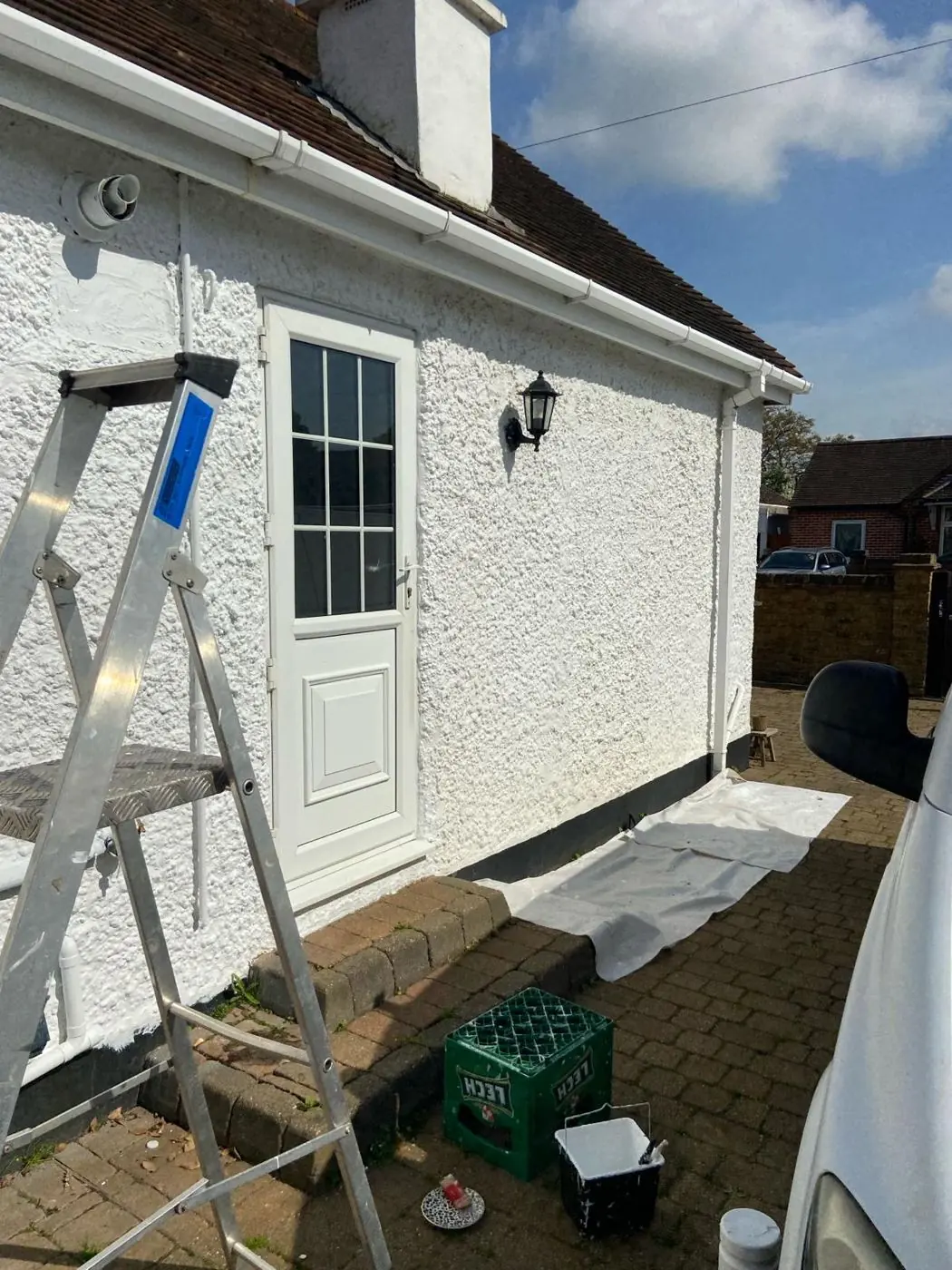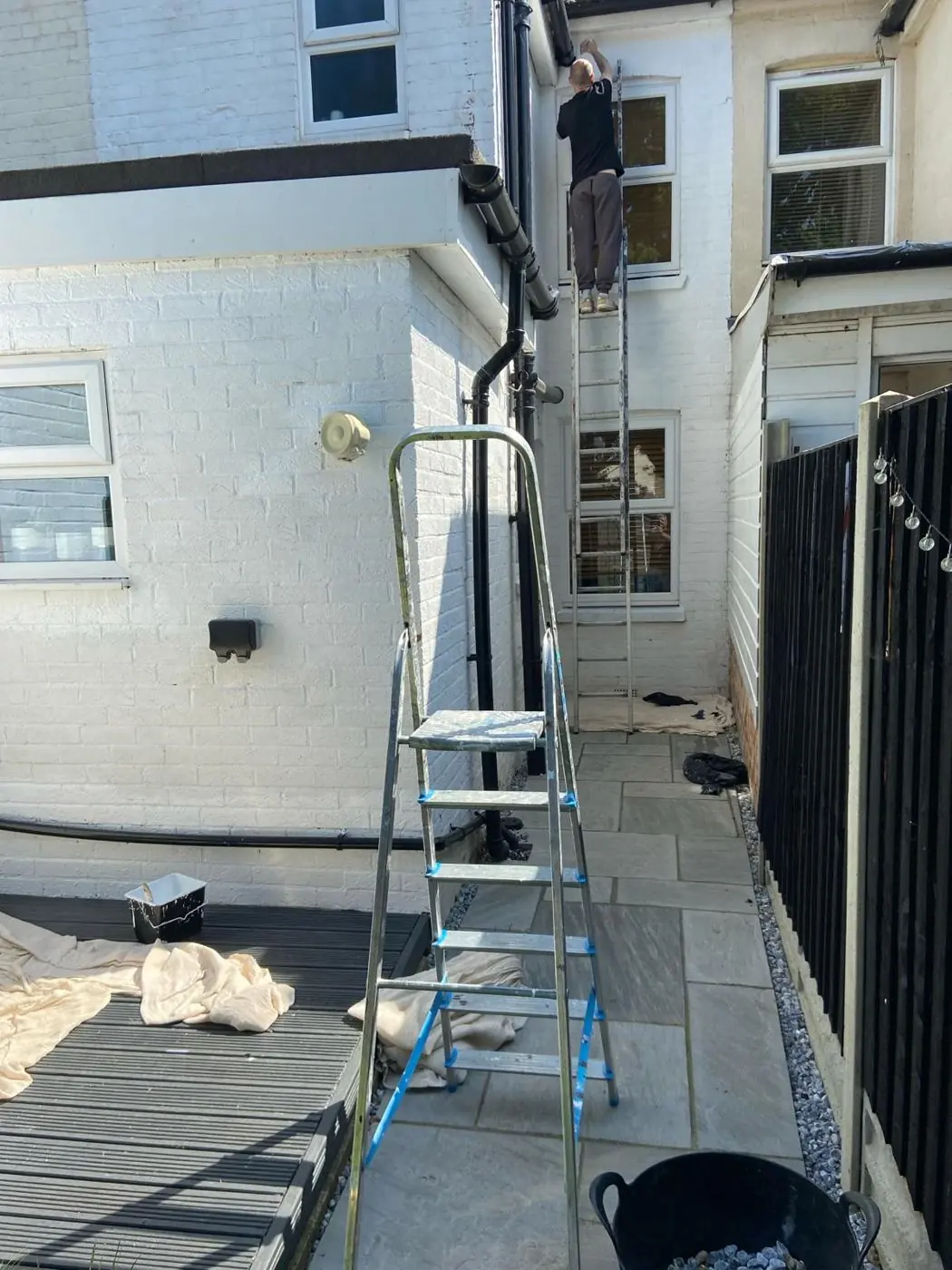
DH Painter & Decorator covers East Haddon from our Northampton base, about 7.3 miles north-west of the town centre along the A428. Dean, with over 30 years in the trade, paints and decorates the village's listed stone and cob cottages, larger period houses, newer homes and local commercial premises.
A stone village on high ground
East Haddon is a small village and civil parish in the Northamptonshire Uplands, roughly halfway between Northampton and Daventry and close to the Althorp estate. It was recorded in the Domesday Book as Edonne, and the 2011 census counted 643 residents. The historic core runs along Main Street, with Church Lane, Vicarage Lane, Holdenby Road, Ravensthorpe Road and Tilsbury Road branching off it, and the A428 passes along the southern edge.
The parish sits between 90 and 180 metres above sea level, on an east-west ridge of Northampton Sand ironstone with Upper Lias Clay below. That height matters for painting. Exterior coatings here take more wind and weather than in Northampton town, so outside work is planned for settled spells and exposed elevations tend to need repainting sooner.
What the houses are made of
Many cottages are thatched and built of local stone. The listed-building records describe coursed lias and limestone, lias ashlar, and rendered cob, and the village also draws on Northampton Sand ironstone from the ridge it stands on. Datestones on listed houses run from 1655 at The Gardeners House to 1748 at Walcott House, and Well Cottage is believed to be older still.
| Building type | Examples | What it means for decorating |
|---|---|---|
| 17th and 18th-century stone cottages | The Thatched House, The Old House, Red Lion Cottage, The Forge House | Leave bare stone unpainted; breathable paints on lime plaster inside |
| Rendered cob cottages and walls | Nos 4 and 5 Main Street; the cob wall on Tilsbury Road | Limewash or lime-compatible paint only |
| Farmhouse and estate buildings | Hall Farmhouse; The Hall Flats, the former stable block | Casements under keyblocked arches, stone mullions with leaded lights |
| Country house | East Haddon Hall, c.1780 | Sash windows with glazing bars, high formal rooms |
| 19th-century buildings | The Old Chapel (1811), the Gothic Vicarage (1856) | Bargeboards and timber eaves details to maintain |
Several of these buildings have had later lives that show in their interiors. East Haddon Hall was a maternity hospital in the 1940s and a girls’ boarding school in the 1960s before becoming a private residence in 1971, and the old stable block is now The Hall Flats. The primary school’s original classroom dates from 1790, with extensions in the mid-19th century, 1904 and 1973, so one building can hold several generations of plaster and joinery. In mixed buildings like these, we check each surface rather than assume one paint suits every wall.
There are newer houses too, and the work on those is more conventional: gypsum plaster, uPVC or modern timber, and standard emulsions and masonry paints.
Breathable walls inside and out
The single most important point about decorating old East Haddon houses is that their walls need to breathe. Lias, limestone and ironstone are soft stones, and cob is earth. Acrylic masonry paint on the outside, or heavy vinyl emulsion and vinyl wallpaper on the inside, slows the escape of moisture and can lead to blown render, flaking paint and damp walls.
- Bare stone: left unpainted. Paint should never go onto clean stone dressings, mullions or quoins.
- Rendered cob: limewash or a lime-compatible paint, as on render and masonry painting jobs.
- Part-rendered fronts: on houses like Walcott House and The Old House, we identify the existing coating before choosing a new one.
- Lime plaster inside: breathable emulsion, mineral paint or distemper, with lining paper before any wallpaper on uneven walls.
Our interior painting and exterior painting pages explain our general method; the village pages for each service go into how it applies here.
Thatch, casements and leaded lights
Thatched roofs change the outside job. Eaves are low and deep, so first-floor windows are tucked under the thatch, and ladders have to be placed so they never bear on it. Thatched cottages have little or no fascia and soffit; that work applies mainly to the slate-roofed stone houses, the Vicarage’s bargeboards and newer homes.
Timber casements under wooden lintels or in moulded stone surrounds are common. They need careful hand preparation through many old layers, then microporous or linseed-type paints that let old timber move. Stone mullioned windows with leaded lights, at The Gardeners House, The Hall Flats and the rear of Walcott House, are not painted at all, though the reveals around them are, which makes for slow, careful cutting in. Plank and panelled doors and skirtings inside get the same patient prep, covered on our woodwork painting page.
Listed buildings and consent
East Haddon has 15 listed structures. They include the Grade I Hall, built about 1780 to a design by John Johnson of Leicester; the Grade II* Church of St Mary, of coursed lias; a run of Grade II cottages and houses; the Hall’s gates and gate piers; and the cob wall on Tilsbury Road. Changing the colour or type of finish on a listed building may need listed building consent, so owners should check with West Northamptonshire Council first. Like-for-like redecoration is usually straightforward. We found no conservation area appraisal or Article 4 direction for the village on the council’s lists, so we make no claim about one.
The listed gates to the Hall are a reminder that metal work needs the same care: wrought and cast iron gates and railings should be rust-treated and repainted in a colour that matches what is there.
Businesses and community buildings
The village has no recorded shops, but it does have commercial premises. Grovelands Business Park, set up in 2015 on former farm buildings off West Haddon Road, has 20 office suites from 500 to 8,000 sq ft with free on-site parking. Repaints there are scheduled around tenants in occupied offices. The Red Lion on Main Street, a pub, restaurant and hotel, needs hard-wearing, scrubbable finishes in trade areas and bedrooms. The Village Hall and the 1998 sports pavilion on the War Memorial Playing Fields are the other buildings where commercial painting applies.
Arranging a visit
The old houses on Main Street front straight onto the road, so front elevations are worked from the roadside and we plan where the van can wait. Dean visits, looks at the stone, render, plaster and joinery, and gives you a written quote. For what drives the cost, see our decorating cost guide. We are fully insured, and we also cover nearby villages including Long Buckby, Guilsborough, Harlestone, Spratton and Creaton.
Last updated by Dean, DH Painter & Decorator.