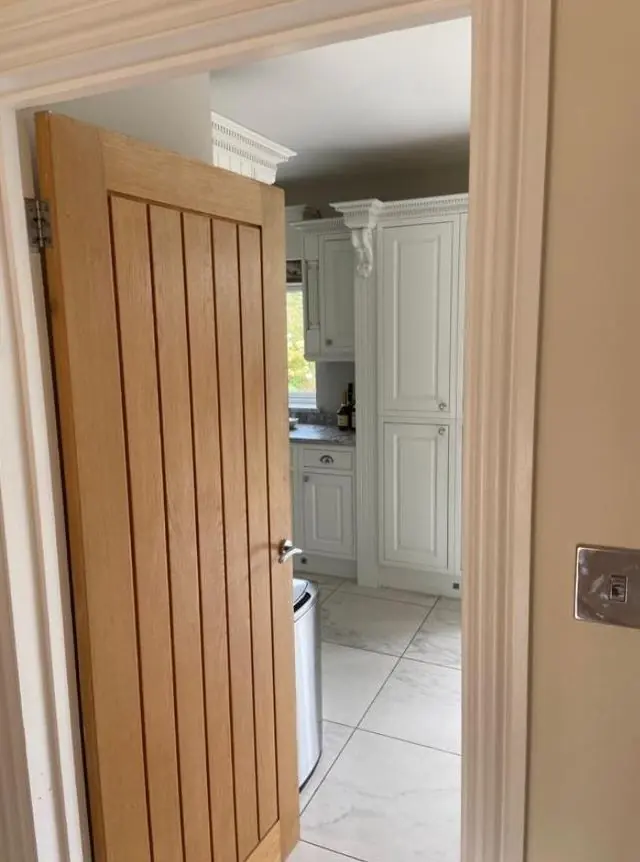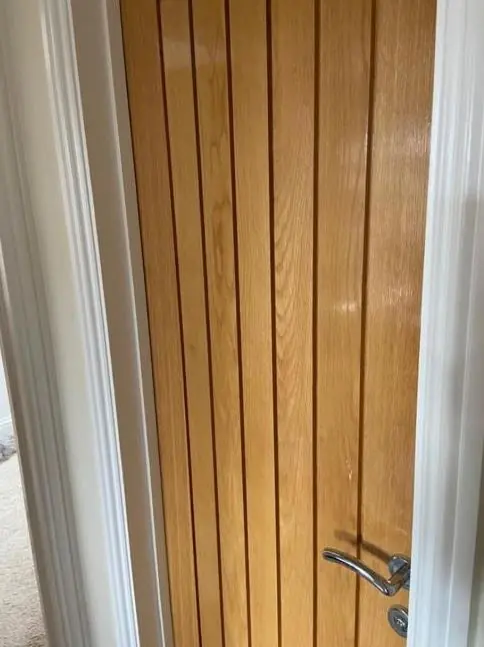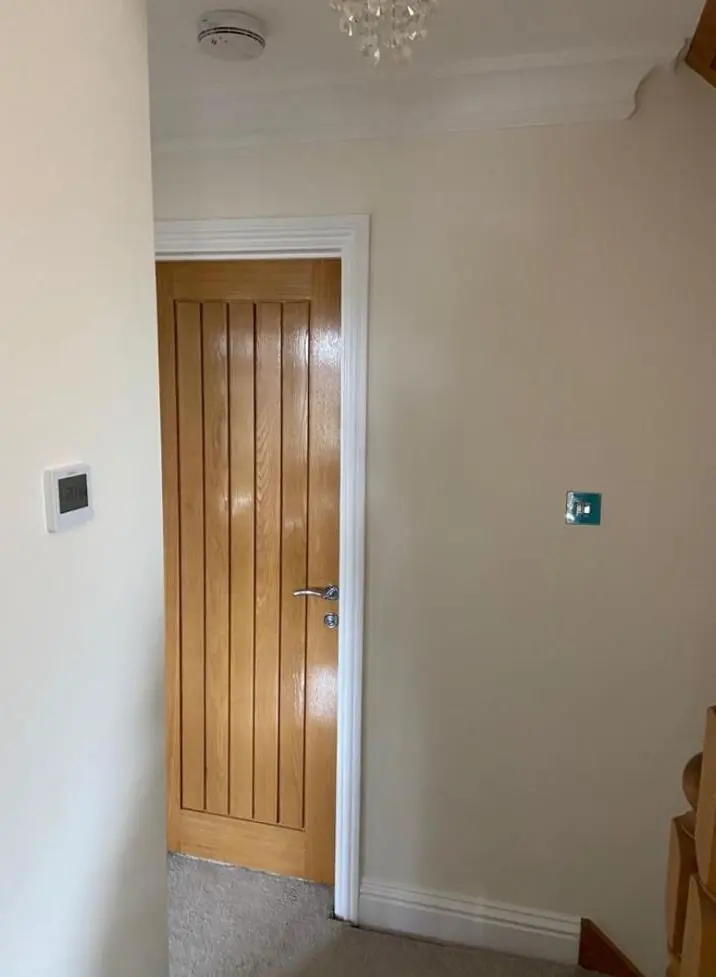
DH Painter & Decorator paints doors, skirtings, architraves and window joinery in East Haddon, a village 7.3 miles north-west of Northampton in the NN6 postcode. Dean has over 30 years in the trade and works from our Northampton base, preparing old woodwork by hand and choosing oil-based, microporous or linseed-type finishes to suit each piece of timber.
Joinery that spans three centuries
A cottage with a 1690s datestone over the door can have a front door, skirtings and casements that have been patched and repainted for most of the time since, and in East Haddon several listed houses carry datestones of that age, The Old House (1691) and Red Lion Cottage (1695) among them. Cottages along Main Street and on Church Lane and Ravensthorpe Road have timber casements under wooden lintels or set in moulded stone surrounds, and their doors tend to be ledged plank or simple panelled types rather than the moulded factory doors found in newer estates. East Haddon Hall, built around 1780, sits at the other end of the scale with sash windows divided by glazing bars.
That range matters when you paint. A plank door that has hung in a stone cottage for generations has shrunk, swelled and been repainted many times over. Its surface is uneven, its joints move with the seasons and a hard, brittle modern gloss can crack along every board line within a couple of winters. Our main door, skirting and woodwork painting page covers the standard process; here we focus on what the village’s older joinery asks for.
Many coats deep: preparing old cottage woodwork
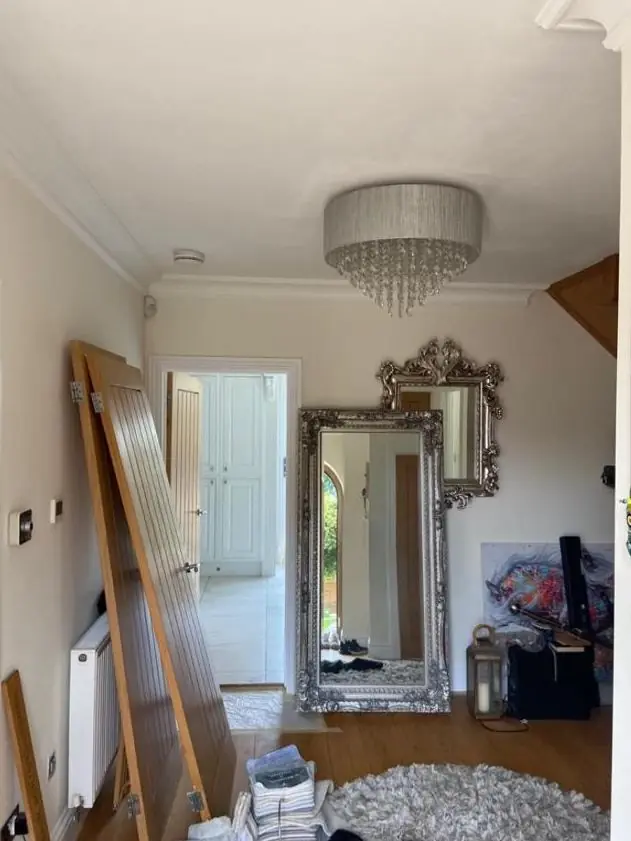
Woodwork in a 17th or 18th-century house has usually been painted far more often than anyone has stripped it. Skirtings sit proud with built-up layers, panel mouldings lose their crispness and door edges stick. Preparation is most of the job:
- Testing older layers before any abrading, because paint applied before the 1960s may contain lead. Where it does, we keep sanding wet and dust down, and never burn it off.
- Scraping back flaking paint to a sound edge and feathering it in, rather than chasing every layer back to bare wood.
- Easing doors that bind on swollen frames so new paint is not scuffed off on the first day.
- Filling splits in plank doors with a flexible filler that can move with the timber.
On uneven lime plaster, skirtings rarely meet the wall in a straight line. We caulk only where the gap is stable; on old cob or lime walls, a rigid bead of decorator’s caulk can trap damp and crack, so some gaps are better left alone or filled with a lime-compatible mix.
Which finish suits which surface
There is no single paint for every door in a village like this. The table below sets out the usual choices.
| Surface | Typical East Haddon setting | Finish we would usually suggest |
|---|---|---|
| Ledged plank doors | Stone and cob cottages on Main Street | Microporous satin or traditional oil eggshell that flexes with the boards |
| Timber casements under wooden lintels | Thatched and slate-roofed cottages | Linseed-type or microporous paint so damp in old timber can escape |
| Georgian sashes with glazing bars | East Haddon Hall, c.1780 | Oil-based or waterborne trim paint, applied thinly so sashes still run |
| Skirtings and architraves | Rooms with lime plaster walls | Satinwood or eggshell; we avoid high gloss on very uneven boards |
Where a house is listed, a change of colour or finish on external doors and windows may need listed building consent from West Northamptonshire Council. Like-for-like repainting is normally fine, but it is worth checking before switching from a traditional colour to something new.
Stone mullions, leaded lights and low beams
At The Gardeners House, The Hall Flats and the back of Walcott House, the windows are stone mullions holding leaded glass. Neither the stone nor the lead cames take paint, so the work there is cutting in the internal timber and reveals cleanly and protecting the glass. That is slow, close work with small brushes, and we allow time for it in the quote rather than rushing it at the end of the day.
Low ceilings and exposed beams in the older cottages also mean door heads and architraves sit tight under timber. We mask beams that are bare or limewashed so trim paint stays where it belongs.
Our van comes out from Northampton, roughly 7.3 miles away, and woodwork jobs here sit alongside the rest of our East Haddon painting and decorating work. For a sense of how woodwork jobs are priced, see our painter and decorator cost guide.
Last updated by Dean, DH Painter & Decorator.