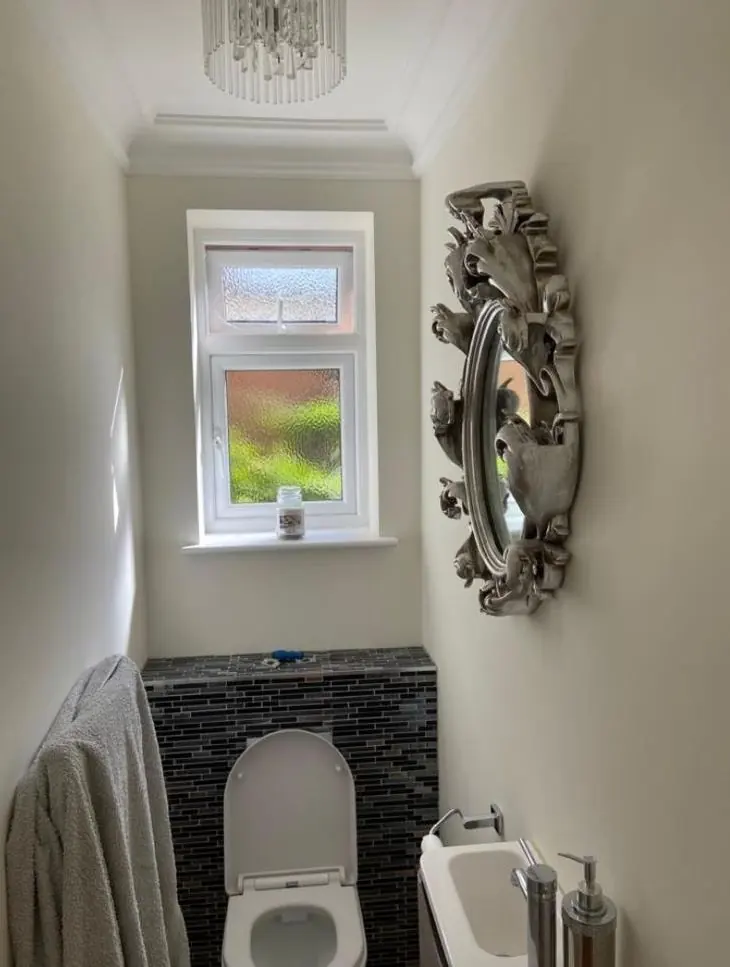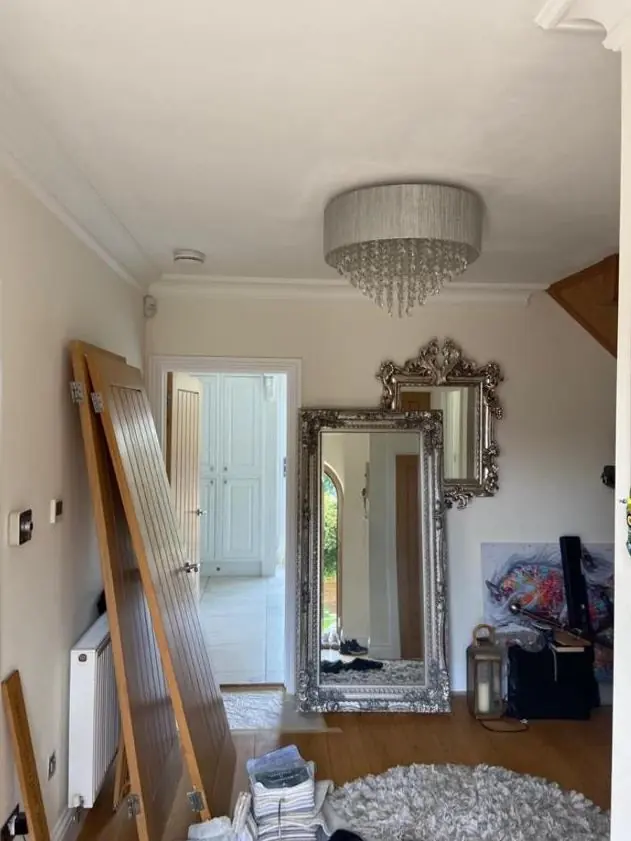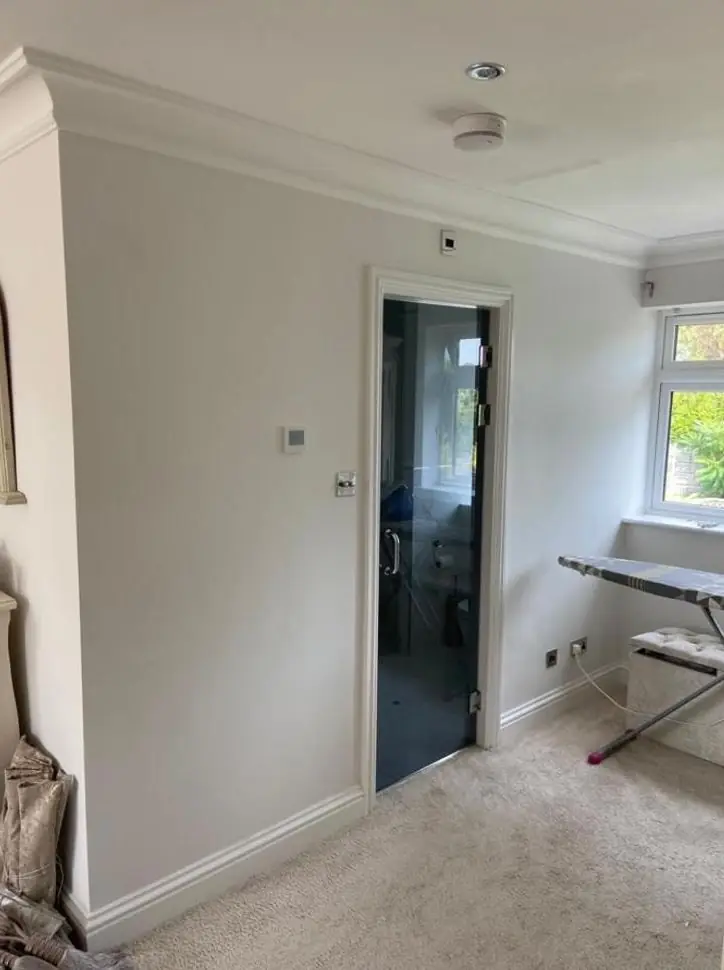
We apply decorative and traditional finishes in East Haddon, a NN6 village about 7.3 miles north-west of Northampton. With rendered cob cottages, lias and limestone houses and 18th-century formal rooms, the finishes that suit the village are mostly limewash, distemper and carefully picked-out period detail rather than modern feature effects.
Limewash on the village’s cob
Nos 4 and 5 Main Street are mid-18th-century thatched cottages of rendered cob on a lias plinth, and a cob wall with lias gatepiers stands on Tilsbury Road. Cob is earth, and it has to dry out through its surface. Limewash is the traditional finish for it: a thin coat of slaked lime, often tinted with earth pigments, that hardens as it reacts with the air and lets moisture escape.
Limewash is applied quite differently from paint. The wall is dampened first, and the wash goes on in several very thin coats rather than two thick ones. It looks patchy and translucent while wet and dries much paler. Each coat needs time and the right weather, so on an exposed site like this, at 90 to 180 metres up in the Northamptonshire Uplands, we avoid frost, strong sun and drying winds. The result has a soft, slightly mottled finish no masonry paint matches. It does need renewing every few years, and that is part of how it protects the wall.
Pigment choice matters too. Earth pigments such as ochres and umbers mixed into limewash give the warm creams and buffs that sit beside lias and ironstone, and because limewash dries several shades lighter than it looks in the bucket, we brush test patches and let them dry fully before you decide.
Soft distemper and old ceilings
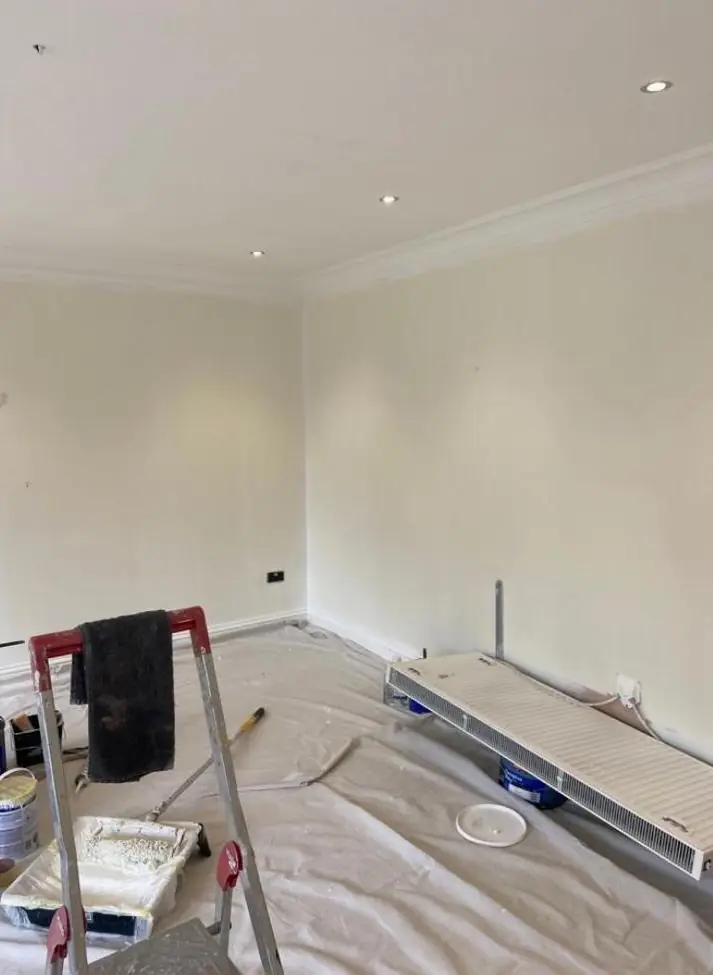
Ceilings in houses of the 17th-century East Haddon type were traditionally finished in soft distemper, and some may still carry it under later coats. It is chalk-based, flat and very breathable, and it is still a sensible finish on lime plaster between beams. Most modern emulsions will not stick to old distemper, so before redecorating we test it. If it rubs off on a damp cloth, it is either washed off back to plaster or refreshed with distemper. Done properly, it gives the deep, chalky matt that suits low cottage rooms.
Picking out detail in the formal rooms
The bigger 18th-century houses, and East Haddon Hall with its sash windows and glazing bars, offer the more classic decorative work: panelling, dado and picture rails, cornices and door cases picked out by hand in a second colour or a different sheen. On panelling we clean the mouldings first, so new paint keeps the profile crisp, and use a lighter tone on the panel faces against a deeper frame, or the reverse.
- Panelling and mouldings in a tonal two-colour scheme
- Glazing bars and sash frames cut in by hand
- Traditional graining on plank doors where a room calls for it
Where a modern effect fits, and where it does not
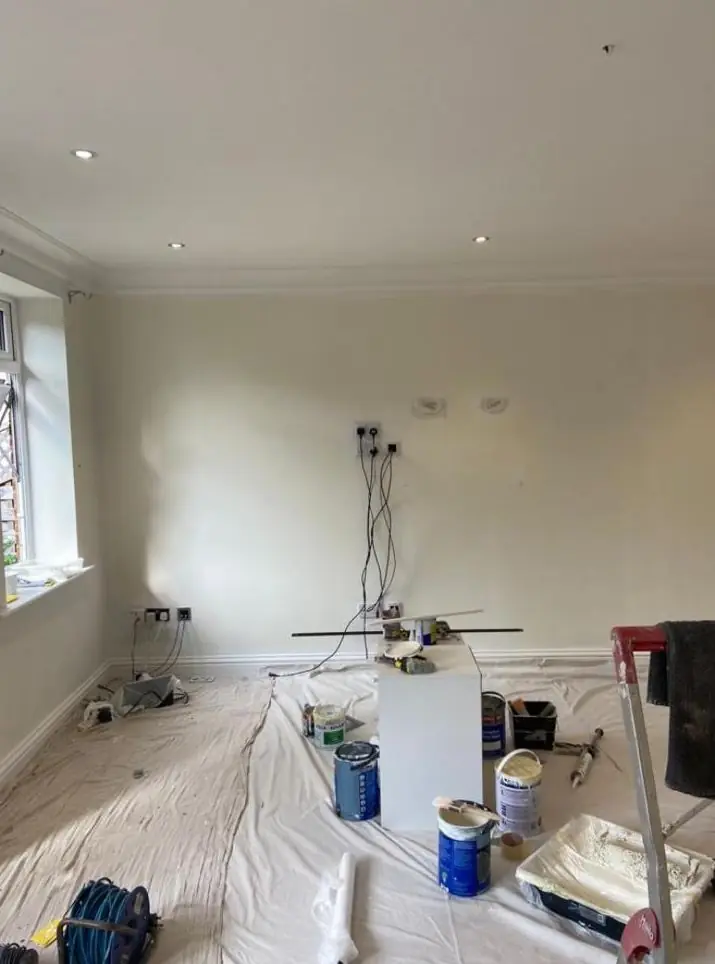
One more traditional option is a stone-coloured lime or mineral paint on plastered reveals and chimney breasts inside, which gives a subtle, slightly varied surface without looking like an applied effect.
Faux plaster effects, metallic glazes and bold feature walls have their place in the village’s newer houses and in office space such as the Grovelands Business Park suites. On a listed cottage they rarely suit the building, and applying a modern coating over historic lime finishes can harm the fabric. If your house is listed, check with West Northamptonshire Council before changing a traditional finish to a modern one, as some changes need consent.
The decorative finishes service describes feature walls and faux effects in more detail. For breathable coatings on the outside of cob and stone, see render and masonry painting, and for how the village’s stone and cob houses shape our other services, the East Haddon page.
Last updated by Dean, DH Painter & Decorator.