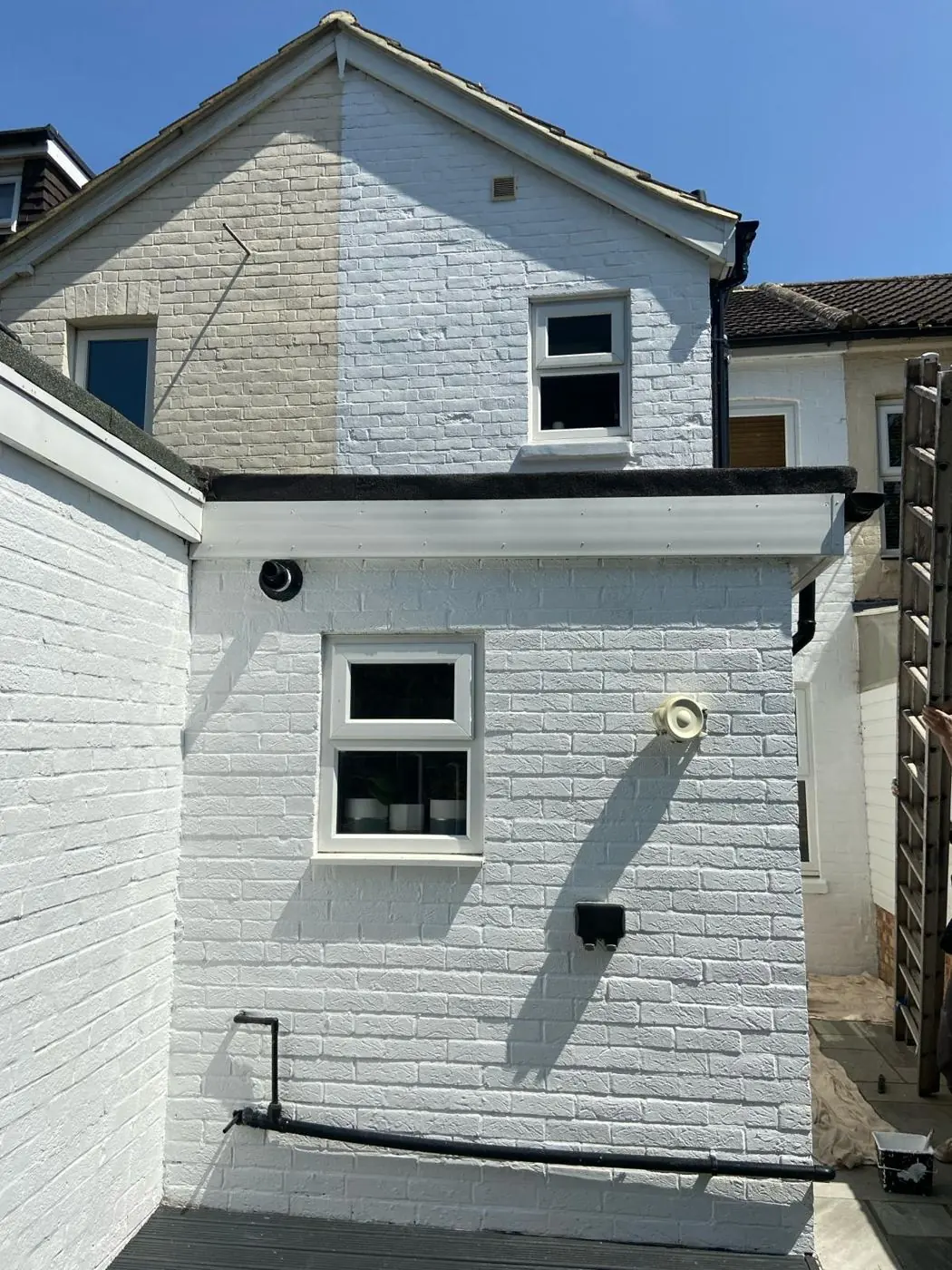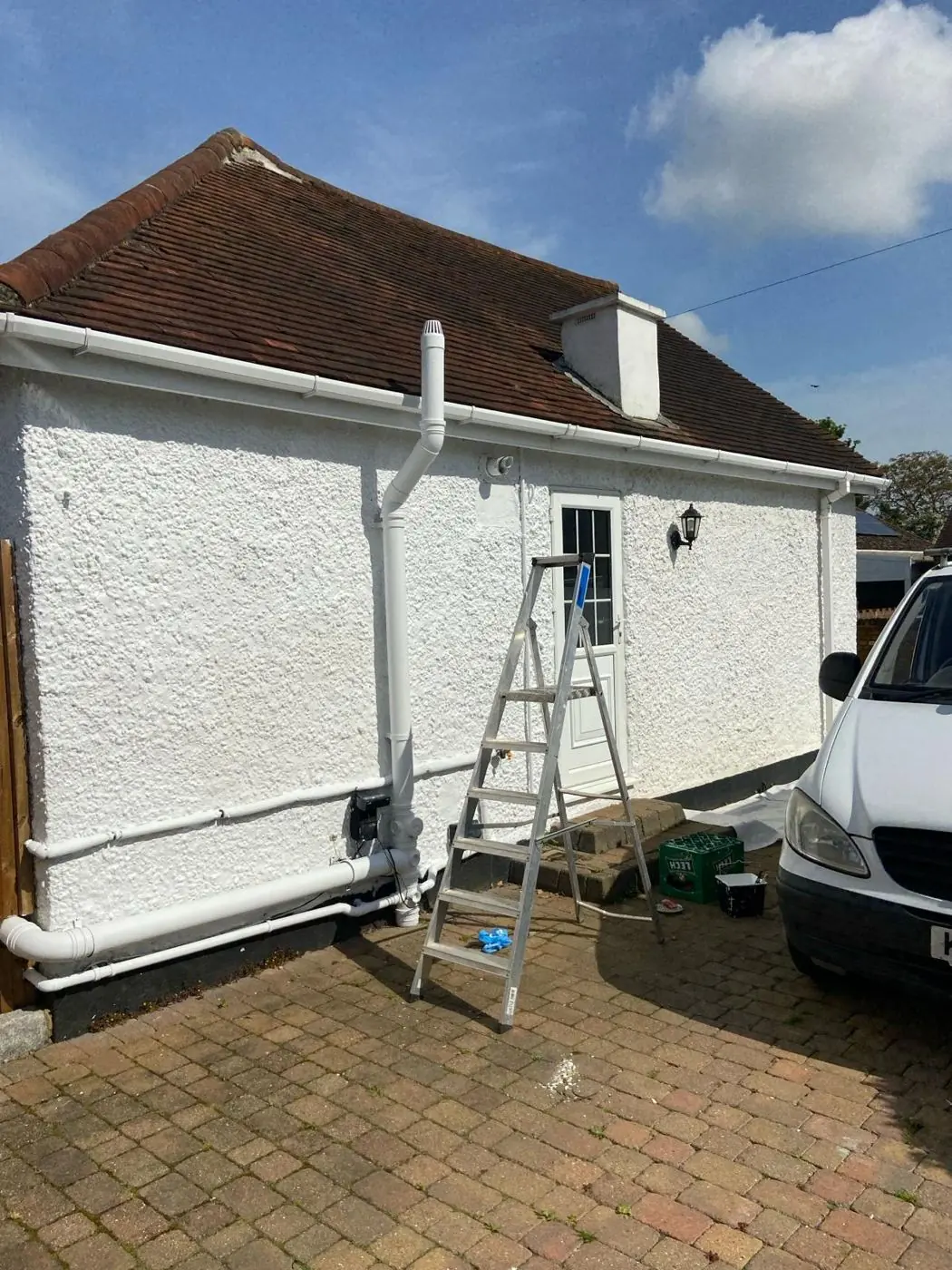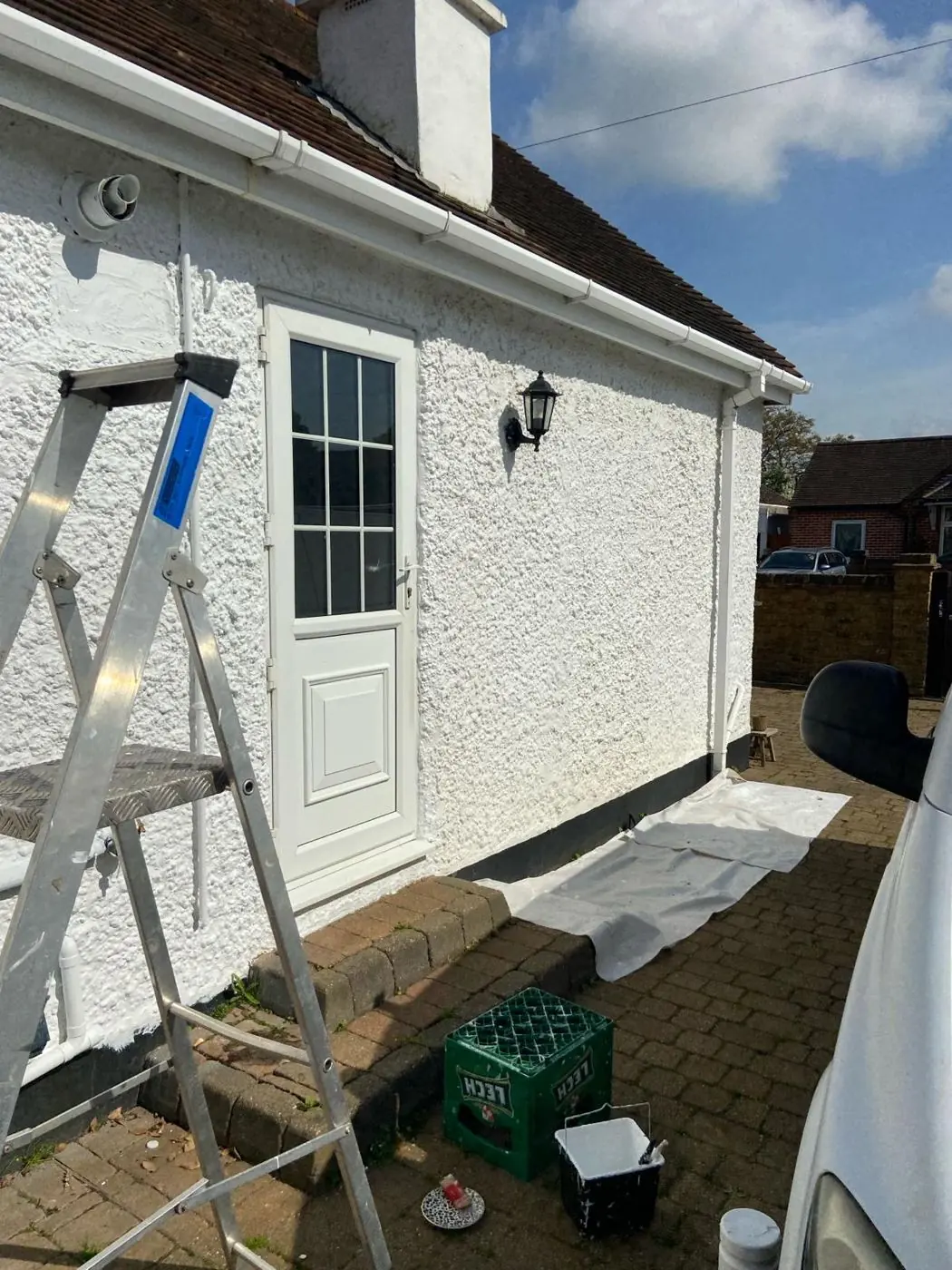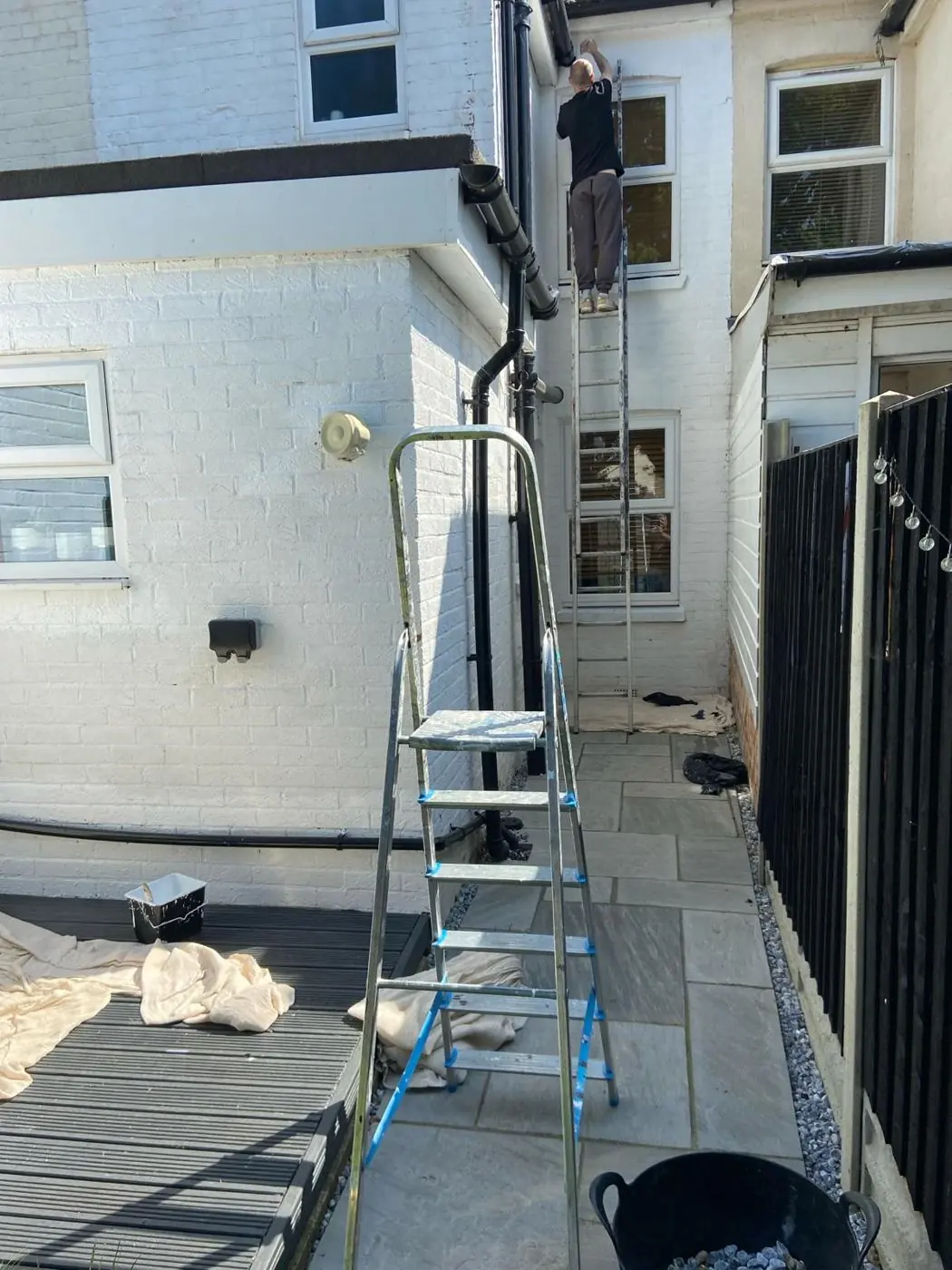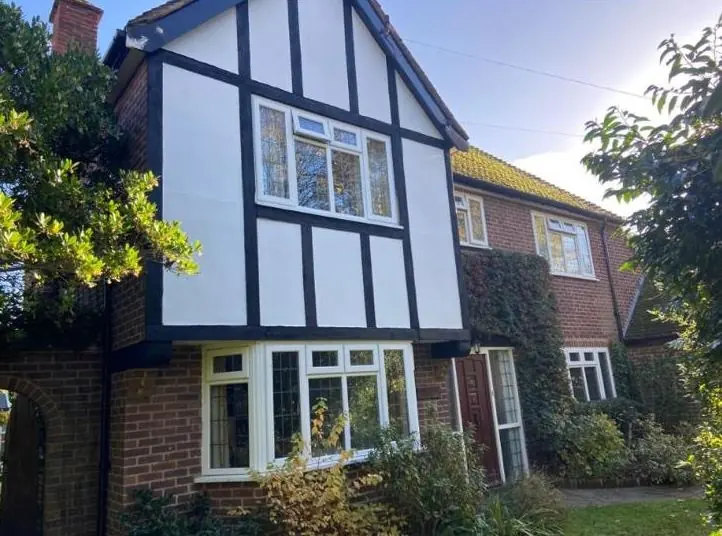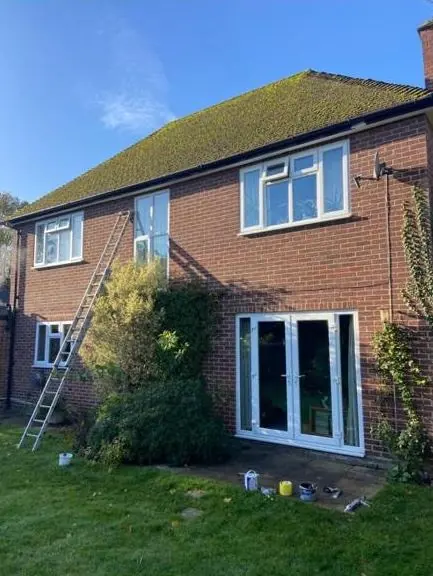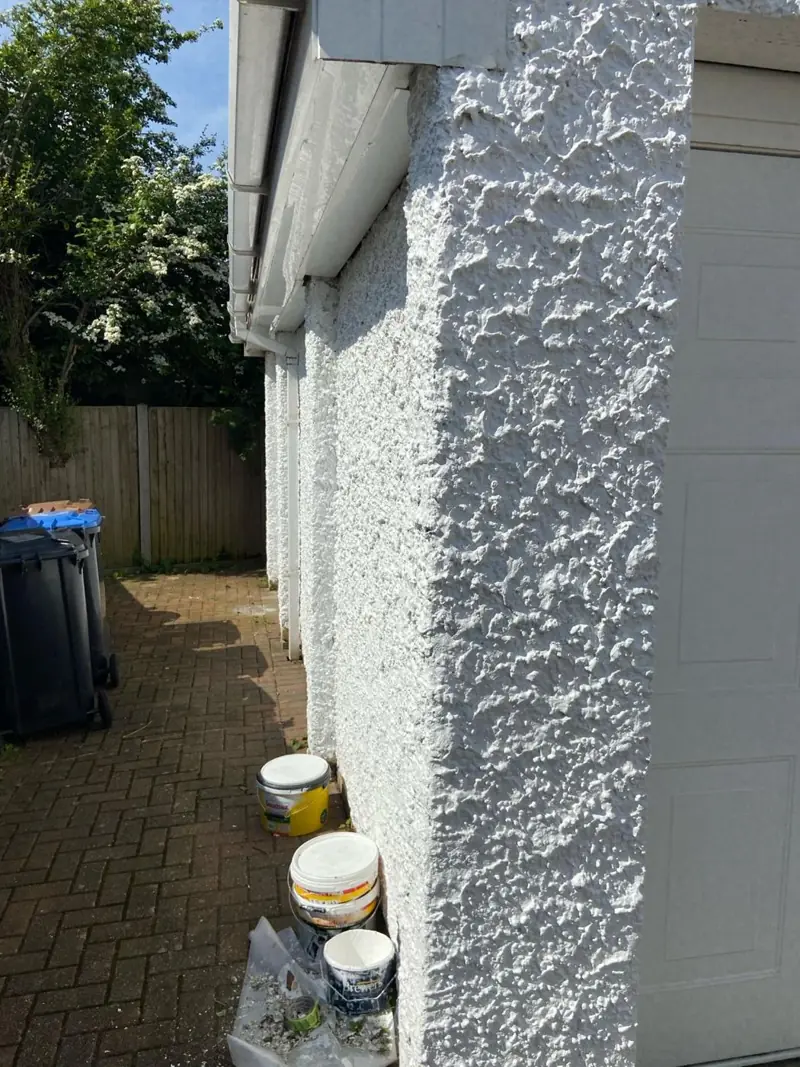
DH Painter & Decorator paints fascias, soffits, bargeboards and gutters in East Haddon, about 7.3 miles north-west of Northampton town centre. In this village the work is on slate-roofed stone houses, Victorian Gothic timberwork and newer homes, because thatched cottages have no conventional fascias. Dean looks at the roofline and gives a free quote.
Thatch has no fascia board
The first thing to say about roofline painting in East Haddon is that many houses do not need it. A thatched roof runs out past the wall into a deep, rounded eave with no fascia board, no soffit and often no gutter. Cottages such as The Thatched House and Walcott House on Main Street, Nos 4 and 5 Main Street and The Gardeners House on Ravensthorpe Road are all thatched, and there is nothing for a fascia painter to do on their eaves.
So when someone in the village asks about fascias and soffits, the useful question is what their roof is. The work falls into three groups:
- Slate-roofed stone houses, such as The Old House on Main Street and Hall Farmhouse, which have timber eaves, bargeboards and rainwater goods to keep up.
- The 19th-century buildings, including the Vicarage of 1856 on Vicarage Lane, built in a stone Gothic style where bargeboards are part of the design.
- Newer houses in the village, where fascias and soffits may be timber or uPVC.
Gothic gables and older bargeboards
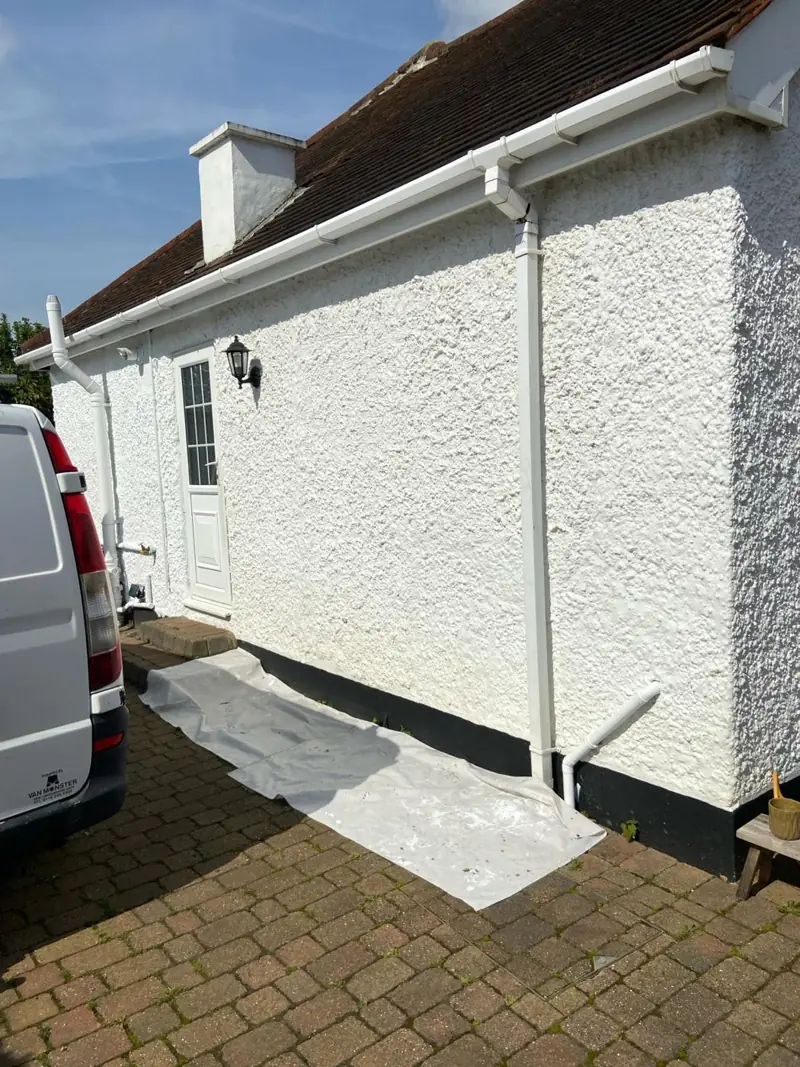
Gothic-style stone houses of the Victorian period often have steep gables with bargeboards that are deeper and more shaped than a modern roofline board. Joints and end grain on those boards are where water gets in, and paint tends to fail there first. Preparation is slow: loose paint scraped back by hand, end grain sealed, any soft timber found by probing and reported before painting rather than painted over.
On a stone house, the masonry directly below the eaves is usually unpainted lias or limestone. That means protecting the wall face from drips and scrapings as the boards are prepared. A paint run on bare stone is very hard to remove cleanly, so sheeting and careful cutting-in are part of the job here, not extras.
Access on a village street with low eaves next door
Houses on Main Street front onto the road, so a roofline at the front is often reached from the roadside. Where a slate-roofed house adjoins a thatched neighbour, ladders and staging are set so nothing leans on or brushes the thatch, and scrapings are kept off it. Gable ends facing a side lane or a garden are usually easier.
Ladders, a small tower or hired access are chosen after Dean has seen the building. The height of a 17th-century two-storey house is modest, but gables, dormers and a narrow village street can make a short roofline slower than its length suggests.
Wind on high ground and how often to repaint
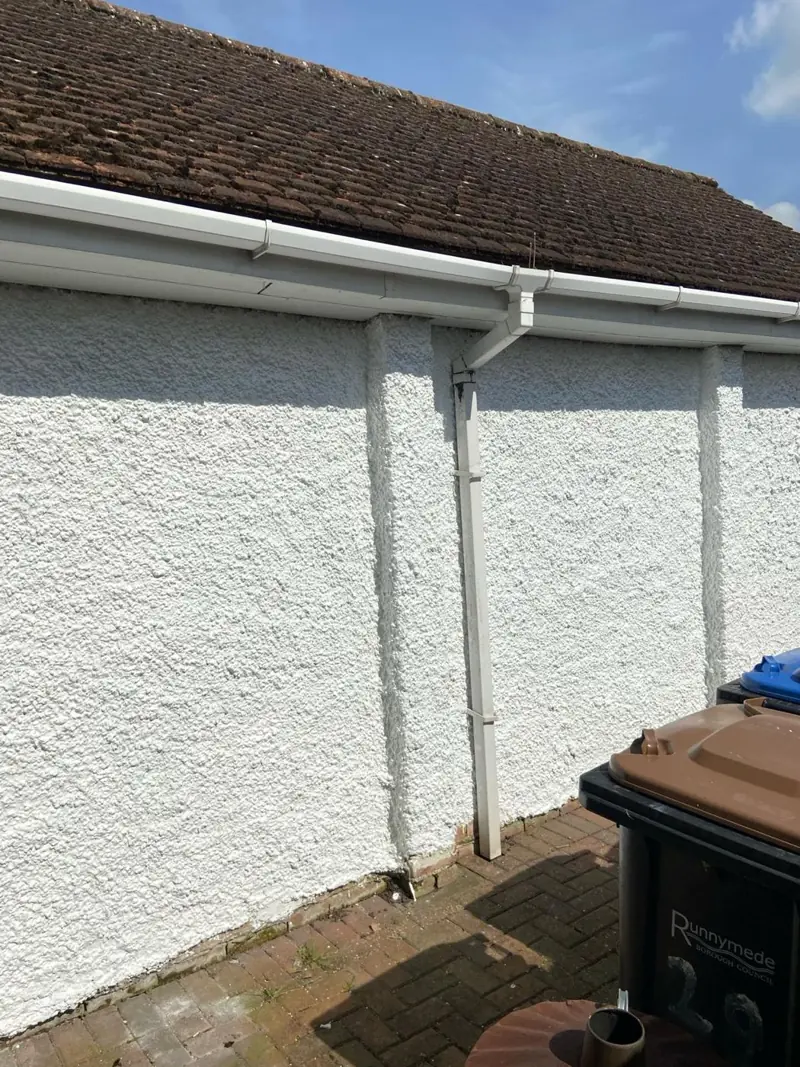
East Haddon stands on open ground in the Northamptonshire Uplands, roughly 90 to 180 metres above sea level. Roofline boards are the highest painted timber on a house and catch the full force of wind-driven rain on the exposed side. Expect the weather-facing gable to need attention before the sheltered one. Where only one side has failed, painting that side first and the rest on the next cycle can be a sensible way to spread the work.
We do not quote prices on these pages, because the condition of the boards matters more than their length. Our painter and decorator cost guide explains what affects a quote. How we prepare, prime and paint roofline timber is set out on the main fascia and soffit painting page, and other work we cover in the village is on the East Haddon page.
Last updated by Dean, DH Painter & Decorator.