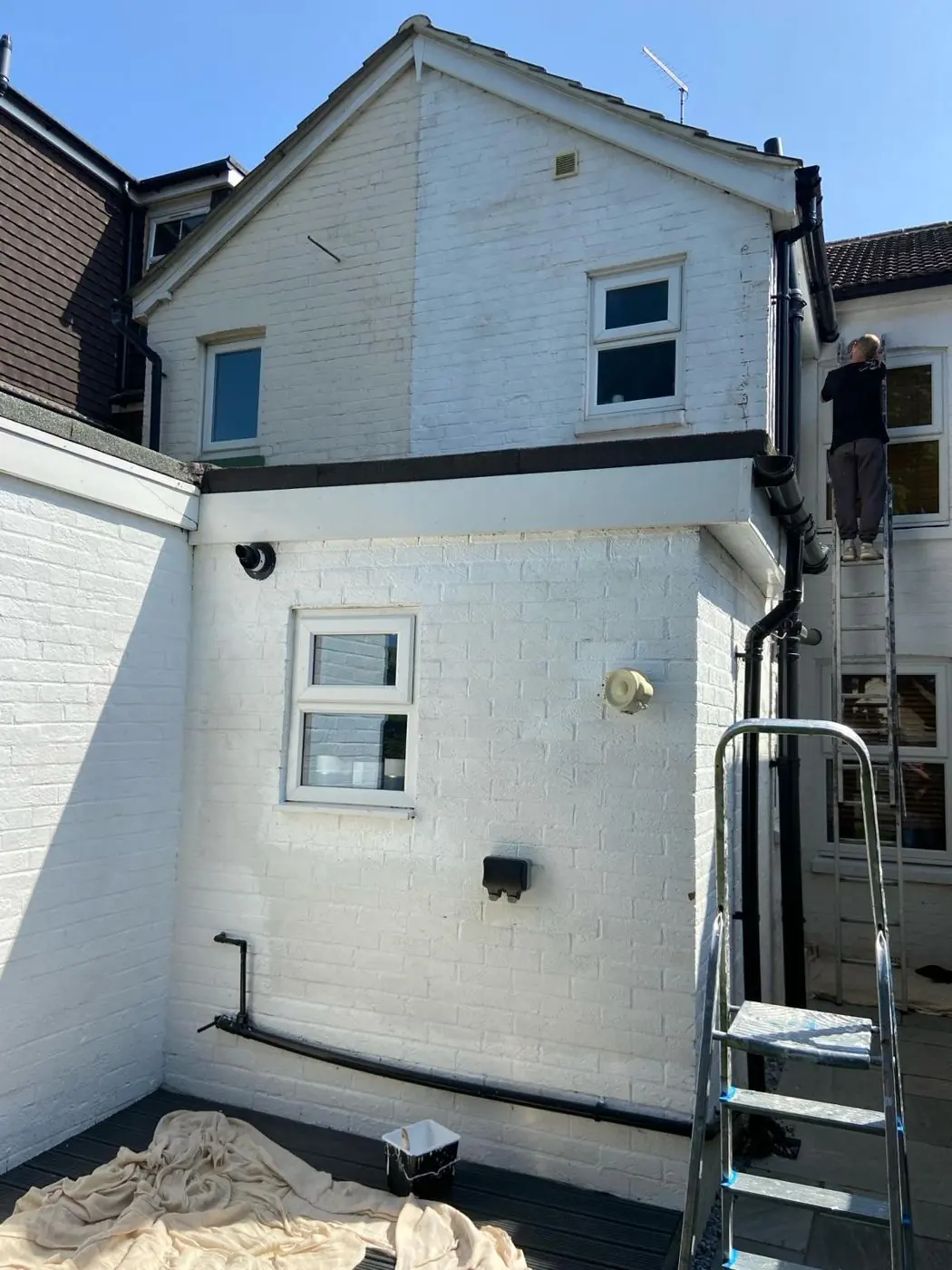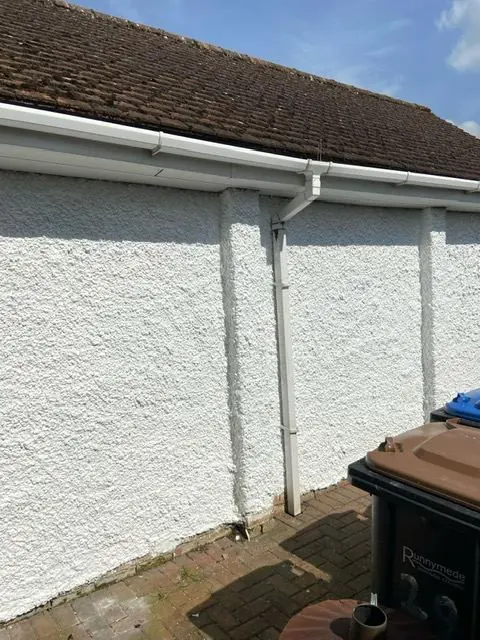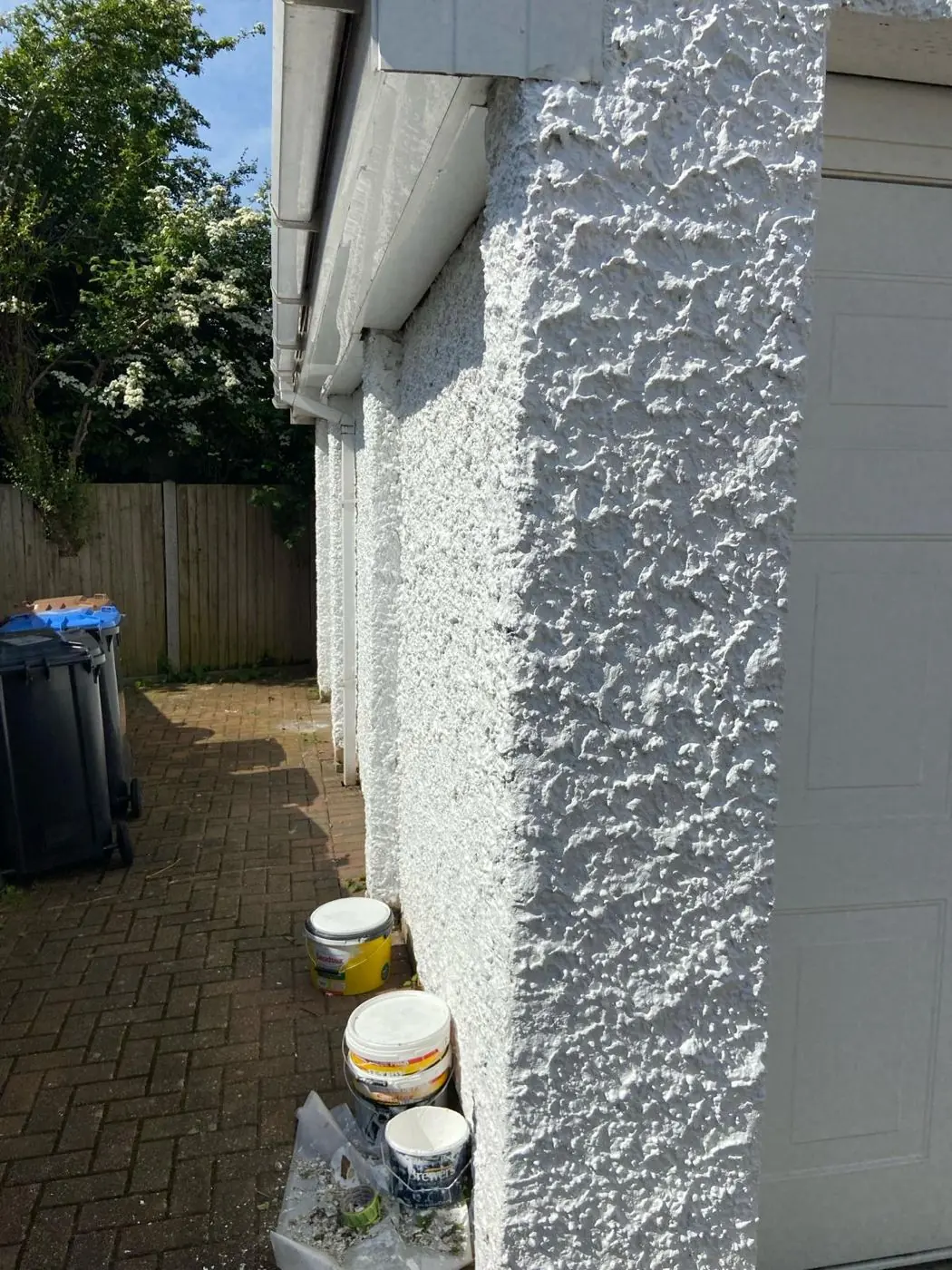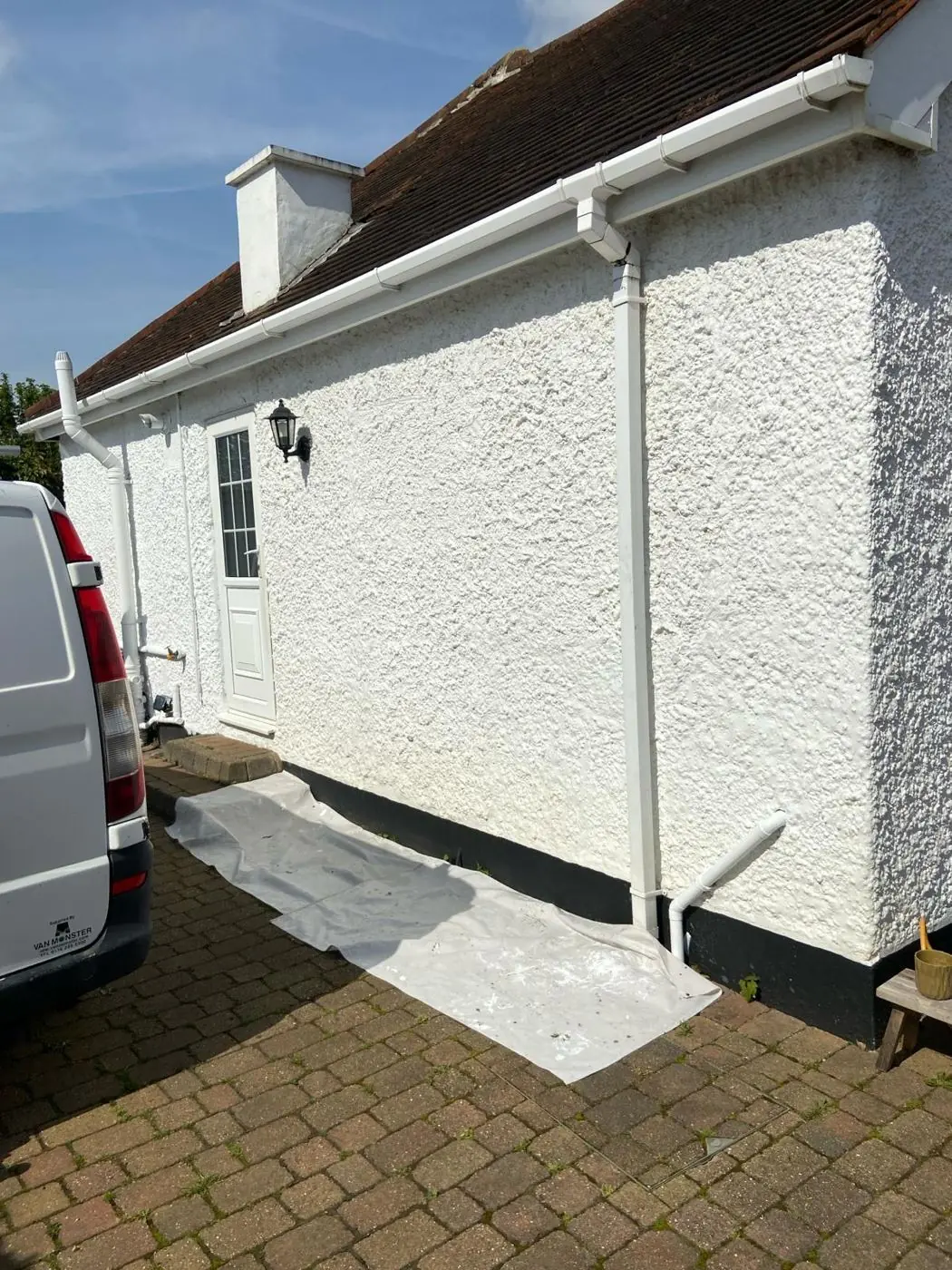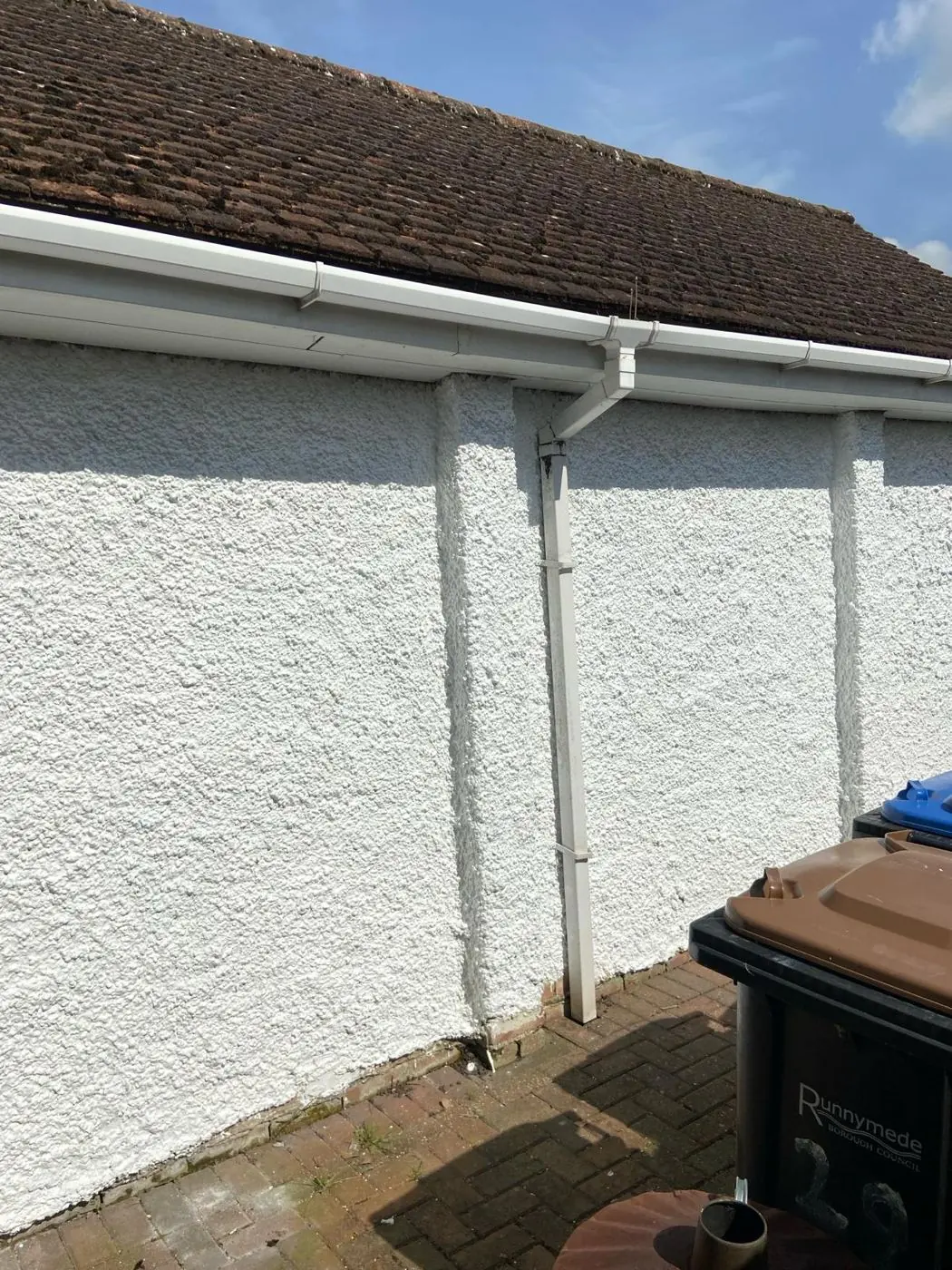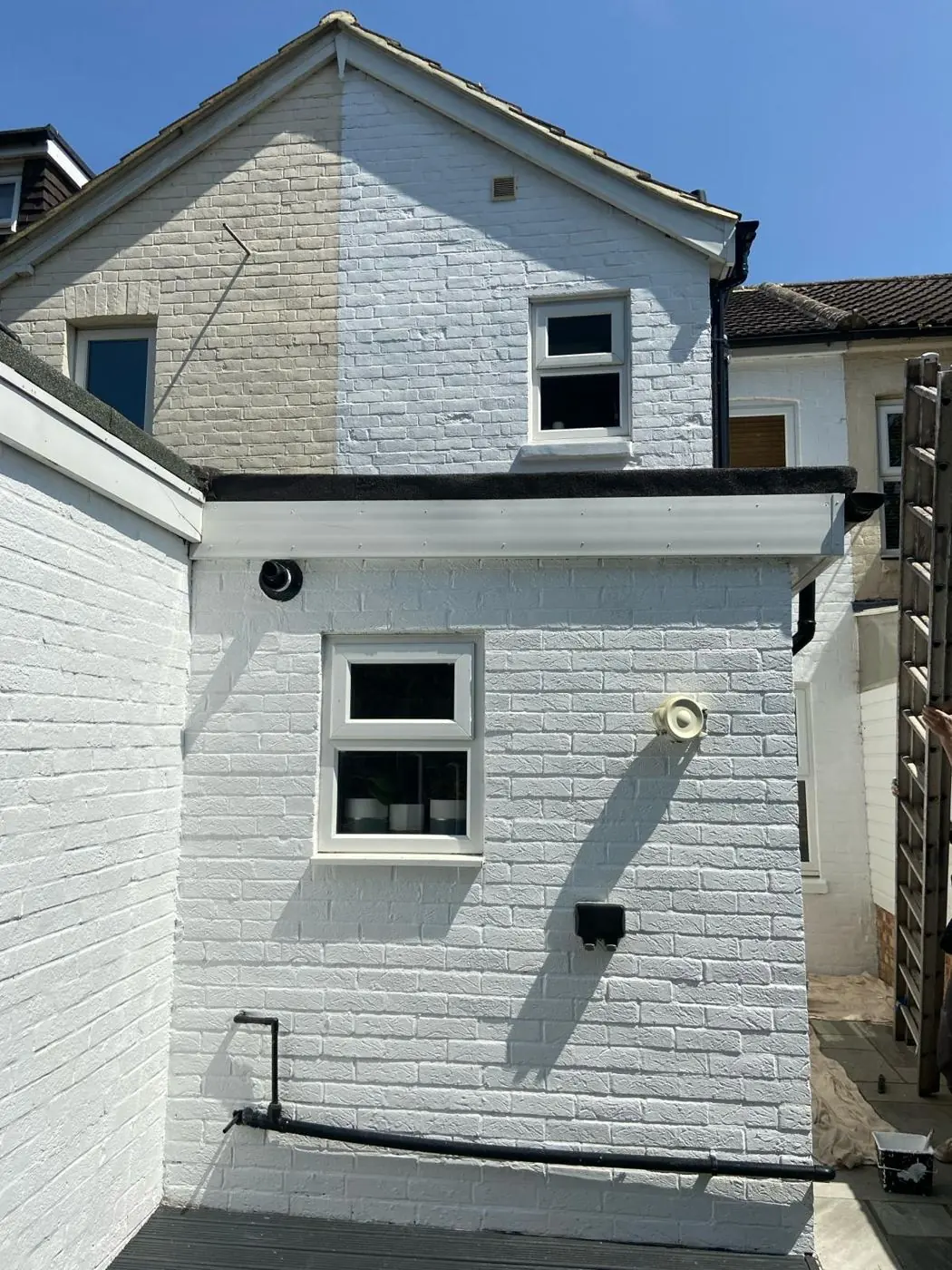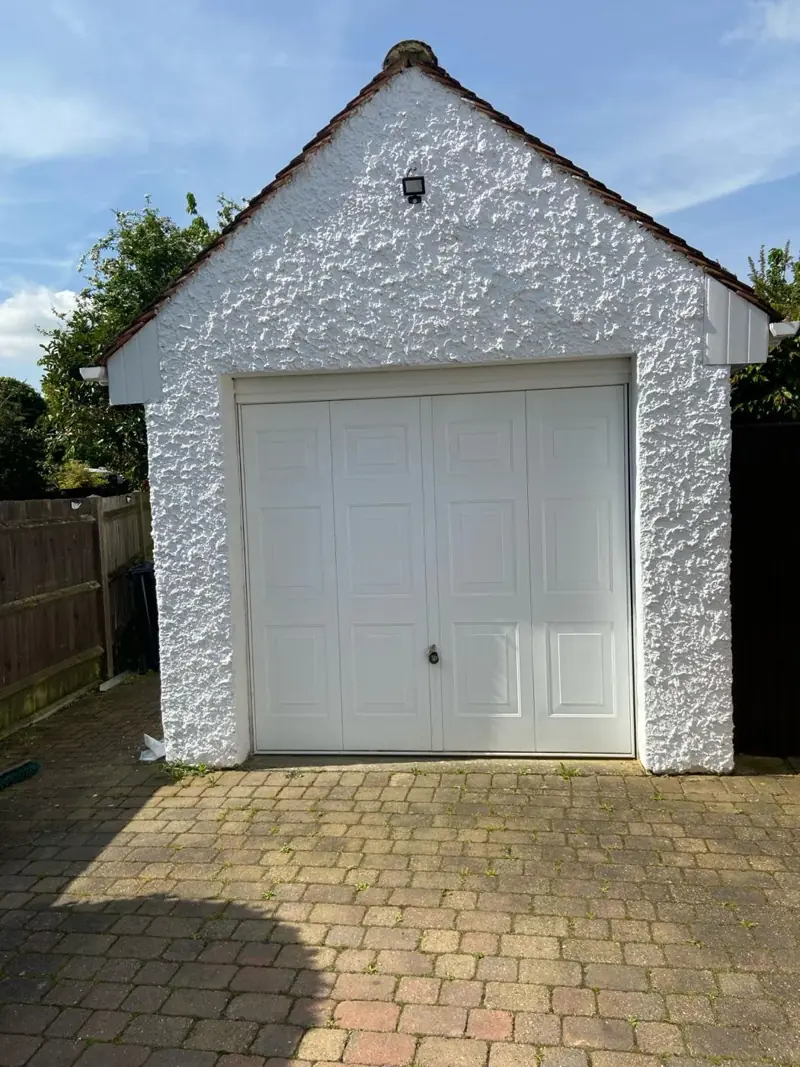
DH Painter & Decorator repaints render and masonry in East Haddon, about 7.3 miles north-west of Northampton in the NN6 area. Rendered walls here are often cob or old lime over lias, so we use limewash or mineral paint rather than standard masonry emulsion. Dean checks the existing coating first and gives a free quote.
Cob under the render
Masonry painting in East Haddon is shaped by what sits behind the surface. Nos 4 and 5 Main Street, listed at Grade II, are mid-18th-century thatched houses of rendered cob on a lias plinth, and the cob wall with lias gatepiers on Tilsbury Road probably dates from the late 18th century. Cob is earth. It stays sound as long as moisture that gets in can also get out.
That rules out the acrylic masonry paint that is used on most modern rendered houses. A plastic coating on a cob wall holds water in, and over a few winters the wall behind it can soften, bulge and fail. On cob, our choice is limewash or a lime-compatible paint, built up in thin coats. Limewash looks softer than masonry paint and needs renewing more often, but it lets the wall dry out between wet spells, which matters more here than a long repaint cycle.
Lias fronts with a rendered upper floor
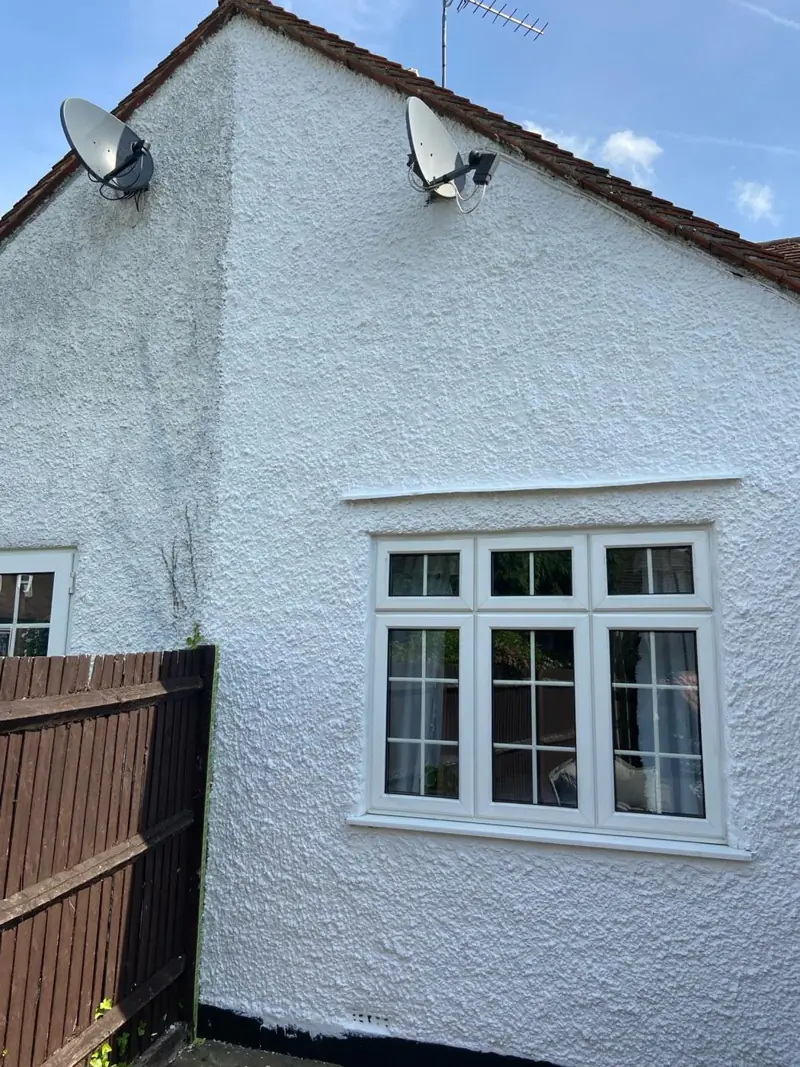
A second pattern in the village is stone below and render above, or a stone house partly rendered. Historic England’s listing describes The Old House, with its 1691 datestone, as lias with a rendered first floor, and Walcott House, dated 1748, as coursed lias partly rendered. Houses of this kind raise two questions before any paint is chosen.
- What is the render? Old lime render wants limewash or mineral paint. A later cement patch may behave differently, and the two can sit side by side on one elevation.
- What is already on it? If an earlier owner used acrylic masonry paint, putting limewash straight over it will not bond. The old coating may need to come off, or a mineral system chosen that suits the substrate.
We test small areas, look at how the existing coat reacts to water and scraping, and only then recommend a system. Our guide to painting render and roughcast covers the newer sand and cement renders found on later houses.
Matching the finish to the wall
| Surface in East Haddon | Typical approach |
|---|---|
| Rendered cob (Main Street cottages, Tilsbury Road wall) | Limewash or lime-compatible paint, thin coats, no acrylic |
| Old lime render over lias | Limewash or mineral silicate paint once the existing coat is identified |
| Bare coursed lias, limestone or ironstone | Left unpainted; protected during work on adjoining surfaces |
| Ashlar dressings, mullions and quoins | Never painted; masked off carefully |
| Modern sand and cement render on newer houses | Breathable masonry paint after cleaning and repair |
Why clean stone stays clean here
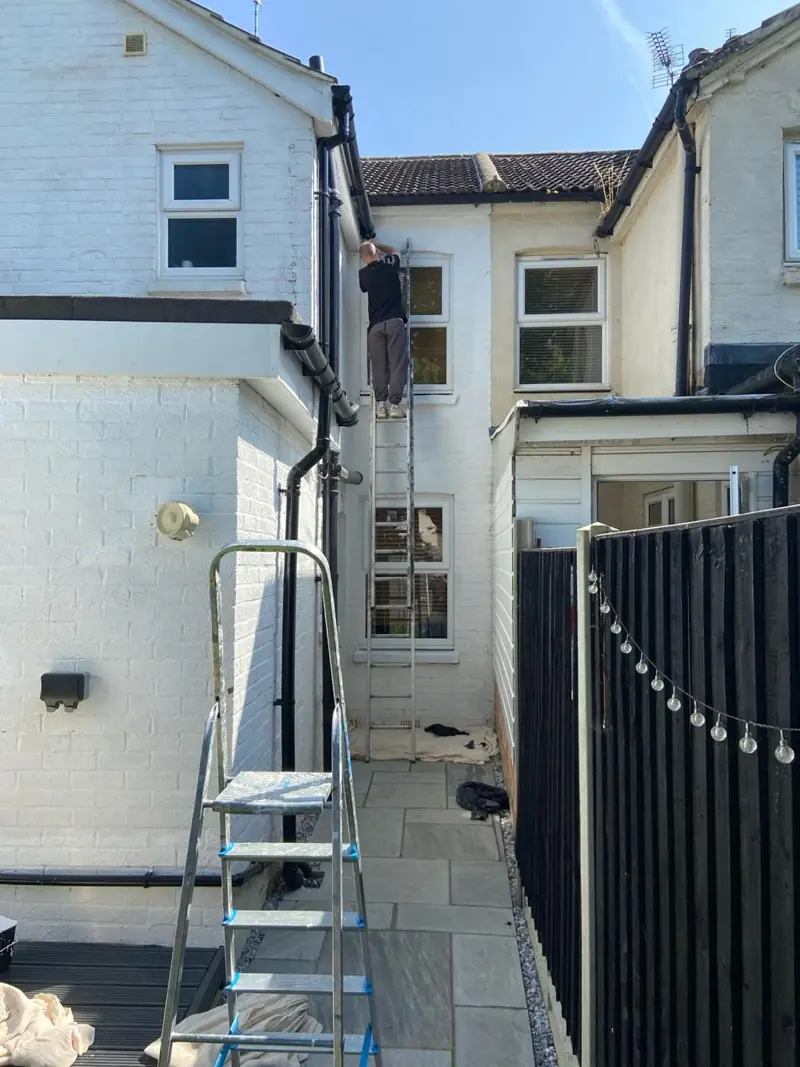
East Haddon is a stone village in every sense. Haddonstone, the stone supplier, has been based here since 1971 and uses the 17th-century Forge House on Church Lane. People in the village tend to care about stone, and rightly. Paint on clean ashlar or ironstone cannot be taken off without harm, so when we repaint a rendered panel beside bare stone, the stone edge is masked and cut in by hand.
Exposure, listing and timing
Limewash needs mild, damp-but-not-wet conditions to cure, and the village’s position on open ground between 90 and 180 metres makes drying winds and early frosts a real factor. Spring and early autumn often suit lime better than a hot summer week. On a listed house, keeping the render the colour it already is avoids a consent question with the council altogether.
The trade detail behind our render work is on the main render and masonry painting page, and the rest of what we do in the parish is on our East Haddon page.
Last updated by Dean, DH Painter & Decorator.