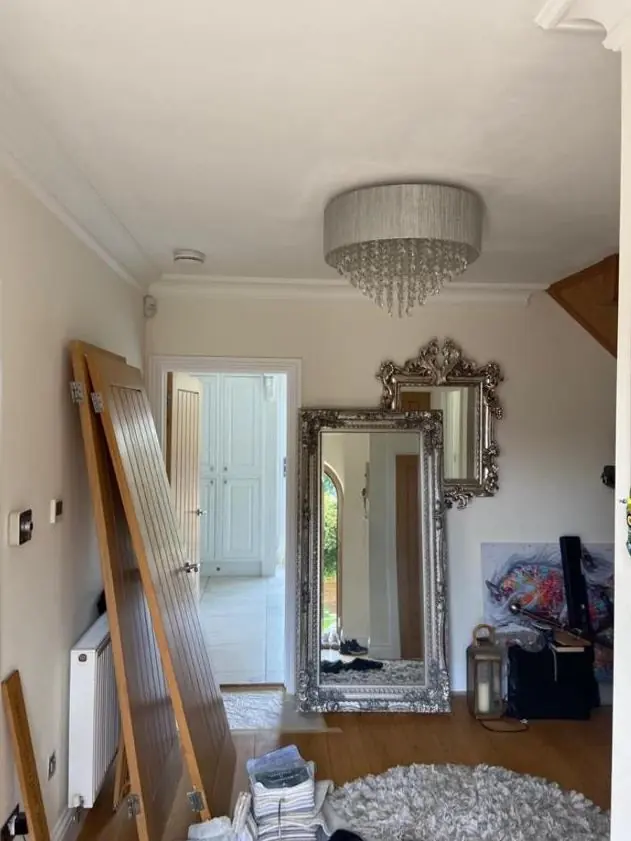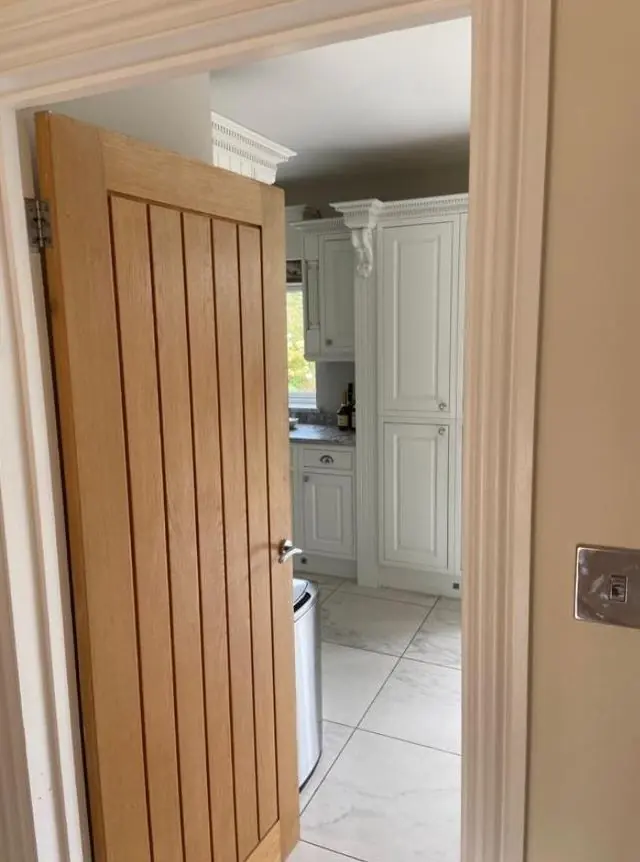
We decorate hallways, stairs and landings in Guilsborough, about 9.3 miles north-west of Northampton. Larger period houses there have tall stairwells that need a tower or platform, while converted homes such as the Old Grammar School can have stairs in unexpected places, so we survey before quoting.
Why stairwells in Guilsborough need a proper look first
Hallways vary more in Guilsborough than the size of the village would suggest. The larger High Street houses date from the 17th to early 19th century, and houses of that standing were often built with generous ceiling heights, so the wall over the stairs can be well out of reach of a normal stepladder. At the other end of the scale, the later housing at Church Mount, built where Guilsborough Hall once stood, tends to have the straight flight and short landing most modern homes share. We come out and measure before quoting, because the access kit for one is very different from the other.
Converted buildings and unusual stair layouts
The Old Grammar School is the clearest example. Founded around 1688 and turned into five homes in the 20th century, it was never designed with five separate staircases in mind. Conversions like that can leave stairs that turn tightly, landings that wrap around old chimney breasts, or a stairwell lit by a single stone-mullioned window. None of that stops the work, but it changes how a platform fits, where dust sheets can go and how long a stage takes. The building is listed, which matters for anything that alters fabric, though redecorating painted plaster inside is ordinary upkeep.
Other older houses in the village have been extended over two or three centuries; Guilsborough House, from around 1632, gained 18th and 19th century additions. Where a later wing joins the original house, a landing can step up or down, and the plaster changes with it.
Walls, plaster and the right paint
In the lias and brick houses, stair walls are often lime plaster. Lime needs to breathe, so a heavy vinyl emulsion is a poor choice there, especially on a stairwell that may be the coolest part of the house. We use breathable emulsions on lime and save the tougher scrubbable finishes for hallways in later homes, where the plaster is modern and the wall can take a wipe-clean coat.
- Period stairwells: breathable matt on lime plaster, cracks raked and filled with a compatible filler, lining paper where the surface is too rough to paint well.
- Later homes: durable washable emulsion on walls by the front door and up the stairs, where bags and hands brush past.
- Woodwork: handrails, spindles and strings sanded and repainted in a hard-wearing eggshell or satin, with bare or varnished timber left alone unless you want it painted.
Getting equipment in and keeping the house usable
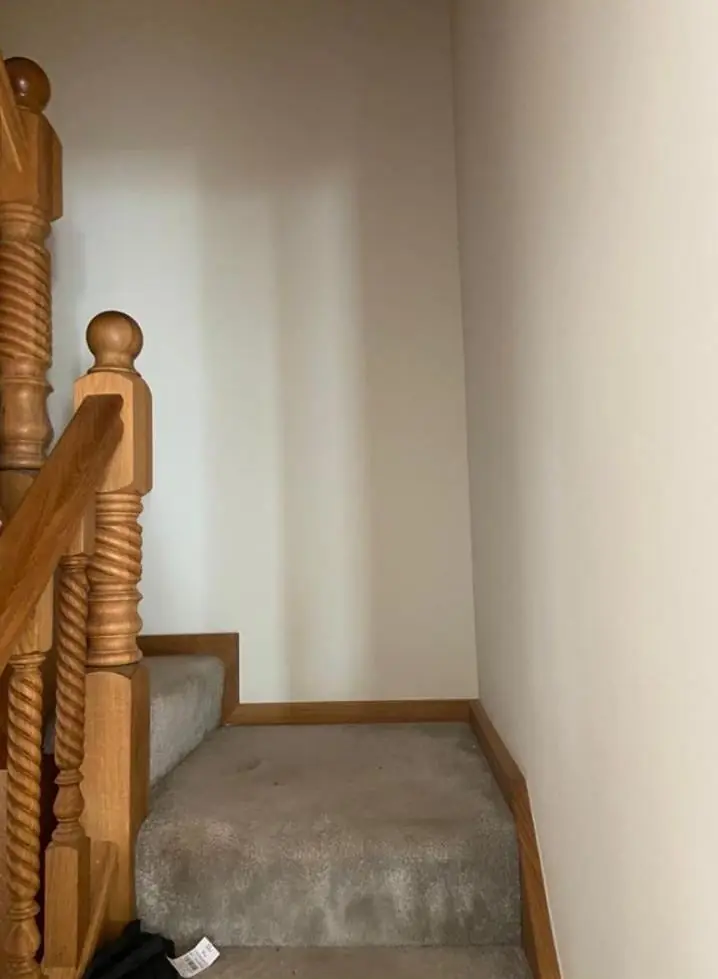
Many of the older houses front straight onto the High Street, so there is no driveway to stage equipment on. Tower sections and staging boards come in through the front door and go straight up, and we keep the stairs passable at the end of each day so you can still get to bed. Parking outside the door may not be possible for long, so we unload quickly and park where it does not block the road.
Coming from Northampton, the village is a drive out along country roads rather than a quick hop across town. For that reason we plan stairwell jobs to run on consecutive days, so drying time on one coat is used for preparation elsewhere rather than a wasted return trip.
Our main hallway, stairs and landing decorating page explains the access equipment and order of work in detail. For a sense of what drives the price on a tall stairwell, see the decorating cost guide, and the Guilsborough village page lists everything else we do there.
Last updated by Dean, DH Painter & Decorator.