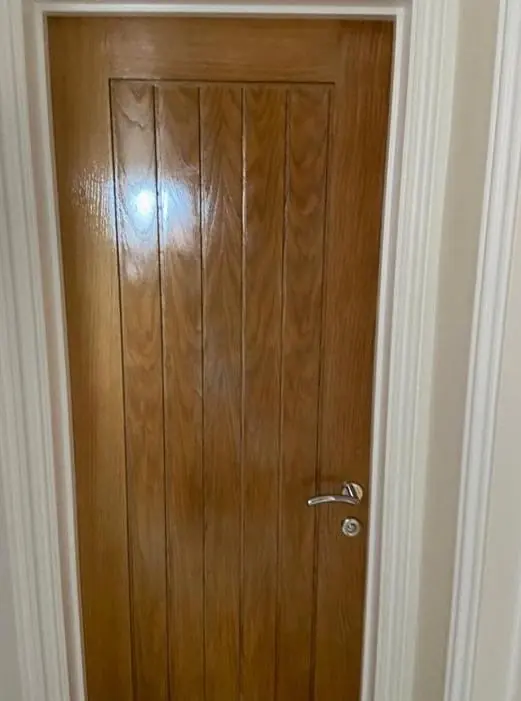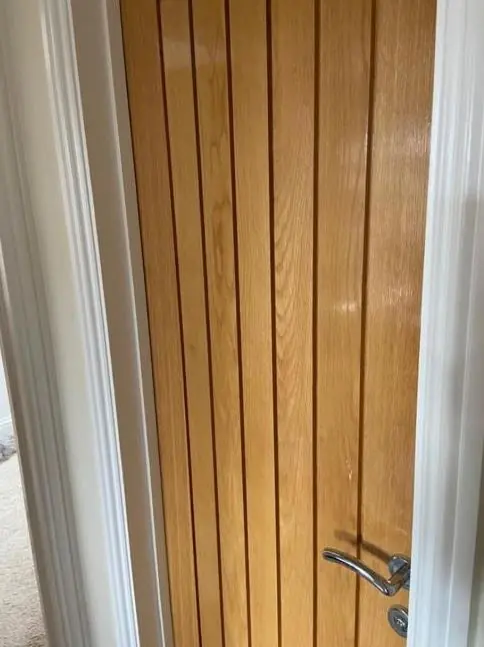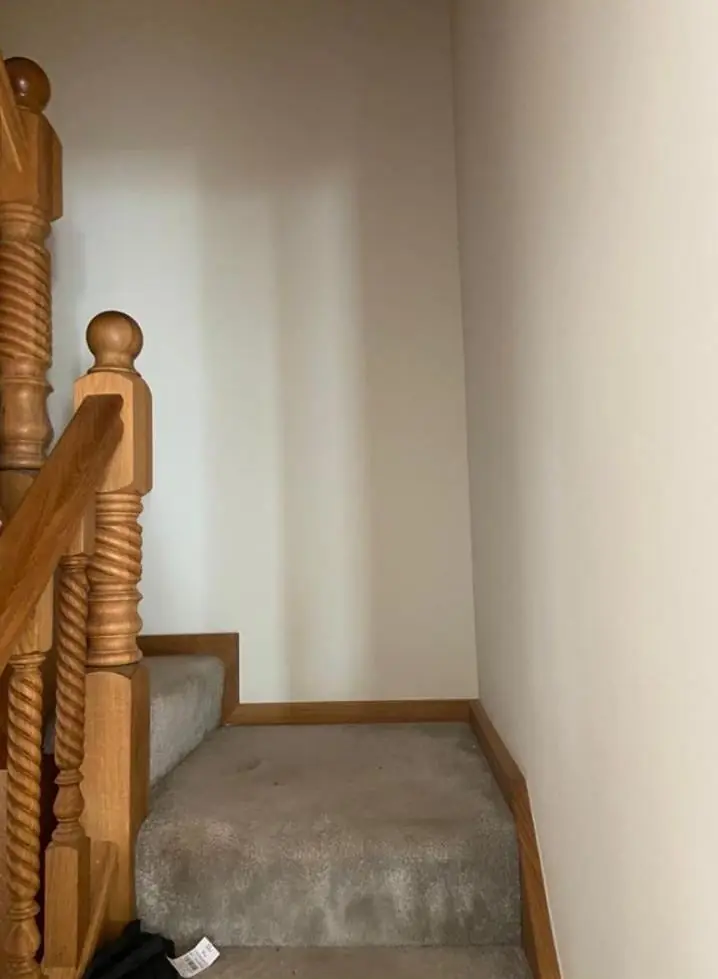
We hand-paint decorative finishes for homes in Blackthorn, the 1970s estate in NN3 roughly 3.8 miles north-east of Northampton town centre. Here that usually means modest, well-judged effects such as a two-tone wall or a painted stair runner, rather than period restoration.
Plain houses, with room for a focal point
Blackthorn has no listed buildings or conservation areas. The houses were built by the Northampton Development Corporation from the mid-1970s, and the nearest historic buildings are in Great Billing village to the south. So there are no cornices to pick out or ceiling roses to restore. Inside, walls are flat, doors are flush or simply moulded and staircases are straightforward.
That plainness is a good starting point for decorative paintwork. A finish that would compete with mouldings in a Victorian house has the stage to itself here. On houses of this size, one effect in one place, done neatly, usually looks better than several. The work is about choosing the right spot and keeping lines crisp.
Three effects that fit a 1970s layout
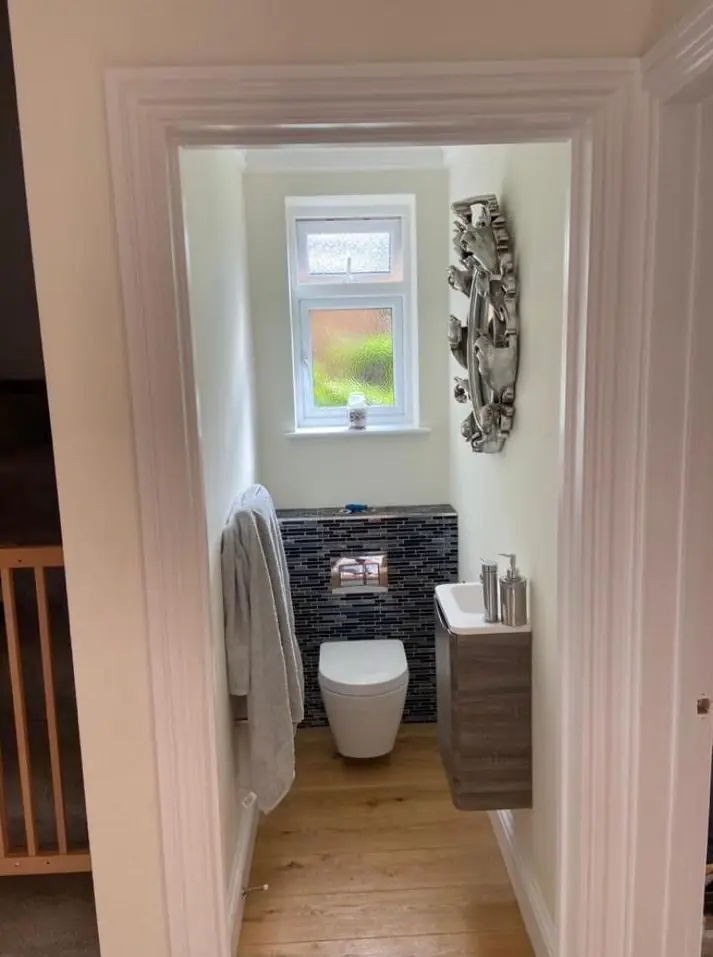
Two-tone walls. A deeper colour on the lower part of a wall with a lighter one above, divided by a sharp line at roughly dado height, gives a compact hall or dining area a sense of proportion. On flat 1970s plaster the dividing line can be taped and cut very cleanly. It also hides scuffs in a busy hallway.
Painted panelling effects. Thin timber strips fixed to the wall in squares or rectangles, then painted the same colour as the wall, imitate panelling at a fraction of the depth. On a long party wall in a terraced living room or behind a bed, it gives texture without taking space. We fill pin holes and caulk every joint before painting, so it reads as one surface.
Painted stair runners. Where a staircase has been stripped of carpet, a painted runner down the centre with a contrasting border lifts a standard hallway. Floor paint needs a properly prepared, sound tread, and it needs time to cure before heavy use, so we plan it for when the household can use the stairs lightly.
Preparation on an estate that needs renewal
A crisp painted line exaggerates every bump in the wall behind it, and on a fifty-year-old estate house that the TCPA would class as due for renewal there are usually a few. Before a two-tone line or a panel layout goes on, cracked plaster is filled and sanded, previous DIY coats are keyed, and old gloss on the stair treads and strings is sanded back. A decorative finish on a poorly prepared wall shows its faults sooner than flat emulsion would.
Access matters too. Because many Blackthorn houses face a footpath and the van sits in a court bay, timber for a panelling effect is cut to length at the van where possible and carried in ready to fix. That keeps sawdust out of the house and saves repeated trips along the walkway past the neighbours’ doors.
Getting the scale right for compact rooms
Rooms in these terraced and semi-detached houses are modest, so effects need to be in proportion. A few principles we follow:
- One feature per room. A panelled wall and a two-tone wall in the same lounge fight each other.
- Smaller panel spacing on short walls, so the grid does not look stretched.
- Darker shades below and lighter above in halls, which keeps the space bright at head height.
Our main decorative finishes page covers faux effects and other finishes in more depth, and the Blackthorn area page explains how we cover the estate. Dean can mark out an idea in pencil on the wall during the quote visit, so you can see the proportions before anything is painted.
Last updated by Dean, DH Painter & Decorator.