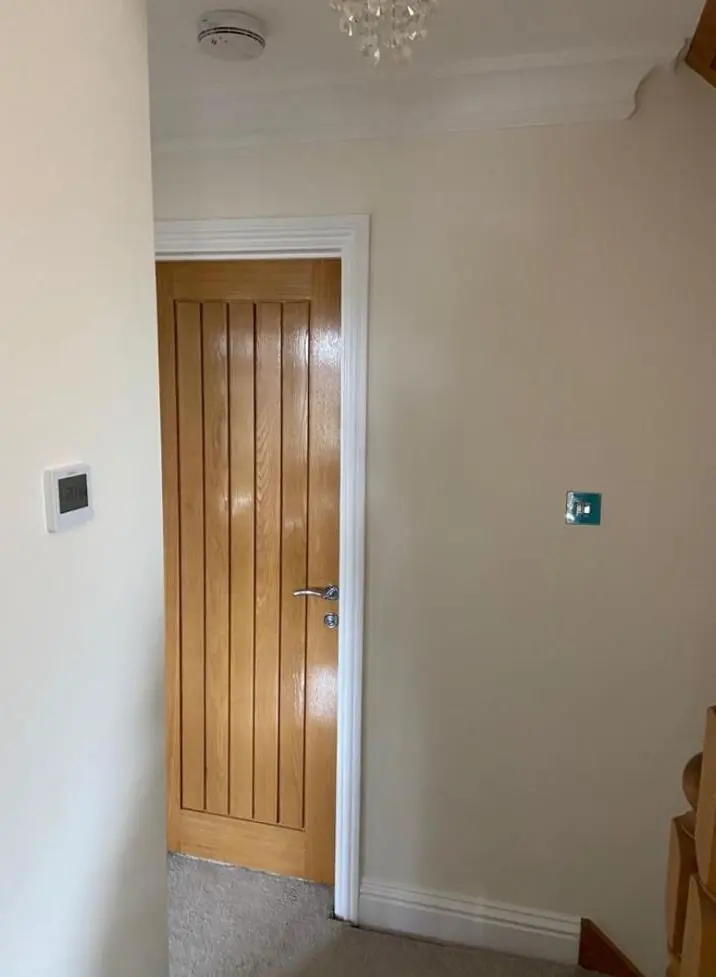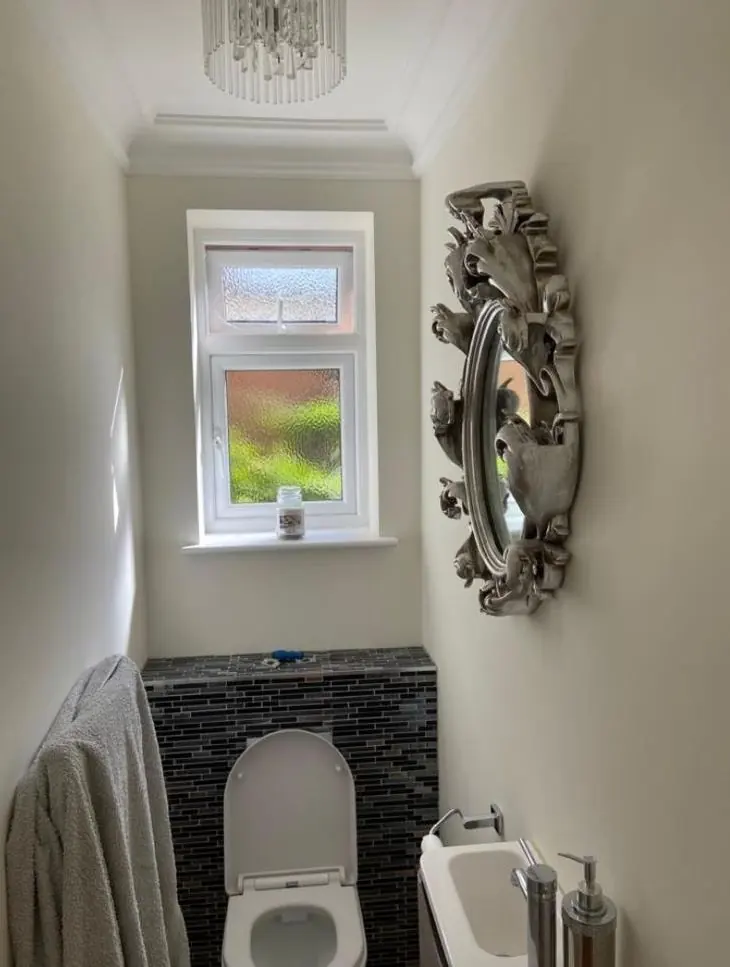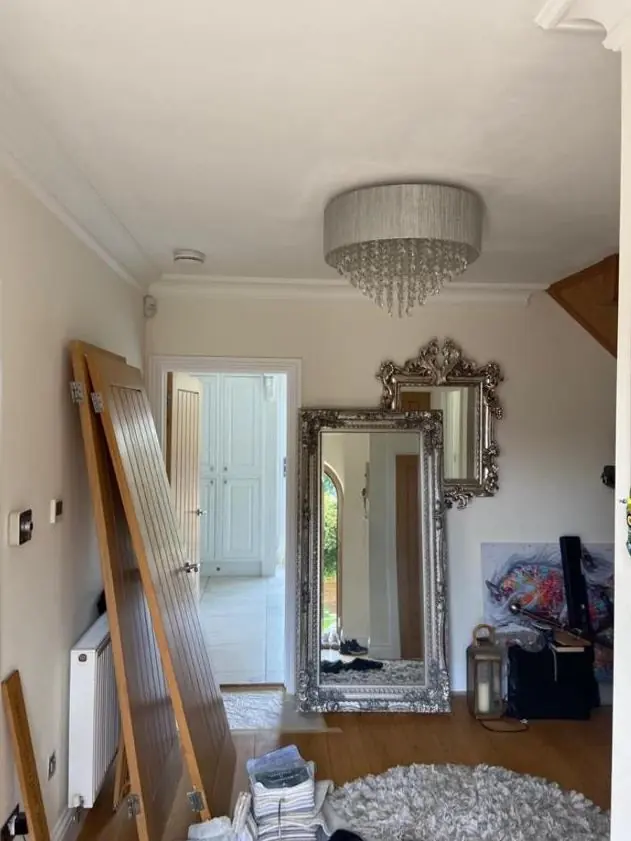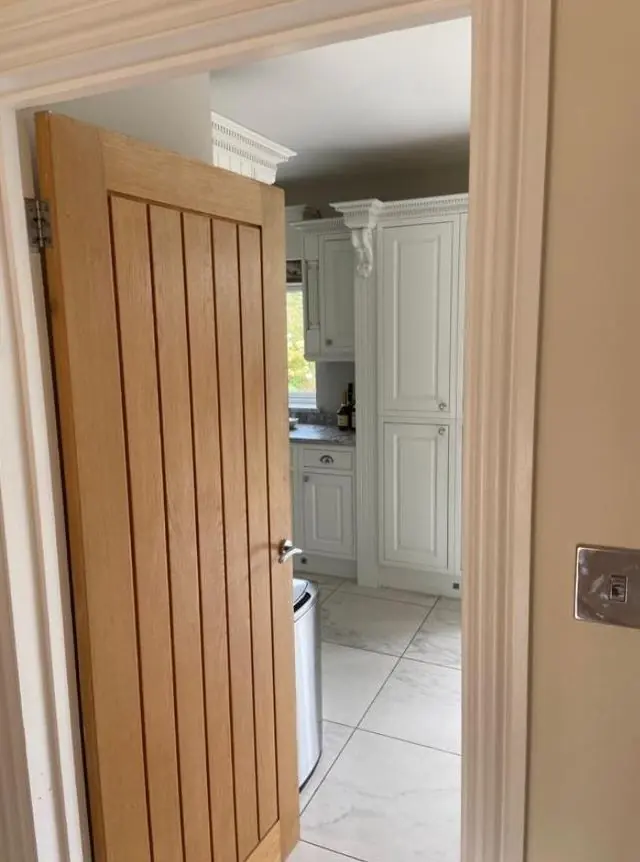
DH Painter & Decorator offers decorative finishes in Bellinge, about 3.5 miles east of Northampton town centre. With rarely any period features to restore, the work here is adding character to plain rooms with panelling, two-tone walls and feature effects.
Character for rooms built without it
Houses on the Bellinge estate were built in the 1970s and 1980s by Northampton Development Corporation as plain, practical family homes. There are no cornices to pick out, no picture rails, no ceiling roses and no original panelled walls. That is the opposite of decorative work in the old stone cottages a short way west in Little Billing, where the job usually means bringing out detail that is already there. On the estate, a decorative finish adds something new: wall panelling, a two-tone split, a painted feature wall or a textured effect, to give a plain room a focal point.
It is a niche service here. Most decorating in Bellinge is straightforward repainting, and Dean will say so if a plain wall in a good colour would serve you better than an effect.
Panelling on estate walls
Painted panelling is the finish that suits these houses most often. Simple box or Shaker-style panels on the lower half of a living-room wall, or full-height panels behind a bed, give an estate room some depth without needing period features. Walls in 1970s-80s houses are generally flat, which helps panels sit tight. Whether a joiner has fitted them or you have put them up yourself, the painting is where they look finished or home-made:
- MDF panels and battens are primed on every face, including cut edges, which soak up paint.
- Pin holes and mitres are filled and sanded so the joins disappear under the topcoat.
- Gaps along the wall and the skirting are caulked before painting.
- A durable eggshell or satin goes on top, because panelling at seat and shoulder height gets touched.
Where an effect fits in a compact terrace
Terraced houses make up most of the core estate, and their rooms are compact. That changes where a decorative finish works. In a narrow hall where the stairs start just inside the front door, a two-tone split with a darker, tougher lower half does a job as well as looking good, hiding the scuffs that collect at bag and hand height. In a small living room, one wall of colour-washed or textured effect behind the sofa reads as a feature; the same effect on every wall would crowd the space. A colour block or painted arch behind a bed can work in a bedroom, where the eye has less else to compete with.
Because most of these rooms are small, we keep the palette for an effect tight: two or three related colours rather than a wide spread, and a sample board made up first so you can see the finish in the room’s own light before a full wall goes on.
Decorative work in a rented home
With a large share of the estate rented from the council, housing associations and private landlords, it is worth thinking about decorative work before committing. Tenants usually need written consent for anything beyond plain repainting, and landlords preparing a property for the next tenancy generally want neutral, easily matched finishes rather than effects that are hard to touch up. Owner-occupiers have a freer hand, and the only real limit is taste. If you plan to sell in a few years, panelling and a two-tone hall tend to suit more buyers than a strong faux effect. Each finish we offer, from faux effects to panelling, is described on our main decorative finishes service page. For the estate’s other decorating work, see the Bellinge area page.
Last updated by Dean, DH Painter & Decorator.