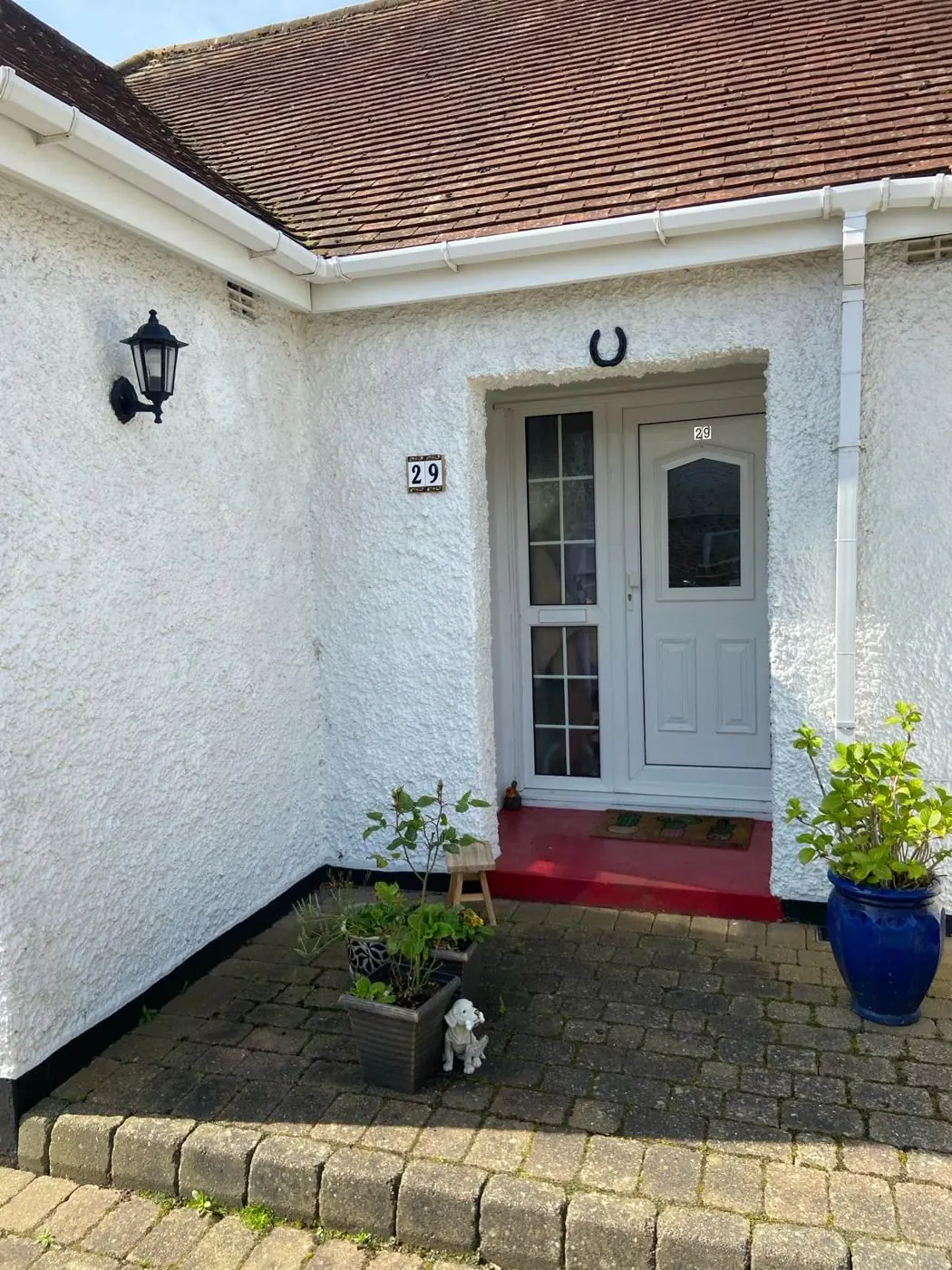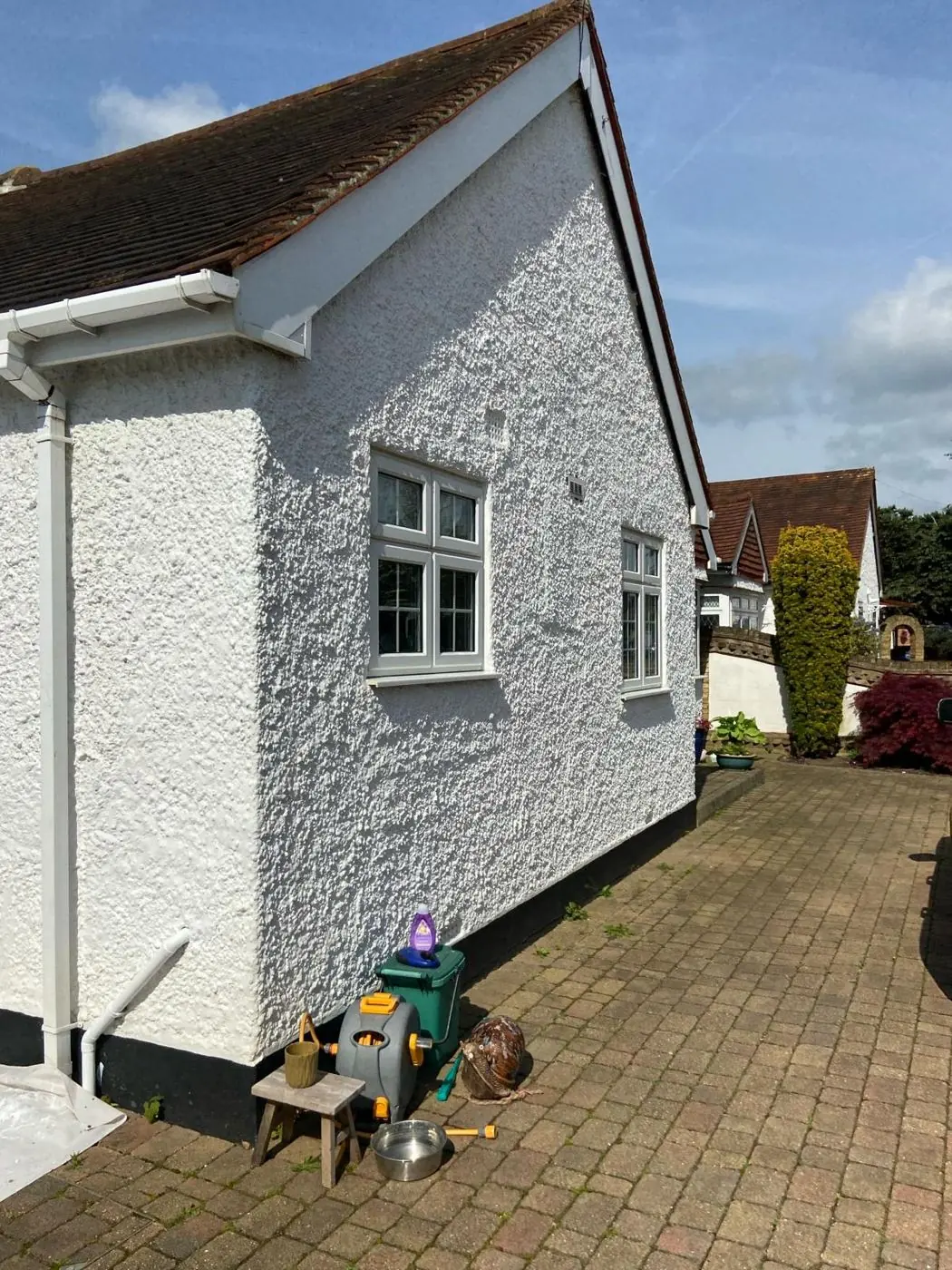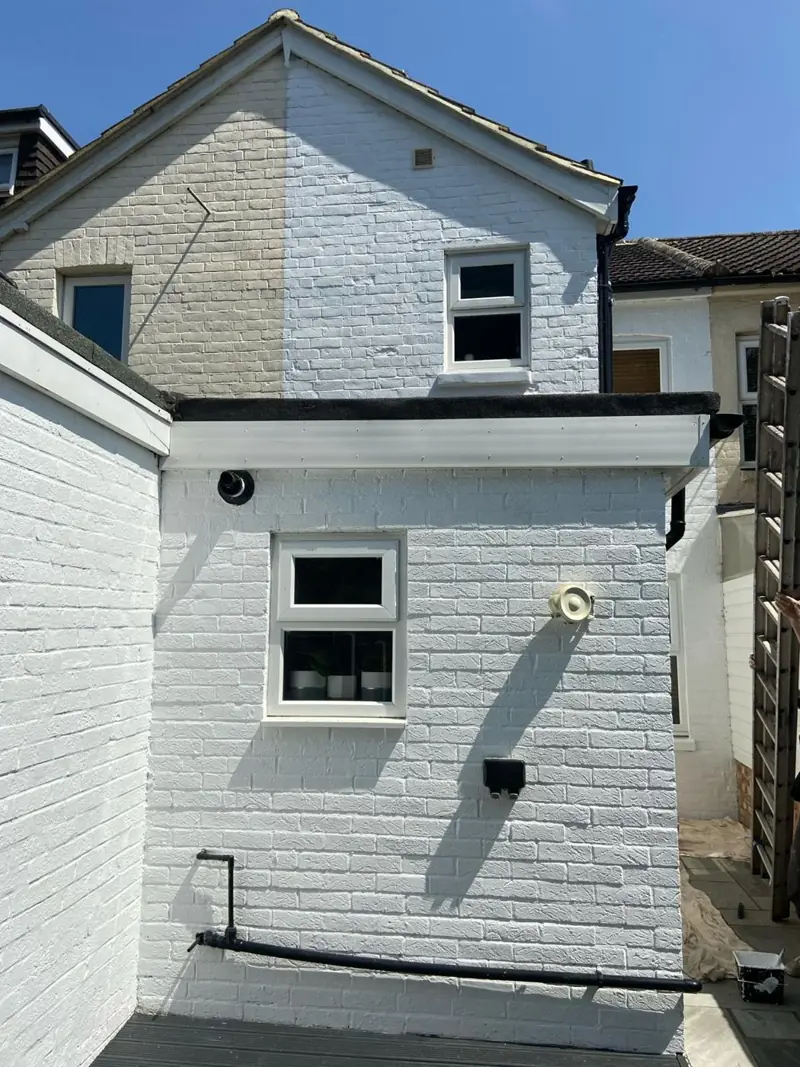
We paint fascias, soffits, bargeboards and gutters on homes in Bellinge, the NN3 estate around 3.5 miles east of Northampton. Many of its houses are now 40 to 50 years old, so Dean probes the original roofline timber for rot and failed paint before he prices the job.
Roofline timber that has had half a century of weather
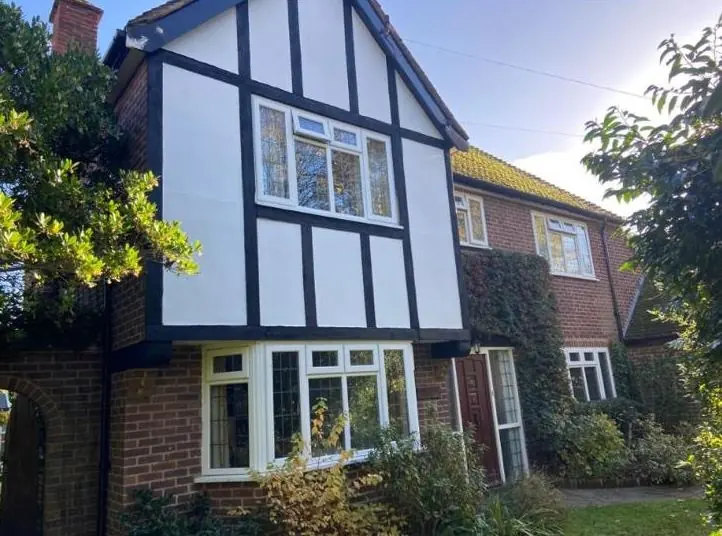
Bellinge was built in the 1970s and 1980s by the Northampton Development Corporation. Houses on the estate may still have their original painted timber fascias and bargeboards, and some may keep timber soffits too. Others have been capped or replaced with uPVC over the years, often one house at a time, so a single terrace can end up with a mix of rooflines side by side.
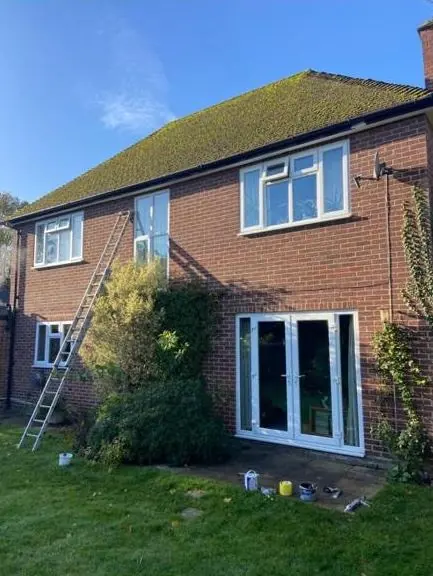
Timber that has been on a roof for four or five decades has usually been painted many times. That build-up is the main thing to look for. Thick old layers crack along the grain, water gets in behind them and the board starts to soften at the ends and joints while the face still looks painted. A new top coat over that only hides the problem for a season or two.
Checking the boards before a price is given
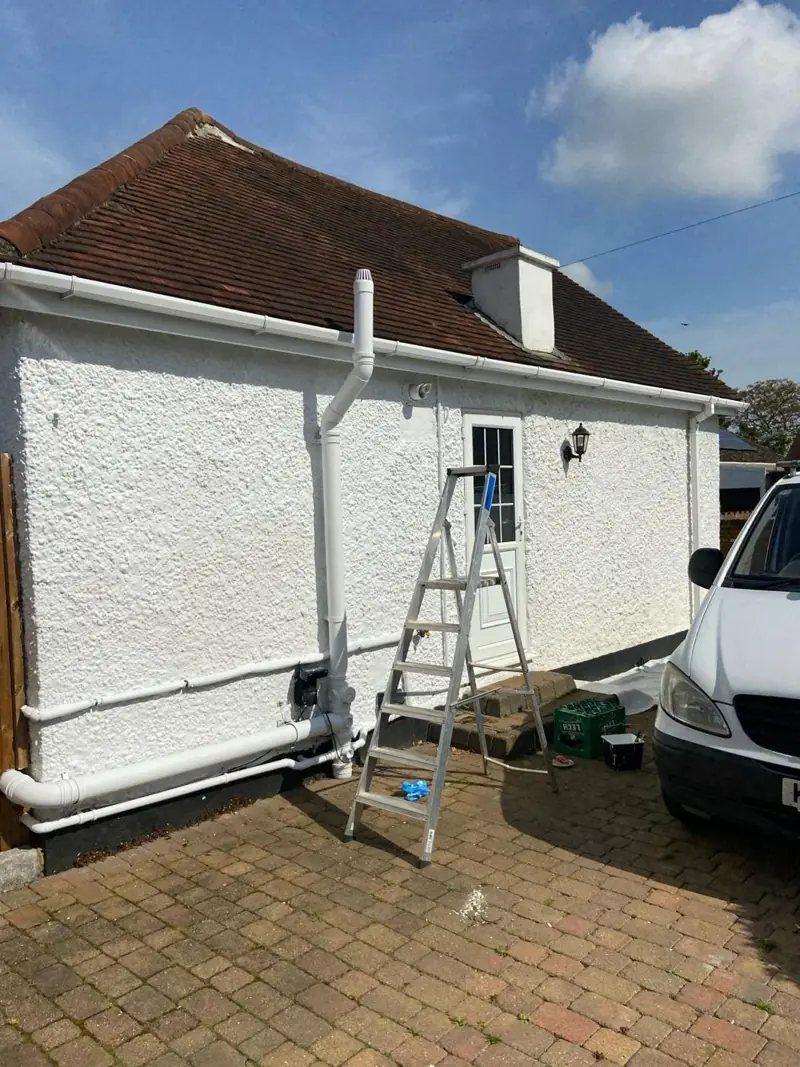
Because of the age of these rooflines, Dean does not quote for fascia work from the ground alone. The survey includes:
- Pushing a sharp point into the board ends, mitres and the corners where gutters run out, which is where rot starts on most rooflines.
- Looking along each board for paint that has lifted in strips. That usually means moisture is getting in behind it.
- Checking gutter joints and outlets for drips, since a leak will spoil fresh paint on the board beneath within weeks.
- Noting where a neighbour’s uPVC meets your timber, as that junction needs careful cutting in and sealing.
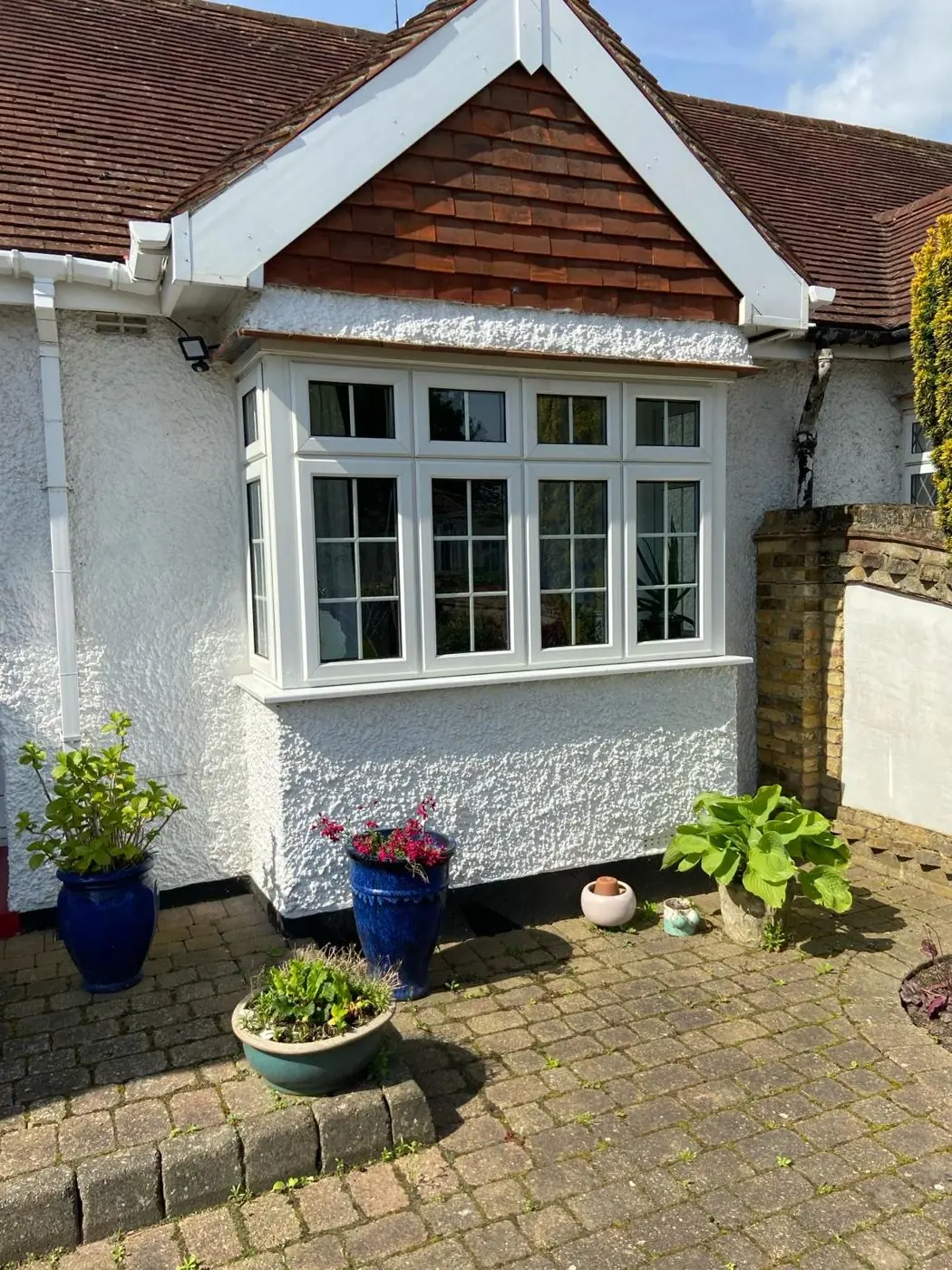
Small soft patches can often be cut out and filled. Long runs of rotten board are a carpentry job, and we will tell you that before any paint is bought. Where boards are sound, the work is scraping, sanding the old edges flat, priming bare timber, then undercoat and top coat.
Ladders, footpaths and shared courts
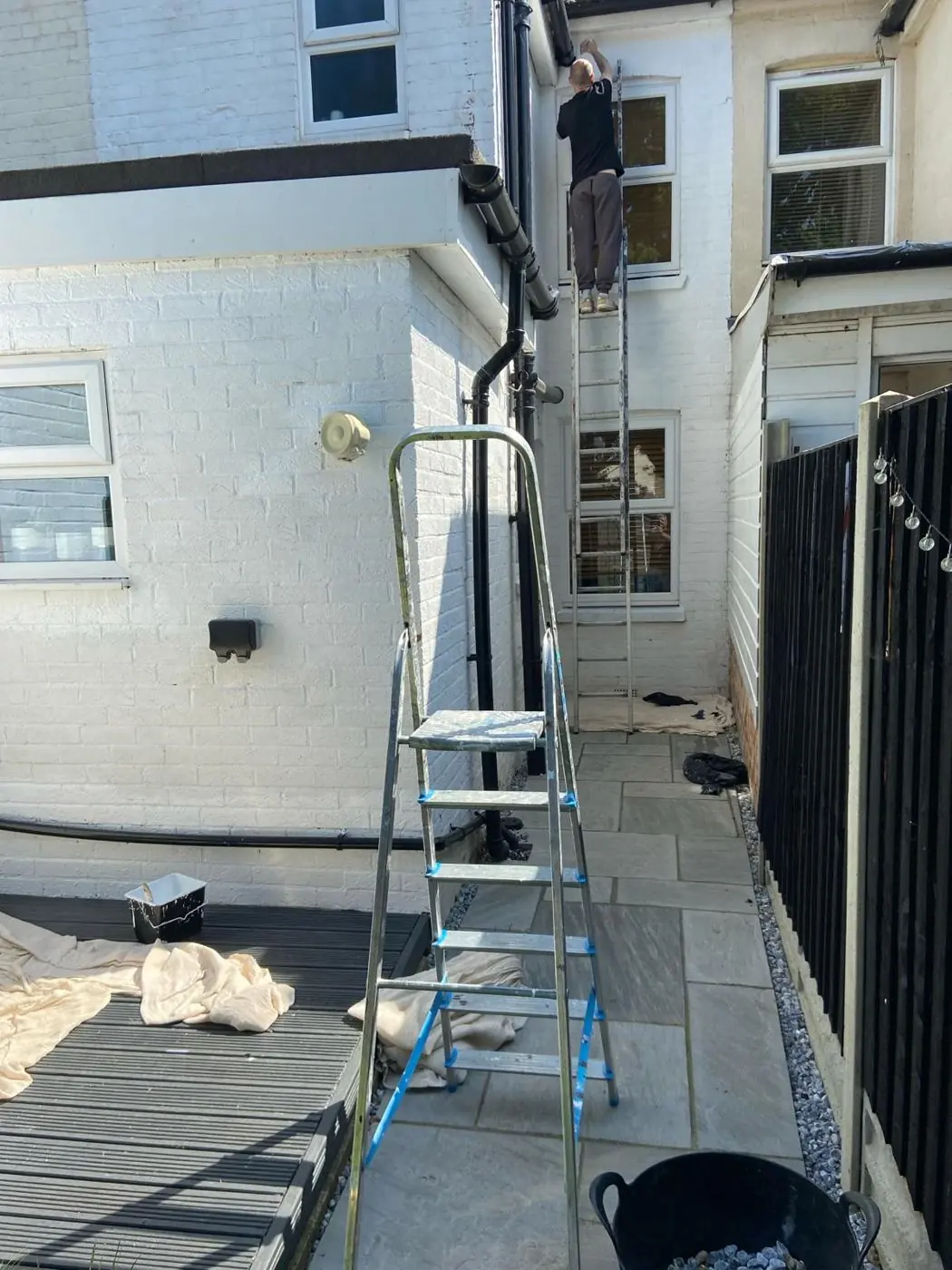
Roofline work is where Bellinge’s Radburn layout matters most. Homes in courts such as Foskitt Court, Gibbs Acre Court, Lasham Court and Coneygree Court often have the front of the house on a footpath. A ladder for the fascia may need to stand on a path that neighbours, school-run families and dog walkers use. Dean keeps a passable route open, puts barriers round the ladder foot and avoids leaving equipment on a shared path overnight.
The courts also have shared parking, so the van may not be right outside. Long ladders and boards are carried in, which is one reason we plan roofline jobs to run on consecutive dry days and avoid stretching the job over a fortnight.
A terrace roofline seen from end to end
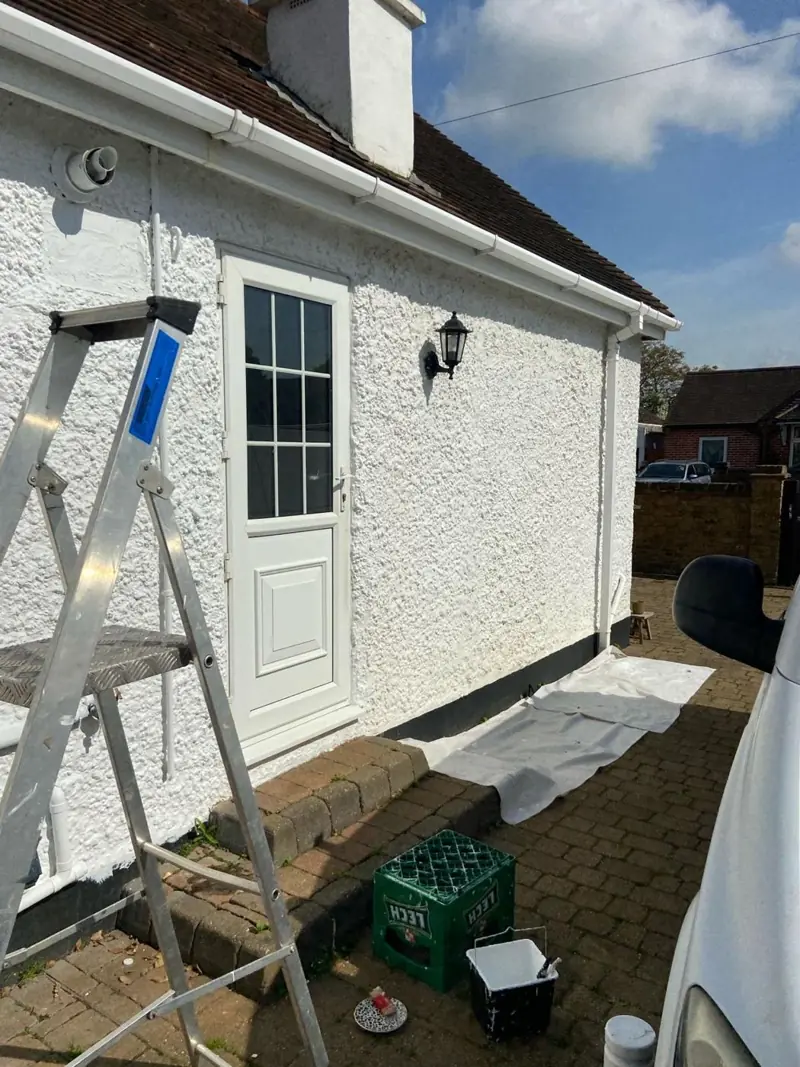
On a terrace, your fascia runs straight into your neighbour’s. If theirs is white uPVC and yours is timber painted black, the joint is visible from the whole court. There are no conservation controls on the estate, so the colour choice is entirely yours, but many owners choose a colour that lines up with the run. If two or three neighbours want their rooflines done at the same time, each house is still quoted and paid for separately.
Gutters and downpipes on the same elevation are usually painted in the same visit, as are any bargeboards on end-of-terrace gables. Homes facing the A45 or the Great Billing Interchange get their boards washed first to remove traffic film, which otherwise stops the primer bonding.
Our main fascia and soffit painting page covers the products and the full sequence. For more on the estate, see the Bellinge area page.
Last updated by Dean, DH Painter & Decorator.