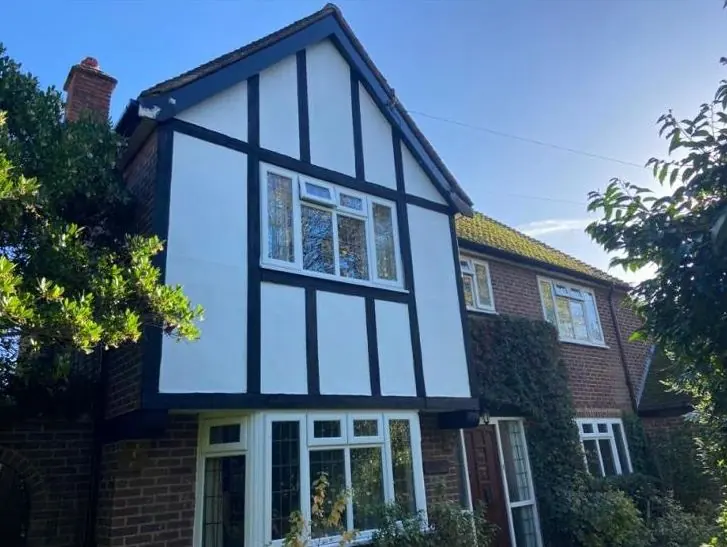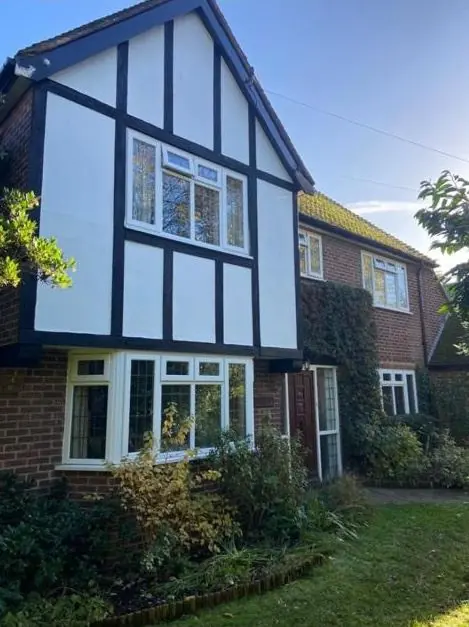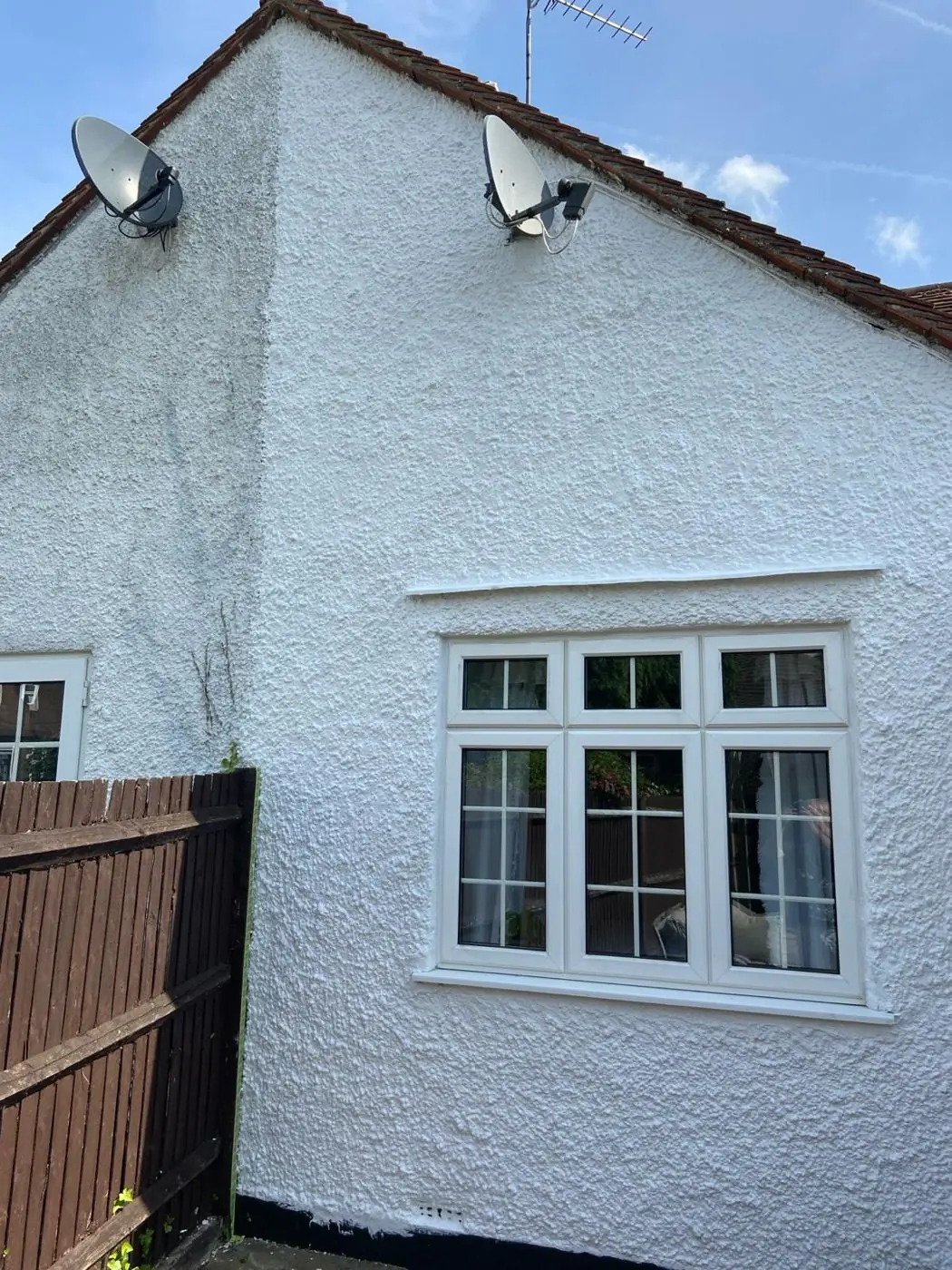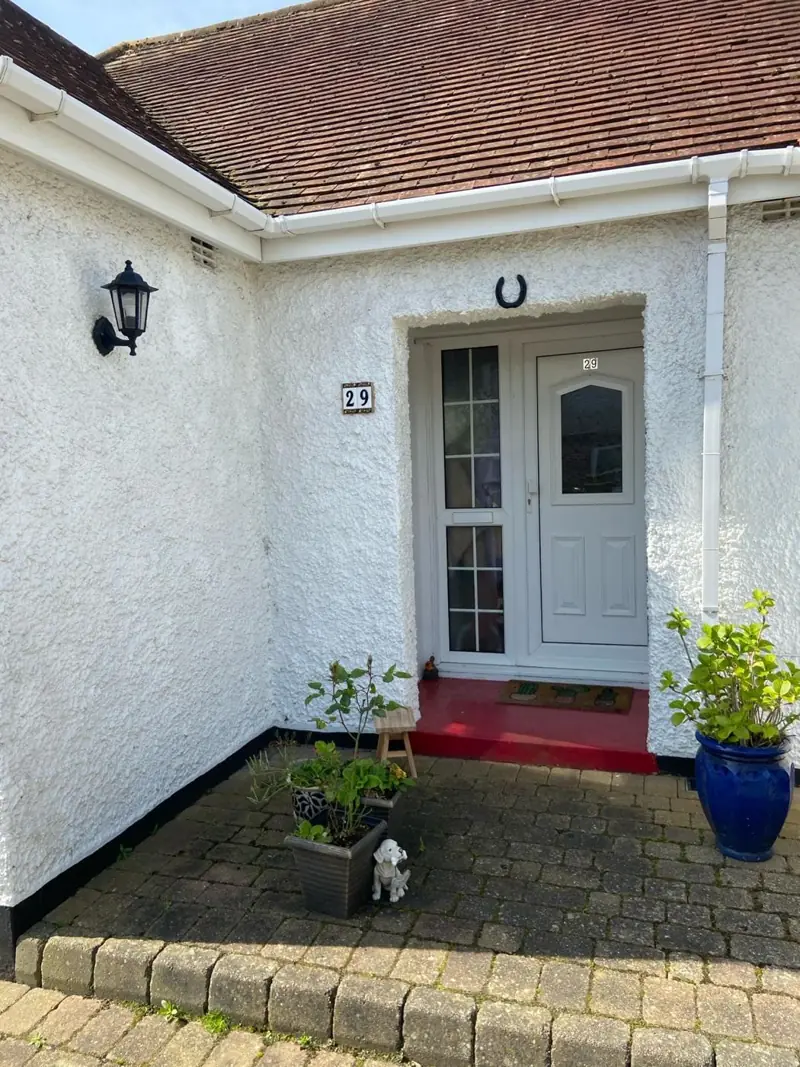
DH Painter & Decorator repaints timber fascias, soffits and bargeboards on homes in Blackthorn, NN3, about 3.8 miles north-east of Northampton. Dean focuses on roofline boards that were never capped in uPVC, which on houses built from the mid-1970s usually carry decades of flaking paint.
Roofline timber after five decades of repaints
House-building on Blackthorn was under way by 1974, when the Development Corporation was preparing the ground for its first phase. Any fascias and soffits that are still the original softwood have therefore been out in the weather for around fifty years. Some owners have since had their rooflines boxed in with uPVC; plenty have not, and on those houses the boards usually show the same pattern: thick, brittle layers of old gloss, cracking along the grain, lifting at board ends and corners, and bare wood where water has been getting behind the paint.
That build-up is the main reason a fascia job here takes longer than people expect. Painting over failing layers simply adds weight to a coat that is already letting go. The loose paint is scraped back, edges are feathered so old ridges do not telegraph through, soft spots are probed and bare timber is spot-primed before undercoat and top coat. Because a roofline board can hold paint from the 1970s at the bottom of the stack, the deepest layers are tested or sanded dry and slowly rather than power-sanded. Our main fascia and soffit painting page covers the full sequence.
Where your fascia stops and next door’s begins
Terraced houses are the most common home on the estate, between 45% and 64% of the stock across the two Census areas. On a terrace the fascia and gutter frequently run as one line across several houses, with no natural break where one property ends. Before work starts, Dean agrees with you, and ideally with your neighbour, exactly where to stop. A clean, square finishing line looks tidy; a ragged stop halfway along a board does not.
The same applies in reverse. If next door has uPVC and you have timber, or their boards are a different colour, there is no hiding the change, but a neat junction makes it look intended. Council-owned houses in the row are maintained by the council, so their roofline is not something we can paint for you even if it would match better.
Getting ladders up, front and back
| Situation on the estate | What it means for the roofline job |
|---|---|
| Front door on a footpath (Radburn layout) | Ladder footing sits on a public walk, so it is coned off and a route kept open for passers-by. |
| Parking in a shared court | Kit is carried from the van; we aim to do the whole roofline in one visit where the weather allows. |
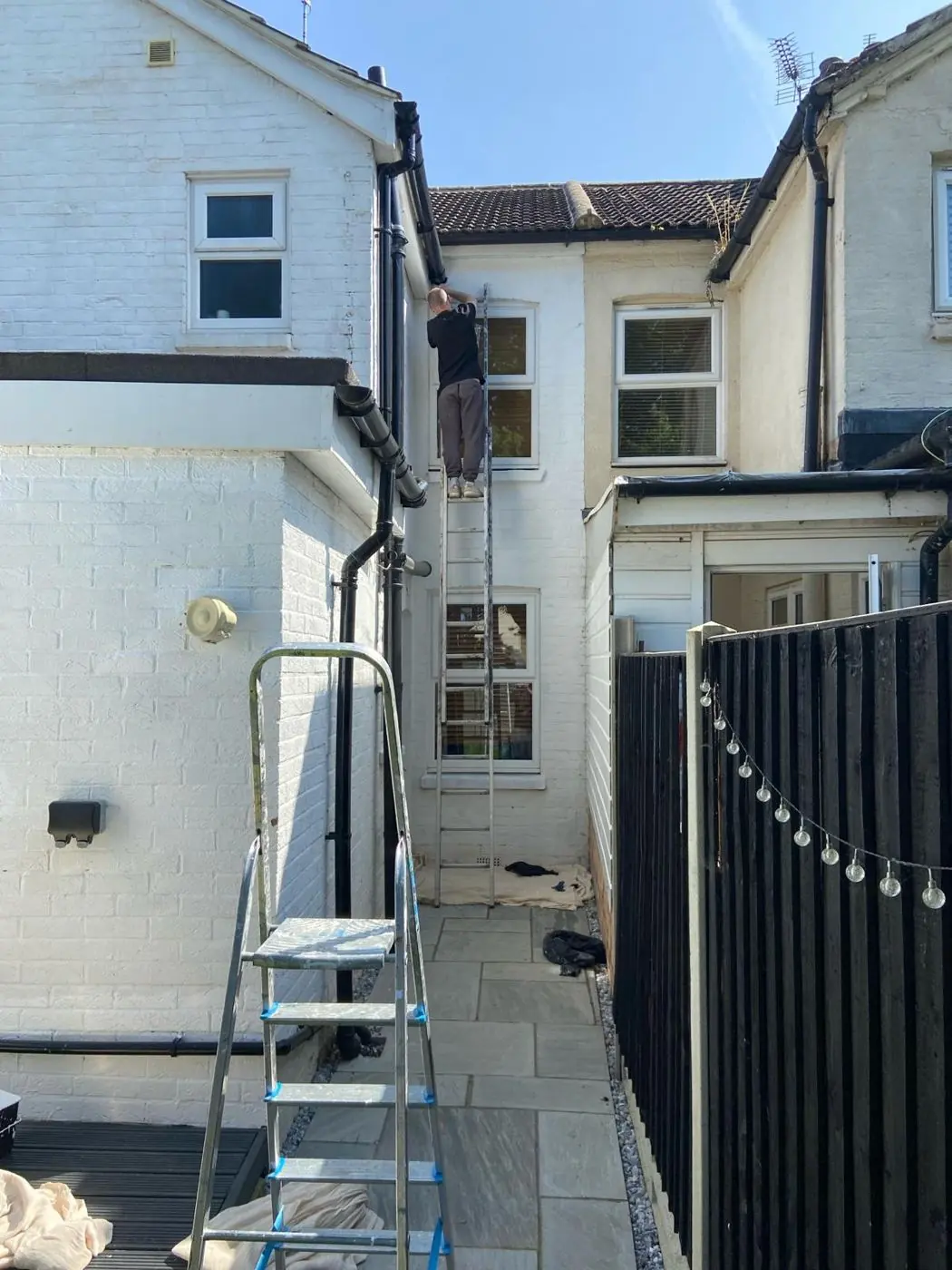
| Mid-terrace, no side passage | Rear ladders come through the house with floors protected, or along a shared path where one exists. |
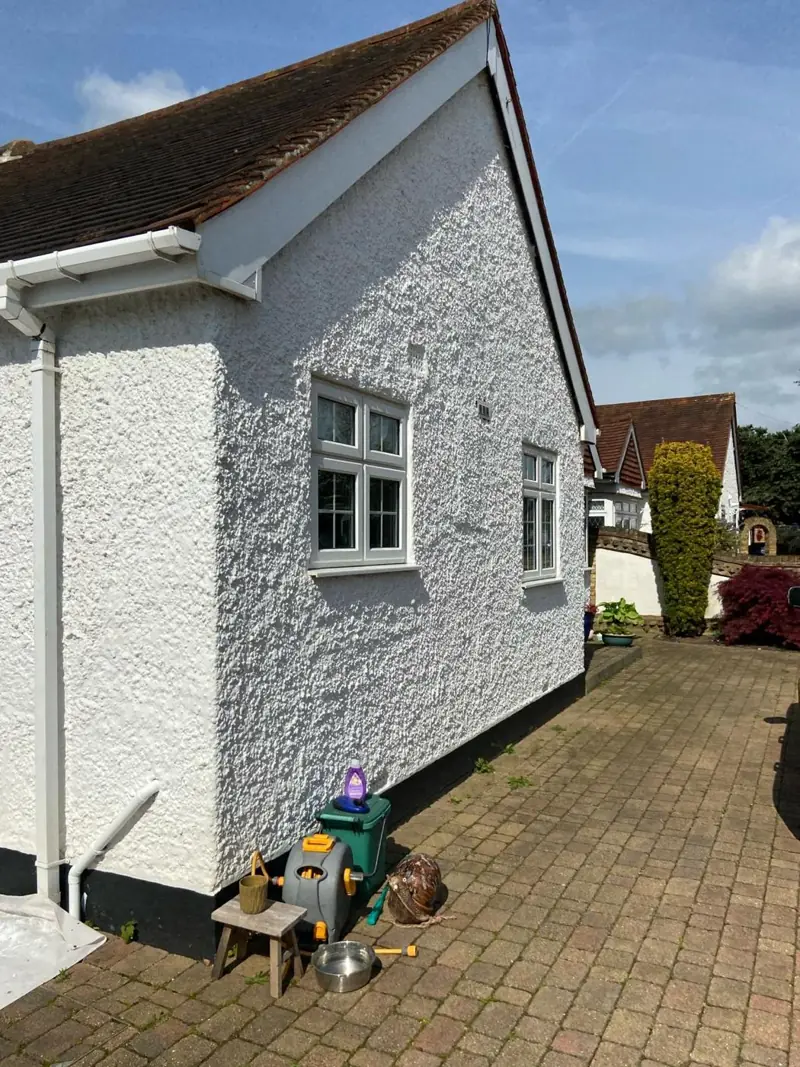
| End of terrace or semi | Gable bargeboards usually add a section that needs a taller ladder or a platform. |
Because court parking near the work is limited, dry-weather scheduling matters: we would rather move a booking than leave a half-primed board out in the rain. Our guide to timing exterior painting in the UK explains why.
Gutters, downpipes and the trees
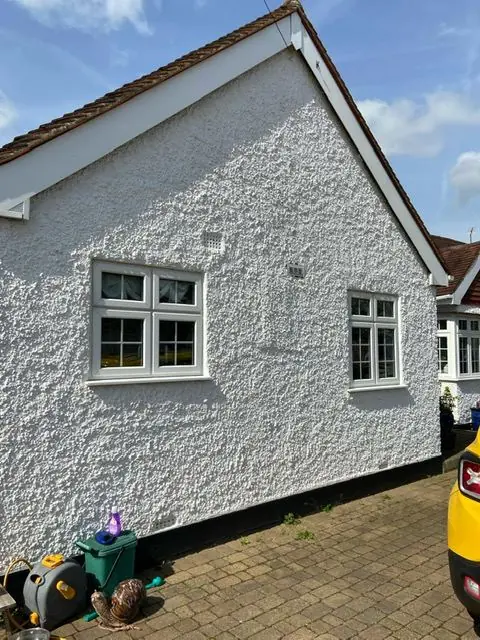
On homes near Lings Wood, leaf litter fills gutters quickly, and an overflowing gutter soaks the fascia behind it every time it rains. Clearing the gutter and checking the joints is part of the preparation, and any plastic gutters and downpipes can be painted at the same time if you want them to match. Where a board has rotted through rather than just softened, a carpenter needs to replace that length first and we paint it once it is in. More about the estate is on our Blackthorn area page.
Last updated by Dean, DH Painter & Decorator.