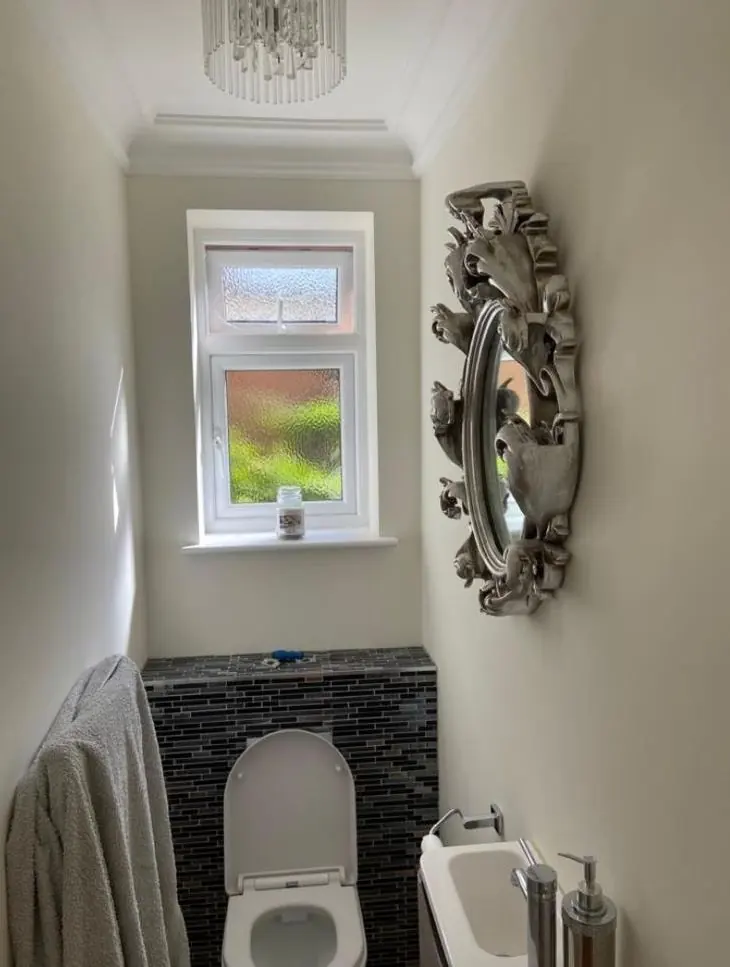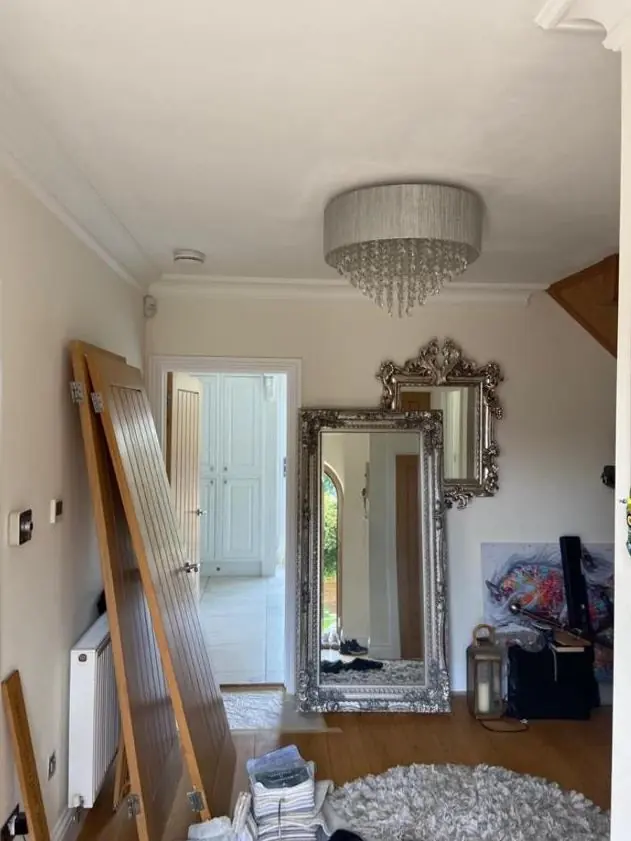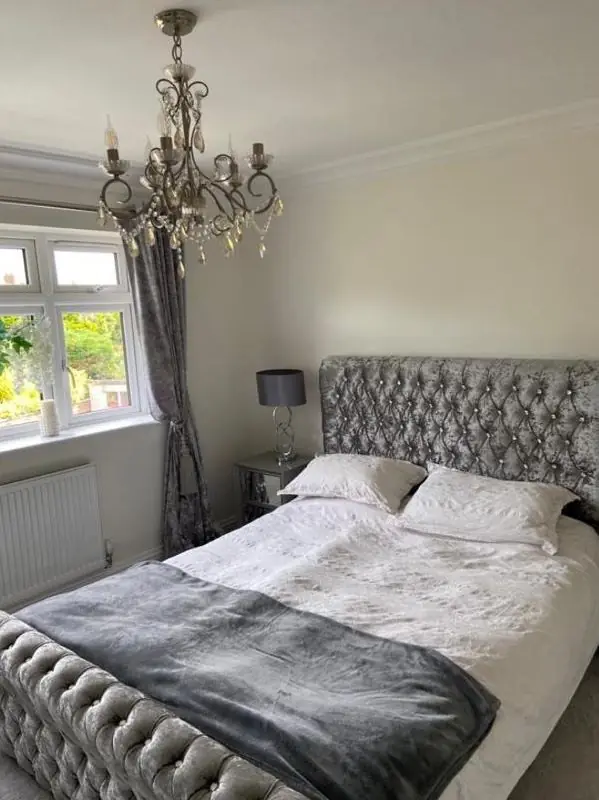
We hang wallpaper in Great Billing, NN3, about 3.9 miles east of Northampton town centre. In the stone cottages of the old village that usually means lining first and choosing a pattern that hides wavy walls; in the brick houses around Great Billing Way it is a more direct job.
Walls that were built by eye
The oldest houses in Great Billing date from the 16th to 18th centuries and were built in coursed rubble limestone, with lime plaster applied straight onto the stone. Nothing about that is square. A wall can lean, bow and change thickness from one end to the other, and window reveals in thick stone walls are rarely parallel. Wallpaper shows all of it. A straight vertical stripe beside a door that leans by a couple of centimetres over its height will look wrong from across the room, however carefully it is hung.
So in the cottages on Pound Lane, Cattle Hill and High Street, the conversation starts with the walls rather than the paper. We check for hollow or loose plaster by tapping, look at whether old paper is holding the surface together, and decide whether lining paper is needed. On most lime-plastered walls it is. A cross-lined base evens out small hollows and gives the finish paper something consistent to grip.
Low ceilings and the case for a forgiving pattern
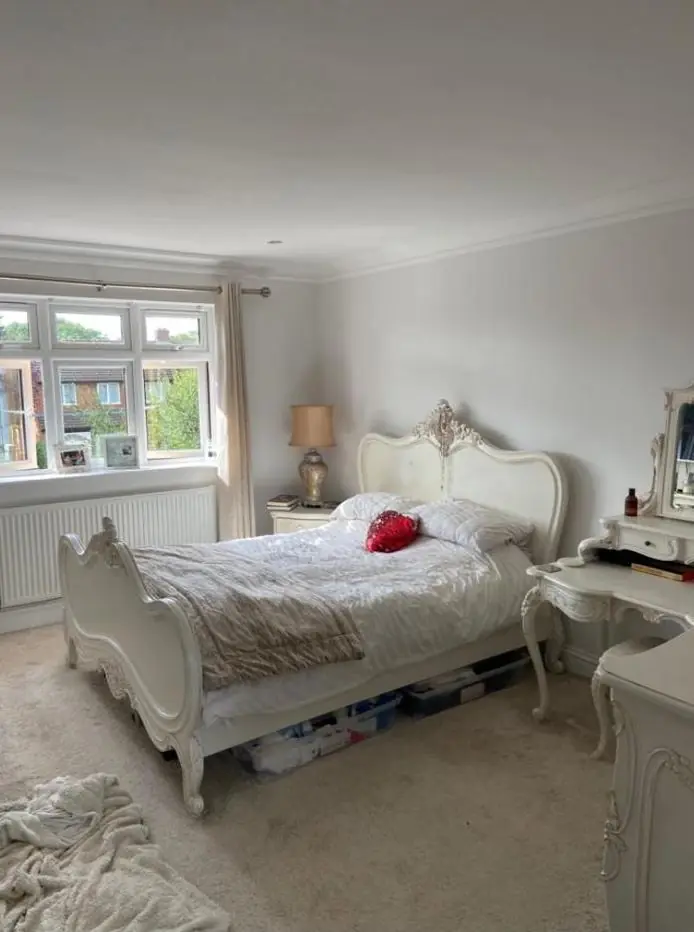
Many of the older rooms here have low ceilings, sometimes with a beam, and ceiling lines that are not level. A bold horizontal or a tight geometric repeat makes that obvious at the top of every length. Patterns that are more forgiving include:
- Small, random or all-over prints, such as sprigs, florals and textured plains, where the eye has no line to follow.
- Designs with a free match or a short repeat, which lose less paper when every drop has to be trimmed differently.
- Softer verticals rather than crisp stripes, if you want a striped look.
We will tell you honestly before you order if a paper you love is going to fight the room. It is cheaper to hear that before the rolls arrive. Where a room has a deep window reveal in a thick stone wall, we also plan how the pattern wraps into it, because that is the spot people look at first.
Papering the newer houses around the old village
The housing that now surrounds Great Billing, from the old Hall site to the mid-1990s estate off Great Billing Way and the infill closes, is modern brick with plasterboard or gypsum-skimmed walls. These take paper straightforwardly. Walls are flatter, corners are closer to square, and a striking feature wall or a large-scale mural works well. The main prep is filling nail pops and taped joints, and sizing new plaster so the paste does not soak in unevenly.
Converted barns and the Hall’s former stables and coach house sit in between: big, tall walls, often with exposed timbers that need neat trimming. Long drops may need a tower rather than steps.
Before you choose a paper for an older house
If your house is one of the listed buildings in the conservation area, original wall finishes may be part of what is protected. Removing historic paper or plaster from one of those may require listed building consent, so the conservation officer is the first call. Even in unlisted cottages, it is worth us looking at what is under the existing paper before deciding to strip it, because on fragile lime plaster the old layers can be holding things together.
Our main wallpaper hanging page covers paper types, stripping and pattern matching in general. For the wider picture of decorating in the village, see the Great Billing area page, and if you are comparing decorators, our guide to choosing a painter and decorator sets out what to ask.
Last updated by Dean, DH Painter & Decorator.