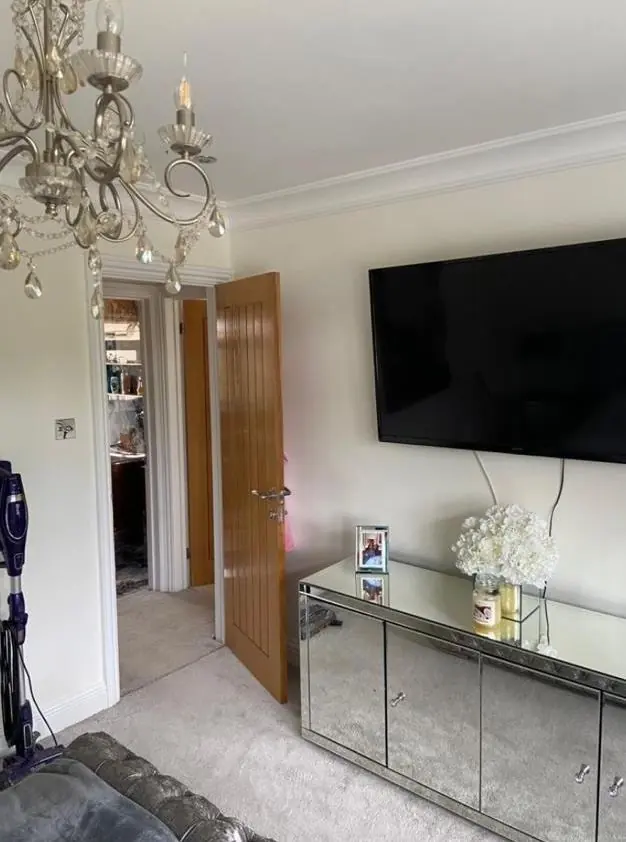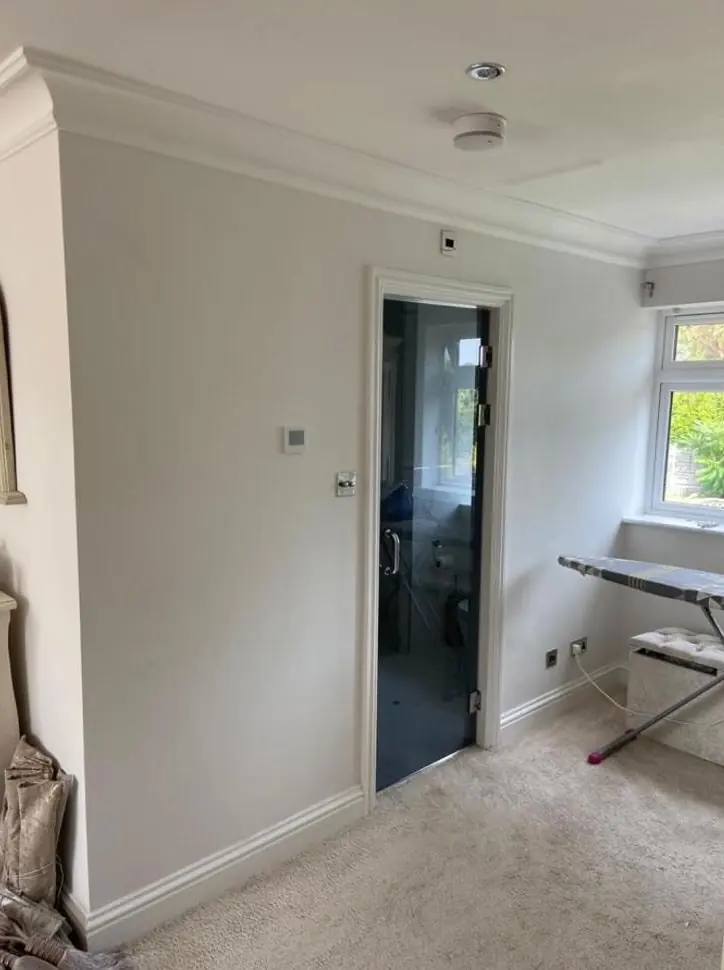
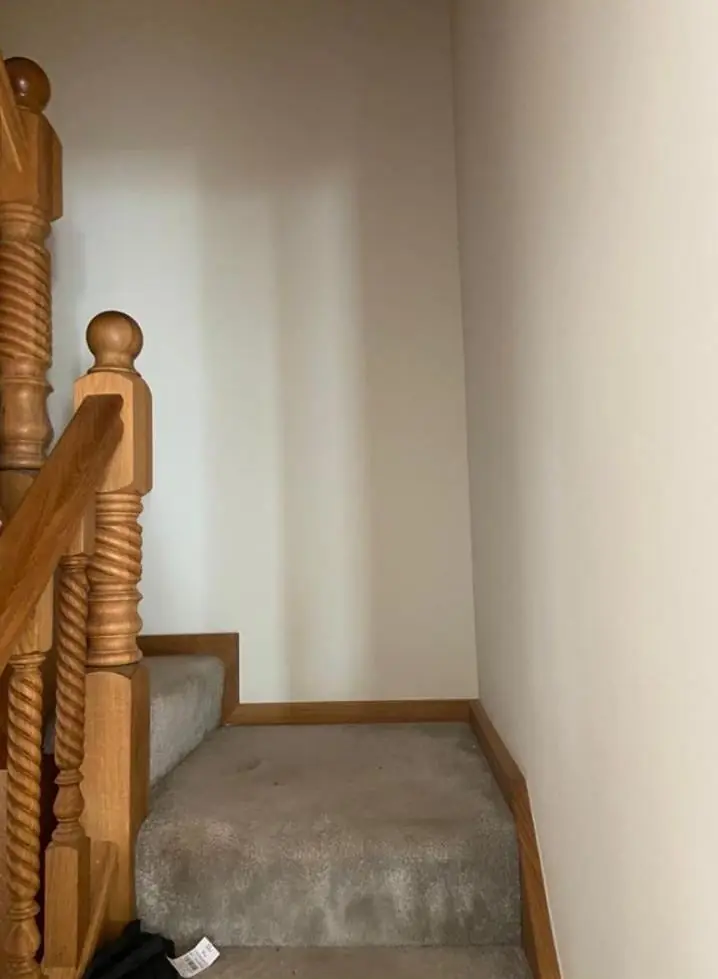
Dean hangs wallpaper and lining paper in Bugbrooke, about 5.1 miles west of Northampton. In the village's 17th and 18th century ironstone cottages the walls are rarely straight, so lining usually comes first; in the larger Georgian and Victorian rooms, the work is matching heritage patterns across tall walls.
Why cottage walls on High Street and West End get lined first
Most of Bugbrooke’s listed cottages were built in coursed ironstone in the 17th and 18th centuries, and their inside walls are old lime plaster laid straight onto the stone. Those walls bow, lean and dip. Wallpaper hung directly onto them shows every hollow, and the seams open where the plaster curves. A layer of lining paper, hung horizontally so its joints never line up with the joints of the finished paper, evens out small ripples and gives the wallpaper a stable, consistent surface to grip.
Lining won’t make a wall flat. On a cottage wall that leans noticeably out of plumb, we decide with you where the pattern should run true. Usually it’s the most visible corner or the chimney breast, and we let the small error land somewhere you won’t notice, such as behind a door.
Breathable papers on solid stone walls
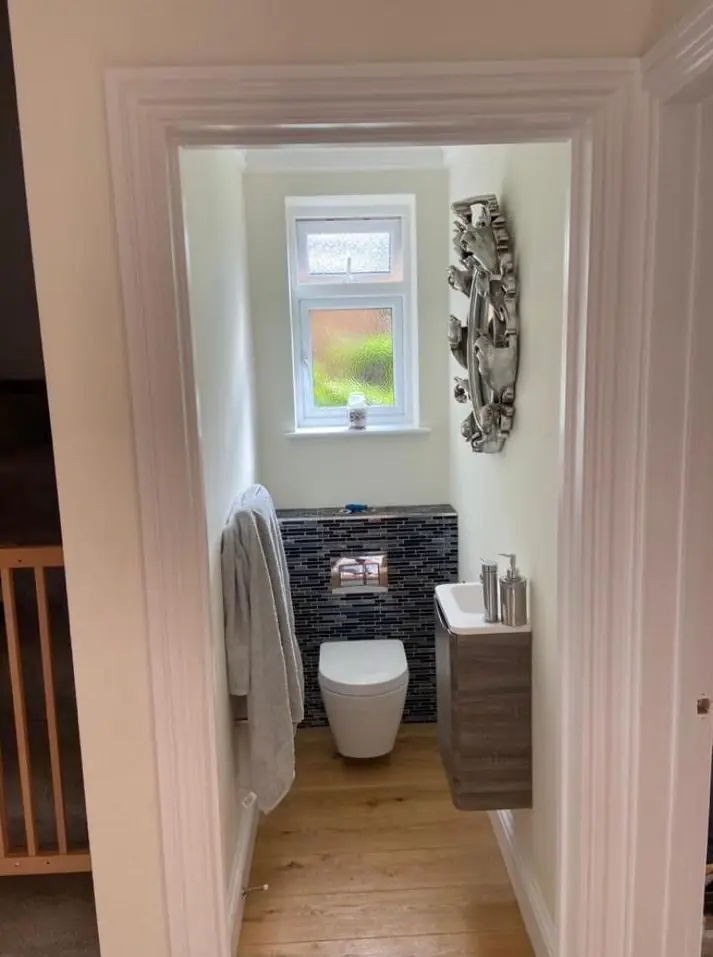
The type of paper matters as much as the pattern. Old lime plaster on solid ironstone moves moisture in and out, and Bugbrooke sits on a ridge above the damp Nene valley, with the Hoarestone Brook running through the village. A heavy vinyl wallpaper acts like a plastic sheet on a wall like that, and can trap damp behind it until the paper lifts or mould shows at the seams. On these walls we’d steer you towards traditional pulp papers or breathable non-woven papers, hung with a paste that suits them. If a wall already shows damp, the cause needs sorting first, and paper won’t hide it for long.
Stripping old paper from lime plaster also needs a light hand. Soft plaster comes away with the paper if it is soaked or scraped too hard, so we test a small area first and take it slowly.
Sloping ceilings and dormers
Many of the cottages have attic storeys and gable dormers, so bedrooms under the roof have sloping ceilings, short knee walls and window reveals at odd angles. Patterned paper on a slope is where poor planning shows. A large repeat or a strong vertical stripe exaggerates every change of angle. Small, scattered designs are much more forgiving in these rooms, and we work out the pattern’s path across each slope before cutting the first length.
Heritage patterns for the larger period rooms
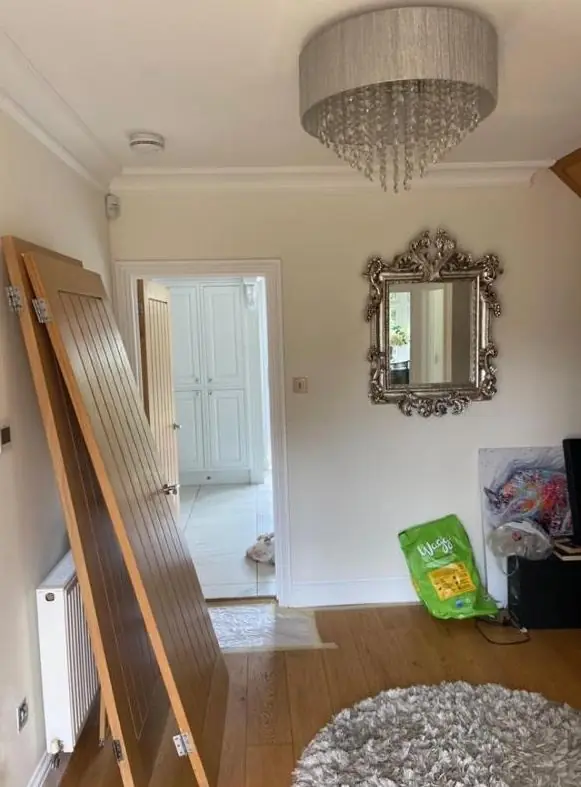
Bugbrooke also has grander rooms. New Creation Hall, the former rectory of 1815, has Georgian proportions, with 12-pane sashes and shutters. The Manor House was remodelled in Tudor style in 1881. Rooms of that age suit heritage designs: damasks, small Georgian sprigs or Arts and Crafts-style patterns, depending on the room. Higher walls make pattern matching more exacting, because a drop that is a few millimetres out at shoulder height can be clearly off at the cornice. We set out from a plumb line and check the match on every drop. Our wallpaper hanging service page covers paper types and our process in more depth.
In the later houses outside the historic core, around Levitts Road, Meadway and Camp Close, walls are generally gypsum plaster or plasterboard, and they can often take paper with less preparation. Feature walls and chimney breasts are the usual requests in houses like these.
Booking and access
Wallpapering is quiet indoor work, so it fits around the season. The lanes in the old core, such as Ace Lane and Church Lane, are narrow and edged with stone walls, so we’ll check where to park and how long lengths can be carried into the house, especially where a cottage is entered from the rear. Our Bugbrooke area page explains how we cover the village from Northampton.
Last updated by Dean, DH Painter & Decorator.