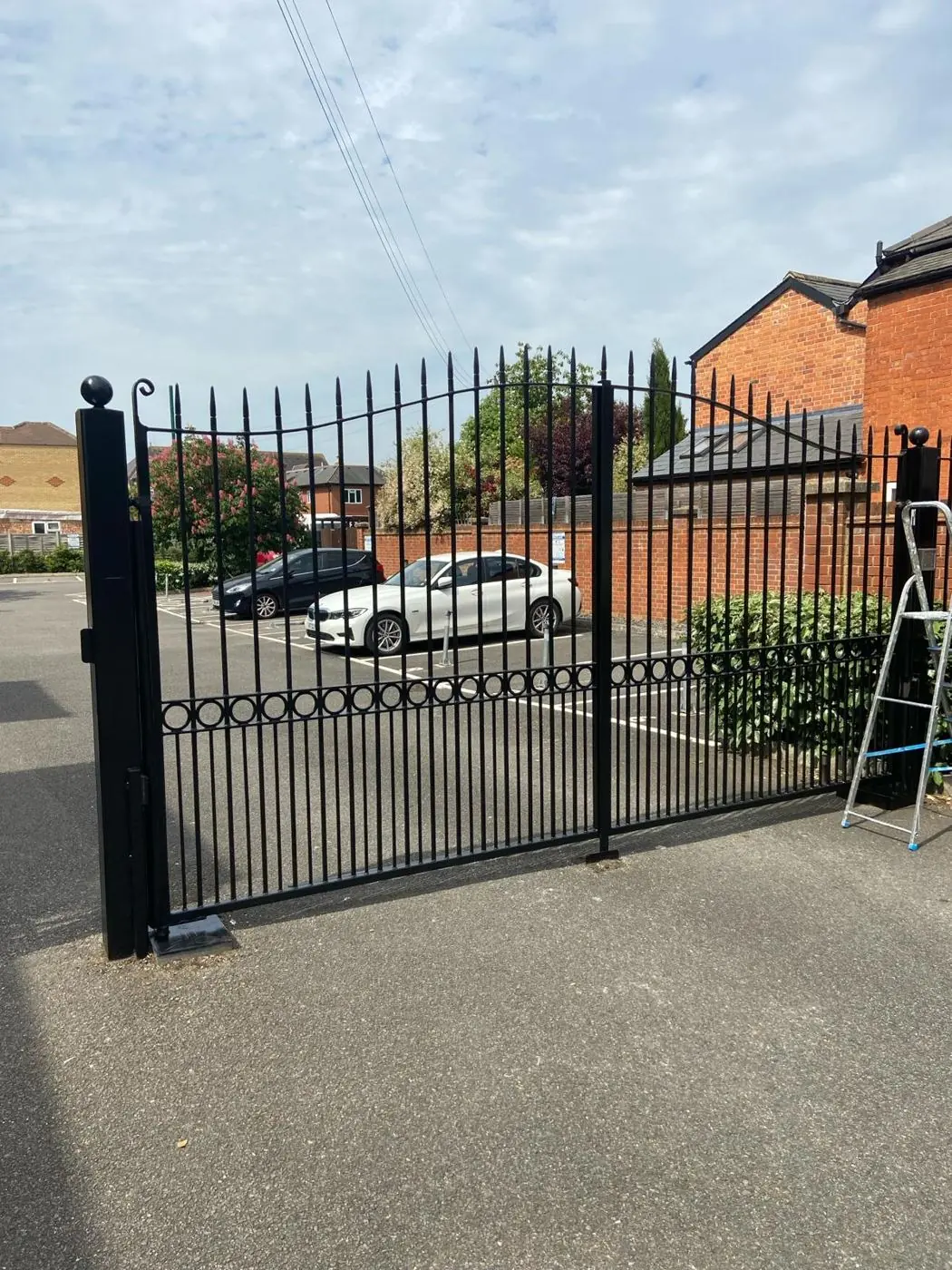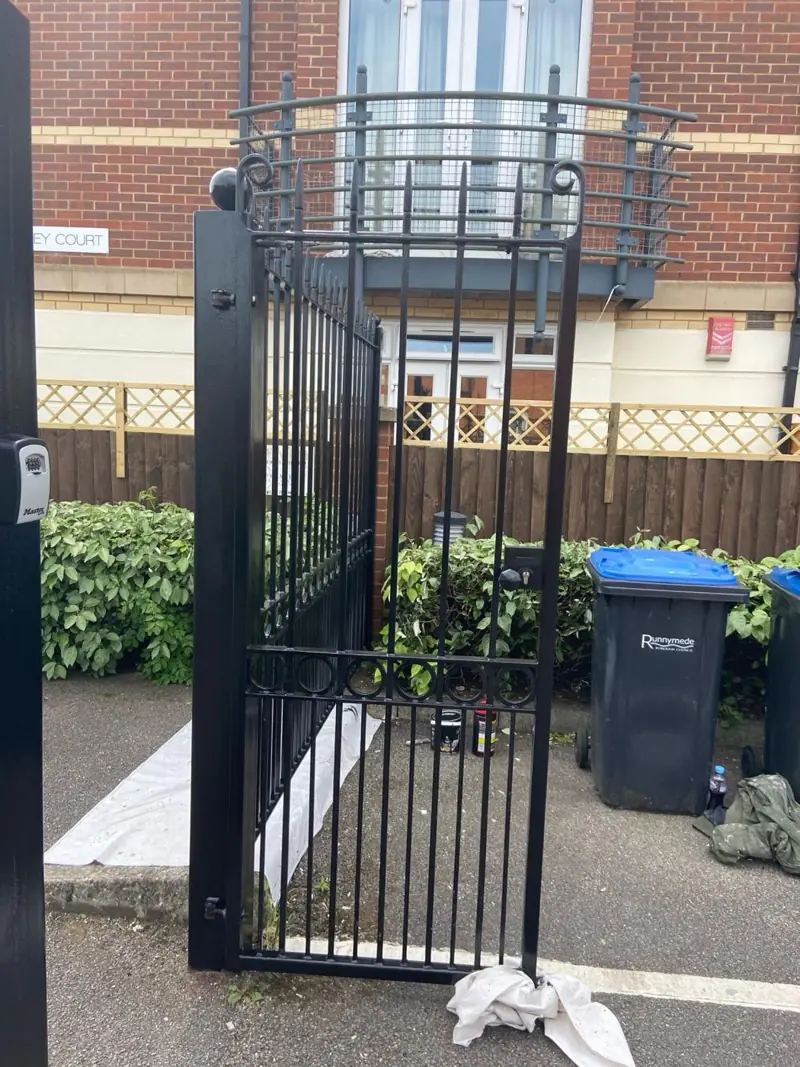
DH Painter & Decorator paints metal gates and railings in Great Billing, NN3, about 3.9 miles east of Northampton town centre. In the conservation area the council's 2018 appraisal asks for railings to be painted black, so most work there is careful rust treatment and a black finish; on the modern estates it covers steel gates and garden metalwork.
Railings the village wants to keep
Ironwork is a small but noticeable part of the Great Billing streetscape. The paired estate houses at 11-19 Church Walk, built in the 1860s for the Cary-Elwes family, keep their front railings and gates, and the Hall’s gate piers still mark the line of the old drive even though the Hall itself was demolished in 1956. The 2018 Great Billing Conservation Area appraisal is specific on colour: railings and lamp posts should be painted black. So a railing job here is less about choosing a colour and more about getting a durable black finish on metal that may be well over a century old.
The general method for any metalwork, from identifying the metal to priming, is on our main metal gate and railing painting page. What follows is about the Great Billing side of it.
Old iron set into stone
Railings of this age are usually cast or wrought iron, and where they are fixed into stone plinths or copings with lead or mortar, two problems recur:
- Rust at the base. Water sits where each bar enters the stone. As the iron rusts it expands and can split the stone or lift the coping. We dig out loose material around the bases, treat the rust and seal the joint before painting.
- Thick old paint. Generations of gloss fill the detail of cast finials and collars. Cast iron is brittle, so we avoid heavy chipping and use scrapers, wire brushes and careful mechanical cleaning instead.
After cleaning, bare spots get a rust-inhibiting primer, then an undercoat and a black gloss or semi-gloss top coat. Shade from the village’s mature trees keeps a lot of ironwork damp, so we allow longer drying times and avoid days when dew lingers into the afternoon.
Gates on the modern closes
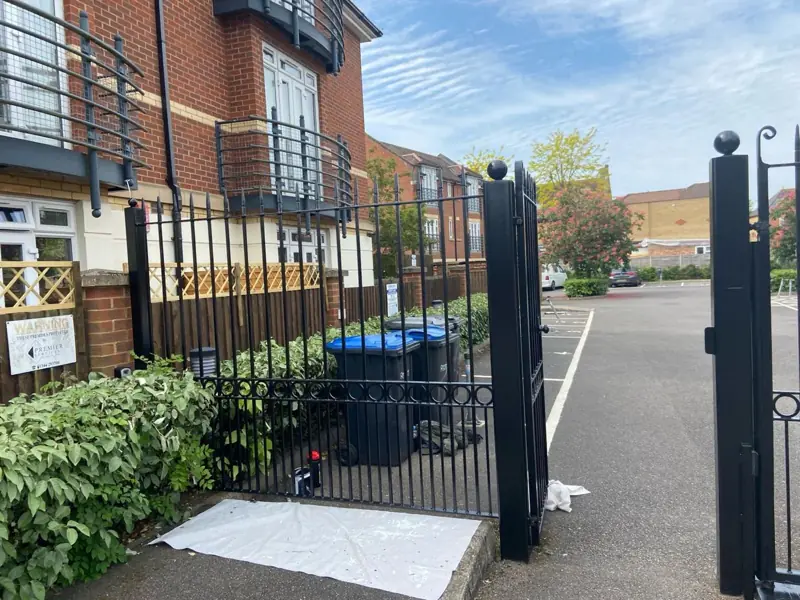
Around the old core the metalwork is newer: mild steel driveway and side gates, galvanised gates and steel garden railings. Mild steel rusts quickly once its coating is broken, especially at welds and the bottom rail. Galvanised steel needs a primer made for zinc before any top coat will hold. Outside the conservation area you are free to choose the colour, and black, anthracite and dark green are the usual choices against light modern brick.
Working on the lanes
| Location | What affects the job |
|---|---|
| Church Walk | Estate-house railings, a granite sett path across the lane, and overhead cables |
| High Street | Road humps and little through traffic, so working at the kerb is manageable with care |
| Elwes Way | Narrow and enclosed by stone walls, so drop-sheets and kit must keep the way clear |
| Pound Lane | Cottages face straight onto the lane, with overhead cables above |
| Modern closes | Gates usually reached from the drive, with simple parking |
Where railings stand at the back of the highway, they are painted from the pavement or lane, so we sheet the ground to protect setts and verges from drips, and keep a clear path for anyone passing. If a railing or gate belongs to a listed building, we will check with you whether anything beyond like-for-like repainting is planned, since that may need consent.
Before quoting, Dean looks at the metal type, how far rust has spread and whether any bars, collars or finials are missing or loose, since a blacksmith repair is better done before painting than after. Where a gate has dropped on its hinges, we point that out too, because a dragging gate scrapes its new paint off within weeks. Our Great Billing neighbourhood page covers the rest of the village.
Last updated by Dean, DH Painter & Decorator.