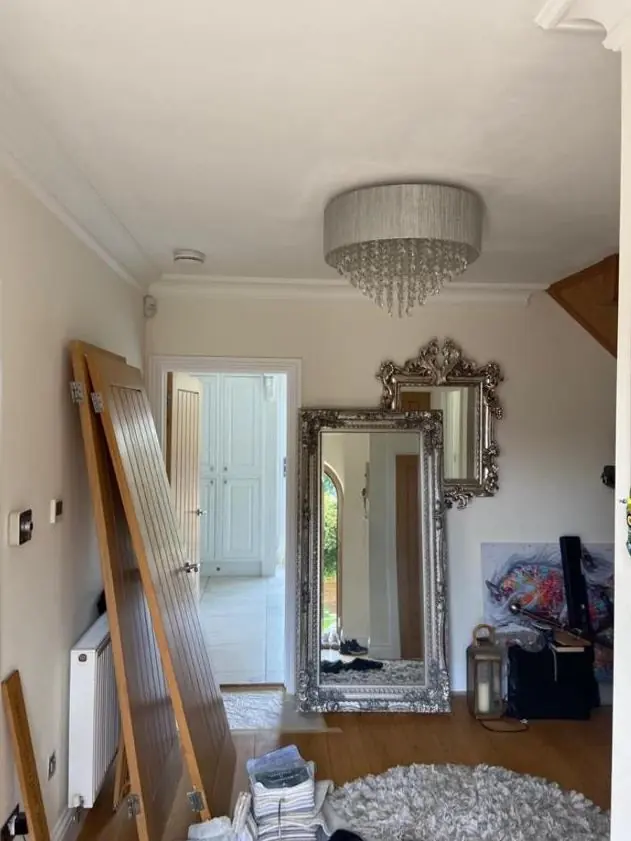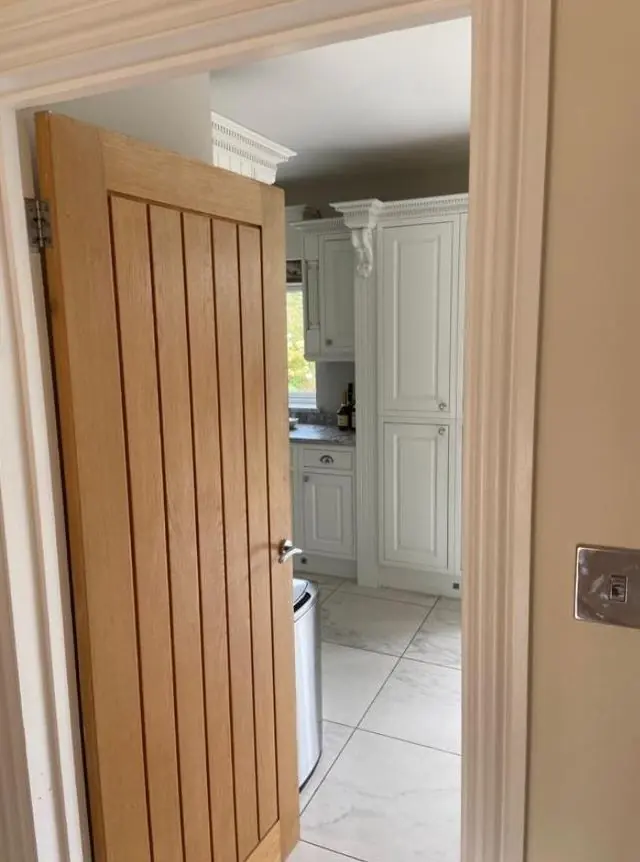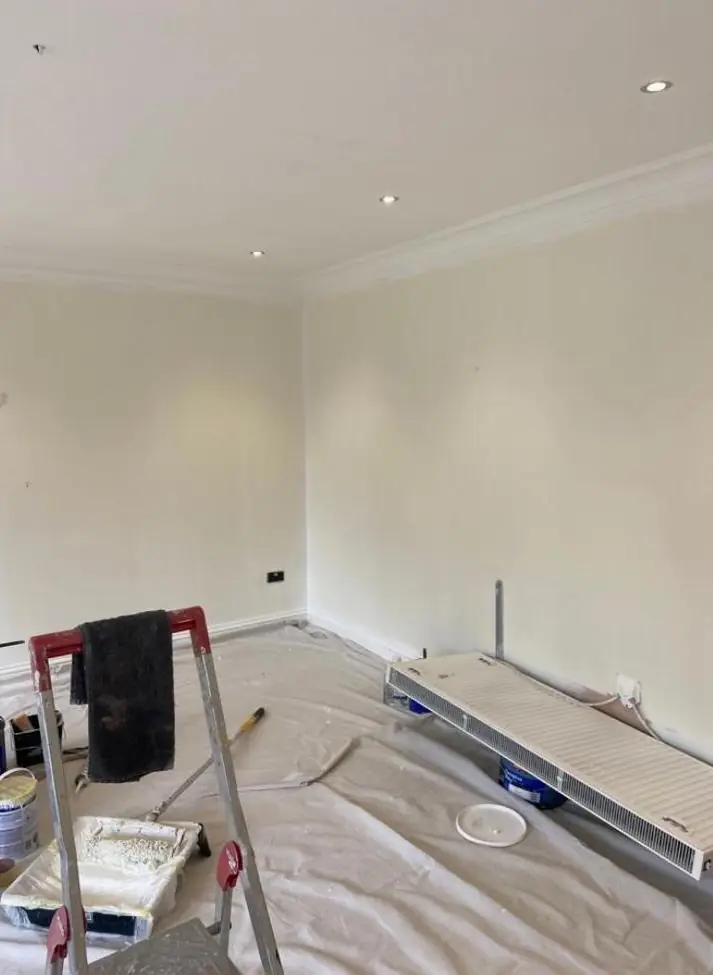
We carry out decorative finishes in Towcester, on the A5 and 8.2 miles from our Northampton base. In the Georgian and older buildings of the centre that usually means restoring panelling, mouldings and period joinery with traditional finishes, while in newer homes it more often means adding panelled or feature walls.
Period detail behind the Georgian fronts
Towcester’s historic centre is full of buildings that were updated rather than rebuilt. In the 18th and 19th centuries, owners kept improving their properties with fashionable new facades, while the earlier rooms carried on behind. As a result, one building can carry panelling, mouldings and joinery from more than one period. Decorative work in these houses is mostly about bringing those features back without blurring their detail.
The usual trouble with joinery of this age is paint build-up. Layer after layer of gloss fills the quirks of a moulding and rounds off the edges of a panel, until the profile looks soft and heavy. Where the build-up is bad, we carefully take it back to recover the detail before refinishing. Where it is sound, a light rub-down and thin coats are better than another thick layer.
Finishes that suit old timber and lime walls
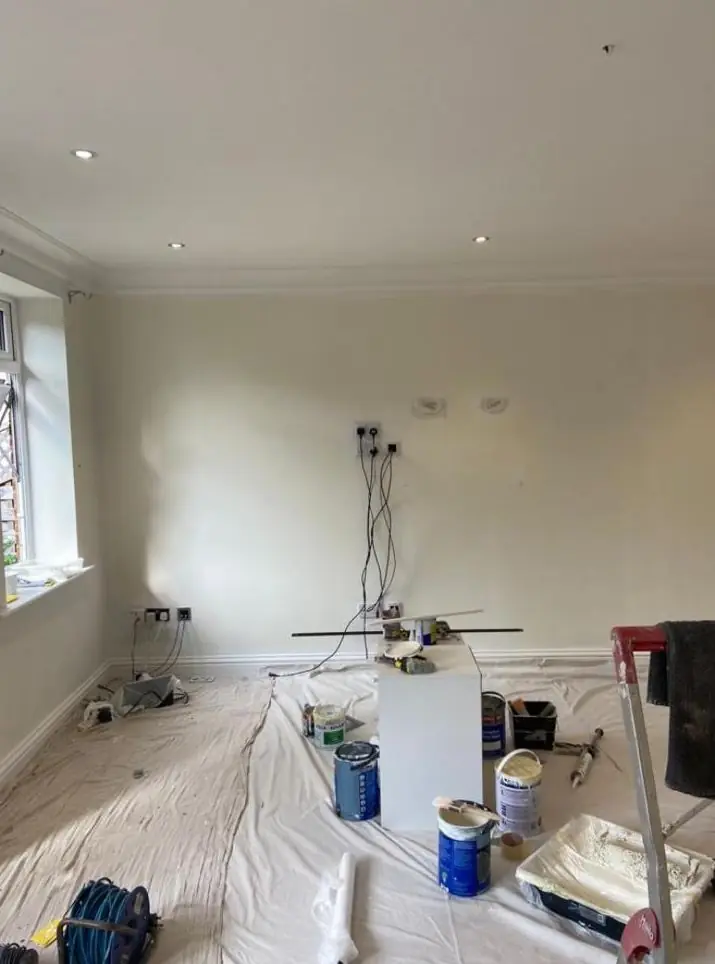
The finish has to suit the surface it sits on. Period panelling usually looks right in a flat or eggshell finish rather than high gloss, which shows every ripple in old timber. On walls with lime plaster, any paint effect, such as colour washing or a soft broken finish, needs to use breathable products so the wall can still dry out. We also keep paint films thin on moving joinery, because a thick, hard coat cracks first where a timber-framed building flexes.
- Panelling and dado rails picked out in two tones, or kept to one colour for a calmer room
- Cornices and ceiling roses cleaned of clogged paint and repainted by hand
- Shutters, window boxes and reveals finished to match the joinery
- Lining and picking out on doors with raised or fielded panels
Around 95 Towcester buildings are listed. If yours is one of them, stripping historic finishes or changing the character of decorative features may need listed building consent, so talk to West Northamptonshire Council before major work. Our main decorative finishes page describes the full range of effects we offer.
Large joinery in the former coaching inns
Watling Street once had more than 20 inns for travellers, and a number survive as pubs and hotels. Their public rooms combine period joinery with constant use: panelled doors swinging all day, dado rails knocked by chairs, long moulded runs along corridors. Decorative work in that setting has to look right and stand up to wear, so we use harder-wearing traditional finishes on joinery that is touched every day, and fit the work around trading.
Where the line of an old carriage arch, since blocked in, still shows on an inside wall, picking out its edge or reveal in a contrasting tone can make it read as a deliberate feature of the room rather than an awkward patch of wall.
Adding panelling to Towcester’s newer homes
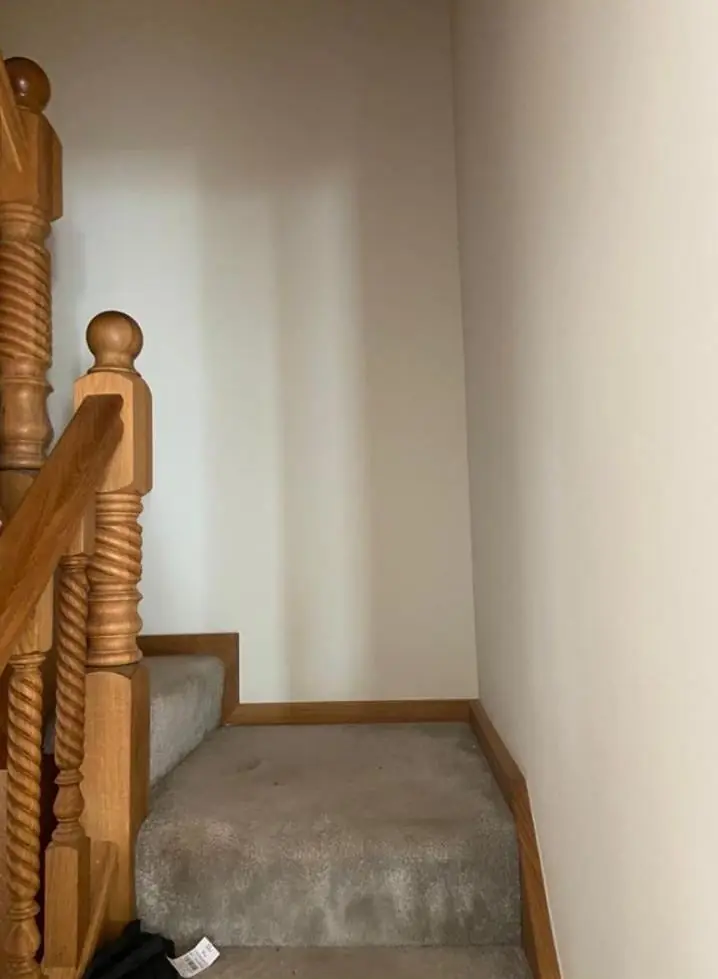
The estates on Towcester’s southern and western side are the opposite of the old core: square rooms, flat plasterboard and no period detail to restore. Decorative work there means adding something, such as panelled walls in halls and stairwells, half-height panelling in dining rooms or a two-tone feature wall. MDF or timber panels are fitted, filled, caulked and sanded so the joints vanish, then painted, often in one deep colour from skirting to top rail.
For colour help on period or new work, see our colour advice service. The Towcester area page sets out how the town’s building types differ.
Last updated by Dean, DH Painter & Decorator.