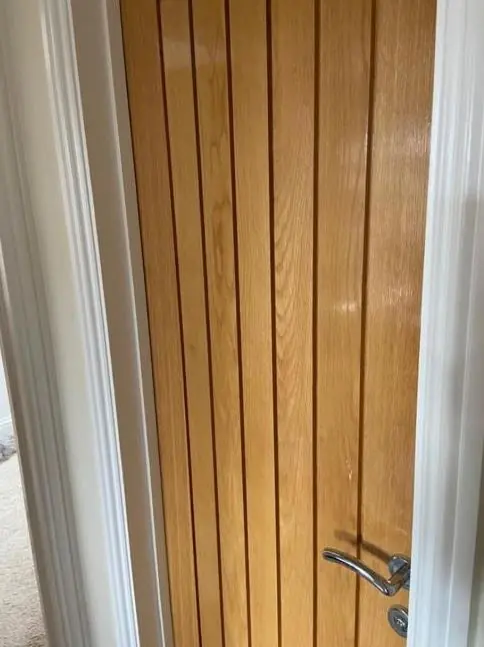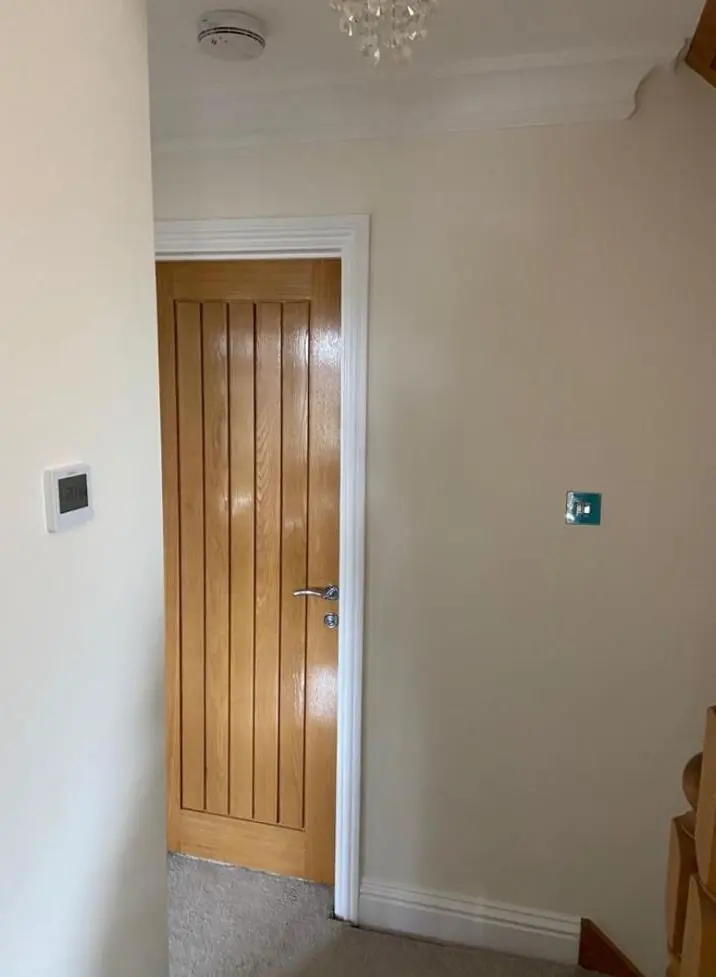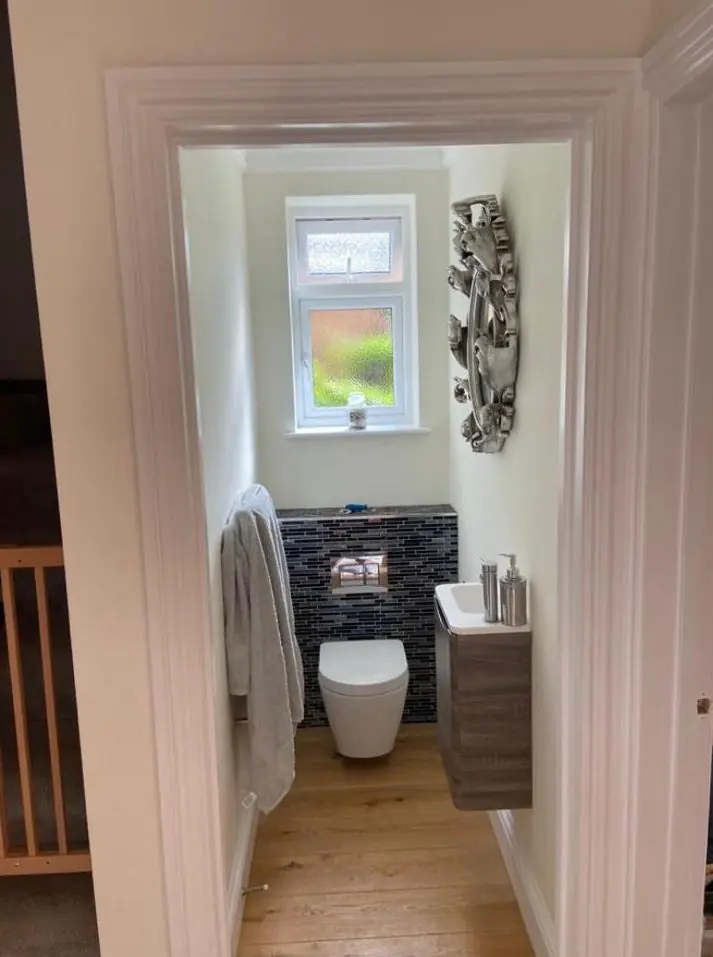
DH Painter & Decorator paints doors, frames, skirtings, architraves and timber windows in Towcester, NN12, a little over 8 miles south-west of Northampton. Much of the woodwork in the town centre is period joinery inside the conservation area, while homes to the south and west have modern doors and skirtings that need a durable, clean finish.
Street doors in the old town centre
In the historic core, frontages run unbroken along the pavement, and a panelled front door, sometimes with a door canopy above it, may be the only timber on the elevation within easy reach of passers-by. The A5 passes within touching distance of many of them, and the centre’s poor air quality is officially recognised by the council. On joinery, the traffic shows up as a grey film on door panels, grime packed into mouldings and paint worn thin on the bottom rail where road spray lands.
Before any new coat goes on, these doors need washing down and degreasing properly, then sanding to give the paint something to grip. Hard-wearing satin or gloss systems wipe clean far better than flat finishes on a street-facing door, which matters when traffic soiling means repaints may come round sooner than on a quieter road. Because the doors sit on the pavement, we plan the work around pedestrians: we keep the doorway sheeted and signed, and we time coats so the door can be shut safely at the end of the day.
Sashes, casements and Article 4
Towcester’s Georgian buildings still have many 6, 8 and 12-pane sash windows, and the Chantry House on Watling Street keeps nineteenth-century wooden casements and mullions. The 2012 appraisal puts weight on keeping traditional joinery, and a number of addresses fall under an Article 4 Direction, which can take the painting of street-facing doors and windows out of permitted development. Before picking a new colour for a door or window frames, a call to the planning office is the safe first step. Repainting in the existing colour is a different conversation from switching to something new.
On the joinery itself the aim is slim paint films. Too many thick coats and a sash stops running in its box, so we cut back loose paint, make good the putty and keep coats thin on the meeting rails and staff beads. There are around 95 listed buildings in the town. On those, anything that changes the character of the joinery, including stripping historic finishes or swapping paint types, may need listed building consent.
Carriage arches and inn doors
Watling Street had more than 20 coaching inns at one time, and the Saracen’s Head still has its carriage arch with panelled double doors. Doors of that size move with the weather, so they need joints filling with a flexible product, bare timber primed, and a hard-wearing gloss built up over several coats. They are painted in place on a busy frontage, so the day is set out around pedestrians and drying time rather than around the door alone.
Skirtings and doors indoors, old and new
| Property | Typical woodwork | What it usually needs |
|---|---|---|
| Refronted houses in the centre | Skirtings and doors fitted to timber-framed rooms behind a Georgian front | Flexible caulk where walls and floors have moved, and careful cutting-in along uneven lines |
| Victorian terraces on Richmond, Queens and Pomfret Roads | Panelled internal doors, timber skirtings, and timber front doors that often survive where sashes went to uPVC | Old gloss keyed or stripped back, then a fresh undercoat and top coat |
| Estate homes south and west of town | Primed MDF skirtings, moulded or flush doors | Gaps sealed, nail holes filled, then a hard-wearing satin or eggshell |
In the oldest houses the floors are rarely level, so a skirting can rise and fall along a single wall. We don’t try to make old woodwork look new. We fill, sand and paint it so it looks cared for. For the step-by-step on prep, undercoats and finish choices, see our main door and skirting painting page, while our Towcester page covers the town’s other painting needs.
Last updated by Dean, DH Painter & Decorator.