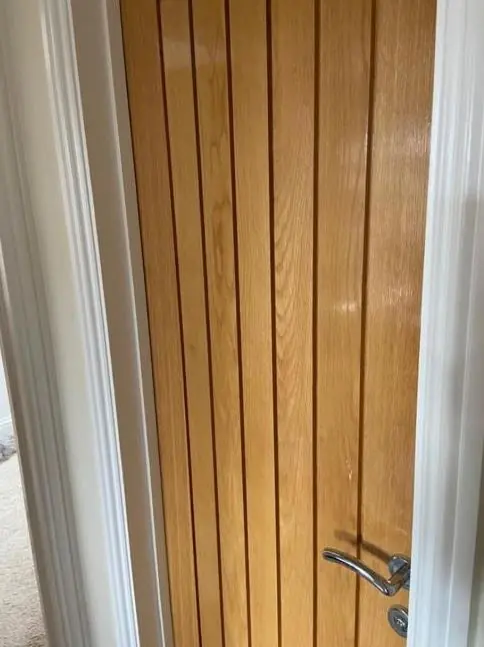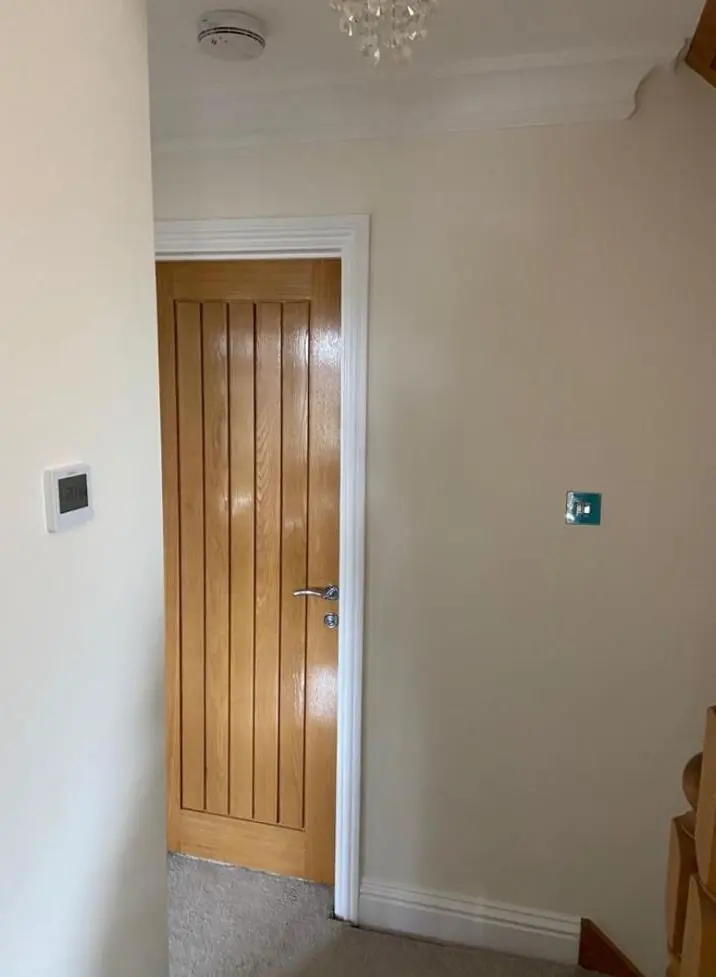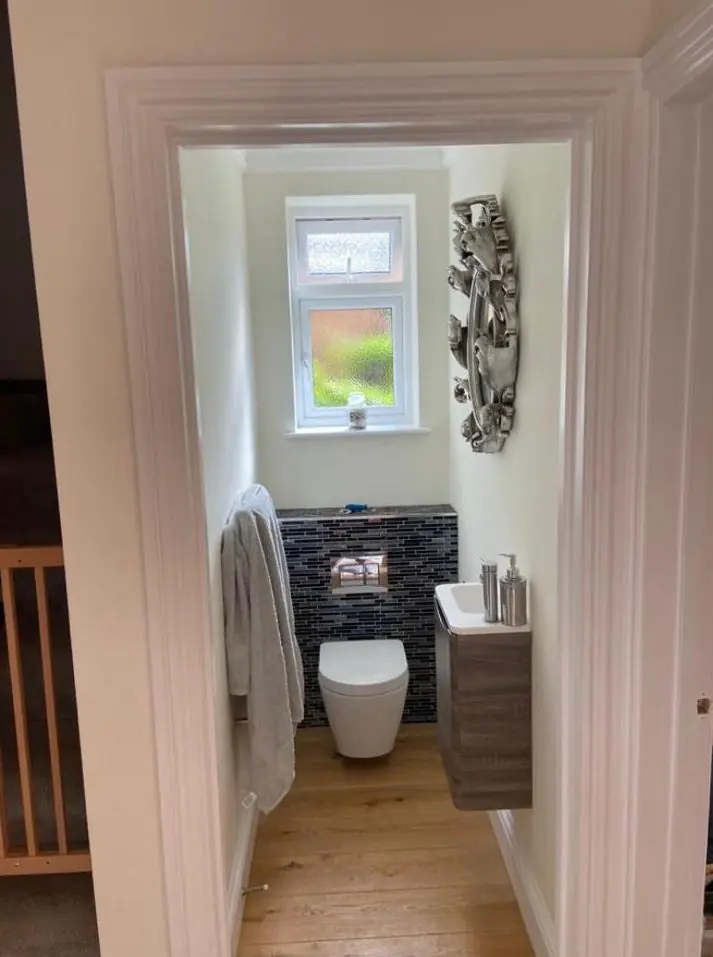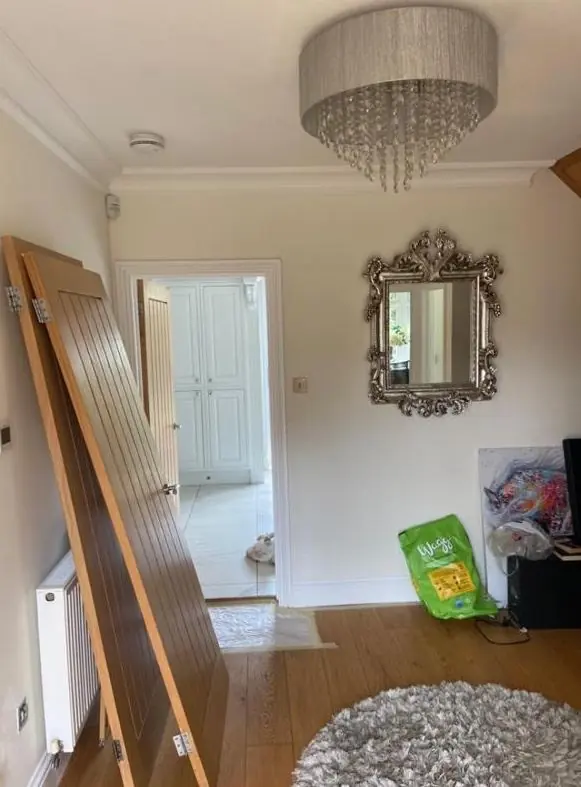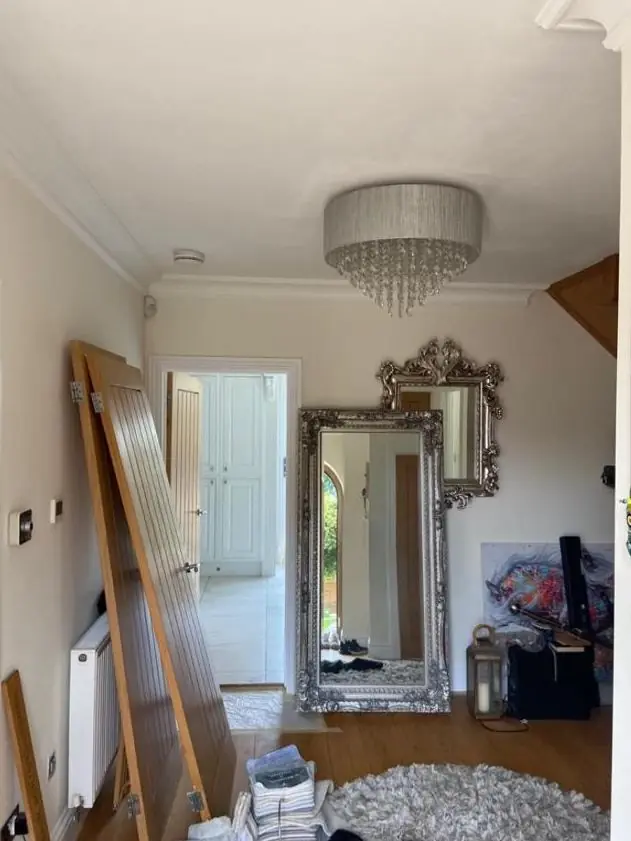
Dean paints internal and external doors, frames, skirtings and architraves in Gayton, the NN7 village a few miles south-west of Northampton. Period joinery in the 17th- and 18th-century limestone houses is prepared by hand and repainted with care, while doors and skirtings in the recent infill homes take modern systems.
Gayton’s doorways, as the listings describe them
The listed houses in Gayton’s historic core give a clear picture of the joinery Dean is likely to meet. Home Farmhouse on Baker Street and Evergreen Farmhouse on High Street both have panelled doors set in pilastered timber surrounds with dentilled cornices and pediments. Inside the older farmhouses and village houses, six- and four-panel doors sit alongside plainer two-panel ones, often carrying two centuries or more of paint. A pediment with a row of small dentils can take as long to prepare as the door beneath it, because every block has a top, a face and two sides that trap dust and flaking paint.
Gayton has just over 200 households, and Dean covers it by van from the Northampton base under five miles away. Woodwork in these houses is quoted on what is actually there, door by door, rather than by the room.
Old paint on old panels: how much comes off
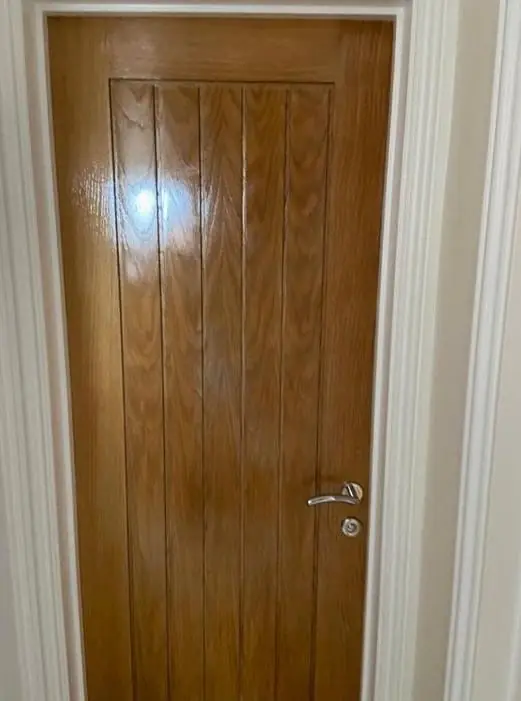
On a door painted for generations, the panel mouldings slowly fill up and lose their crisp edges. The real decision is how much of that build-up to remove. On period doors in Gayton our usual approach is:
- Test first. Older layers on pre-1960s joinery may contain lead, so we check before any sanding and switch to wet abrading and dust control if it shows up.
- Remove only failing paint. Sound layers stay, and loose or crazed areas are taken back with scrapers and hand tools so the mouldings keep their profile.
- Clean out the detail by hand. Dentils, pilaster flutes and panel beads are picked out individually rather than power-sanded.
- Match the paint to the joinery. Traditional oil-based or linseed paints suit the oldest work, while a waterborne satin is practical on later doors.
On the Grade II houses, a new colour or finish on historic joinery may need consent; let the council’s heritage officers see the plan before work begins. Repainting like for like is the simpler route.
Skirtings on walls that were never straight
The older houses here are coursed limestone rubble, and inside, the walls bow and lean as stone walls do. Skirtings follow them, so the gap along the top edge can be a hairline at one end of a board and a finger’s width at the other. Flexible decorators’ caulk handles the small gaps. Wider ones we raise with you first, because packing a large void behind a historic skirting isn’t something to do unasked. Beamed rooms with stone fireplaces also mean plenty of cutting-in where timber meets stone, and we mask the stone rather than relying on a steady hand alone, since paint soaked into porous limestone is very hard to get out.
Modern joinery in Gayton’s newer houses
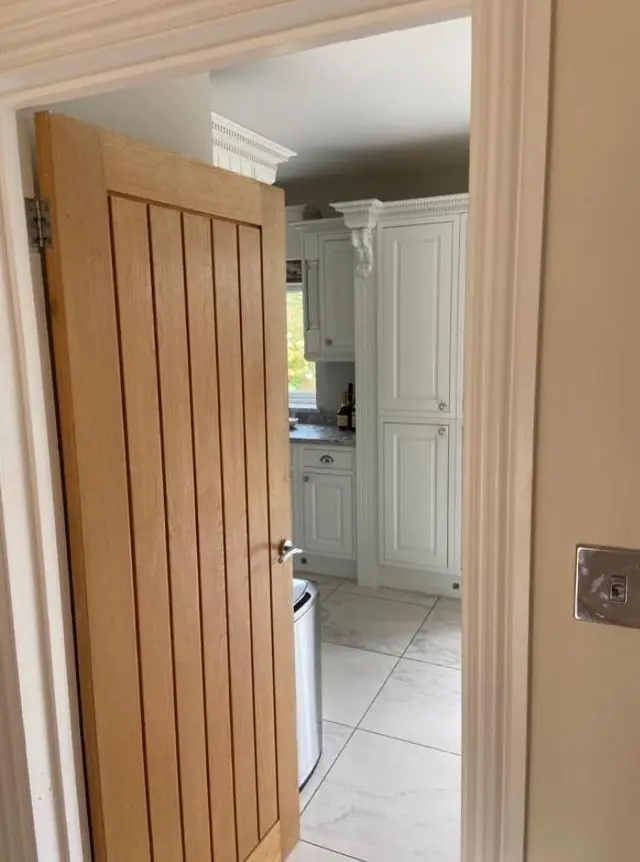
Not every door in Gayton is old. The village has gained high-value infill and brownfield homes in recent years, and a barn conversion has permission. New builds usually arrive with primed or factory-finished doors and MDF or softwood skirtings that need knotting, filling of nail holes, caulking and two finish coats. Where skirtings are fixed to new plaster, we let the walls dry out first so the caulk line doesn’t crack as they shrink. In a barn conversion, exposed structural timber and large openings raise a different question: whether the old wood should be painted at all, or simply cleaned and oiled. We’ll give you a straight answer on that.
Getting started
The full preparation process, paint systems and what to expect on the day are on our main door, skirting and woodwork painting page. More about the village’s property types is on the Gayton area page. For how woodwork jobs are priced, read the painter and decorator cost guide, then phone Dean on 07539 779 036 so he can come and look at the doors.
Last updated by Dean, DH Painter & Decorator.