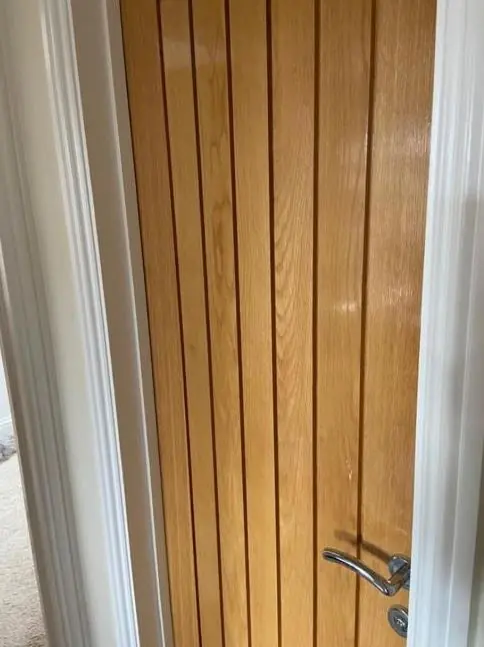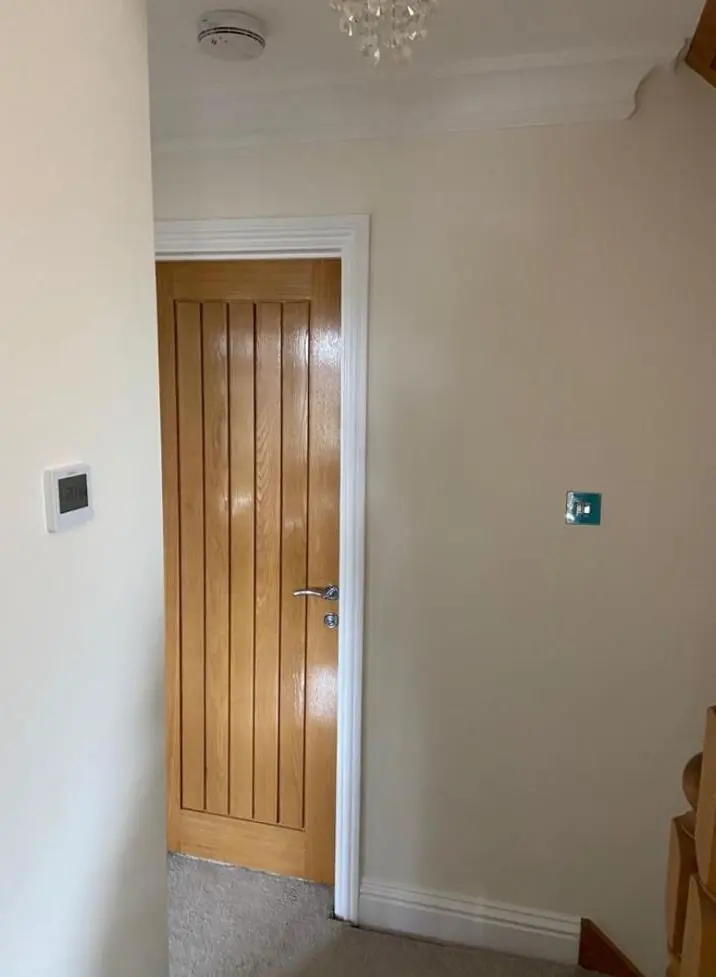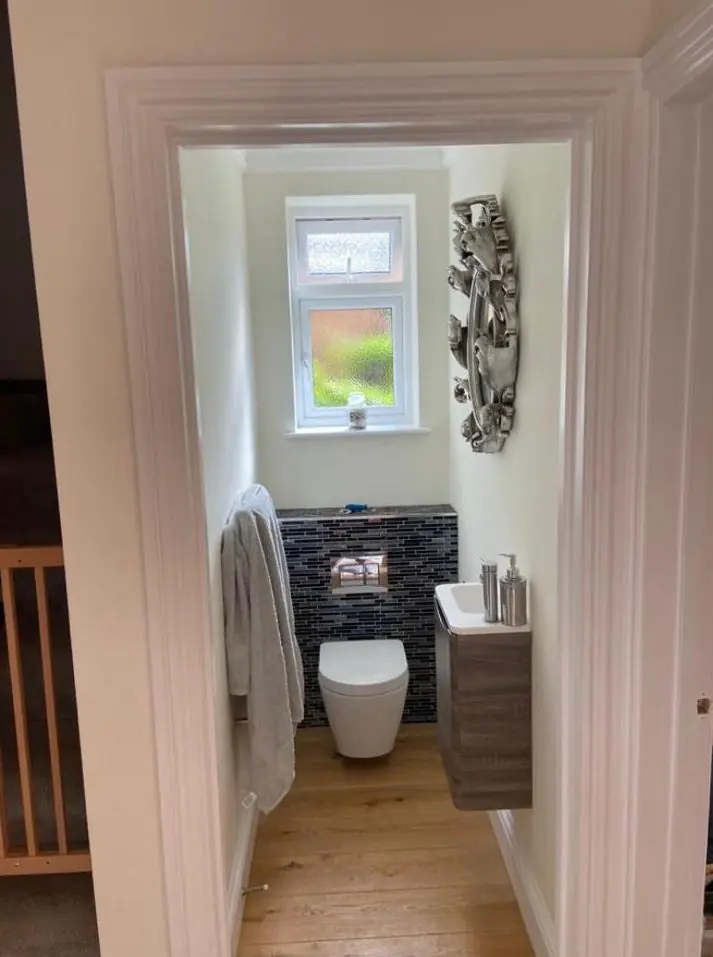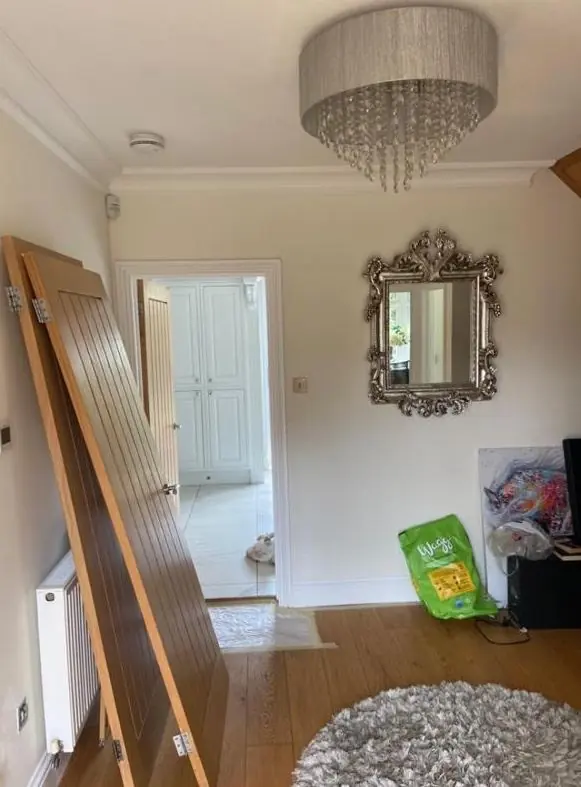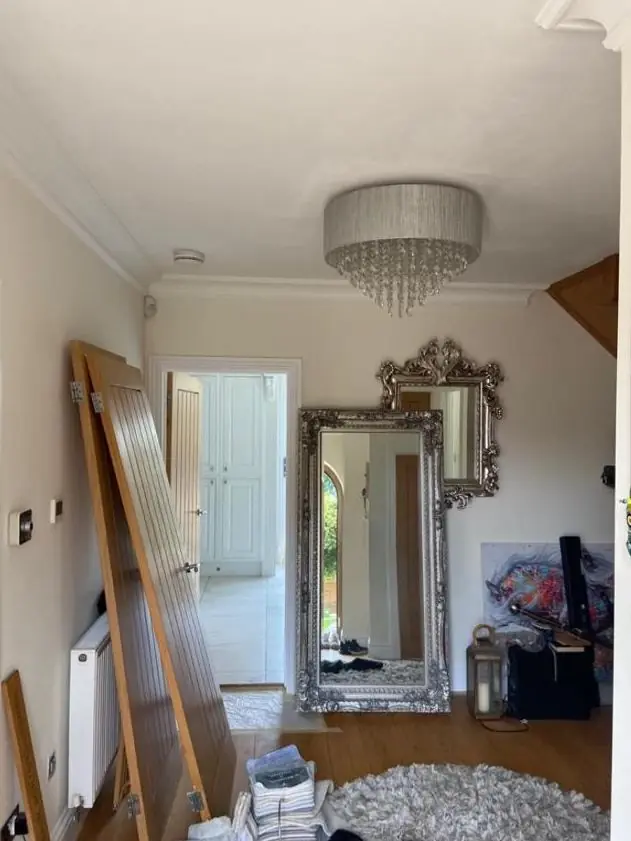
DH Painter & Decorator paints internal doors, skirtings, architraves and other woodwork in Paulerspury, NN12. Dean works from our Northampton base, about 9.8 miles north of the village, and covers every end of the parish from Pury End to Heathencote.
Joinery that has outlived several owners
Much of the woodwork in Paulerspury is older than the paint on it would suggest. The listed cottages on Lumber Lane, Lower Street, Careys Road and High Street date from the 18th century, and the converted farmhouses at Heathencote and around the village (Elm, Kirby, Manor and Old Home Farmhouses among them) have been lived in and redecorated for a very long time. Doors and skirtings in houses like these often carry a deep stack of coatings: early oil paints, later gloss, and sometimes a recent acrylic over the top that never bonded properly.
Before anything new goes on, we test how sound that build-up is. Where layers are flaking or crazed, they come back to a firm edge. Where the old paint is well stuck, we key it and keep it, because stripping a boarded door right back can lose the softened profile that makes it look its age. Any paint that could be old lead-based coating is rubbed down wet rather than dry-sanded, and we never use a heat gun in these houses, least of all in the thatched cottages such as The Thatches on Park Lane and 34 Careys Road.
What you tend to find room by room
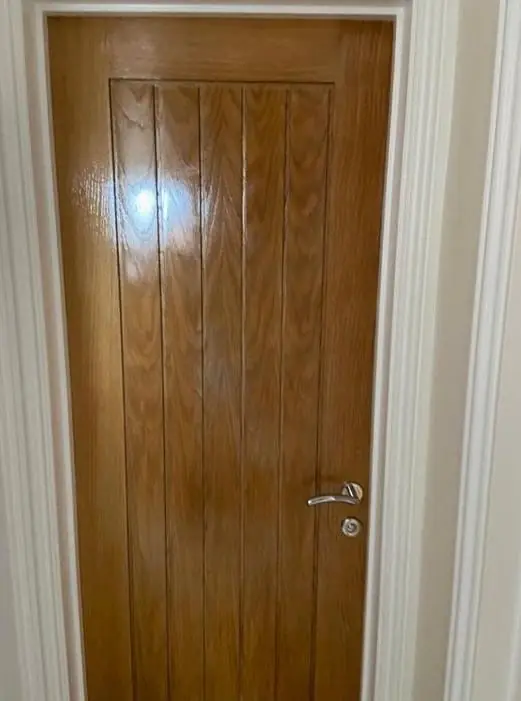
The joinery changes with the type of house, so the preparation changes with it.
| House type in the parish | Typical woodwork | What it usually needs |
|---|---|---|
| 18th-century limestone cottage | Ledged and boarded doors, plain low skirtings, timber lintels inside | Filling open board joints, keeping latches and strap hinges clear, a flexible finish that copes with movement |
| Converted farmhouse | Mixed original and replacement doors, tall skirtings, exposed beams nearby | Matching sheen across old and new doors, careful cutting-in where paint meets oak or limewashed plaster |
| Early 19th-century house | Panelled doors, moulded architraves, window boards under 12- and 16-pane sashes | Cleaning out clogged mouldings, sharp lines on panels, gloss or eggshell to suit the period |
Skirtings in solid stone houses deserve a separate mention. Walls on limestone and Boulder Clay can be damp at the base, and the bottom edge of a skirting is where that shows first: swollen timber, paint lifting along the floor line, or rot behind the board. We check for it before quoting, and if the timber is soft we say so rather than painting over the problem.
Choosing a finish for old woodwork
A bright high-gloss can look out of place on a cottage plank door, while a flat finish on a busy farmhouse skirting will mark within weeks. For most older houses here we suggest eggshell or satin on doors and frames and a tougher satin on skirtings, with oil-based or hybrid products where the substrate is old oil paint. In listed houses, interior joinery can still be covered by listed status, so if you are planning anything beyond like-for-like redecoration, such as removing or replacing original doors, it is worth checking with West Northamptonshire Council first.
Our door, skirting and woodwork painting service page sets out the general process, from degreasing to final coat, so we won’t repeat it here.
Planning the work around a dispersed village
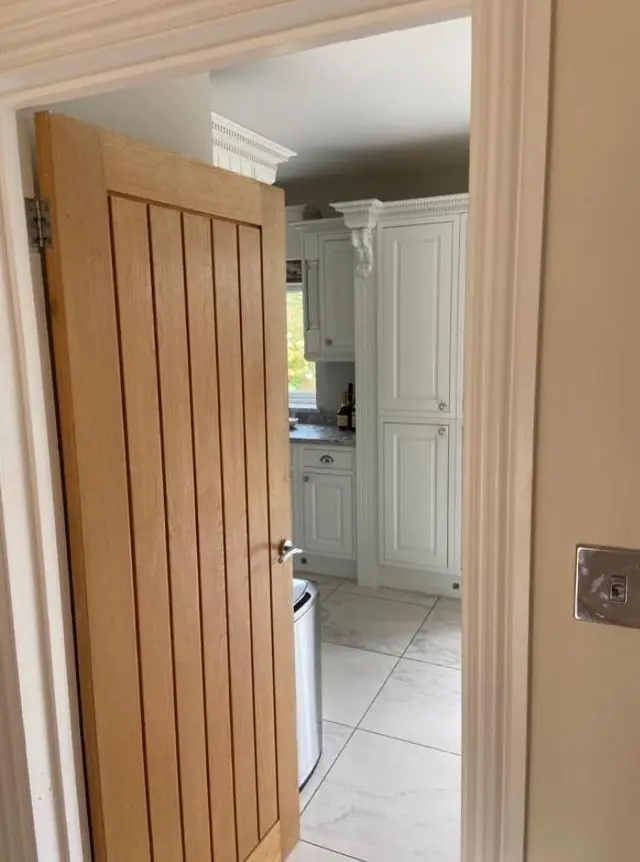
Paulerspury is spread across several ends linked by lanes and old hollow-ways, so homes in the same parish can be some way apart. We visit first, look at the doors and skirtings in place, and note anything that affects timing, such as doors that need to be taken off and laid flat, or rooms where the furniture can’t easily move. Woodwork in a lived-in cottage is usually done in stages, with doors left wedged open to cure so latches don’t stick to fresh paint.
If you would like to see what else we cover in the village, the Paulerspury area page brings the services together.
Last updated by Dean, DH Painter & Decorator.