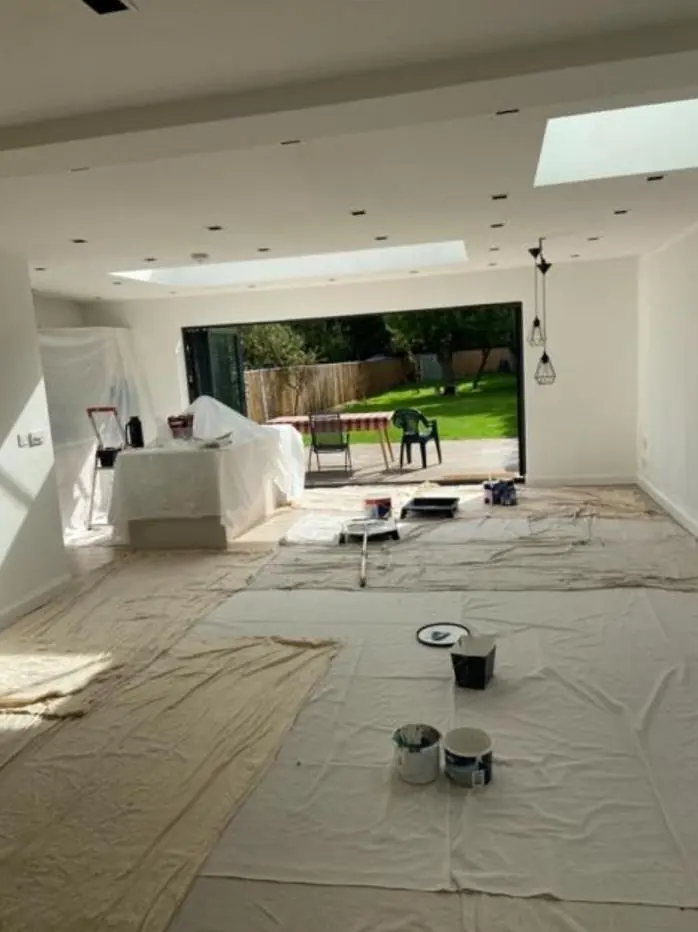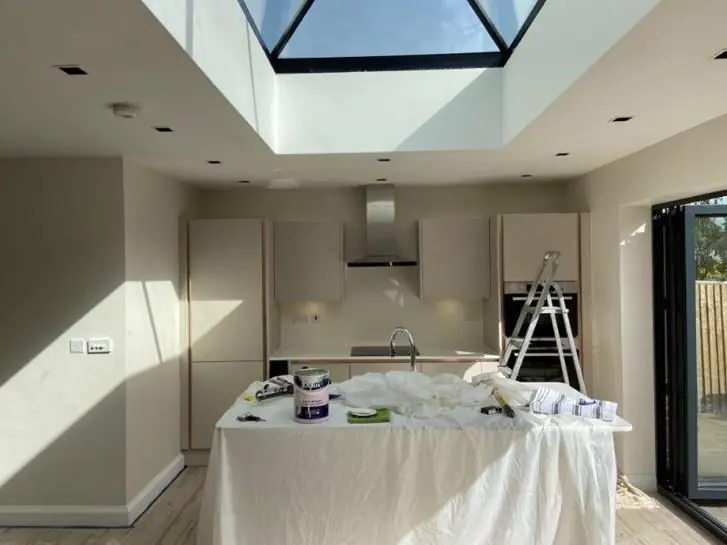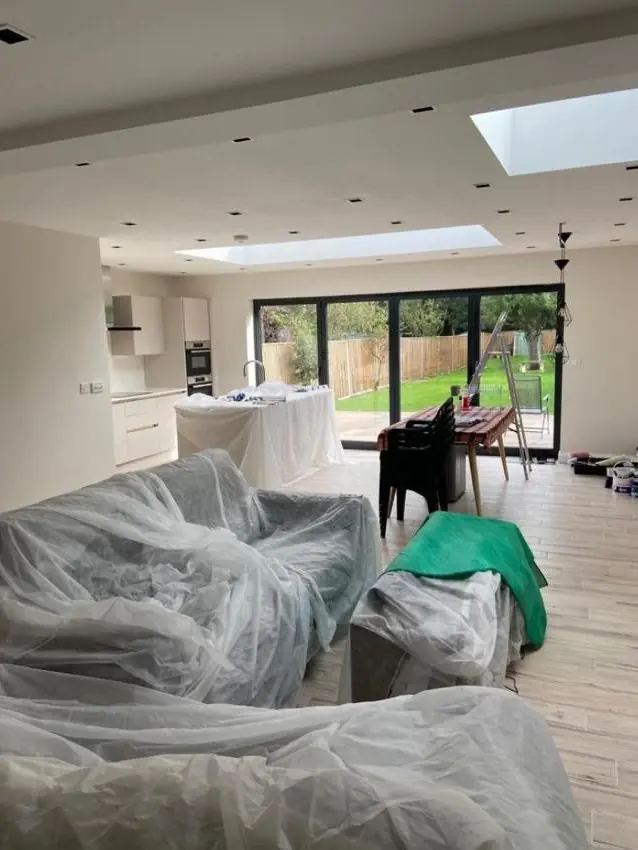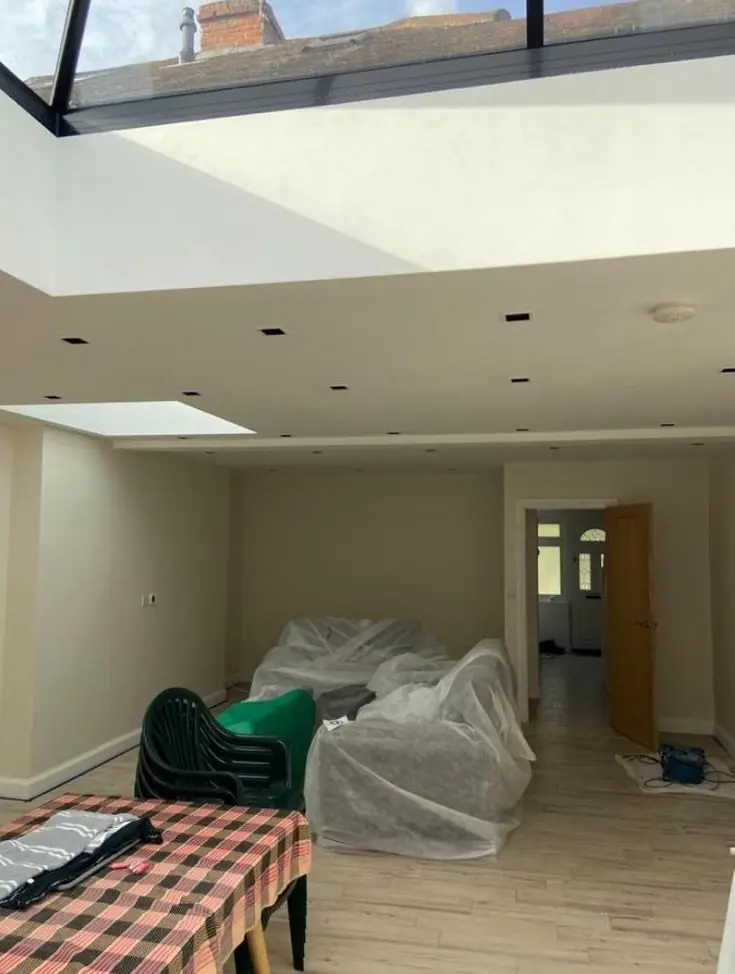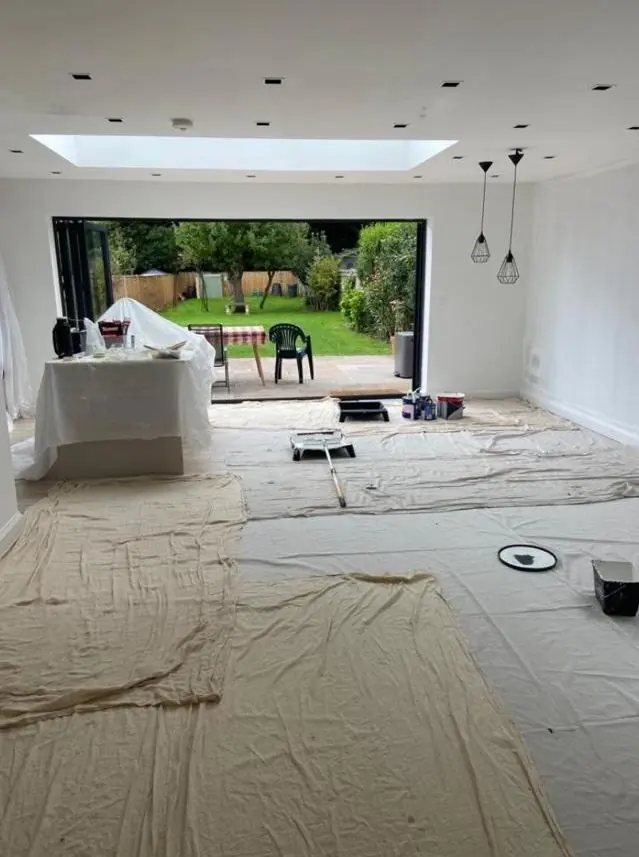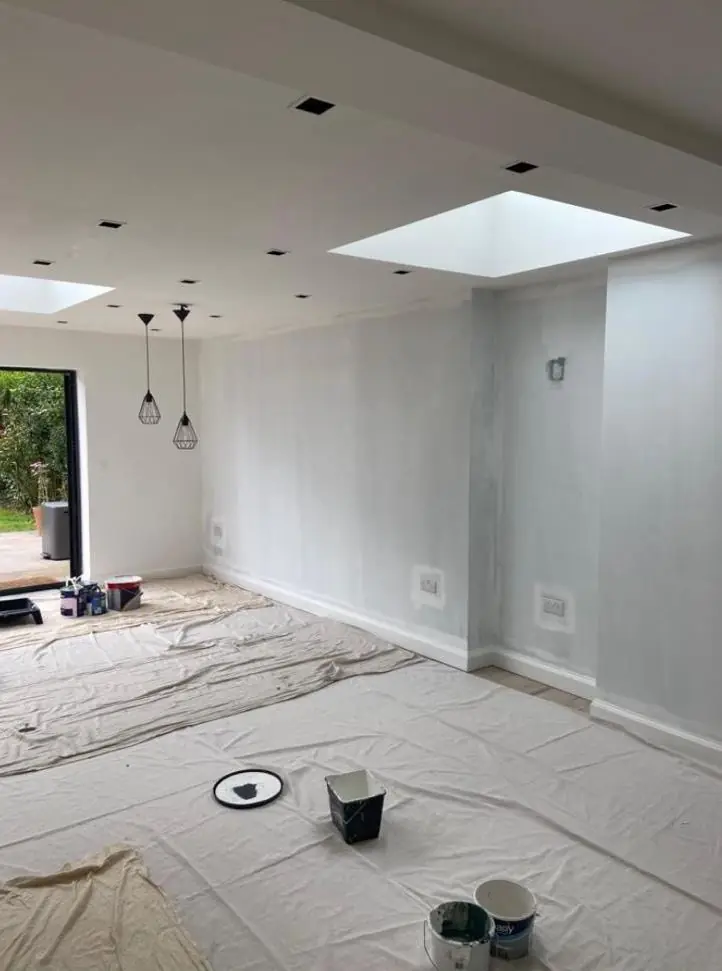
We decorate new plaster, re-skimmed rooms and extensions in Towcester, NN12, with our Northampton base 8.2 miles up the road to the north-east. Most of this work comes from the newer housing south and west of the centre and from extensions behind older town-centre buildings, where new plaster often meets walls that are centuries old.
A town that keeps growing
Towcester has grown quickly. Its population went from 2,743 in 1961 to 9,252 in 2011 and was 11,542 at the 2021 Census, with plans for about 3,300 more houses. Most of the twentieth-century and later development sits south and west of the historic town. With that many houses still to come, fresh plaster is a constant part of decorating in the town: new homes handed over with a builder’s coat of trade emulsion, and extensions on estate houses that are only a few decades old.
The mist-coat process itself is the same anywhere, and our guide to painting new plaster and mist coats sets it out step by step. What changes in Towcester is the range of buildings the new plaster sits in, from an estate house a few years old to a rear extension on a long, narrow plot behind a Watling Street front that may hide a timber frame.
Extensions at the back of burgage plots
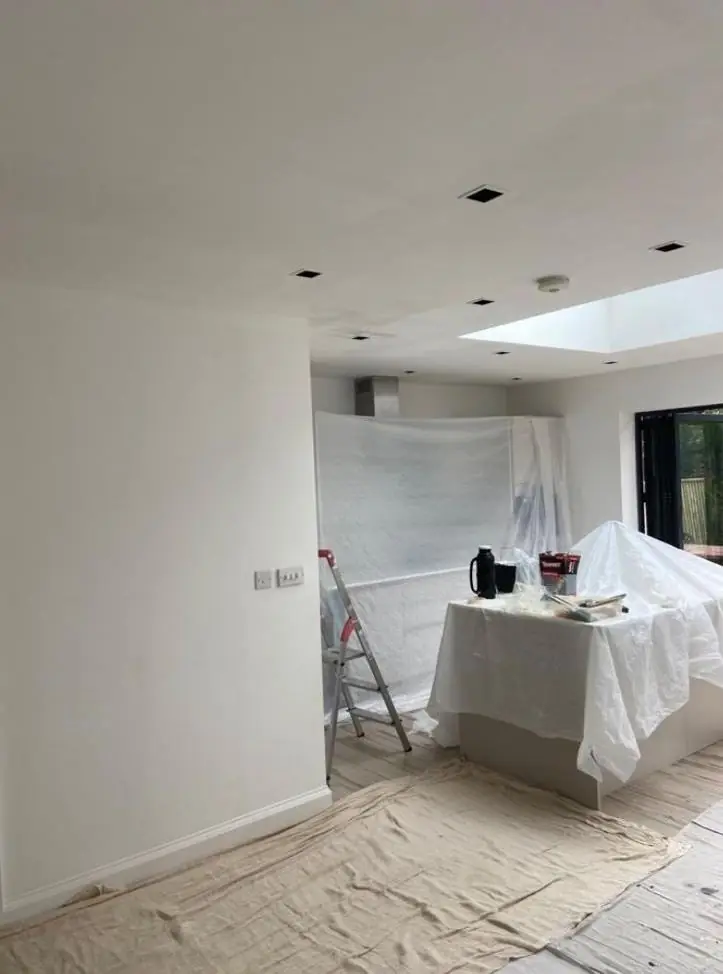
Many Watling Street properties have a deep, thin burgage plot behind them, reached on foot along alleys between the buildings, and a rear extension can sit a long way from the street door. Every dust sheet, tin and board is carried the length of the plot, and at the front the house may face the A5 pavement with nowhere to stop. We plan the route in and the drop-off before the first day so the decorating does not hold up anything else.
These extensions are often joined to much older buildings. A lot of Watling Street frontages hide earlier timber frames, and the walls are ironstone, limestone rubble or brick. The join between the new extension and the old house is where cracks tend to appear. A flexible filler and a short wait before the final coats save going back to the same line a few months later.
Where new gypsum meets old lime
Older Towcester buildings may have lime plaster, and some have lime-compatible finishes outside. When a builder patches or extends with modern gypsum plaster, each side needs different paint. New gypsum takes a standard mist coat and emulsion. Old lime walls need a breathable paint so moisture can still get out. Run one modern vinyl coating across both and the old wall can trap damp, so the paint blisters along the old side first.
- On new gypsum: moisture check, diluted or purpose-made mist coat, then finish coats.
- On adjoining old lime plaster: a breathable mineral or clay-based paint, or one the plasterer recommends for the lime used.
- On the junction: flexible filler, and colours chosen so both sides match even though the products differ.
If the building is listed (one of the many listed buildings in the old core), check what the consent covers before choosing paint.
Drying out near the river
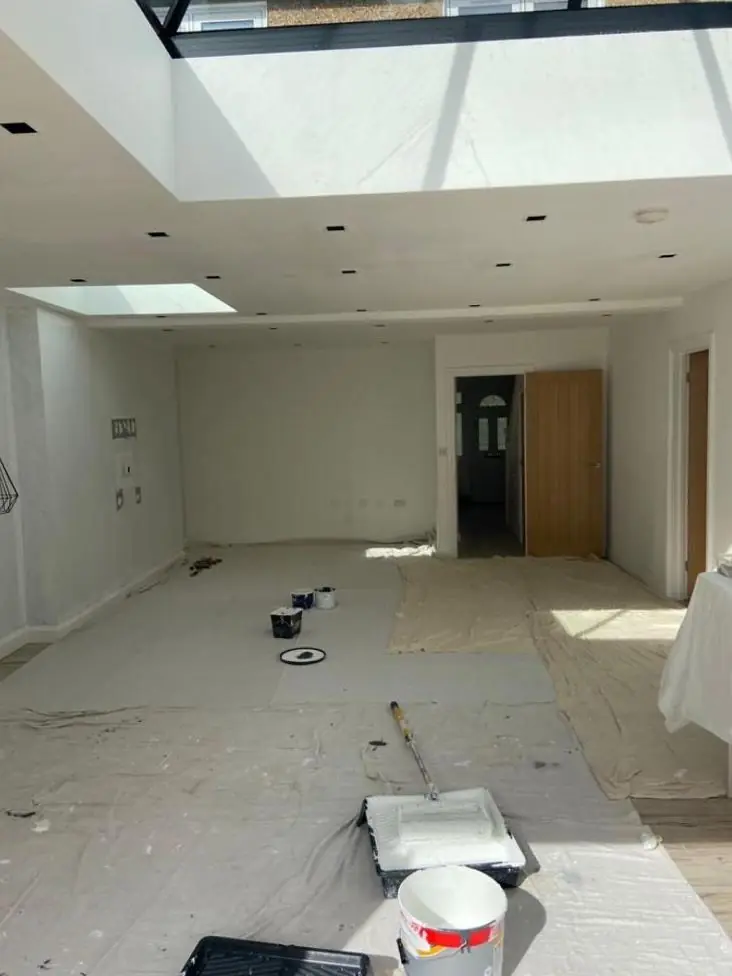
Towcester’s east side drops to the Tove, where Silverstone Brook joins it inside the town and floodplain spreads out towards Easton Neston. In properties close to it, damp-related staining can be a problem, and new plaster there can take longer to dry, particularly in a cold spell. We won’t seal plaster before it is ready, and in kitchens, bathrooms and ground-floor rooms near the water a mould-resistant finish is worth considering once the mist coat is down.
For what a typical extension quote includes, see our main new plaster and extension painting page. Everything else we do locally is on the Towcester hub.
Last updated by Dean, DH Painter & Decorator.