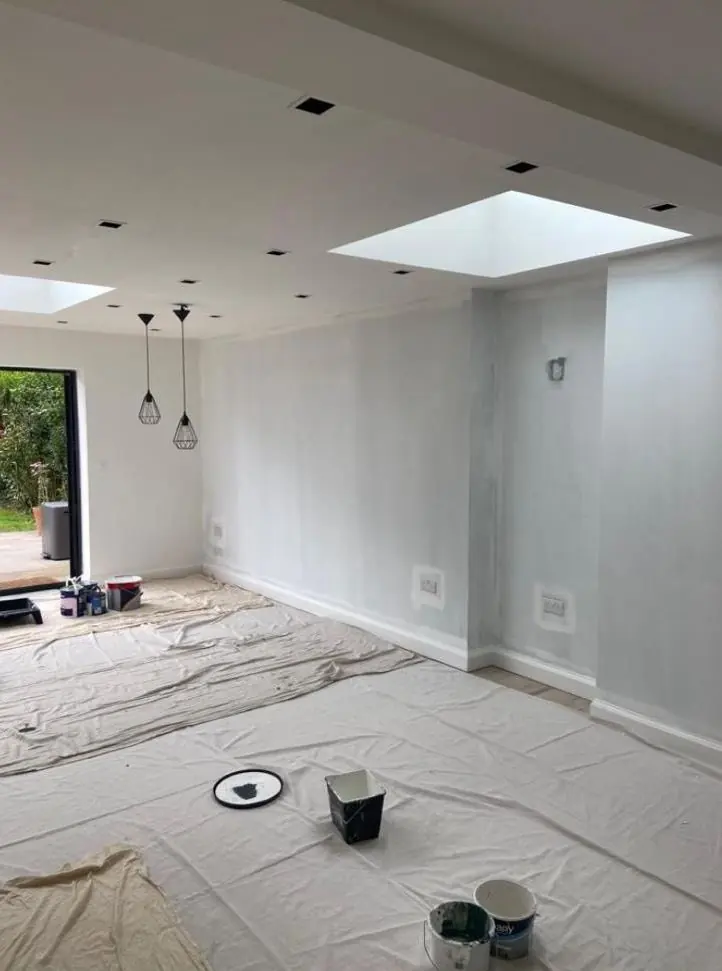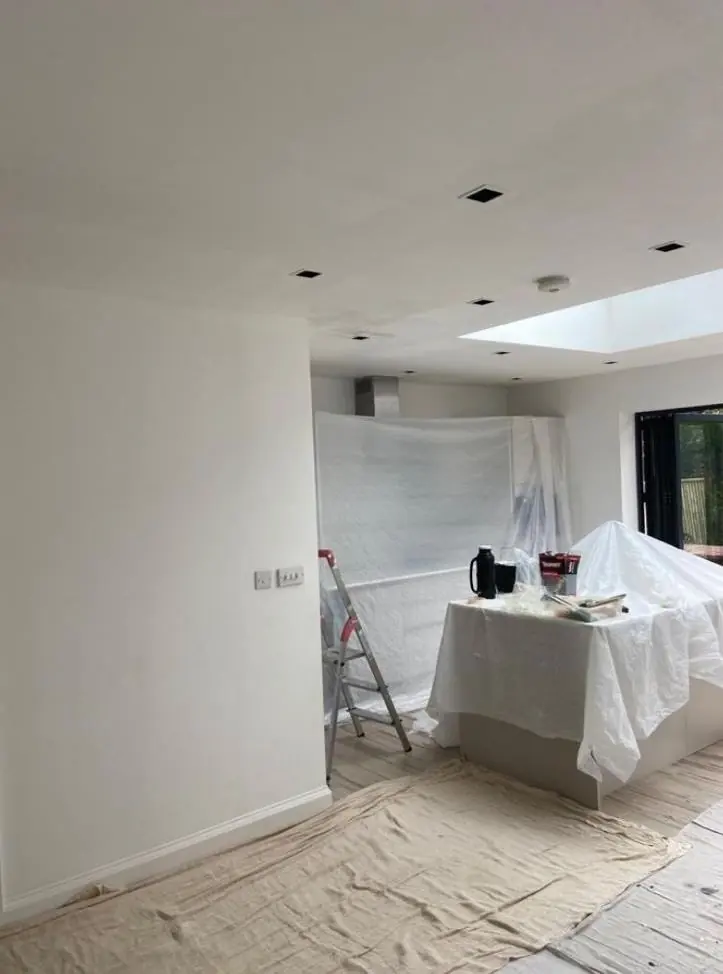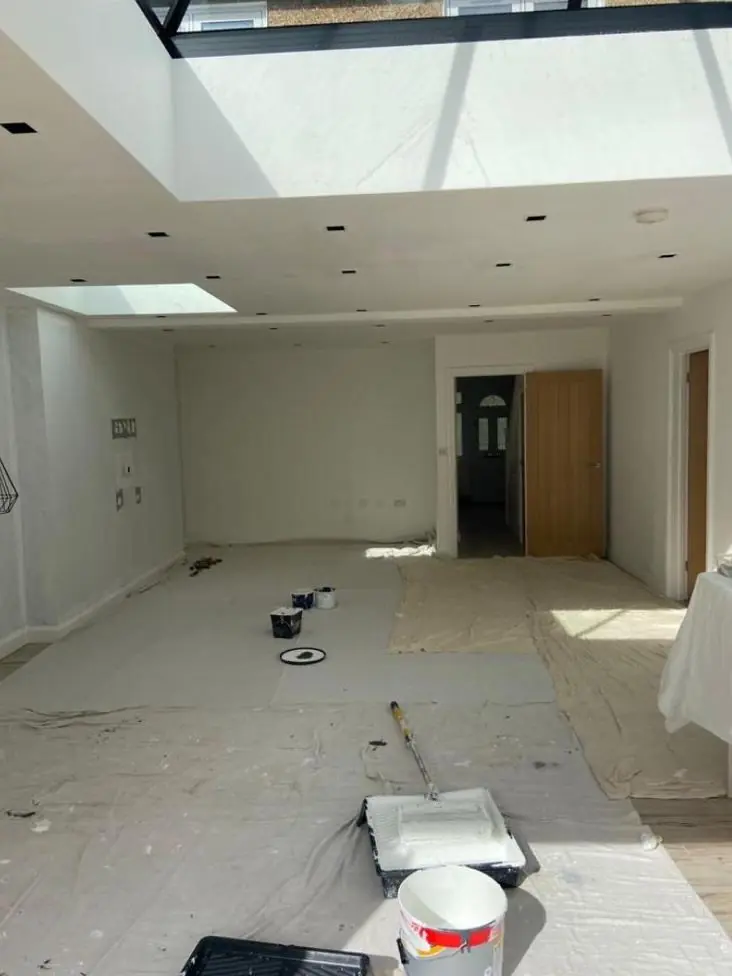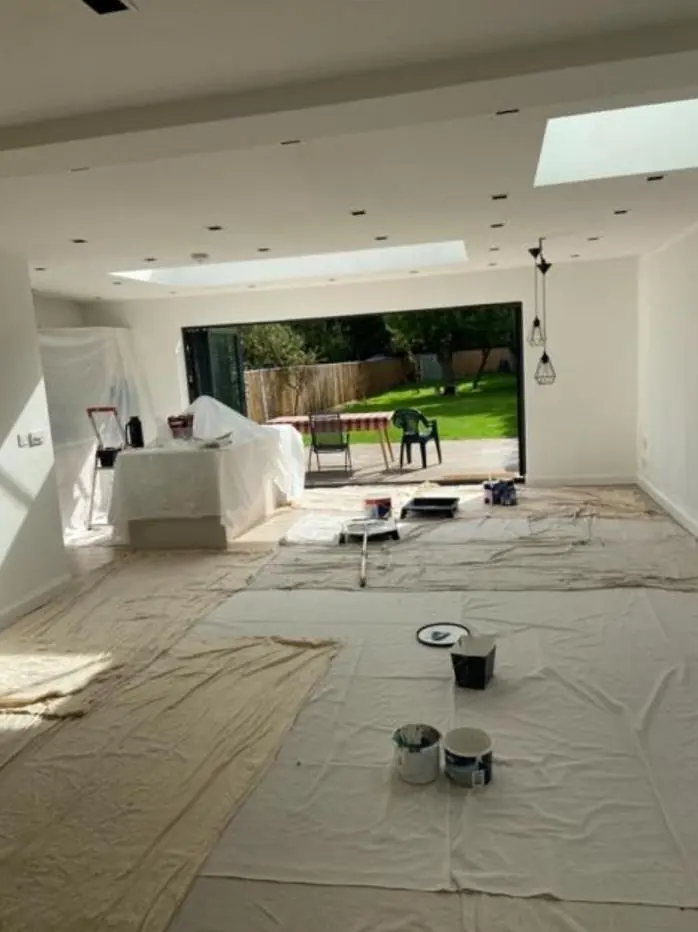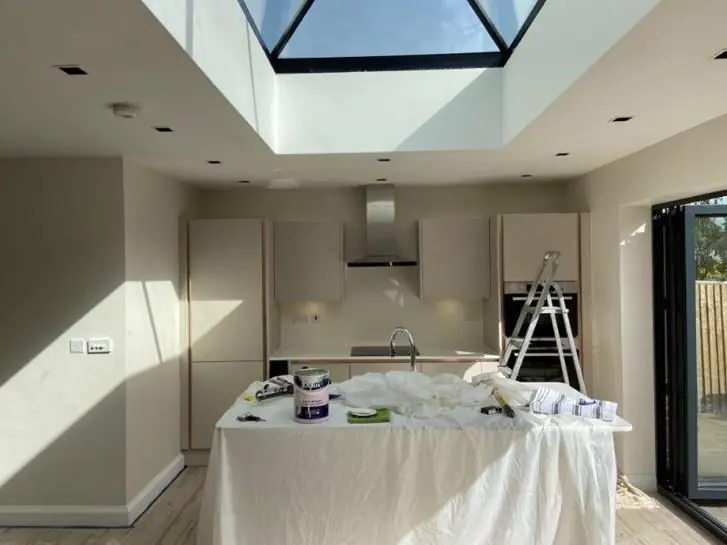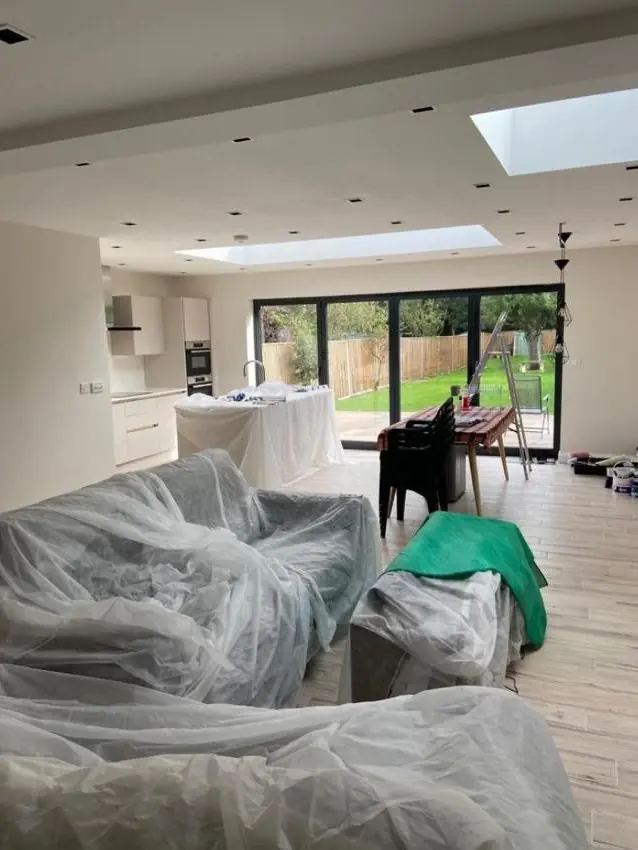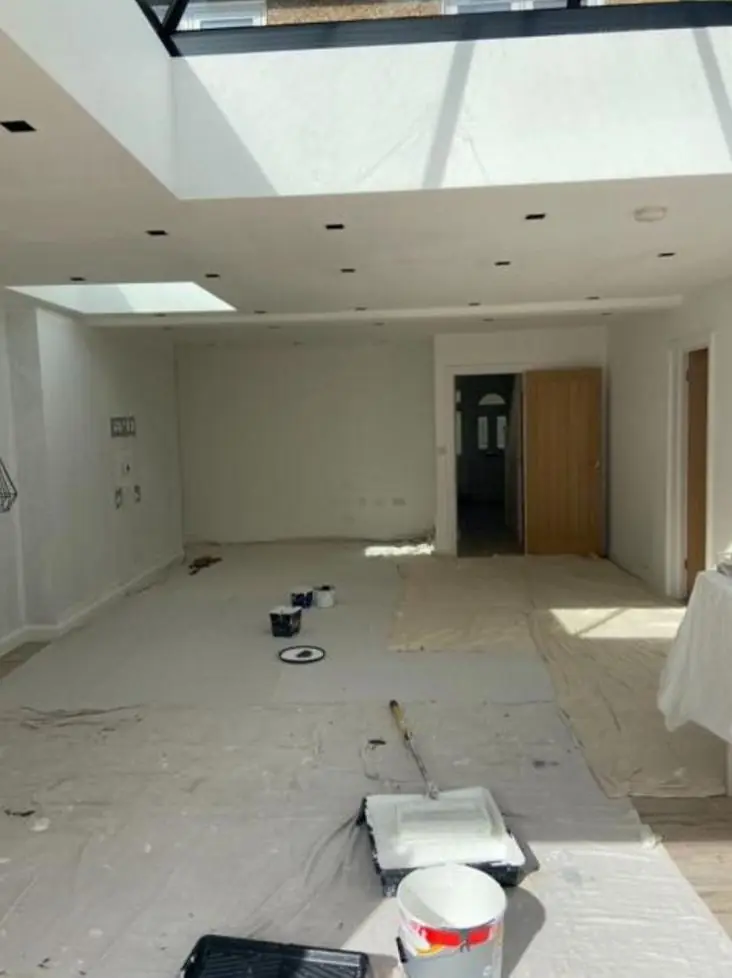
Dean mist-coats and paints new plaster in Gayton, a ridge village in NN7 south-west of Northampton. That covers walls in the recent infill and brownfield homes, extensions and loft rooms, barn conversions with exposed timber, and gypsum patches in the older limestone houses.
Where fresh plaster turns up in Gayton
Gayton has had no large estate built in recent years. Its growth has been small and piecemeal, through high-value brownfield redevelopment and infill within the village: by February 2026, 13 new dwellings had been completed, with permission for 12 more, one of them a barn conversion. Extensions and attic conversions in the older stone houses add to that.
We cover Gayton from our Northampton base, about 4.8 miles to the north-east. Before quoting, Dean asks when the plastering was finished and what it went onto, because those two things decide when painting can start and which first coat is right.
Drying first, then the mist coat
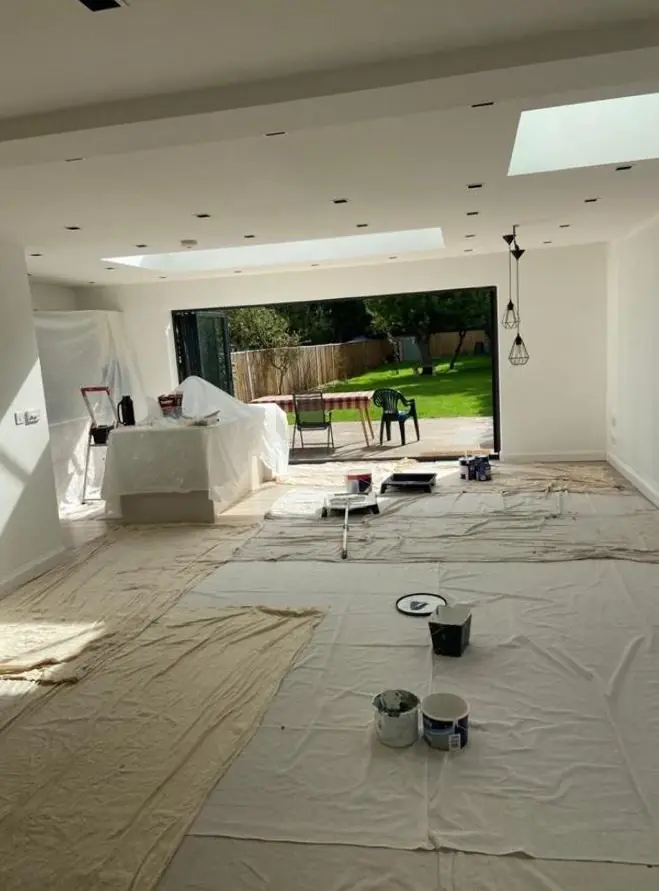
Fresh skim has to dry out fully before it is painted. The pinkish-brown colour should turn an even pale tone with no darker patches. In a newly built house the whole structure is drying at once, so rooms often take longer than people expect, especially through the cooler months. Paint applied too early traps moisture and leads to peeling or blistering later.
Once the plaster is dry, the first coat is a mist coat: a thinned contract matt or a dedicated plaster primer that soaks into the porous surface and gives later coats something to grip. Full-strength vinyl emulsion straight onto new plaster tends to sit on top and peel. Our guide to painting new plaster covers the method step by step.
The barn conversion question
A barn conversion is a different job from a new-build house. The plastered walls meet exposed structural timbers and large openings where the old doors and bays once were, so there is a lot of careful masking and cutting-in where plaster meets beam. Old timbers move with the seasons and can bleed tannins or resin into fresh paint along the joint. We’ll talk through a flexible sealant line and a stain-blocking primer at those edges, and whether the timber itself stays bare. Tall walls under the roof pitch may also need a tower rather than steps.
Patching in old limestone houses
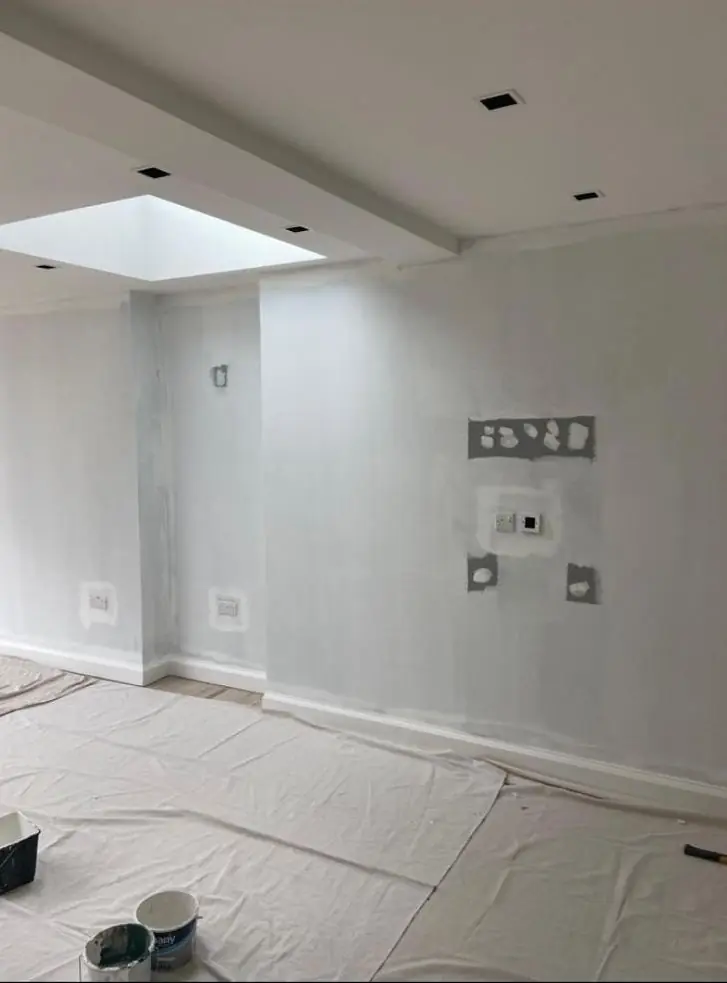
New plaster in Gayton isn’t confined to new buildings. When the older houses in the conservation area are rewired, re-plumbed or opened up, the repairs are often in gypsum on walls that were originally lime-plastered over coursed limestone rubble. That mix needs some thought:
- Gypsum patches still need a mist coat, but the paint over the whole wall should suit the older fabric around them.
- Breathable paints are usually the safer finish on solid stone walls, letting moisture leave through the surface.
- On a Grade II listed house, repairs and finishes may need consent, so raise it with West Northamptonshire Council before the plasterer starts.
Attic rooms deserve a mention too. Many of the old core’s houses have an attic storey, and when those attics become bedrooms they usually get plasterboard and skim fitted between the old roof timbers. Sloping ceilings, dormer reveals and the line where new plaster meets an old purlin make these rooms slow to cut in. They are also dusty spaces, so they’re cleaned down thoroughly before the mist coat.
Booking the work
Tell us your plasterer’s finish date and we’ll fit the painting around the drying time rather than rushing it. The full process, including what we prepare and how many coats to expect, is on the main new plaster and extension painting page, and the Gayton area page describes the village’s housing. Dean is on 07539 779 036 for a free quote once your walls are dry.
Last updated by Dean, DH Painter & Decorator.