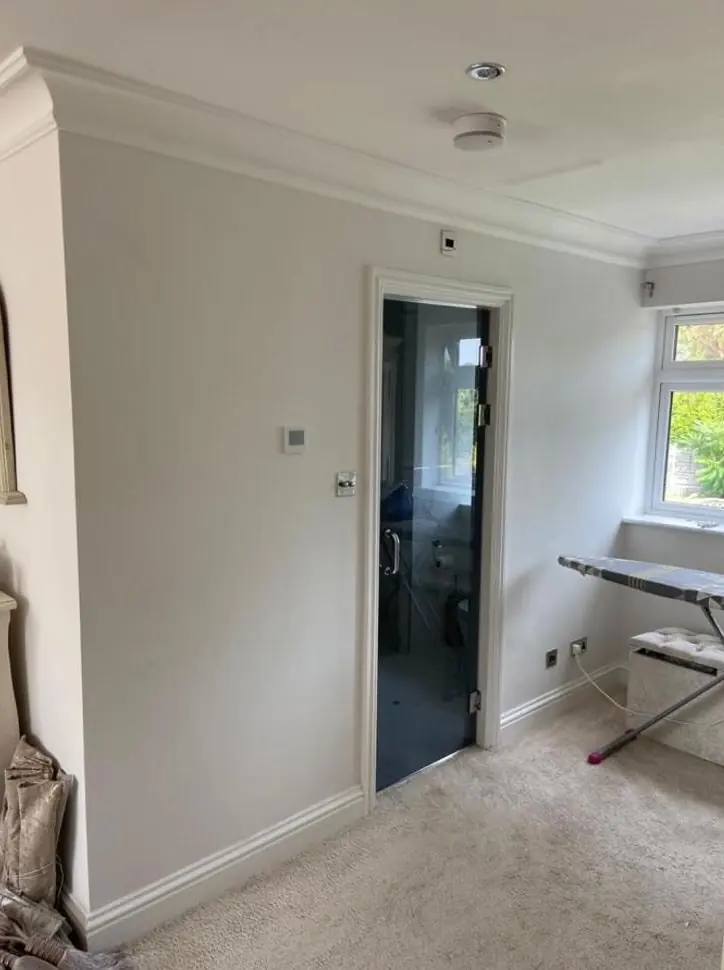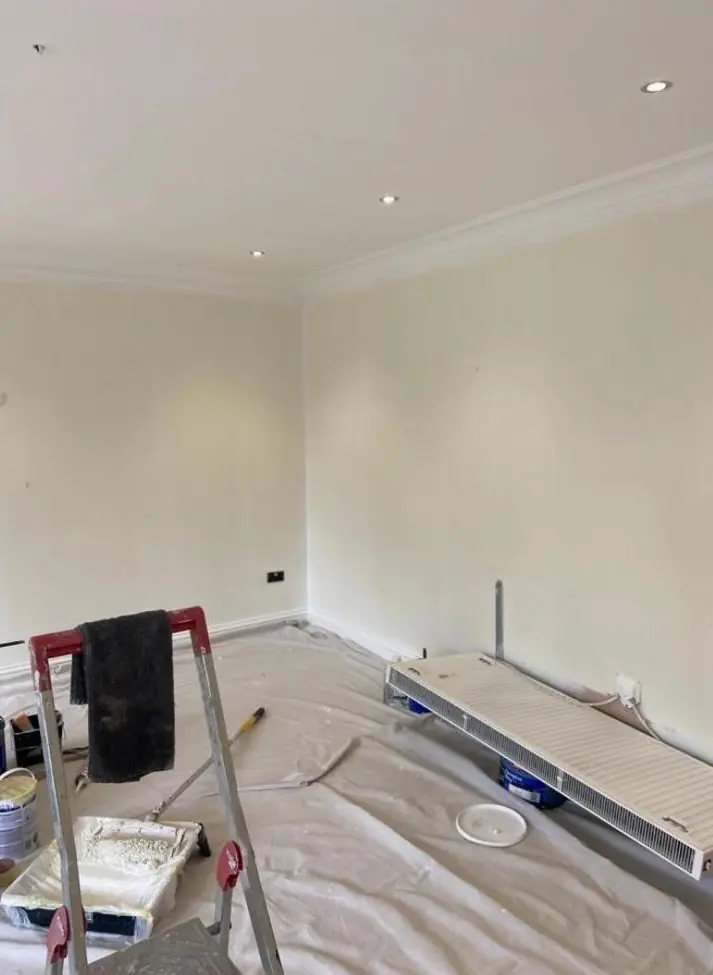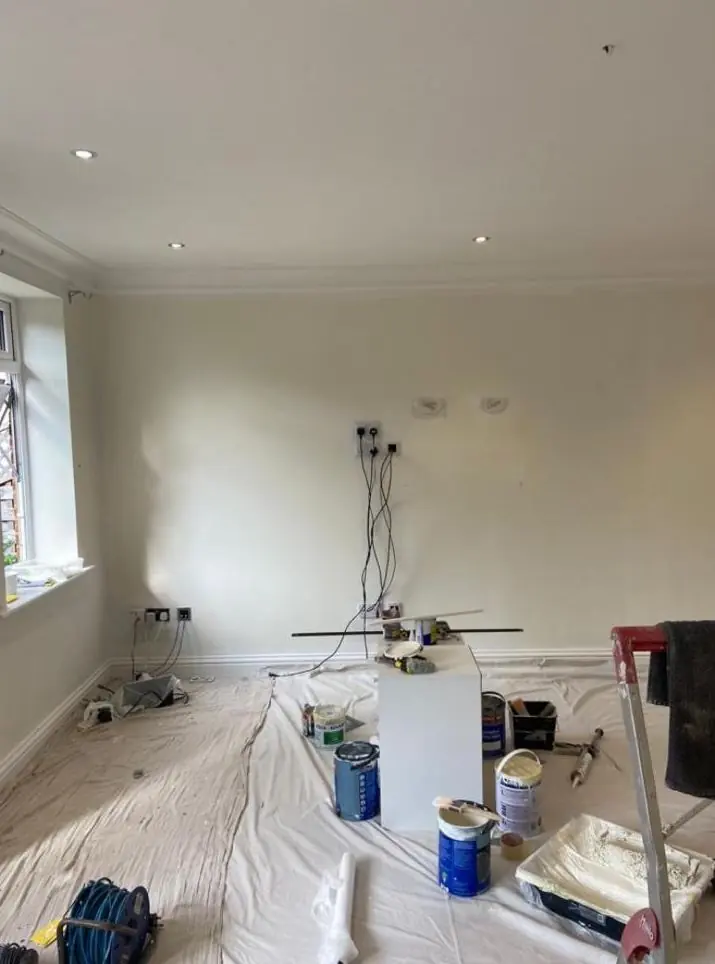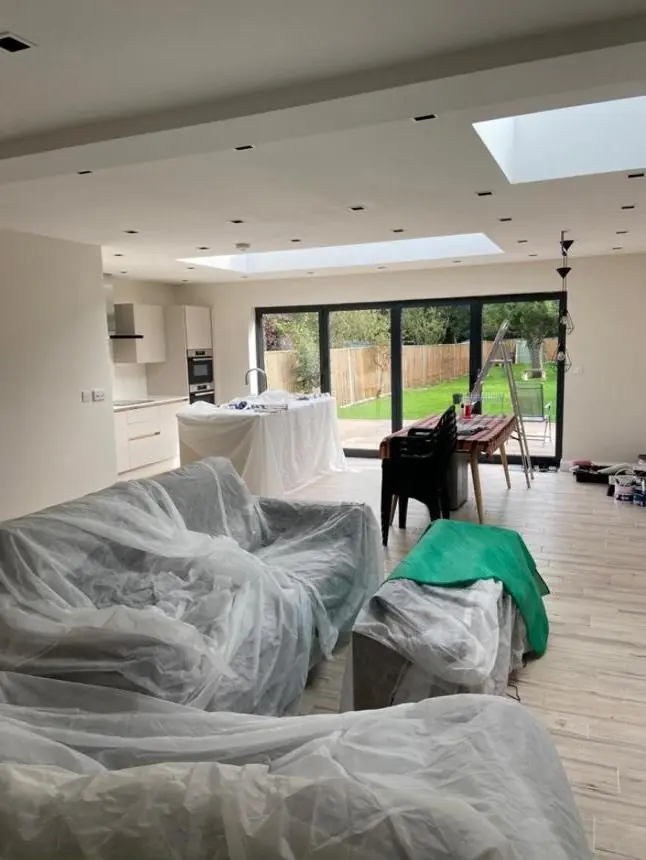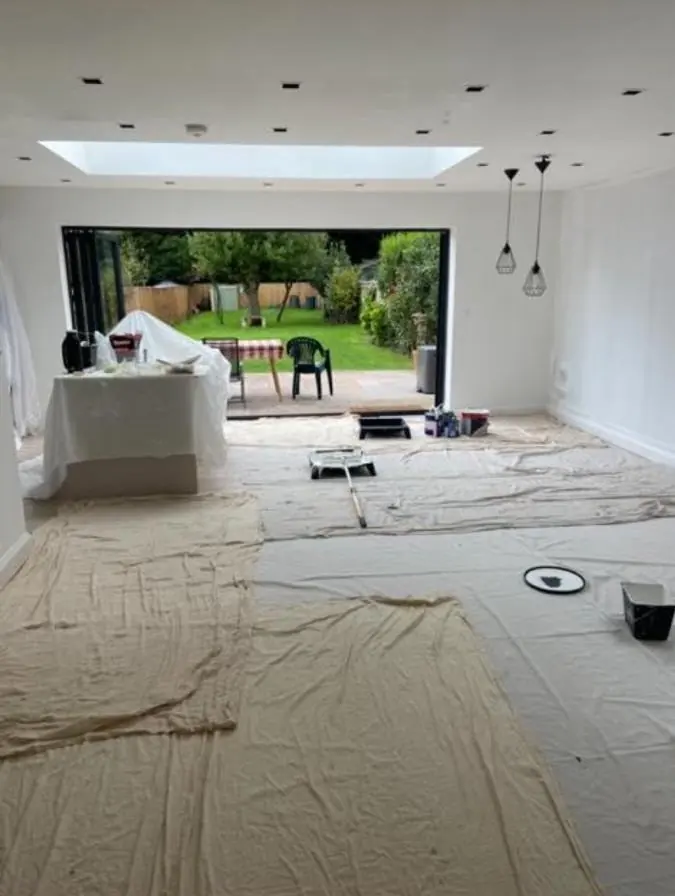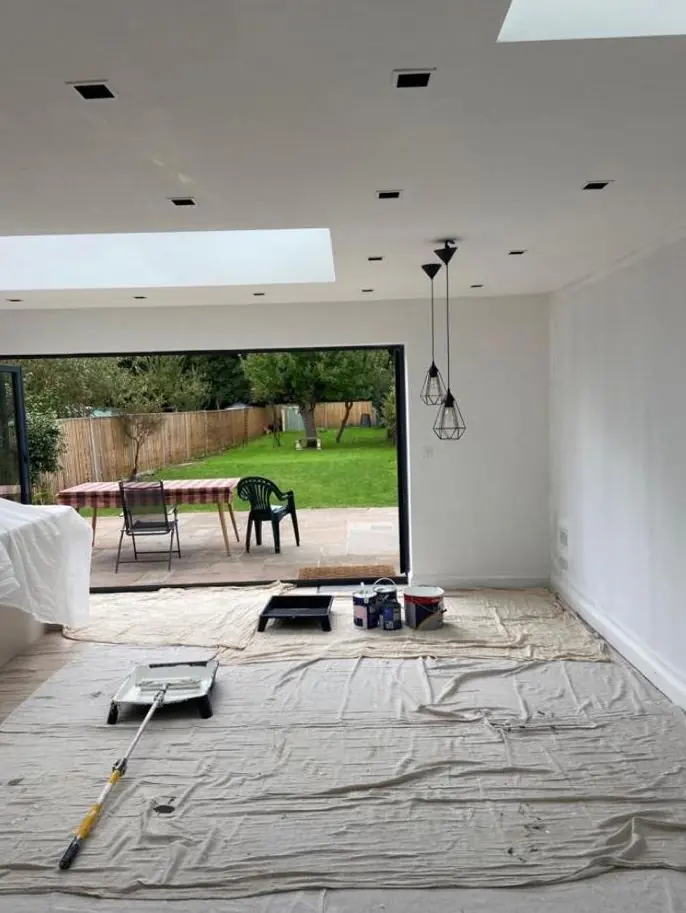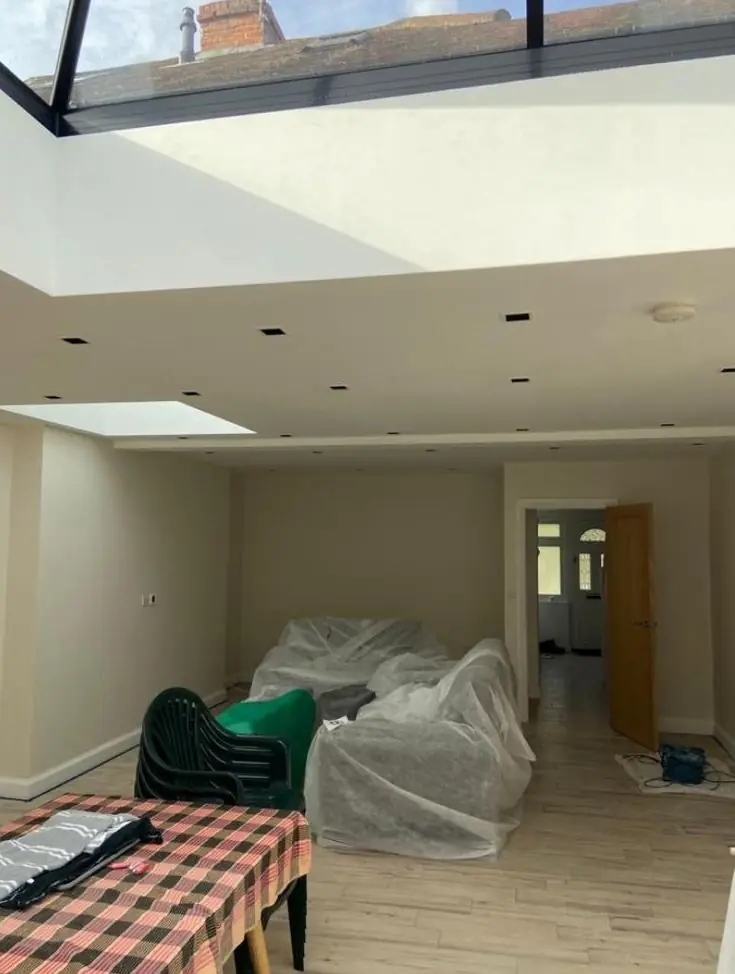
We paint newly plastered walls, extensions and conversions in Paulerspury, NN12, about 9.8 miles south of Northampton. Dean applies the right mist coat for fresh gypsum and plans finishes for where new work joins the old limestone houses.
Where new plaster meets 18th-century stone
New plastering in Paulerspury rarely goes into a blank box. It is far more often a rear extension on a limestone cottage, a re-plastered room in a converted farmhouse, or a patch where an old wall has been opened up. That means fresh gypsum sitting right next to older lime plaster on solid stone walls, and the two behave very differently. Gypsum is fairly uniform and takes a standard mist coat well once it is dry. Lime plaster is softer, more absorbent and needs to stay breathable, which is why the parish’s older houses suit vapour-open paints.
The awkward part is the junction. If a modern emulsion is rolled straight across both surfaces, the lime side can trap moisture and blister while the gypsum side looks fine. We usually treat the old and new areas as separate jobs that happen to meet: a mist coat and contract-quality finish on the new gypsum, and a breathable system on the lime, carried to a sensible break such as a corner or a beam.
Drying time is the part you cannot hurry
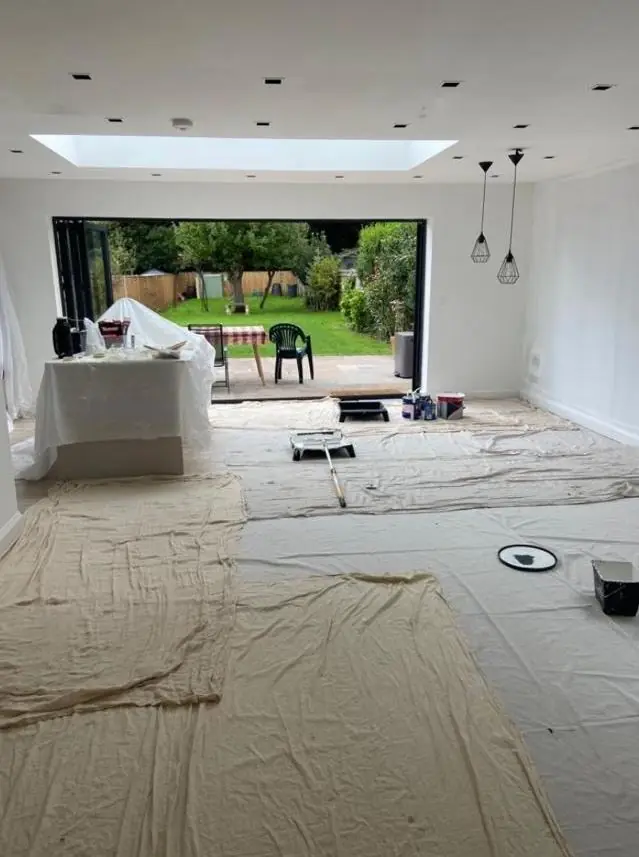
Fresh plaster has to dry before it is painted, and in an old stone house that can take longer than people expect. A thick skim over a solid limestone wall, in a cool room with small casement windows, dries more slowly than the same plaster in a modern build. Painting too early can leave patches that never dry evenly and paint that flakes.
- Plaster should look an even light pink with no dark patches before the first coat goes on.
- Gentle heat and ventilation help; blasting heaters at it can crack the surface.
- In a new extension with a screed floor, the room as a whole carries more moisture, so we allow more time.
Our guide to painting new plaster and mist coats explains the mixing ratios and why a watered first coat matters. On site, we check the plaster ourselves before starting rather than going by a date.
Conversions, beams and listed buildings
Several of the parish’s farmhouses have been converted into homes, and that work often leaves large rooms with new plaster between exposed beams. Cutting a clean line along an oak beam takes time, and the beams themselves must stay free of emulsion. We mask where it helps and freehand where masking tape would pull at old timber.
If your property is one of the listed houses in the parish, check what the consent for the building work says about finishes. Some approvals specify lime plaster and breathable paint for new work as well as old. We’ll follow whatever the conditions set out, and we can recommend suitable mineral or clay-based paints if they are needed.
Snagging after the builders
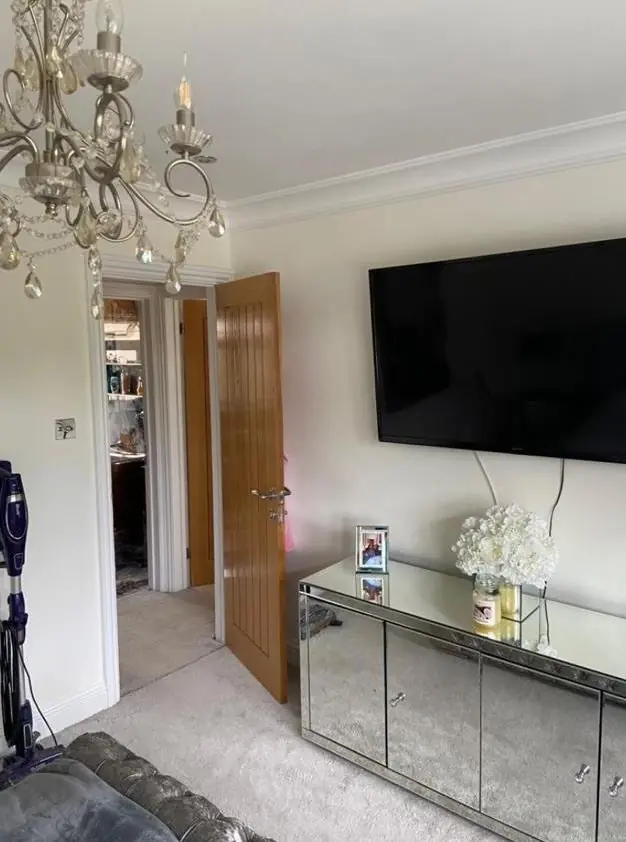
New plaster almost always shows small faults once the first coat is on: trowel marks, nibs, slight cracks at the joins with timber lintels or window reveals. We fill and sand these after the mist coat, when they show up, and before the finish coats. Window reveals around new casements and the edges of new door linings get the same treatment, so the woodwork painting can follow without a ragged edge.
For the full outline of how we handle extensions and new builds, see our new plaster and extension painting page. More on the village is on the Paulerspury area page.
Last updated by Dean, DH Painter & Decorator.