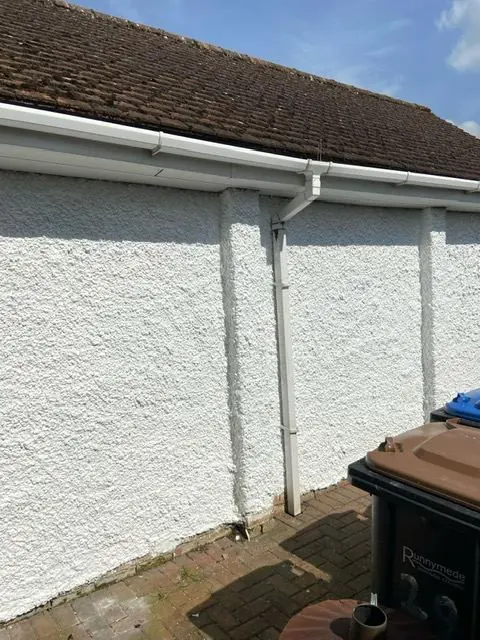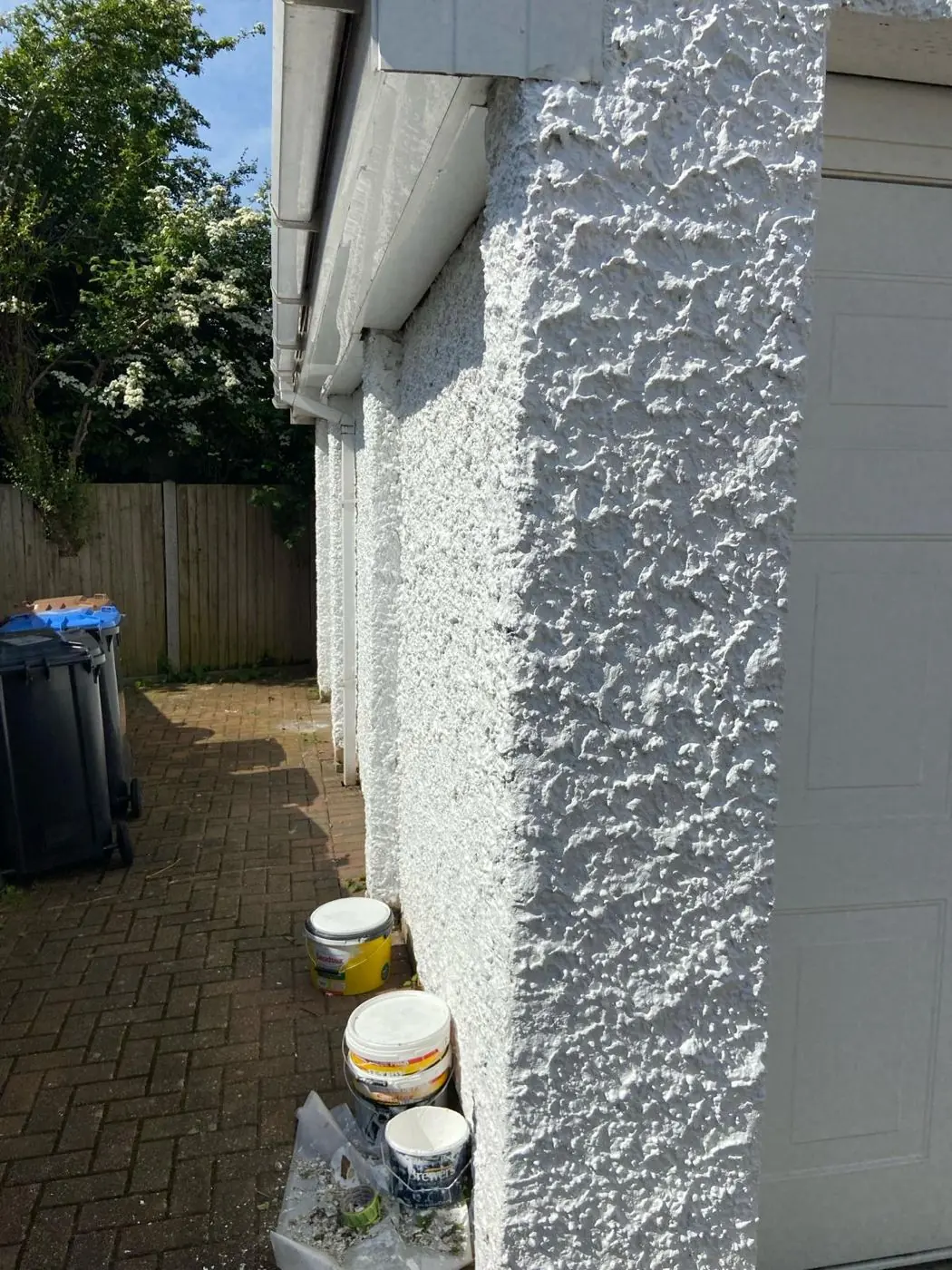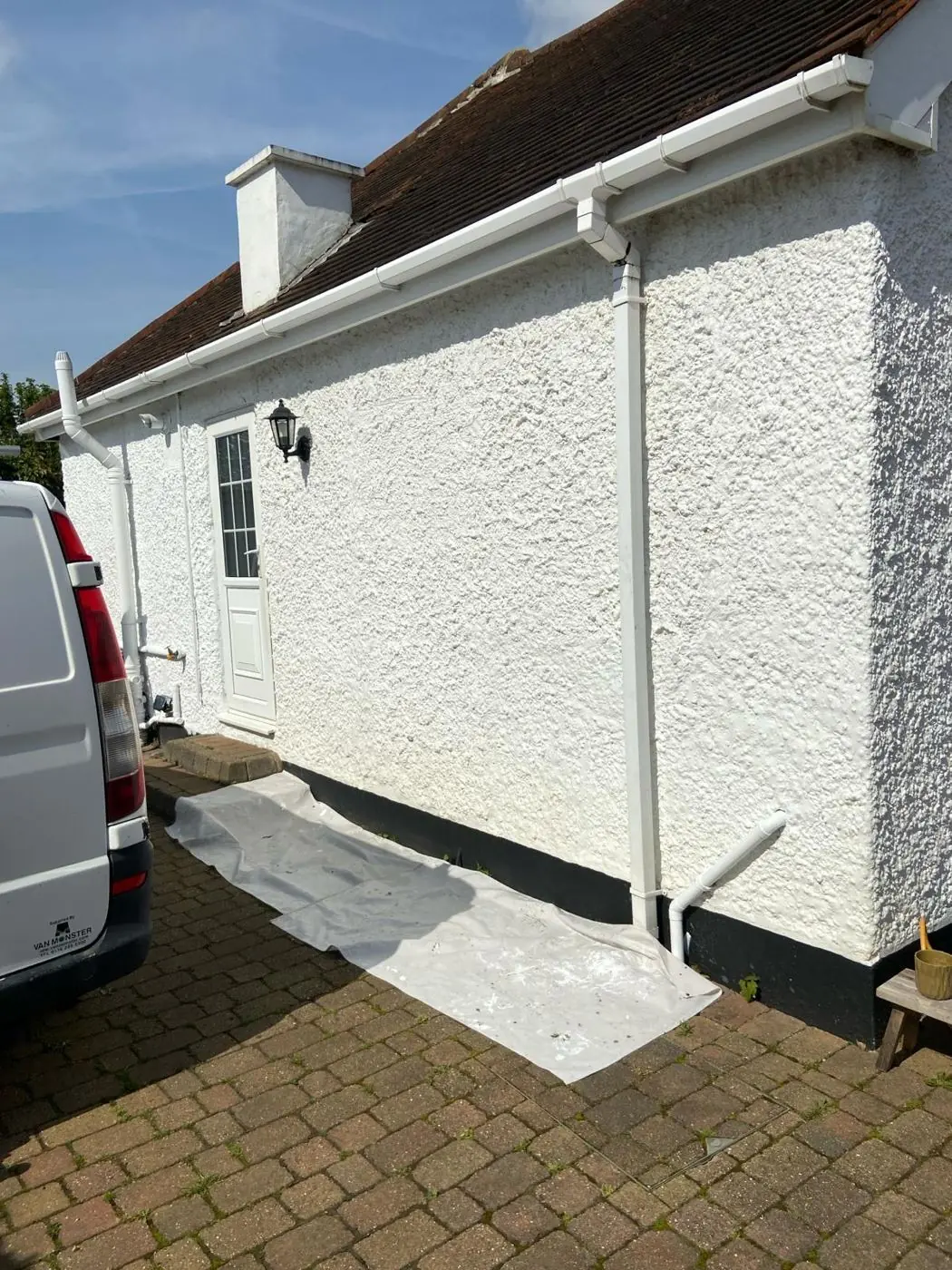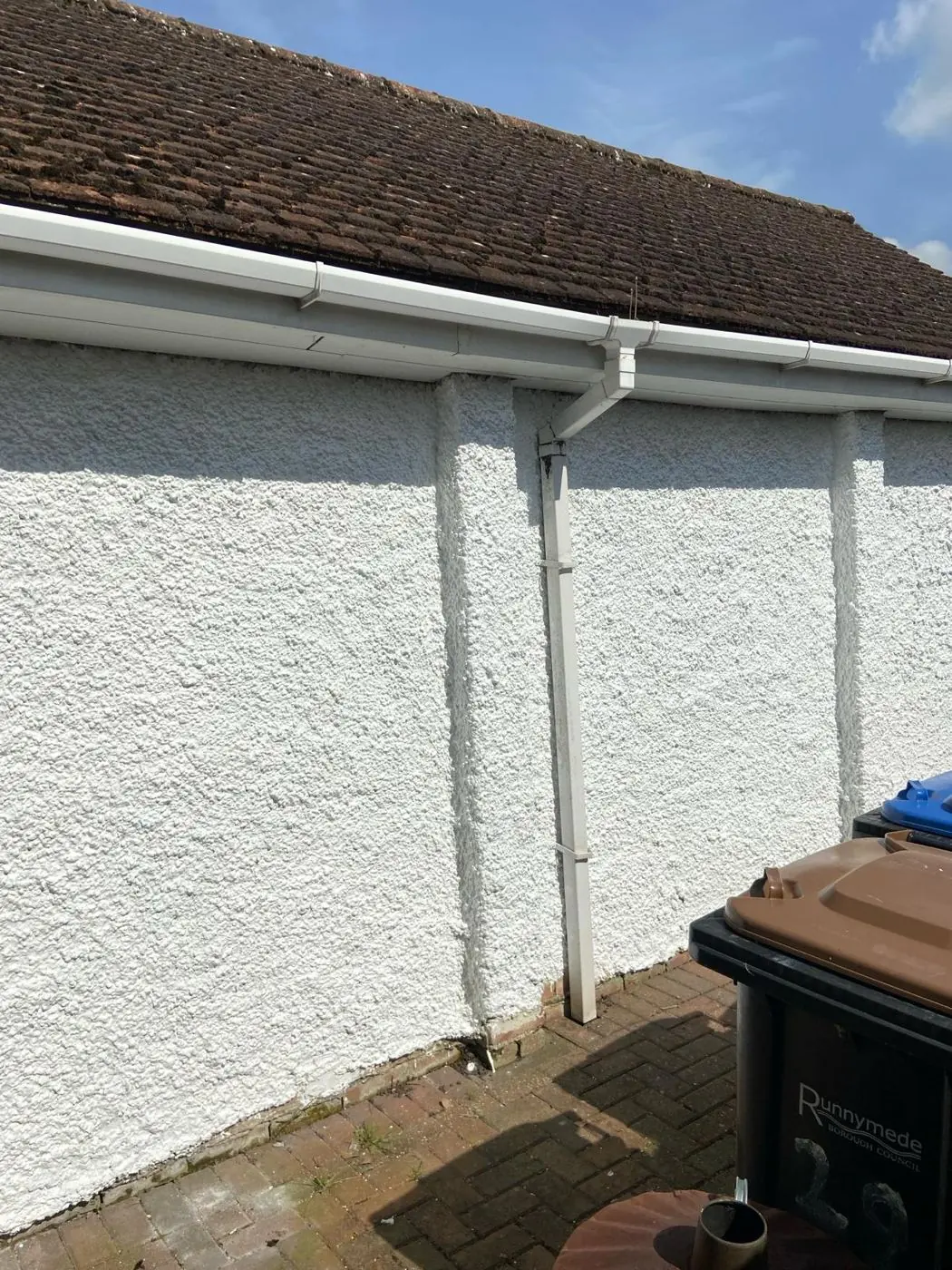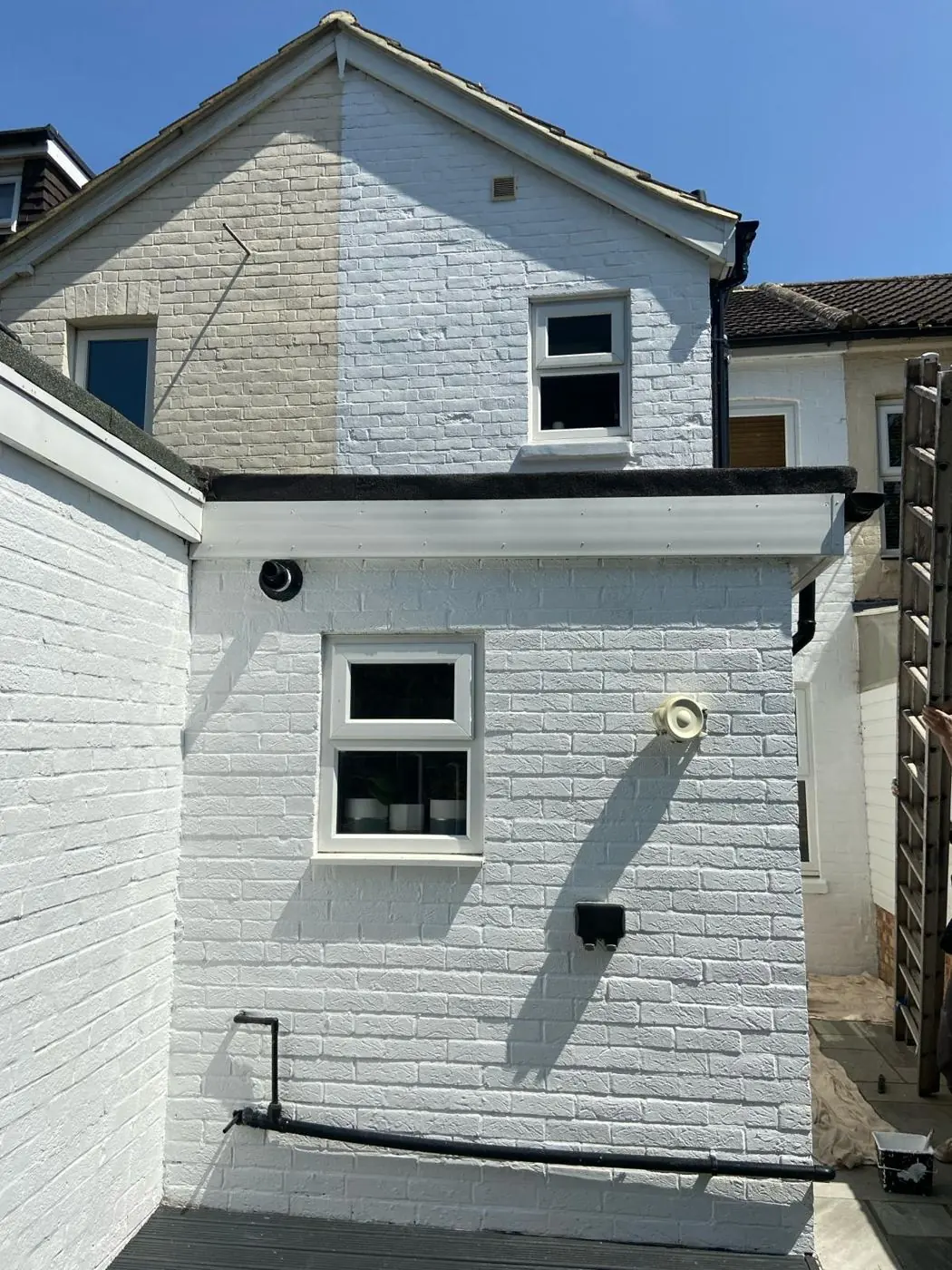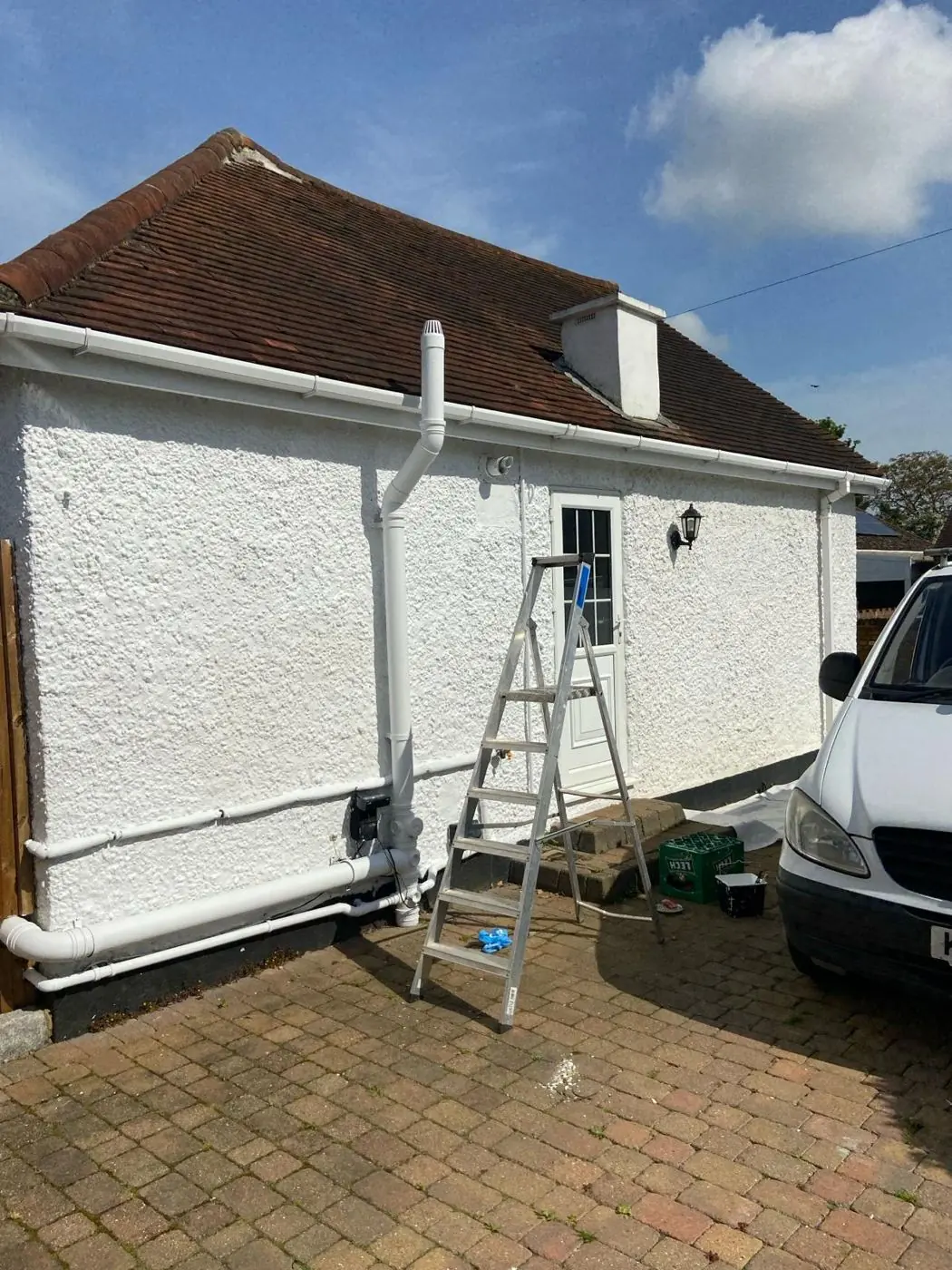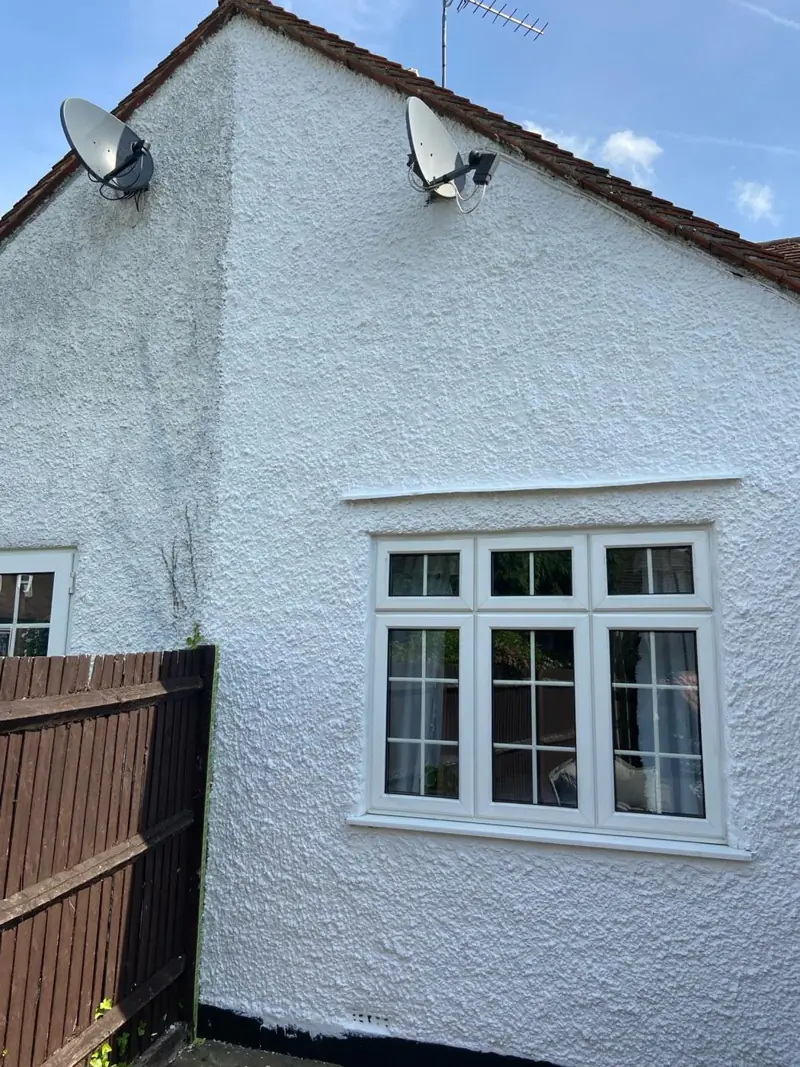
We repaint render and masonry across Towcester, NN12, travelling about eight miles south-west from Northampton. Much of the town centre is ironstone, limestone or brick that has been painted or rendered white or cream, and those walls need breathable mineral or lime-compatible paints rather than ordinary masonry emulsion.
Ironstone and limestone under the paint
Towcester stands on Oolitic limestone, ironstone and boulder clay, and those beds supplied the stone and brick for the old town. On Watling Street you will find coursed rubble and ashlar in orange-brown ironstone and paler limestone, red brick laid in Flemish bond, and, on a large share of fronts, a coat of white or cream paint or render over the top. The listed descriptions show the range: the Saracen’s Head is coursed squared ironstone, the Grade II* Chantry House mixes squared ironstone and limestone, and 131 Watling Street West is ironstone and limestone rubble.
Stone walls like these take in moisture and need to let it out again. A dense acrylic masonry paint traps that moisture behind the film, and in winter it shows as blistering, flaking or a damp patch inside. Where a Towcester wall is already painted, Dean identifies what is on it, removes what is failing, and recoats with a breathable mineral silicate or limewash-compatible system that matches the existing finish.
Why some stone should never be painted
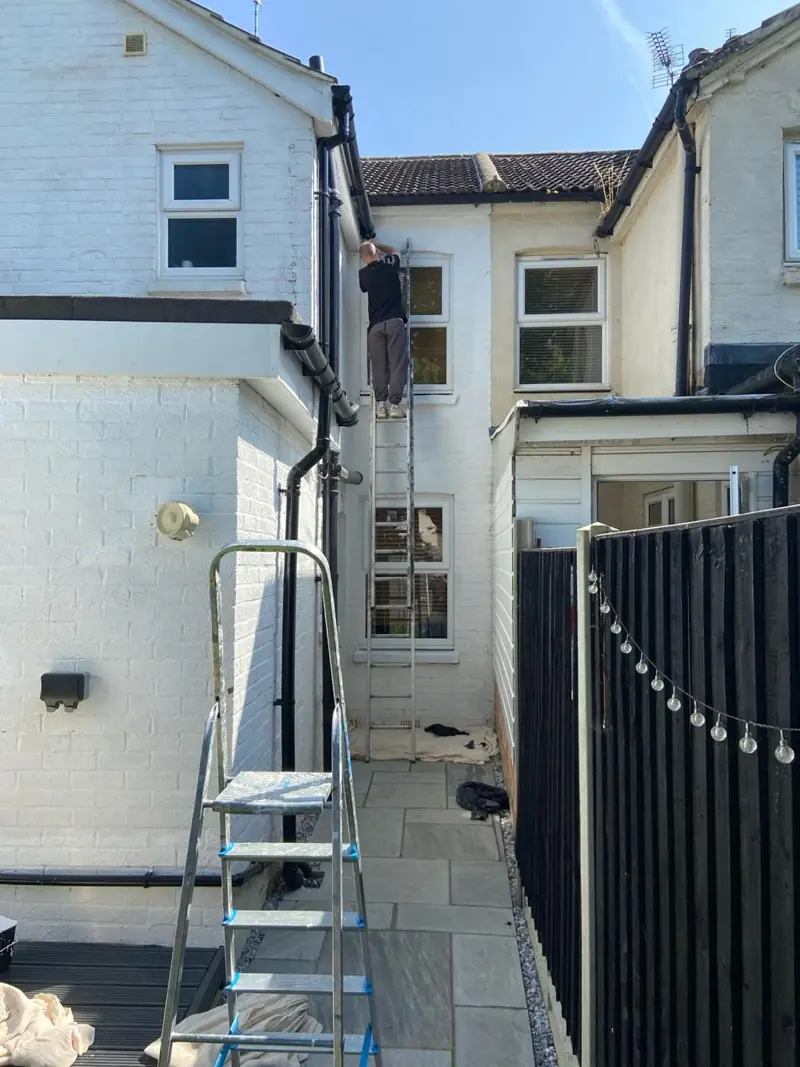
There is a firm line here. Bare ashlar, such as the mid-18th-century ironstone front of 157 Watling Street West, a Grade II* building, should stay unpainted. Painting good stone is a one-way change: it is hard to strip, it changes how the wall handles water, and on a listed building it needs consent. The town has around 95 listed buildings, mostly along Watling Street East and West, Park Street and Brackley Road, and listed building consent applies to changes in character, which can include the paint type as well as the colour. If your stone is bare now, we will usually advise leaving it so.
Refronted buildings and hidden timber frames
Many Watling Street buildings were given new Georgian fronts in the 18th and 19th centuries, and older timber frames survive behind some of them. Where a masonry face is tied to a frame that moves differently, fine cracks and the odd damp patch are common. Hard cement fillers and impermeable paints tend to crack again along the same line and hold water behind them. On these fronts we use flexible fillers and breathable coatings, and we tell you plainly when a crack looks structural and needs a builder rather than a painter.
Blocked-in arched carriage openings, the leftovers of Towcester’s former coaching inns, are another thing to look for. The infill may be a different material from the wall around it, so it can take paint differently and may need its own preparation.
Painted brick on the Victorian roads
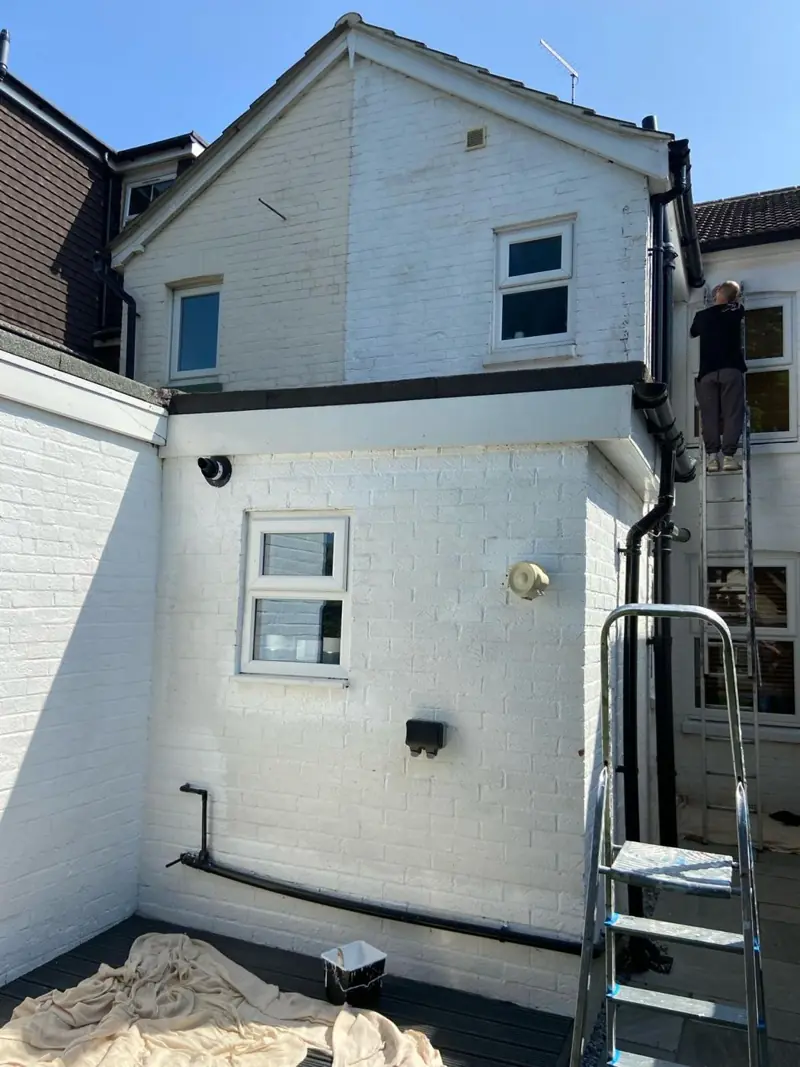
West of the centre, the Victorian terraces on Richmond Road, Pomfret Road and Queens Road, and short rows such as Queens Terrace and Pomfret Row, are red brick, often painted white or cream. The 2012 appraisal brought Richmond, Pomfret and Queens Roads inside the conservation area. Painted brick is less sensitive than stone but still benefits from a breathable masonry paint, especially on soft older brick, and the front garden walls are usually worth doing at the same time.
| Wall in Towcester | Usual approach |
|---|---|
| Bare ironstone or limestone ashlar | Leave unpainted; clean only with advice |
| Painted or rendered stone, town centre | Mineral silicate or lime-compatible paint |
| Painted Victorian red brick | Breathable masonry paint |
| Modern brick or render, newer estates | Standard exterior masonry system |
Our render and masonry painting page explains preparation, algae treatment and crack repair in detail, and our render and roughcast guide covers modern rendered houses. For the wider picture of the town’s buildings, see our Towcester page.
Last updated by Dean, DH Painter & Decorator.