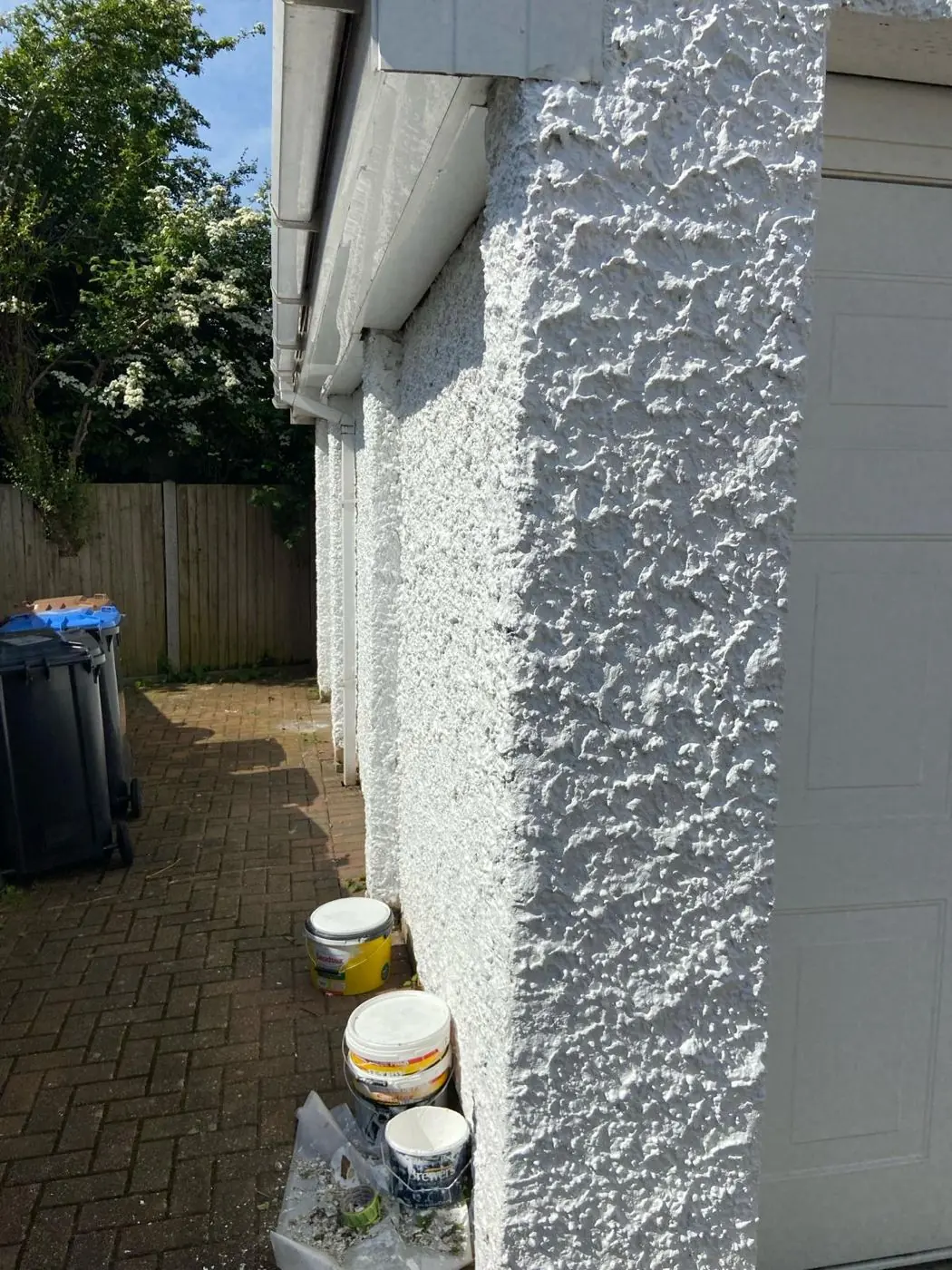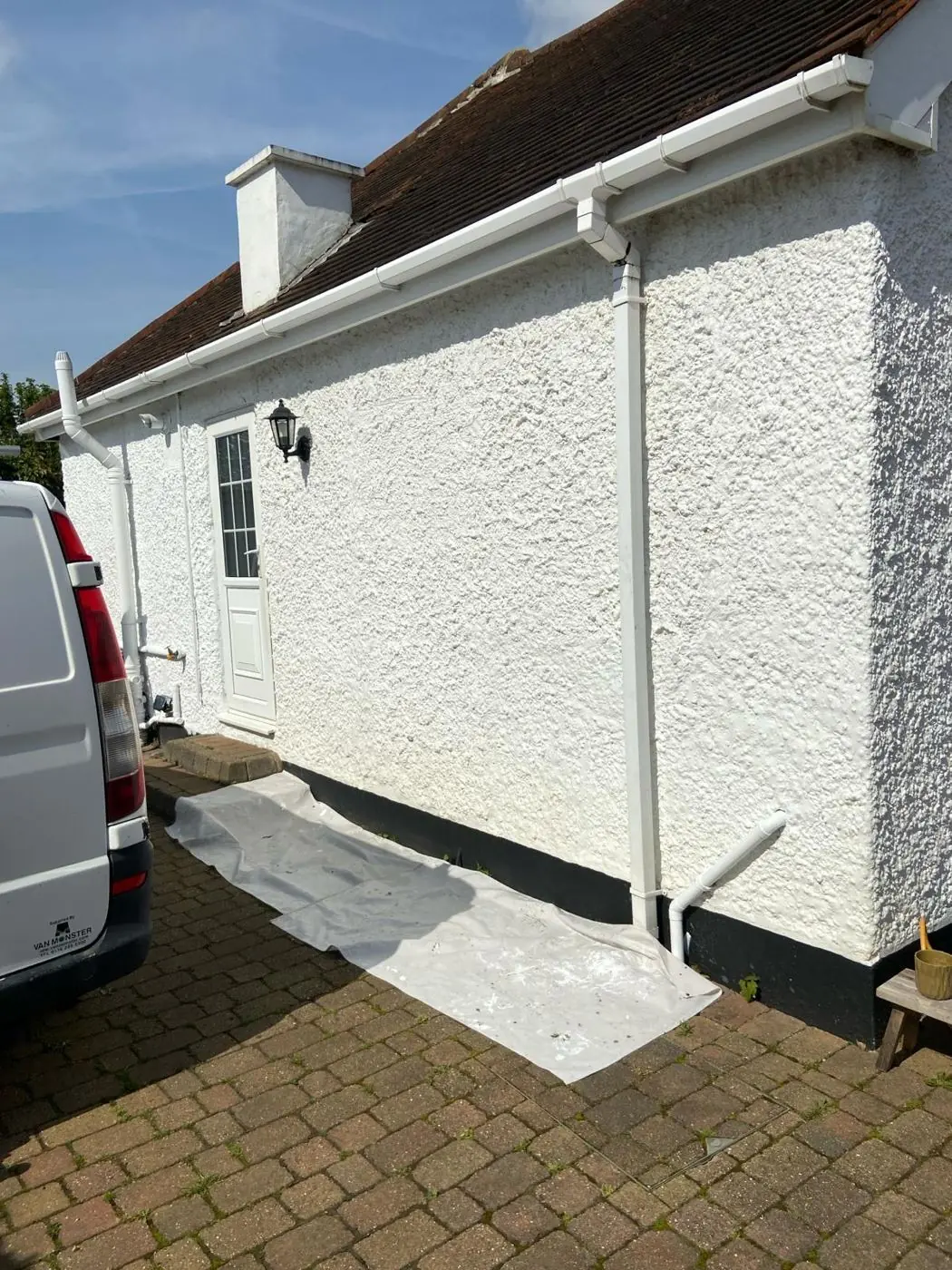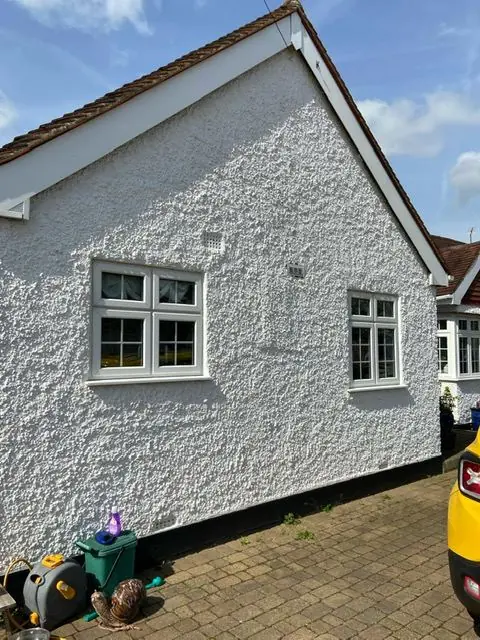
Dean paints rendered and previously painted masonry in Gayton, NN7, about 4.8 miles south-west of Northampton. Most of the village's historic houses are bare limestone and should stay unpainted, so this work centres on walls that already carry render or paint, using breathable mineral, silicate or lime systems.
Most of Gayton’s walls should never see masonry paint
The honest starting point for masonry painting in Gayton is that most of the old village does not need it. The 17th- and 18th-century farmhouses and village houses on High Street, Baker Street and Deans Row are built of coursed rubble or squared blocks of limestone, with ironstone at the corners and openings. Gayton Manor is the same coursed squared limestone with some ironstone. Stone like this was built to get wet and dry out again through its face and its lime joints. Seal it under a plastic masonry paint and the moisture that used to escape gets trapped behind the film, which leads to blistering, damp patches inside and frost spalling on the stone face.
So if your Gayton house is bare stone and you are thinking of painting it, Dean’s advice is usually to leave the stone alone and spend the money on the joinery or on repointing with lime instead. Inside the conservation area, painting stone that has never been painted would also change the look of the historic core, which the Neighbourhood Development Plan asks owners to preserve or enhance.
Where painted masonry does turn up
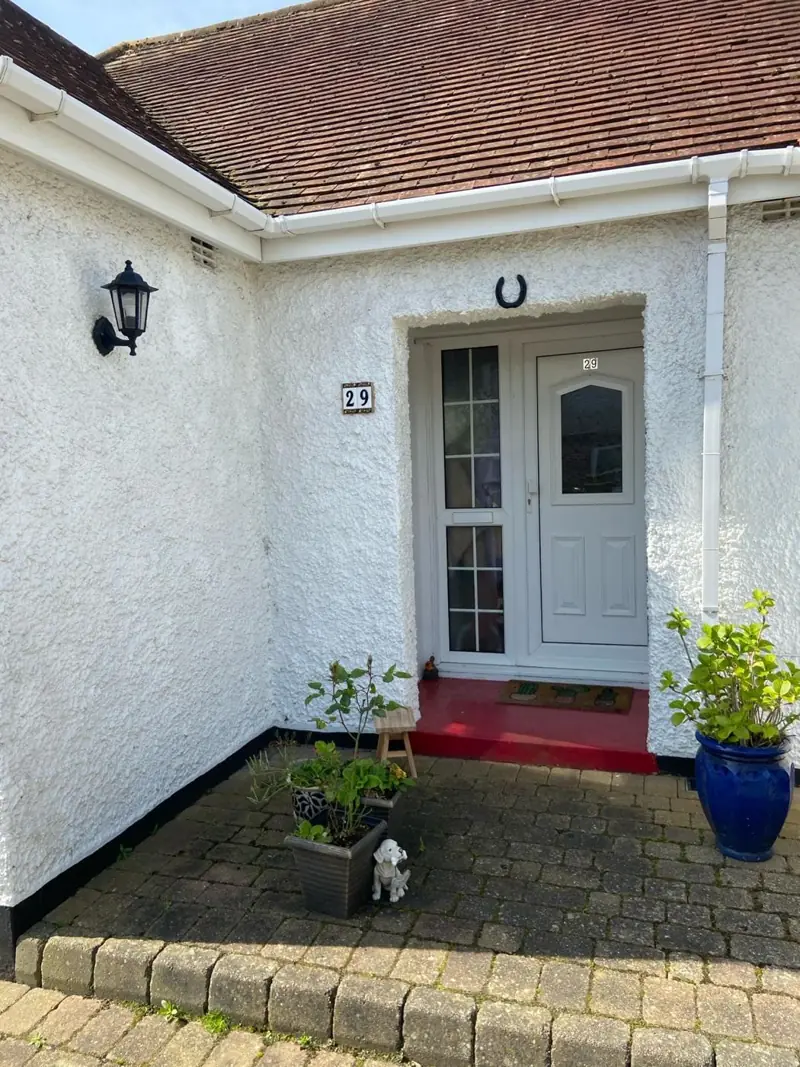
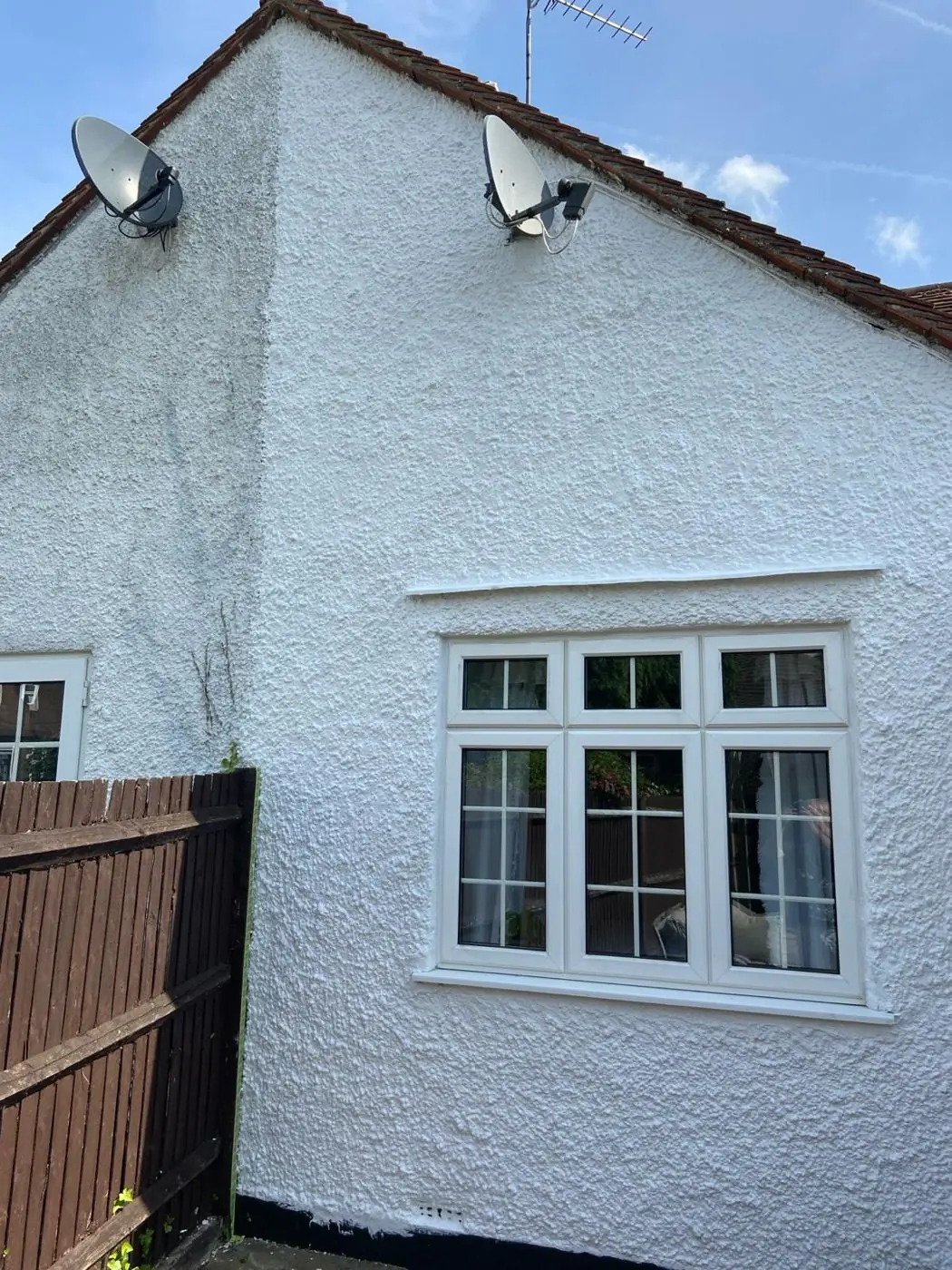
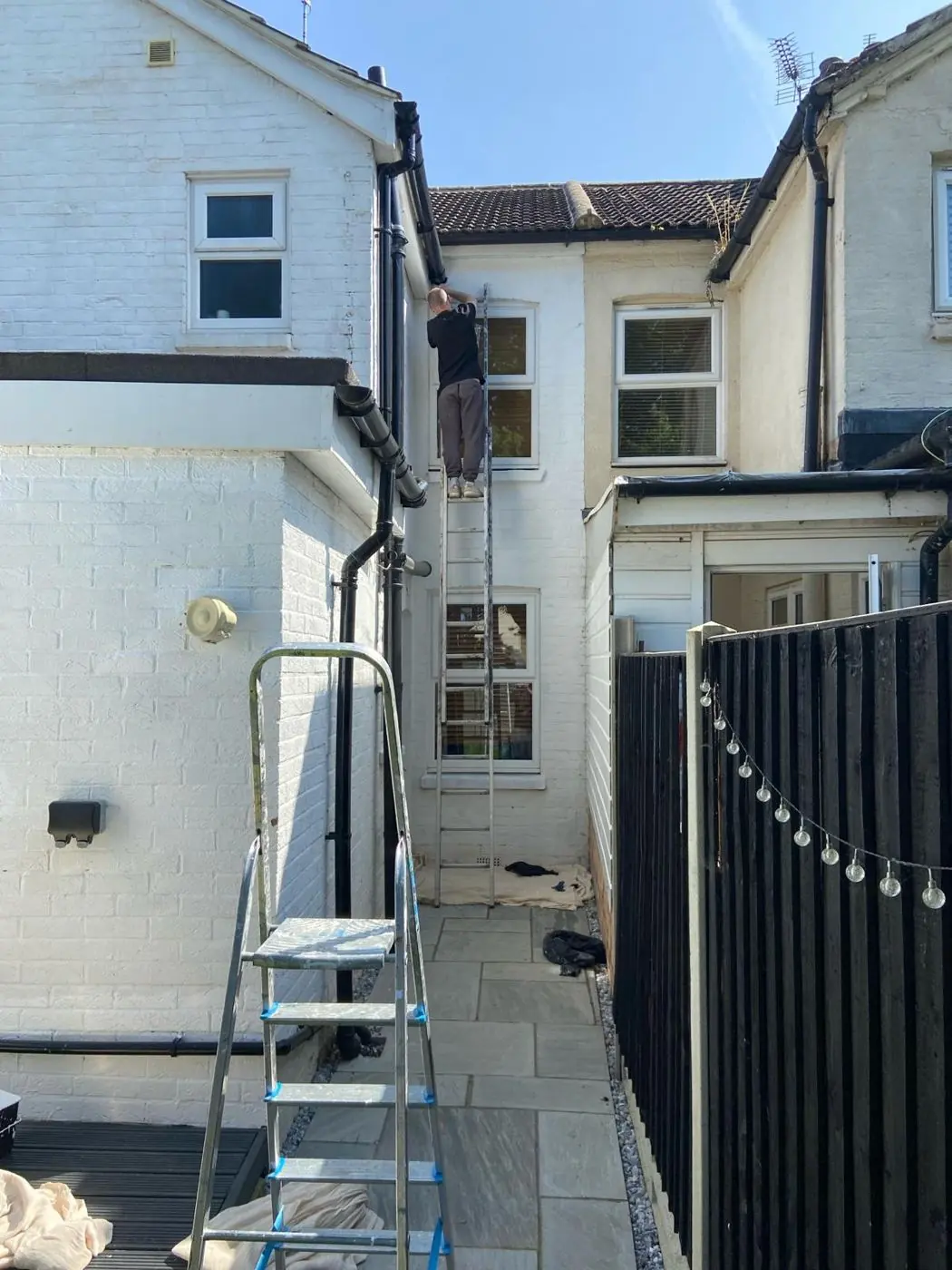
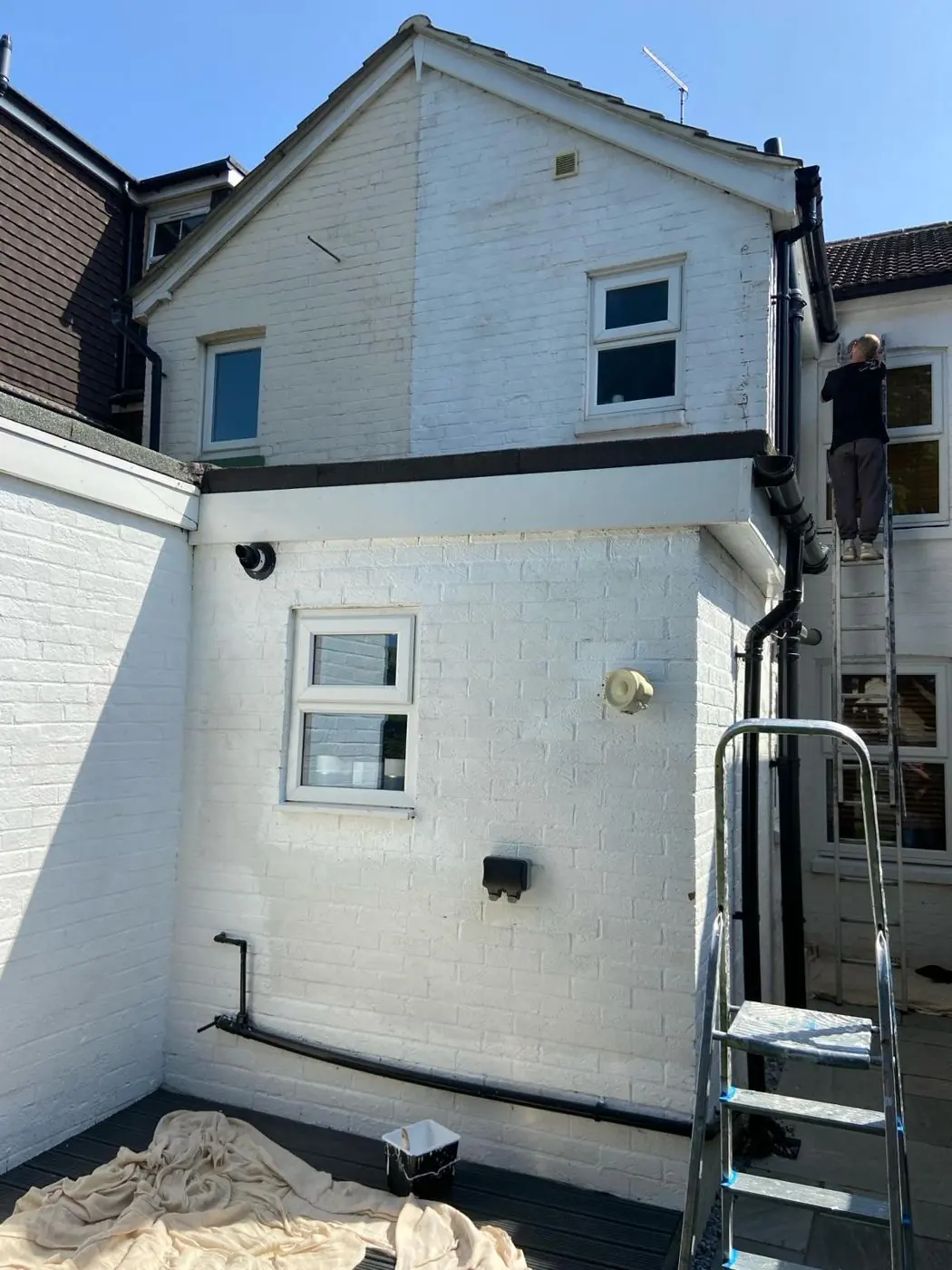
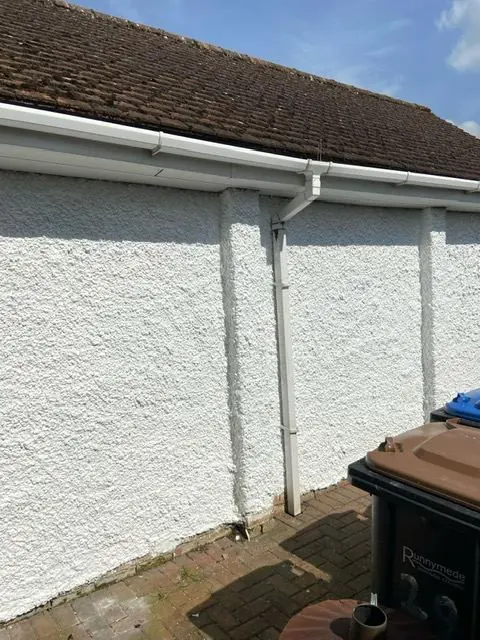
There are still walls in the parish that carry paint or render. Three brickyards once worked here, all long gone, so 19th- and 20th-century brick houses are likely among the stone ones, and some brick or stone elevations will have been painted or rendered at some point. Recent infill homes, brownfield redevelopment and the consented barn conversion may also include rendered panels. Once a wall has been painted, the job is to keep it sound with a coating that still lets it breathe, or in some cases to take off an unsuitable one.
Before quoting we identify the existing coating. A soft, chalky film over old stone behaves very differently from a hard, plastic-feeling masonry paint that is peeling away in sheets, and the second may need removing before anything new goes on. Hairline cracks, hollow-sounding render and damp staining below failing gutters are noted at the same visit.
Choosing a breathable system
| Wall | Suitable coating | Reason |
|---|---|---|
| Limestone or ironstone with an old lime-based finish | Limewash or a mineral paint | Matches the porosity of the stone and lime mortar |
| Previously painted stone or soft local brick | Silicate (mineral) masonry paint | Bonds into the surface and stays vapour-open |
| Modern sand and cement render on a newer house | Breathable masonry paint or silicate | Sound render on a cavity wall takes a standard system |
| Wall under a failing plastic coating | Removal first, then a mineral system | New paint over a trapped film only repeats the failure |
Silicate and lime systems need a bare or mineral surface to bond to, so they are rarely a straight swap on top of acrylic paint. Our guide to painting render and roughcast covers the general preparation, and the main render and masonry painting page sets out the full process.
Damp faces, shade and algae
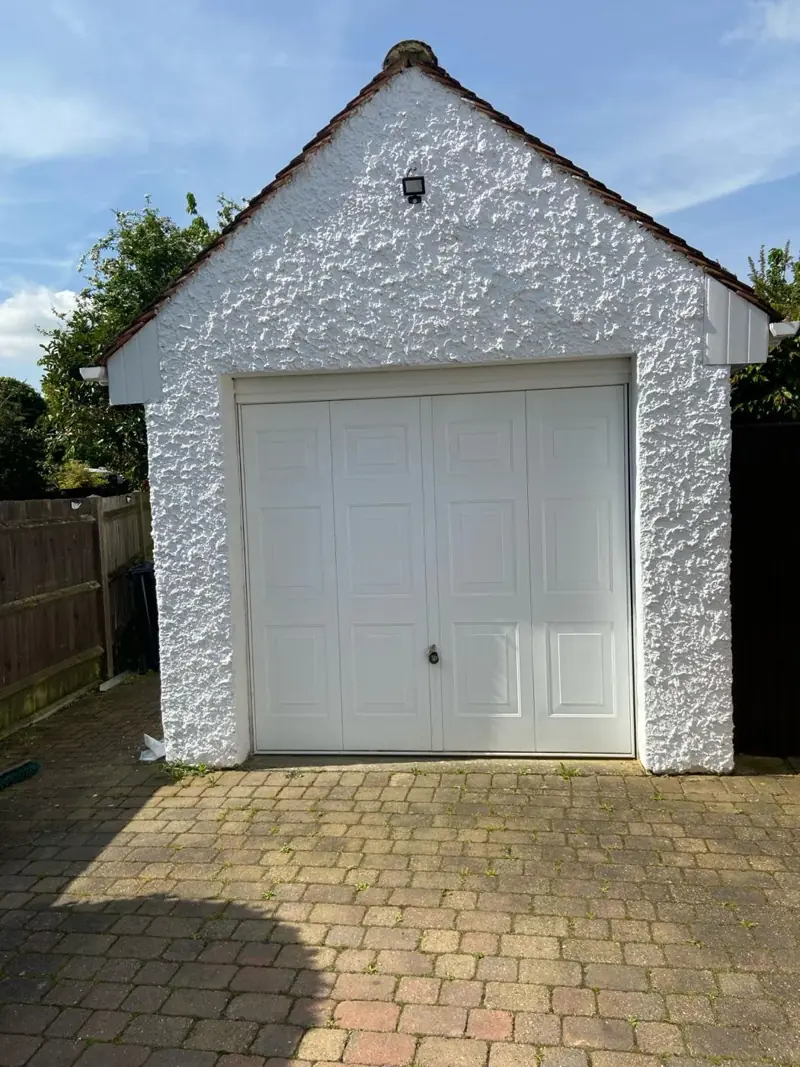
Gayton’s ridge-top position puts its north-west and north-east walls in the path of wind-driven rain, and the clusters of mature trees in and around the village keep some elevations shaded and slow to dry. Those are the walls where green and black algae take hold. A fungicidal wash, left to work and then brushed off, comes before any coating, and the wall must be properly dry before a mineral paint goes on. In practice that means waiting for a run of dry days rather than painting the morning after rain.
Listed buildings add one more step. A change of finish on a listed wall, including painting or limewashing stone, may need listed building consent, so ask the council before booking. Scaffold or tower bases also need agreeing early, given how tight parking is on the village roads. More about the village’s houses and their upkeep is on our Gayton page.
Last updated by Dean, DH Painter & Decorator.