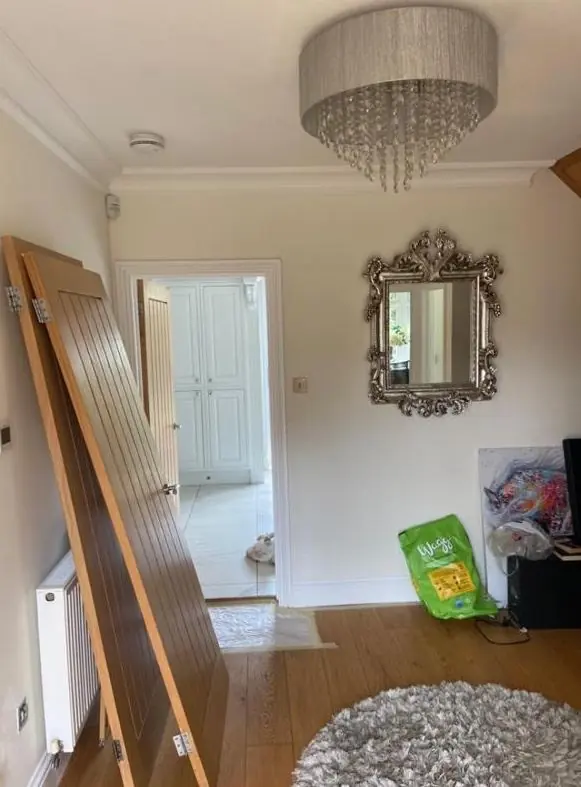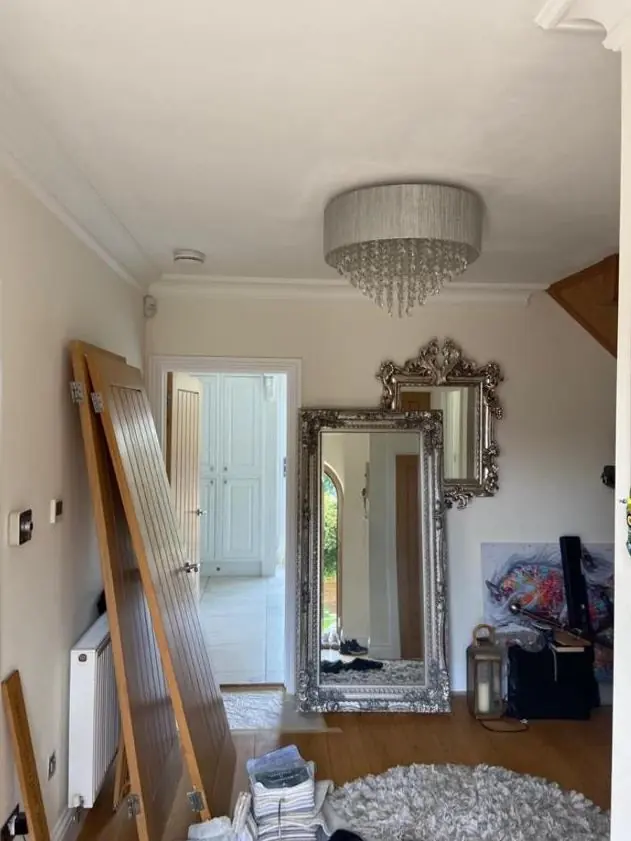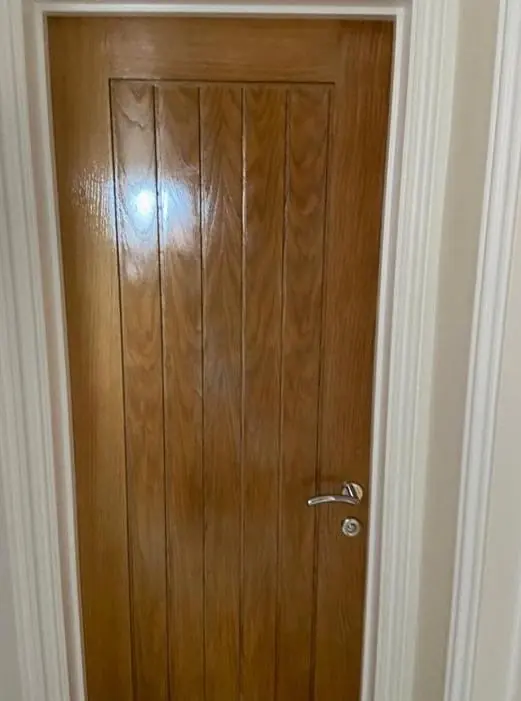
Dean paints doors, skirtings, architraves, sashes and casements in Guilsborough, a village about 9.3 miles north-west of Northampton in NN6. On the listed lias and brick houses the work is slow, hand-prepared joinery; in later homes such as those at Church Mount it is a standard prepare-and-gloss job.
A village where the woodwork is the decoration
Guilsborough’s High Street is lined with listed houses from the 17th to the 19th century, built in lias stone or brick. On most of them the walls are meant to stay bare, so the painted surfaces you actually see are the timber ones: front doors, sash boxes, casements, eaves. That puts more weight on joinery painting here than in a village of rendered or pebble-dashed houses. A neglected sash on a lias front shows up in a way a scuffed wall never would.
The window types vary a lot within a short walk. Guilsborough House and The Old Manse have sashes with glazing bars. Nortoft House has tripartite sashes and a Gothick dormer. The Glebe House and The Sun have leaded casements, and Rose Manor has casements with wood mullions and original glass. The Old Grammar School at Nos. 1 to 5 High Street has mullion-and-transom windows in its lias ashlar front. Each of those needs a slightly different approach.
Matching the method to the window
| Joinery | Examples in the village | How we handle it |
|---|---|---|
| Sashes with glazing bars | Guilsborough House, The Old Manse, The Red House, Nortoft House | Hand scraping and sanding, oil-based or linseed system on old timber, paint kept off the running beads so the sash still moves |
| Leaded lights with old glass | The Glebe House, The Sun, Rose Manor | No heat gun near the glazing; masking and scraping by hand around the lead cames |
| Wood-mullion and stone-mullion casements | Rose Manor, the Old Grammar School | Small-bead cutting in against stone, microporous timber finish that lets the wood breathe |
| Modern doors and frames | Church Mount and other later housing | Degrease, key, undercoat and gloss or satinwood |
Old paint layers on 18th and 19th century timber can contain lead, so we avoid dry sanding and burning off on period joinery and use wet abrasives and scrapers instead. It is slower, and it is the right way to treat a house where the windows may be the most valuable thing on the elevation.
Listed fronts and shared frontages
With twelve listed buildings recorded in the parish, a lot of the joinery on the High Street sits on listed houses. Repainting a door or window in the colour it already is counts as routine upkeep. Changing it, say from white to a dark heritage green, may need listed building consent from West Northamptonshire Council, and we would ask you to check before the job is booked rather than after.
The Old Grammar School is a special case. It was founded around 1688 and remodelled into five houses in the 20th century, so one listed frontage now belongs to five owners. If one household repaints its windows a different shade, the whole front looks patched. When we are asked to paint one of those houses, we match the colour and sheen already used on its neighbours unless the owners have agreed something new between them.
Inside: skirtings, panelled doors and old walls
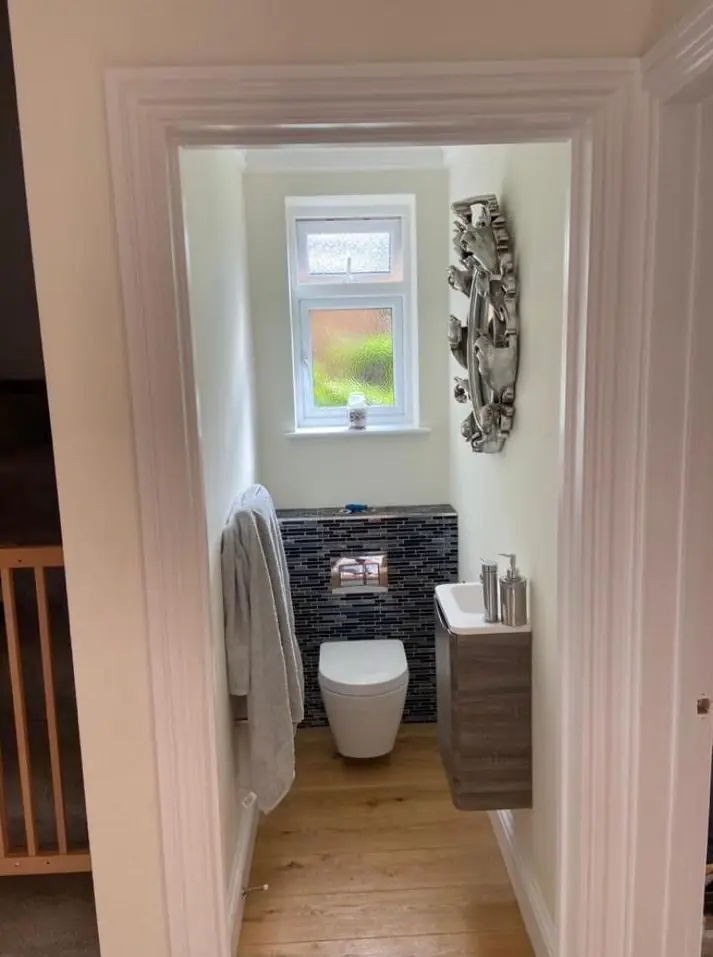
Indoors, the period houses often have lime plaster, and the junction between a skirting and a lime wall moves more than one against modern gypsum. A hard acrylic caulk tends to crack away there within a season. We use a flexible filler sparingly and accept a fine shadow line rather than packing the gap solid. Panelled doors in older houses are usually several coats thick, and runs and drips from past repaints have to be cut back before a fresh coat will sit flat in the mouldings.
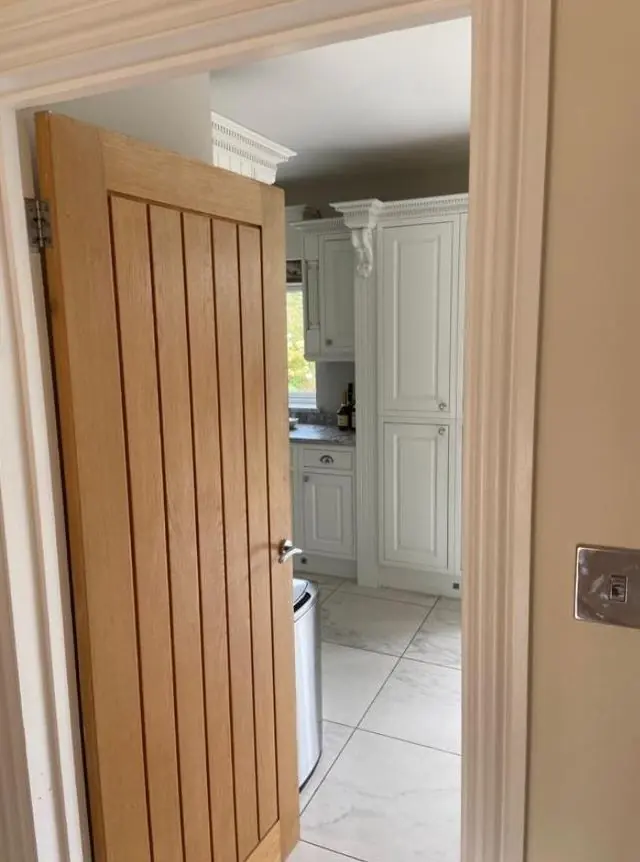
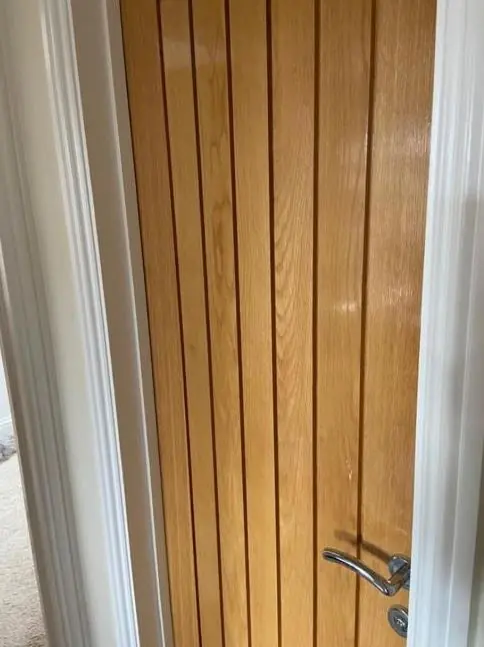
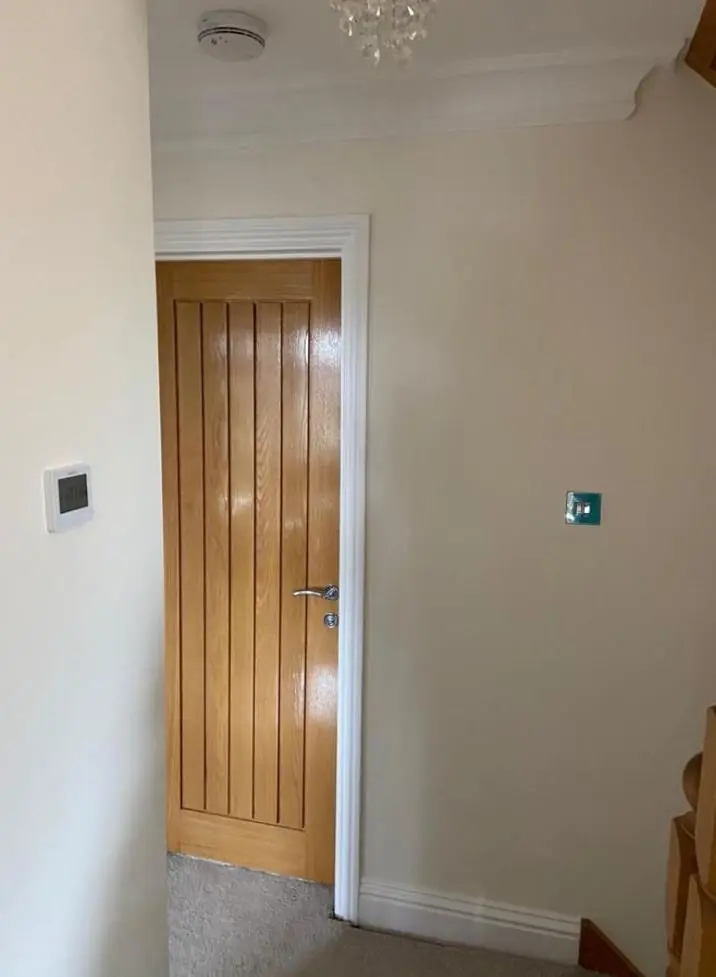
Later homes such as those built at Church Mount, on the site of the old Guilsborough Hall, are a simpler job: MDF or softwood skirtings and flush or moulded doors that take a standard water-based or oil-based system. A whole floor of woodwork in one of these houses can often be done in a day or two.
For our general approach to prep, sheen choice and drying times, see the main door, skirting and woodwork painting page. Other services we cover in the village are on the Guilsborough village page.
Last updated by Dean, DH Painter & Decorator.