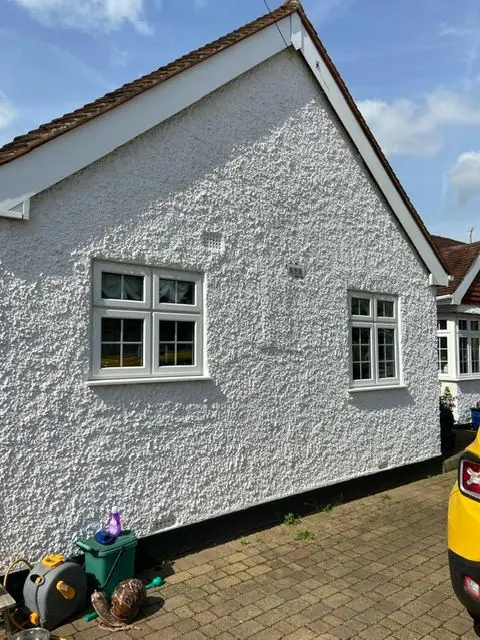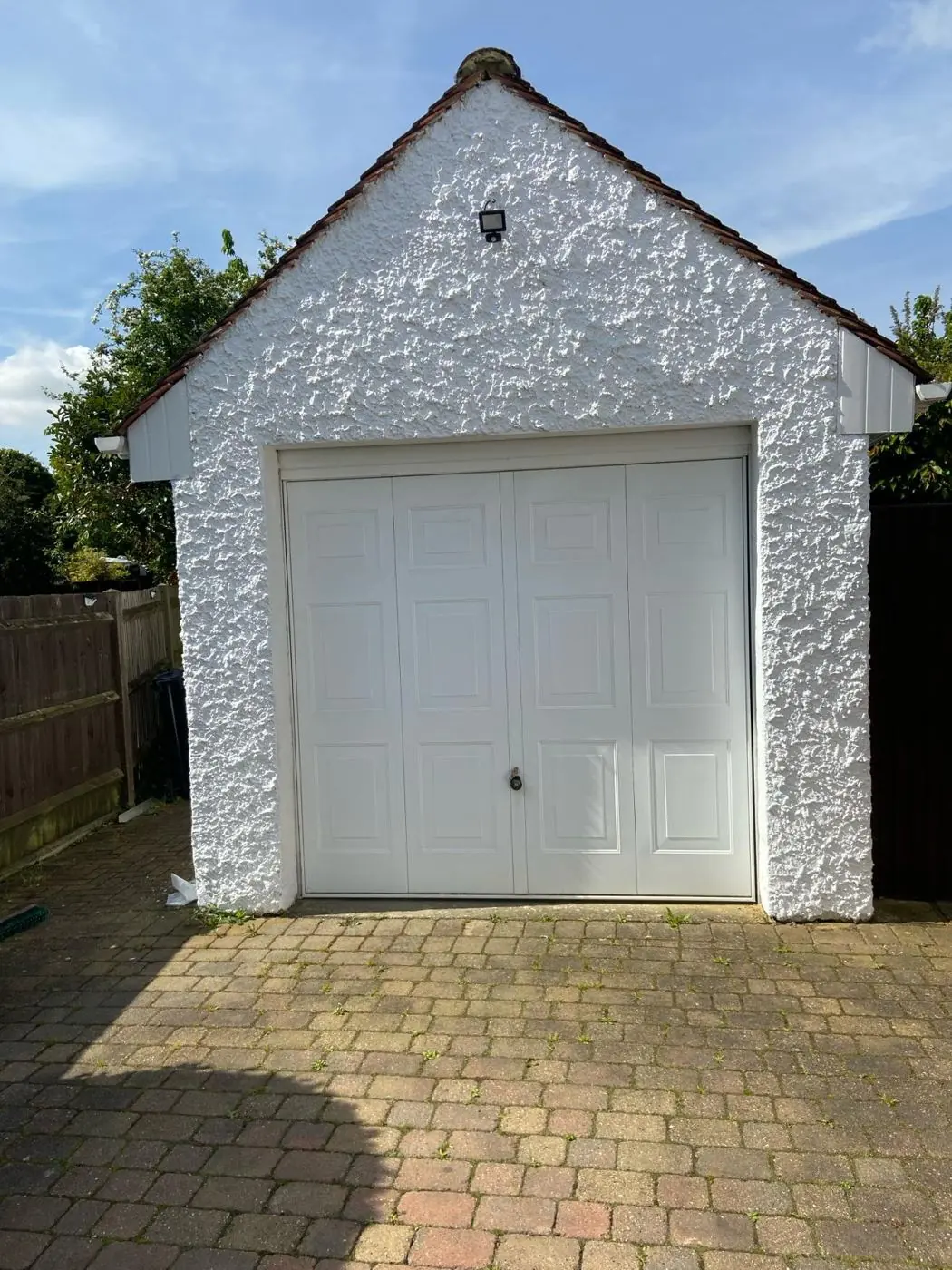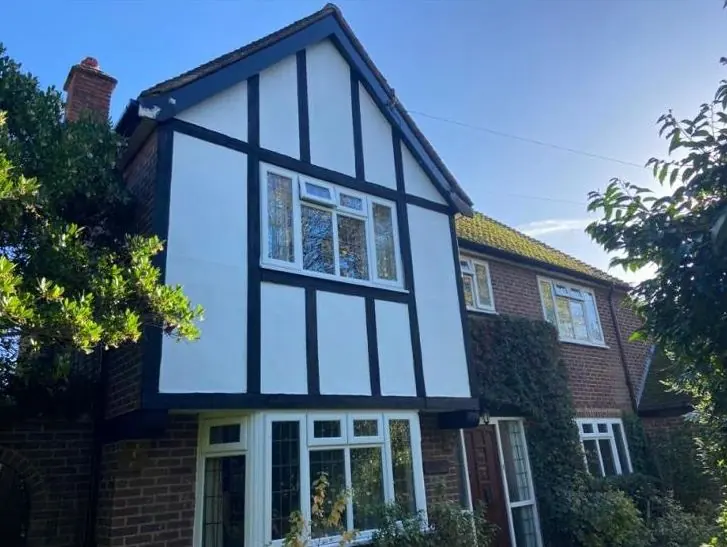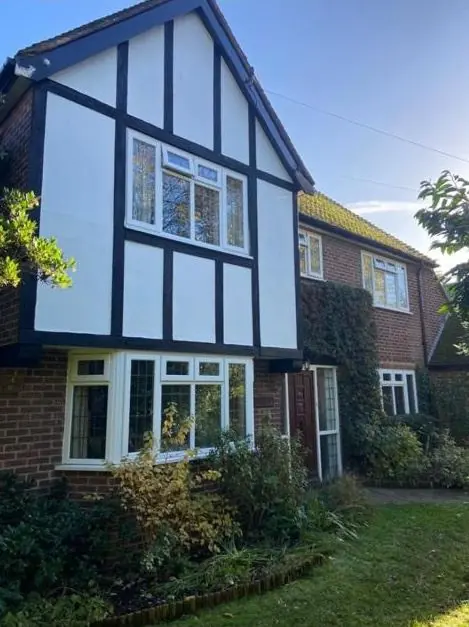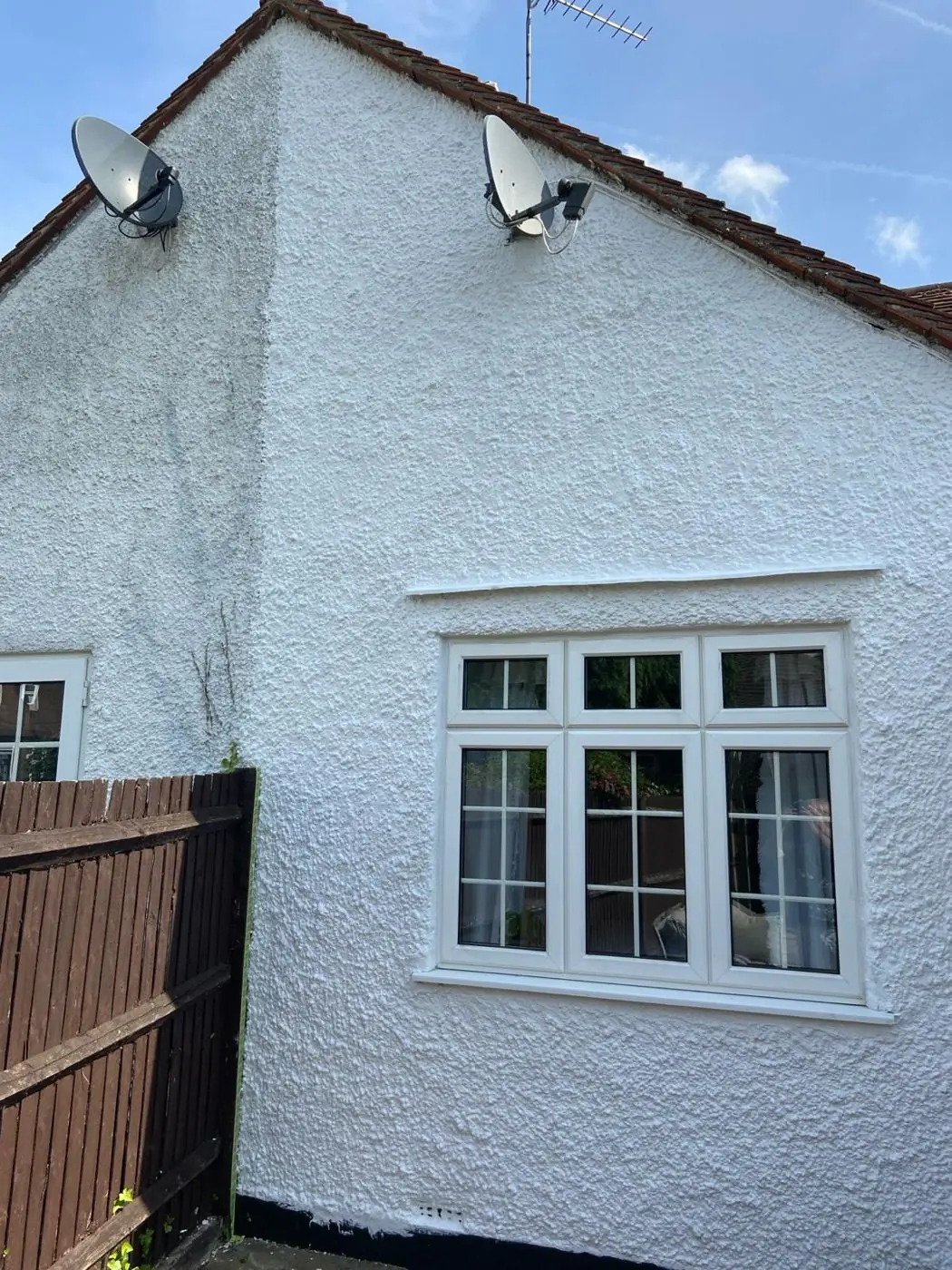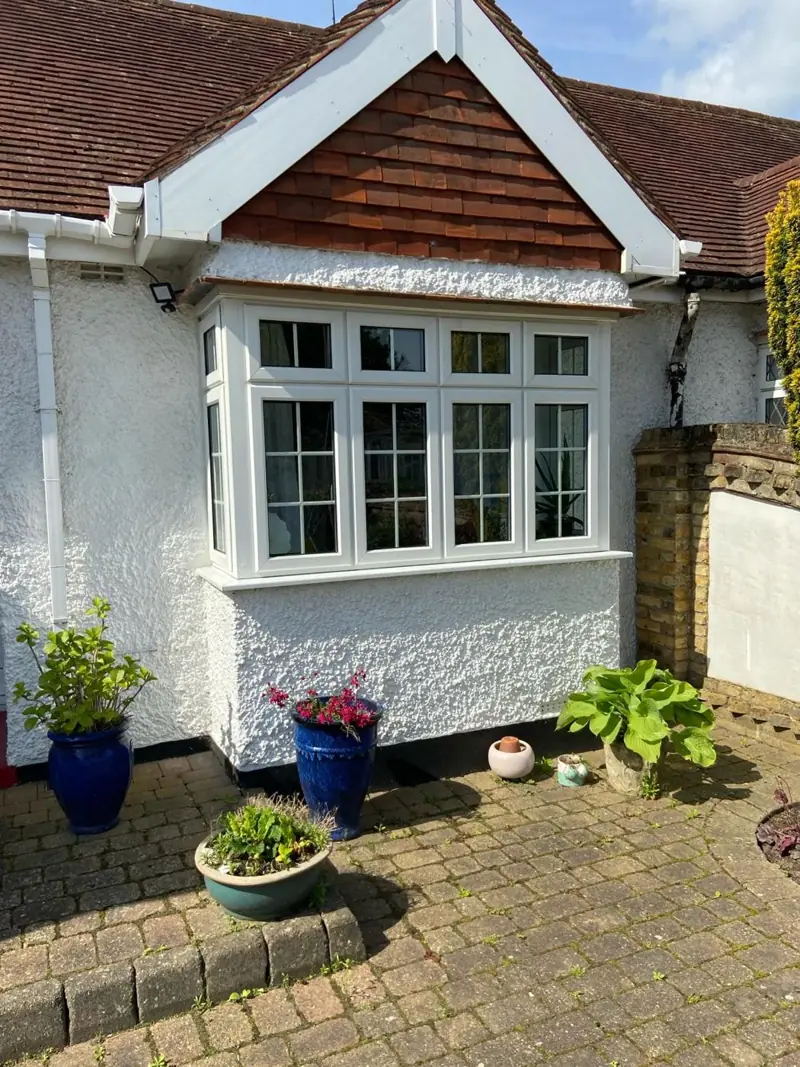
DH Painter & Decorator paints fascias, soffits, bargeboards and gutters in Guilsborough, the NN6 village about 9.3 miles north-west of Northampton. The work ranges from deep eaves soffits on the village's hipped-roof Georgian houses to timber eaves on later homes such as those at Church Mount. Dean gives a free quote after looking at the roofline.
Three roof types, three kinds of eaves
The roofline in Guilsborough tells you the age of the house. The 17th-century lias houses, such as the Old Grammar School with its stone-slate roof, may finish at the wall head with little or no timber showing, in which case there is little for a fascia painter to do. The 18th-century brick houses and cottages carry plain-tile or slate roofs, sometimes with a simple boarded eave or bargeboards on the gables. Then come the larger houses of the late 18th and early 19th century, some with hipped slate roofs and deep eaves soffits, and those are where the real roofline work is.
Later housing, including Church Mount on the site of the former Guilsborough Hall, is where most conventional fascia boards, soffits and gutter runs are found. Each type needs a different approach, so we look at the roof before we talk about paint.
The deep soffit on a hipped Georgian roof
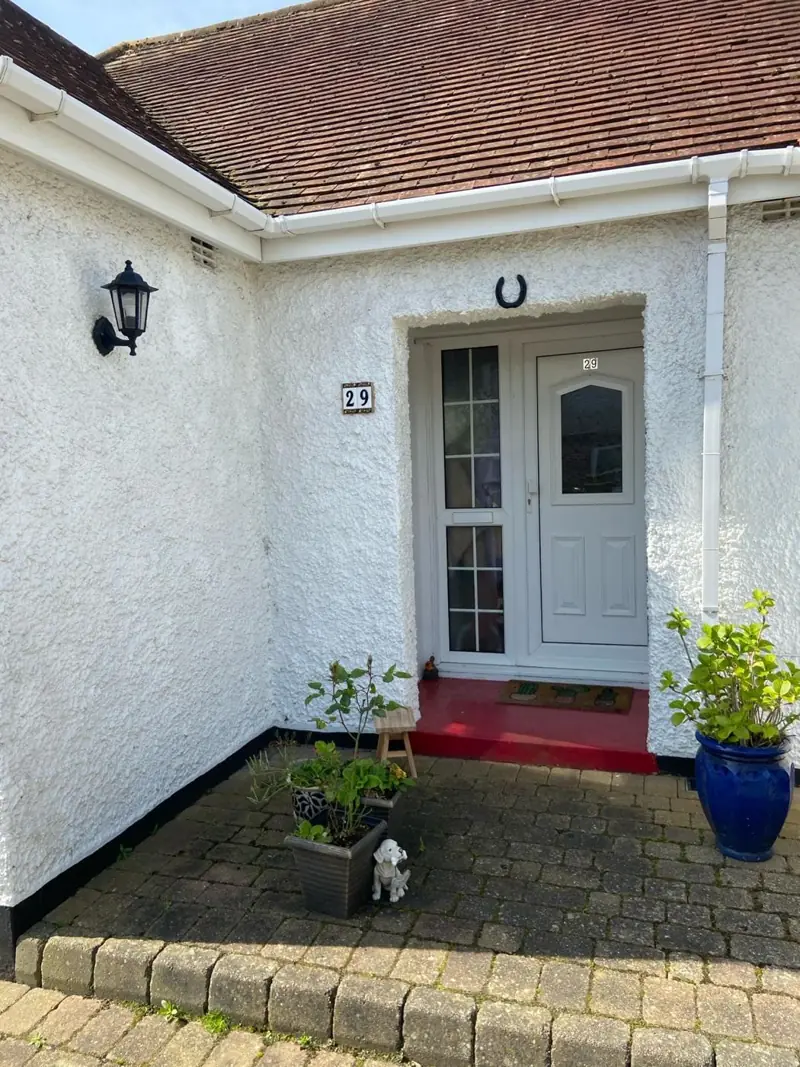
The Old Manse on the High Street is the clearest example in the village: an early 19th-century brick house whose listing notes a hipped slate roof with a deep eaves soffit. A soffit like that is wide, flat timber facing straight down, often with a moulded fascia or cornice at its edge. Because it runs round all four sides of a hipped roof, it is exposed to every aspect, and the corners where two runs meet are where water and rot tend to start.
On a soffit of that depth, we work from a scaffold tower or platform rather than ladders. Painting overhead at full stretch from a ladder gives poor results and is unsafe. We scrape and sand the old paint, check the timber and the joints with a probe, fill or splice where needed, prime bare wood and finish with an oil-based or microporous system suited to old timber. On a listed house the colour stays as it is unless consent has been given.
Trees, parkland and open fields
Guilsborough Park keeps mature trees and parkland, and houses near it get leaf litter in the gutters and damp, shaded soffits on the tree side. Blocked gutters overflow onto the fascia and soak the end grain behind the brackets, which is often the first place the paint fails. We clear and flush gutters before we prepare the boards, and we check the timber behind them.
On the other side of the village, houses on the farmland edge of the village get more sun and wind-driven rain. There the south and west boards crack and chalk first. It is common for one elevation to need doing a year or two before the rest, and we can quote for that side only.
Roadside scaffolding and how often to repaint
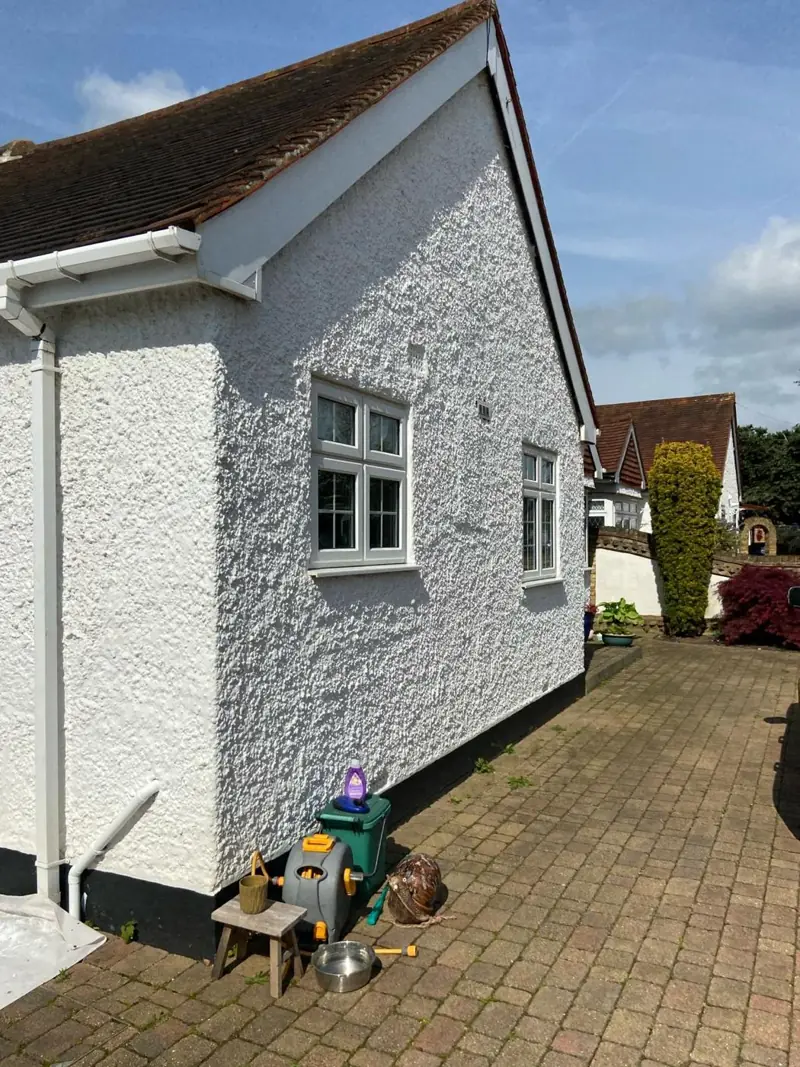
Many High Street houses stand right on the road, so any tower for eaves work goes on the pavement edge. We plan for that at the survey, with barriers and a short working window on each elevation. Traditional paint on old timber eaves tends to need a repaint on a regular cycle, and keeping to it is cheaper than repairing rotten boards later. Our painting and decorating cost guide explains what affects the price, including access equipment.
The full sequence for modern timber and uPVC boards is on the main fascia and soffit painting page. If the windows and doors below need doing too, our Guilsborough area page covers the rest of the outside work we take on here.
Last updated by Dean, DH Painter & Decorator.