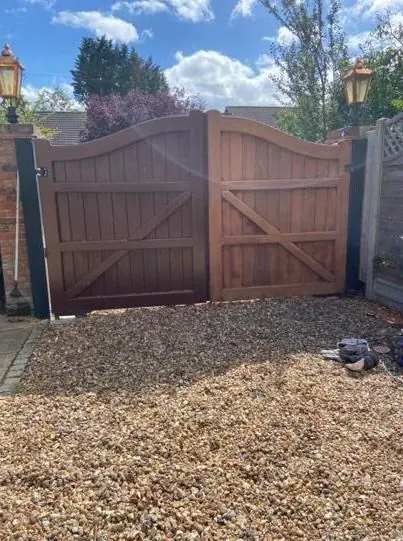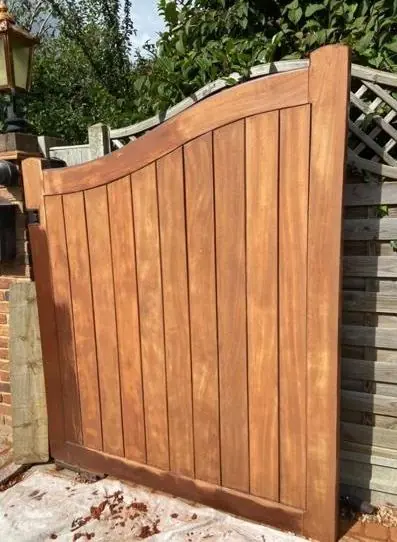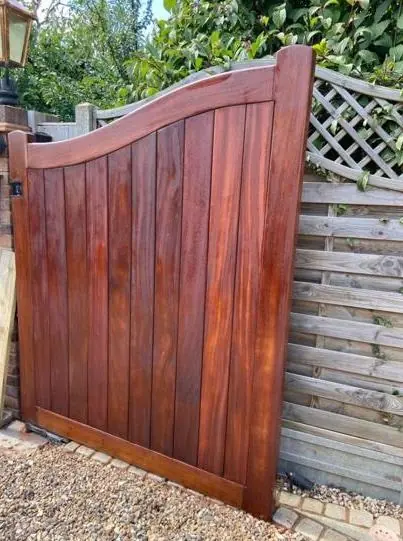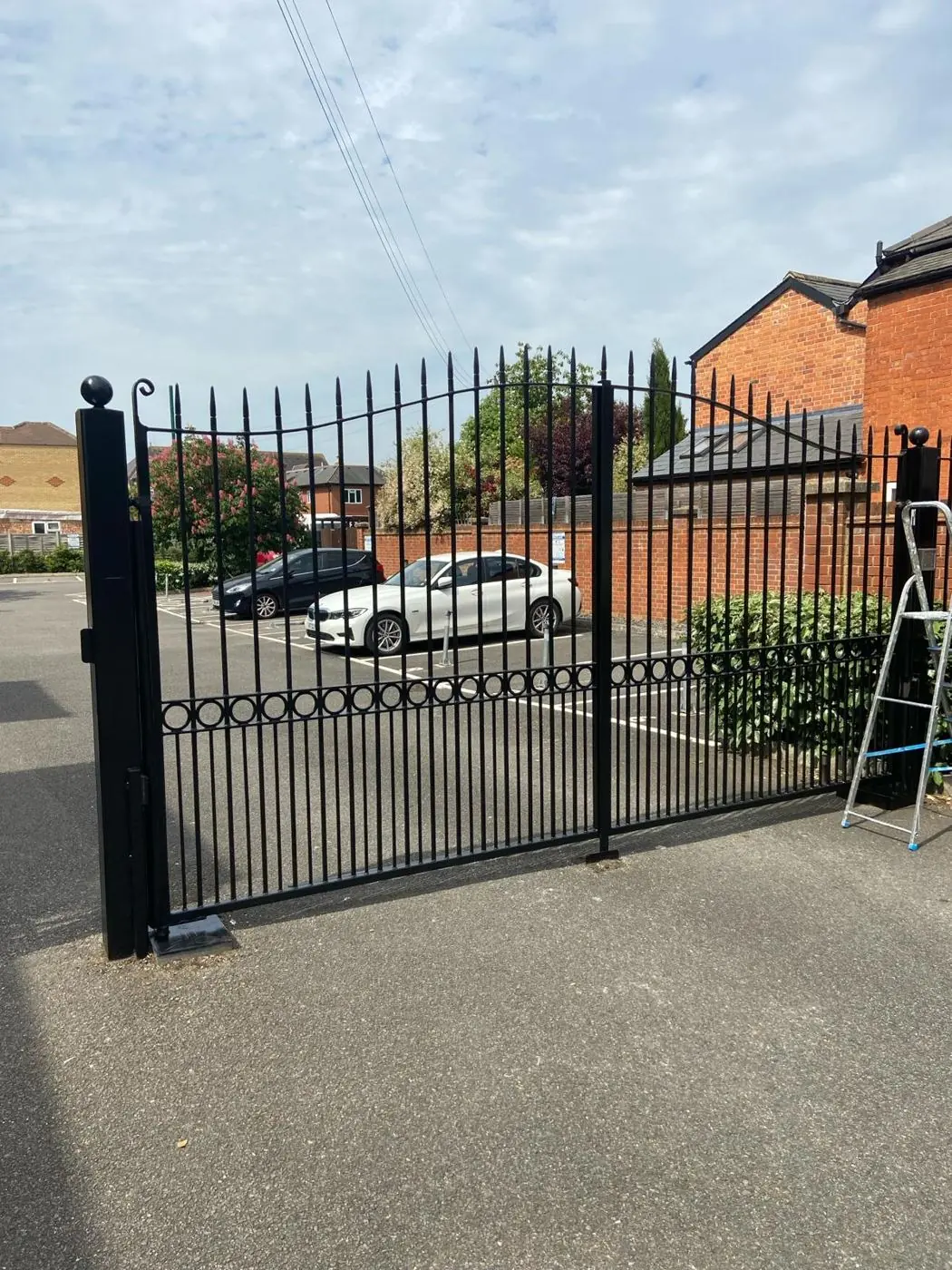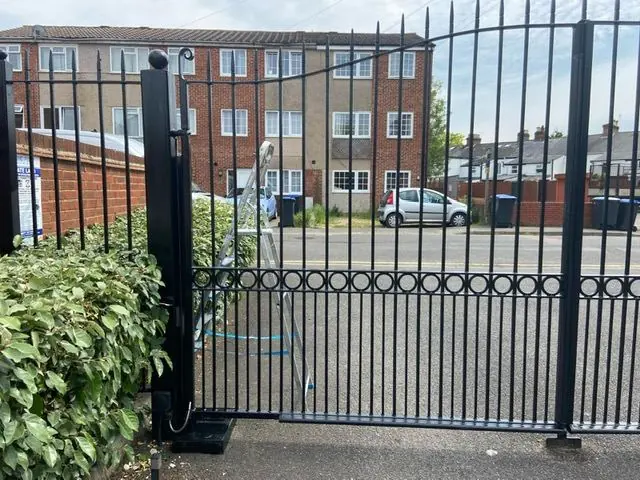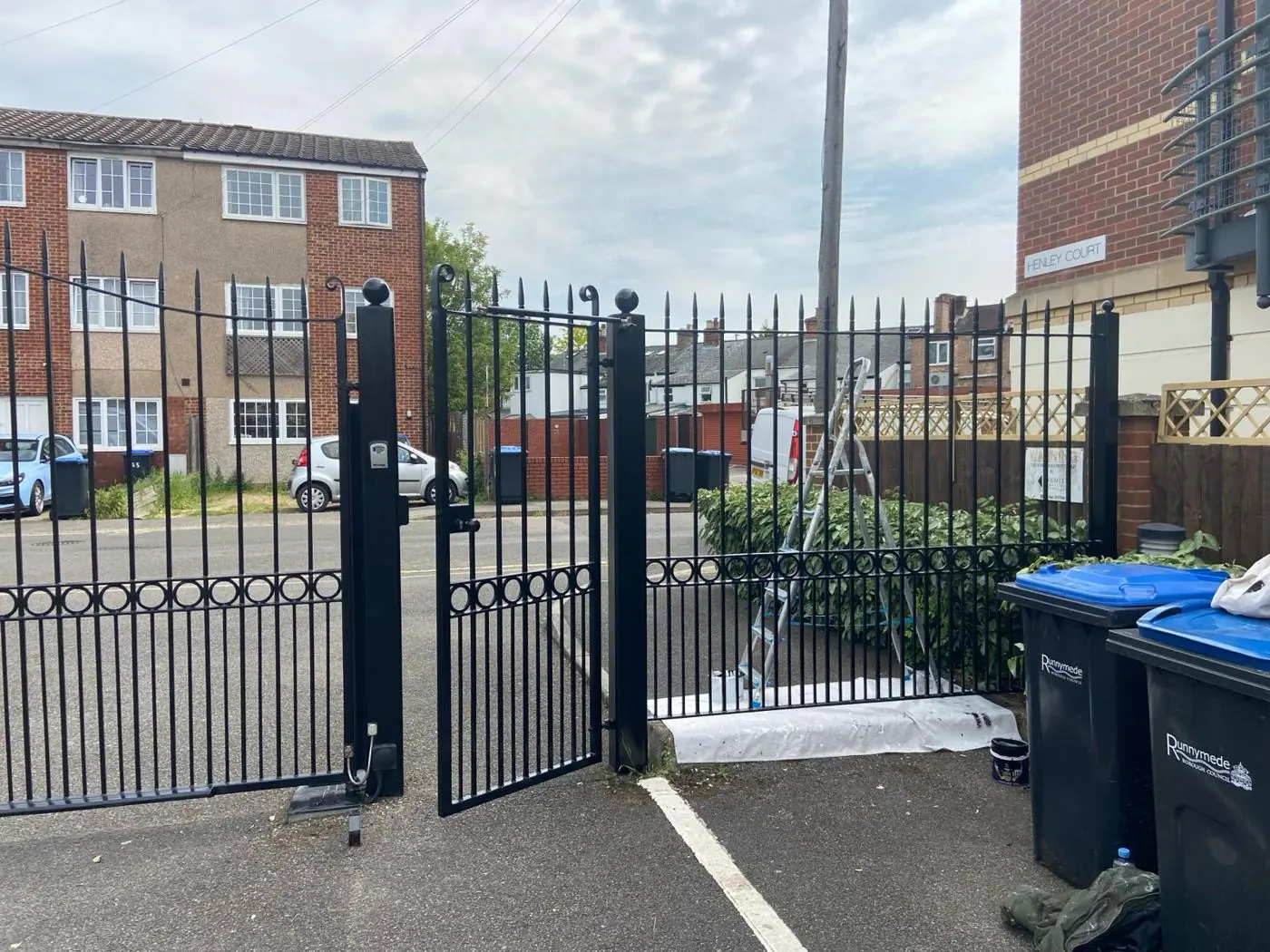
DH Painter & Decorator stains and treats timber fences, garden gates and field gates in Guilsborough, about 9.3 miles north-west of Northampton in NN6. Plots on the edge of the village face open farmland, so the timber takes more wind, rain and sun than in town. Dean gives a free quote after seeing the boundary.
Boundaries that face the fields
Guilsborough is a rural village on the edge of open farmland, joined to Nortoft and the neighbouring villages by country lanes. Many garden boundaries are the last line between a house and the fields beyond. A fence there has no buildings to shelter it, so the prevailing weather hits it full on. Panels dry out and grey in summer, then stay wet for days through winter. That cycle opens the grain, lifts old stain and lets green growth take hold at the base.
Boundaries in the middle of the village behave differently. They are more sheltered, but they are often shaded by walls, hedges and outbuildings, so moss and algae are more of a problem than sun bleaching. We look at which way each run faces before choosing a product. One house can easily need two treatments.
Field gates, five-bar gates and posts
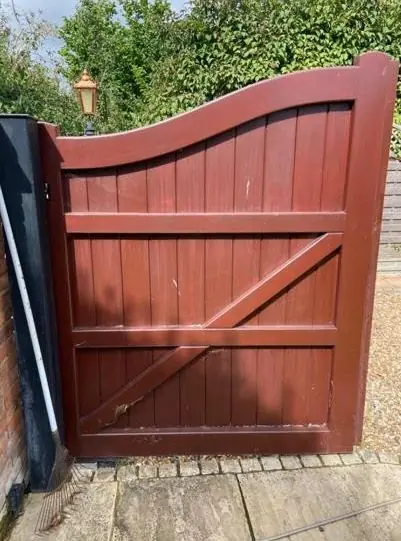
Rural plots around Guilsborough often have a wide timber field gate or five-bar gate as well as a garden fence. Those gates take more punishment than a panel: they are opened and slammed, they carry weight on the hinges and the bottom rail sits close to wet ground. Before any stain, we check that the gate hangs true and the joints are tight, because a sagging gate will crack a new finish within a season. Loose fixings and rotten bottom rails are flagged for a carpenter first.
Gate posts tend to fail at ground level. We clear soil and grass from the base, let the timber dry and work a preservative into the end grain and the lower few inches before the coloured coats go on.
Stain, oil or paint?
The finish depends on what is already on the wood and how much upkeep you want.
- Penetrating oils and preserver stains soak into rough-sawn fencing and field gates. They do not peel, so recoating is a wash and a fresh coat rather than a strip-down. They suit exposed boundaries facing the farmland.
- Film-forming woodstains give a richer colour and suit smooth planed gates, but they need recoating before they start to flake.
- Opaque wood paints work on a planed garden gate where a solid colour is wanted, for example to match the front door.
Mixing them is where problems start. An oil will not soak into wood that already carries a film stain, so we test old coatings before we promise a finish.
Gates beside listed houses
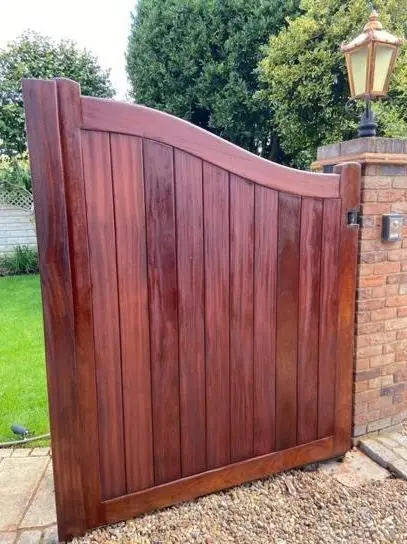
Guilsborough has twelve listed buildings, from the High Street houses to Nortoft House and Holly Cottage at Nortoft, and a gate or fence that forms part of a listed property’s setting is worth treating with care. Re-staining in the same colour is routine. A bright new colour on a gate beside a listed lias or brick house may be a different matter, so it makes sense to check with West Northamptonshire Council first. Muted browns, dark greens and greys that sit well with the stone and brick are usually the safe choice. Our colour advice service can help if you are unsure.
Timing the work
Stain needs dry timber and a dry day to follow. After a wet spell, fencing on the farmland side of the village can take several days to dry out, so we check moisture at the base of the posts before starting. The main fence and gate staining page explains our full preparation, and the Guilsborough page lists the other outside work we take on in the village.
Last updated by Dean, DH Painter & Decorator.