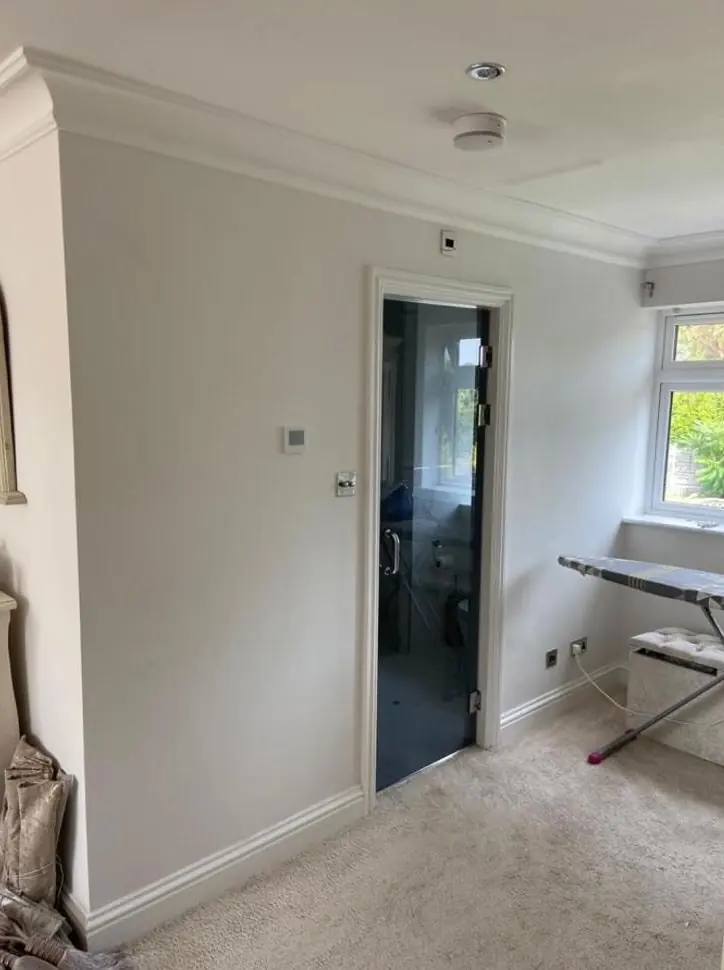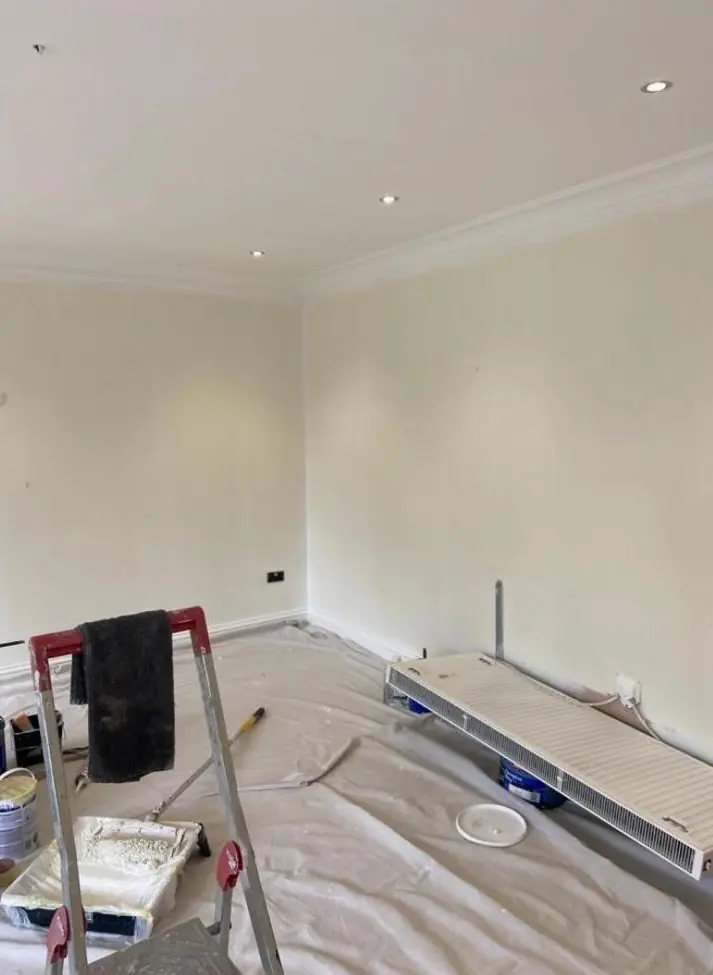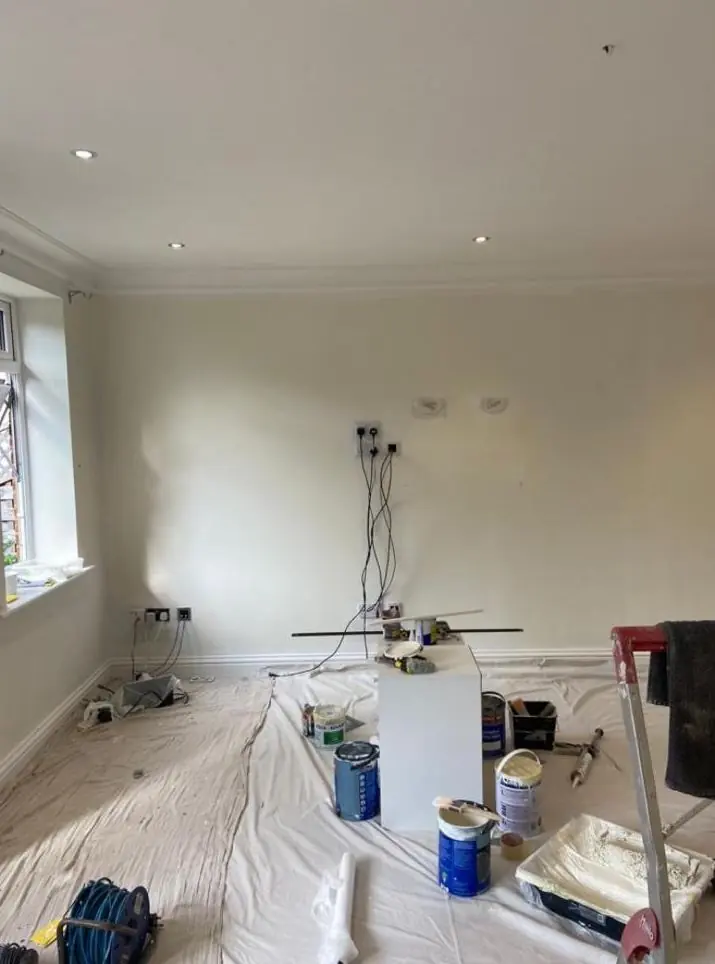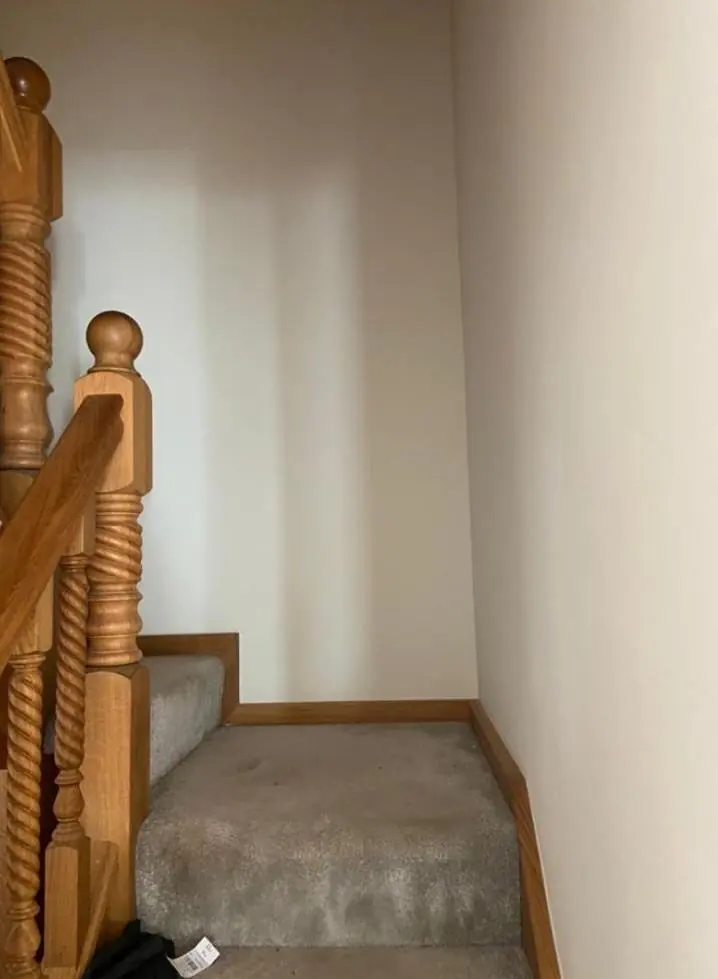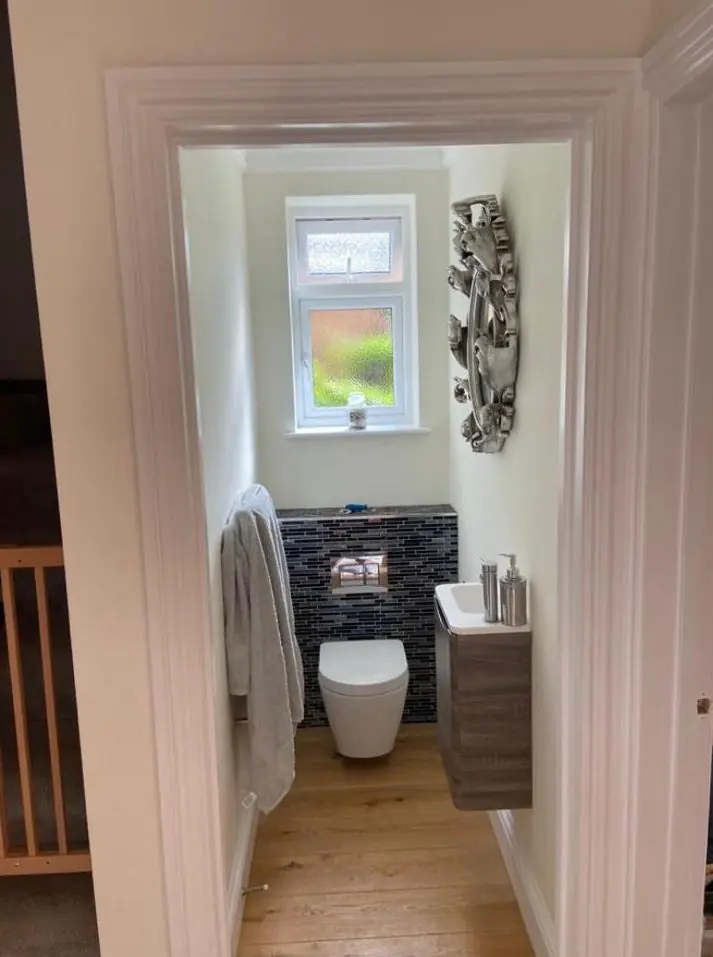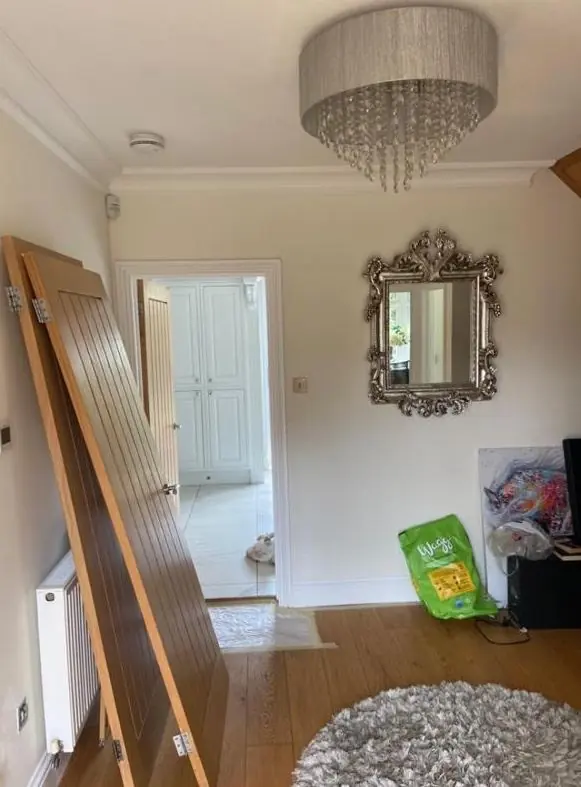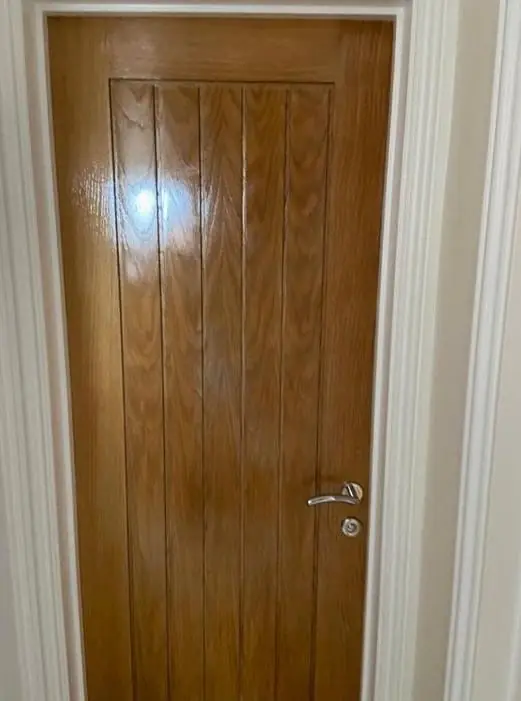
We apply decorative and traditional finishes in Guilsborough, the NN6 village about 9.3 miles north-west of Northampton. In the older houses that means limewash, distemper and hand-painted panelling and joinery that respect old fabric; in the later homes at Church Mount it is more often feature walls and picked-out detail.
Limewash, distemper and soft old walls
The oldest houses in Guilsborough are built from lias and brick, and at Holly Cottage in Nortoft from ironstone rubble with rendered cob above. Walls like these were traditionally finished with limewash or distemper. Both give a soft, slightly chalky surface with gentle variation in colour, and both let the wall breathe. That depth is the decorative effect: limewash builds up in thin layers that catch the light unevenly, in a way a flat modern emulsion can’t copy.
Limewash is applied thin, often four or five coats, on a damp surface, and it needs protecting from fast drying and frost while it cures. It suits inside walls on lime plaster and, where a wall was always coated, rendered cob outside. It does not belong on bare lias or brick that was never meant to be painted. Coating good stone in the village would hide the material that gives these houses their character, and on a listed house it is likely to need consent.
Panelled rooms and painted woodwork in the larger houses
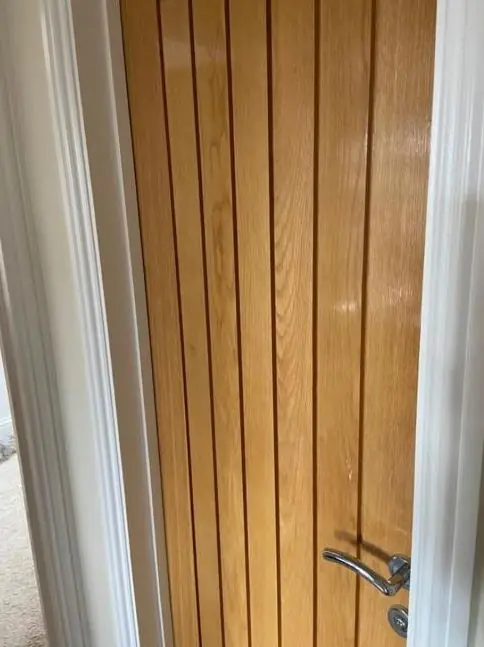
Gentry houses such as Guilsborough House and Nortoft House, with their sashes and later extensions, are the kind of property that suits panelled rooms finished in eggshell. A low-sheen eggshell shows the line of the panel mouldings without the glare of gloss. Two common approaches:
- One colour throughout. Walls, panels and mouldings all in one shade, which lets the joinery give the room its shape.
- Tonal contrast. Panels a shade darker or lighter than the frames, picked out by hand with a fine liner.
Joinery details get the same care: the glazing bars of tripartite sashes, the timber mullions of casements like those at Rose Manor, and shutters or reveals inside deep window openings. Old timber like this usually takes a traditional oil-based or linseed paint, applied in thin coats and brushed, so the finish has the faint brushmarks of a period interior rather than the flat look of spray paint.
Feature walls and detail in later homes
Later houses, such as those at Church Mount on the former Guilsborough Hall site, offer different options. Flat modern walls are a good base for colour blocking, two-tone splits at dado height, applied panel mouldings painted in with the wall, and subtle glaze effects on a single feature wall. Picking out a cornice or ceiling rose in a contrasting shade also suits these rooms, where there is less original detail to work with.
Modern paints make these effects practical in busy rooms. A scrubbable matt or eggshell on the lower half of a split wall takes knocks in a hallway or family room, while a flat matt above keeps the colour soft. Because the walls are gypsum rather than lime, standard primers and acrylic glazes can be used without the breathability concerns of the older houses.
Listed houses and the order of work
With twelve listed buildings in the village, a decorative scheme in an older house has two things to check first. One is whether stripping or changing historic finishes needs listed building consent from West Northamptonshire Council. The other is what is already on the wall, since modern emulsion over old distemper, or acrylic over limewash, will fail. We test small hidden areas before quoting so the right system goes on from the start.
The full range of effects we offer, from faux finishes to picked-out cornicing, is on our main decorative finishes page. For the other work we cover in the village, about 9.3 miles from Northampton, see our Guilsborough page, and for costs, the decorating cost guide.
Last updated by Dean, DH Painter & Decorator.