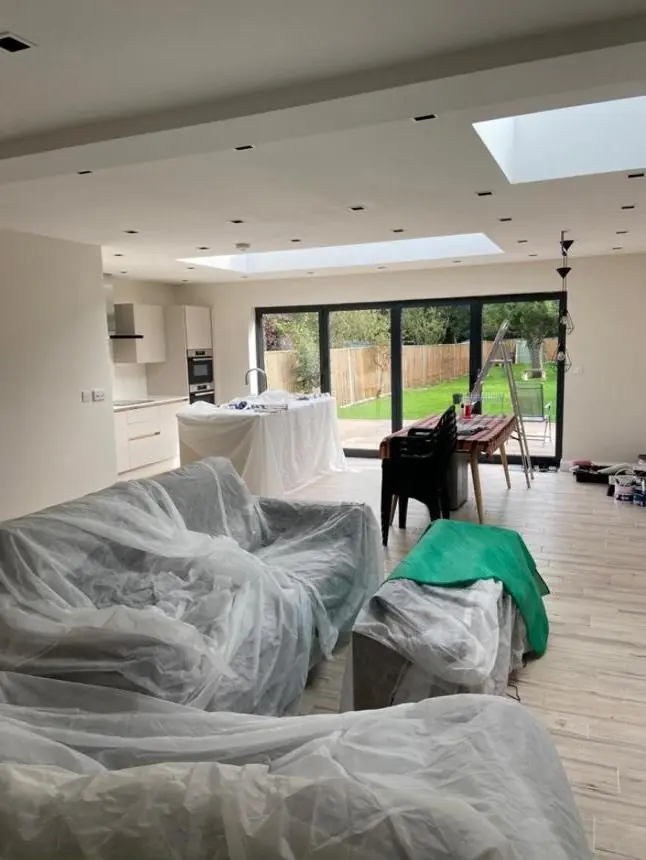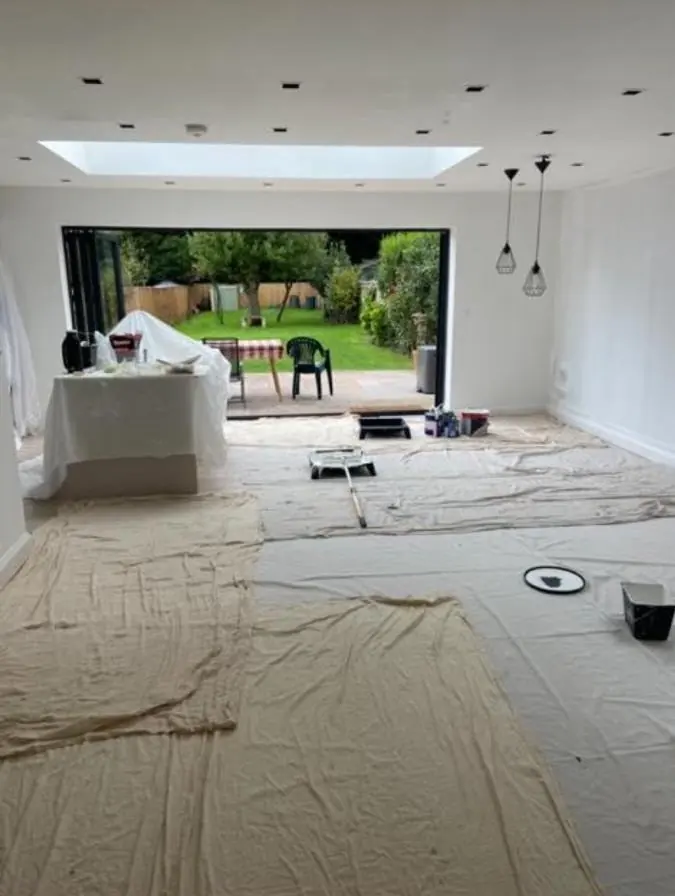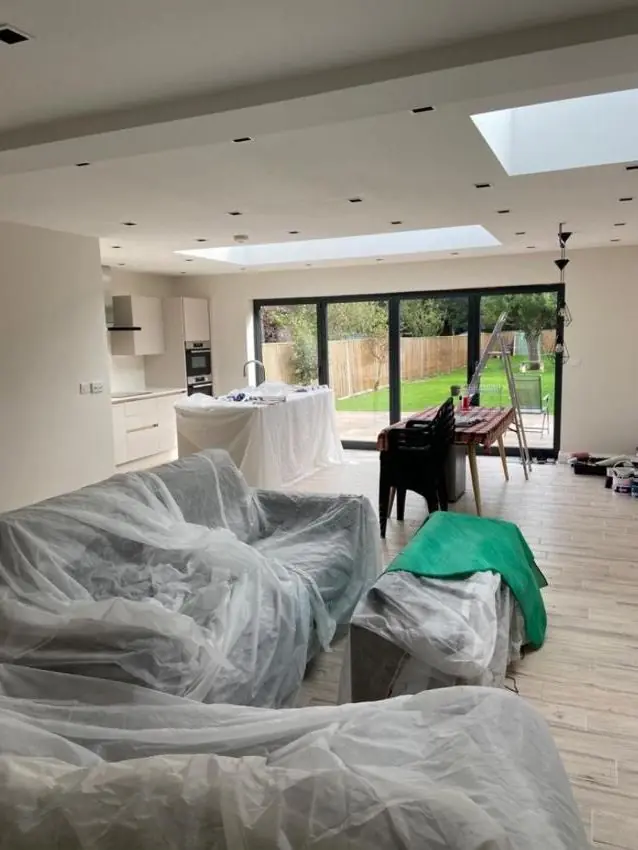
We decorate new plaster and extensions in Guilsborough, 9.3 miles north-west of Northampton in NN6, once your builder or plasterer has finished. The main local issue is the join between new gypsum and the lime plaster in the village's older lias and brick houses, which needs a breathable approach.
Old house, new room
A lot of Guilsborough’s older houses have already grown over time. Guilsborough House, dated to around 1632, picked up 18th and 19th century extensions, and a modern extension continues the same pattern. The difference now is the plaster. Builders today almost always finish an extension in gypsum, while the original rooms in a lias or brick house of that age are usually lime. Decorating the new room is straightforward. Decorating the point where the two meet is where care is needed.
Where gypsum meets lime
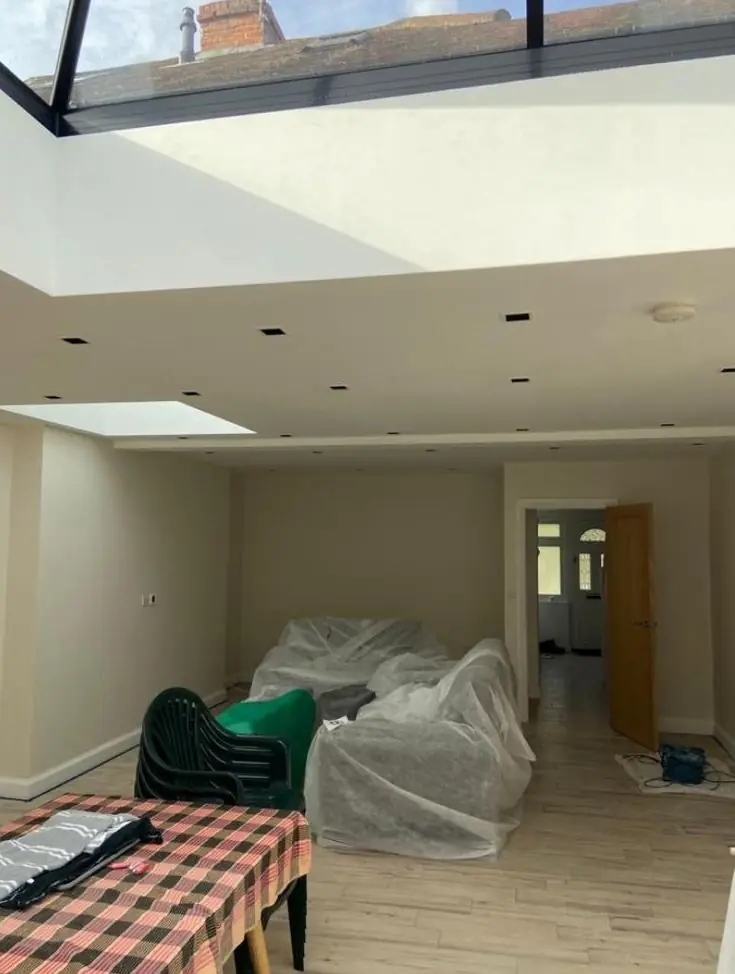
Lime plaster lets moisture move through the wall. Gypsum and most modern paints are far less open. If the doorway or opening between an extension and the old house is finished with a hard, sealed coat across both surfaces, any moisture in the old wall has nowhere to go and tends to show up as a blistered or flaking band beside the join.
- On the new gypsum we apply a mist coat once it is fully dry, then the finish coats.
- On the existing lime walls next to it we use a breathable emulsion rather than a vinyl, so the old part of the house can still dry out.
- If you want one colour throughout, we pick paints from a range that offers both a breathable and a standard version in matching shades.
- Cracks along the junction are filled with a flexible, compatible filler; we would rather leave a fine line than pack it with something rigid that will break away.
Listed houses and the 20th-century homes
Twelve buildings in the parish are listed, from Guilsborough House and the Old Grammar School on the High Street to Nortoft House and Holly Cottage at Nortoft. Building an extension to one of those is a planning and listed building consent matter for you and your architect before any plaster goes on. By the time we arrive, decisions about the structure have been made; our part is to finish the surfaces in a way that suits the old fabric next door.
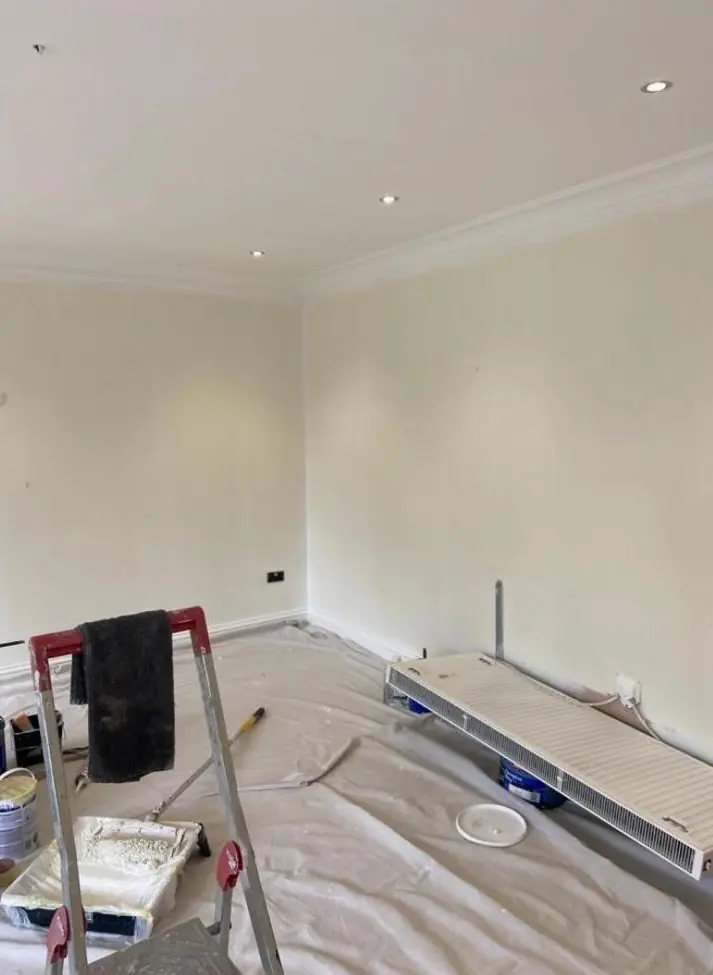
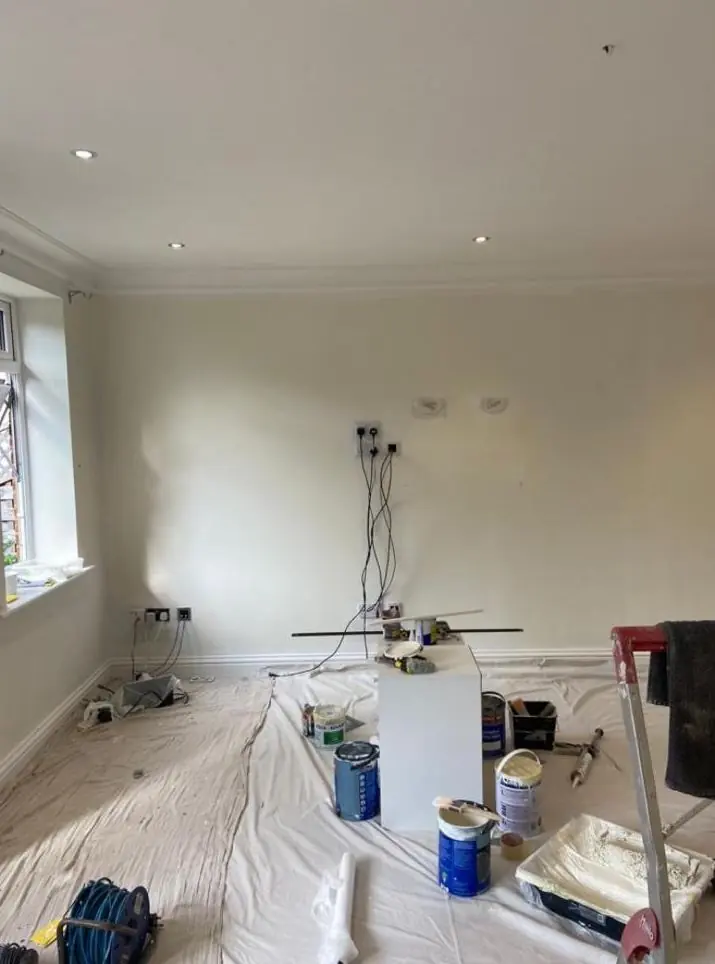
The later houses at Church Mount, built on the former Guilsborough Hall site, are a simpler case. An extension or re-skimmed room there is gypsum against gypsum or modern blockwork, so the standard sequence works: dry, mist coat, snag, two finish coats, and new joinery sealed and painted.
Drying time out in the country
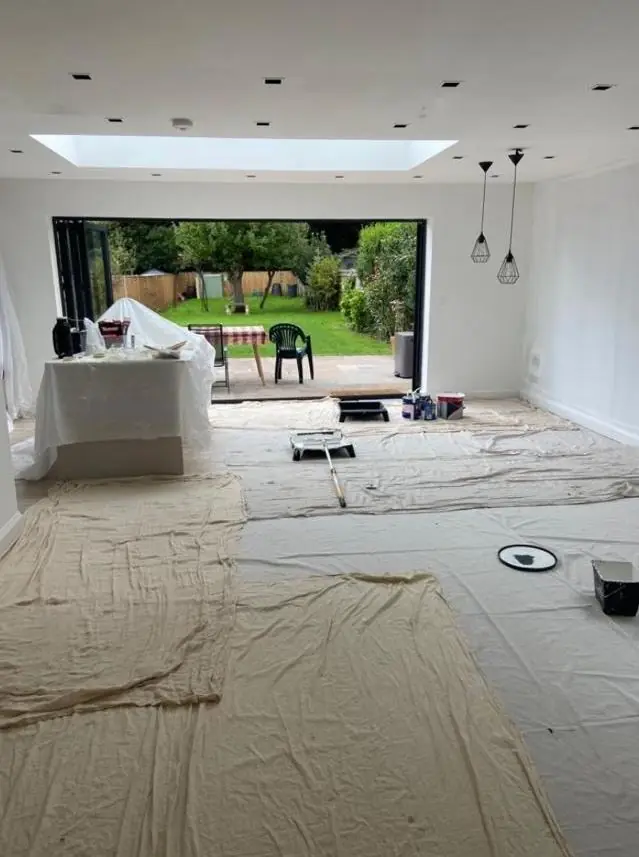
Guilsborough sits on the edge of open farmland, and a new extension on a rural plot can stay cold for weeks if it is finished in winter before the heating is connected. Fresh plaster dries slowly in those conditions, and painting it too soon traps moisture under the paint. We check the walls, corners and reveals before mist coating, and if they are not ready we will tell you, even if it means waiting. Pale, even colour across the whole wall is the sign we look for.
Because the drive from Northampton runs out along country roads, we try to arrange the visit after the plasterer has signed off and the room has had time to dry, rather than coming out early and having to go away again. If your builder can give us a rough date for the final skim, we can pencil the work in around it.
Our step-by-step guide to painting new plaster with a mist coat explains the mixing and timing. For what is usually included in an extension job, see the main new plaster and extension painting page, and for other work in the village, the Guilsborough village page.
Last updated by Dean, DH Painter & Decorator.