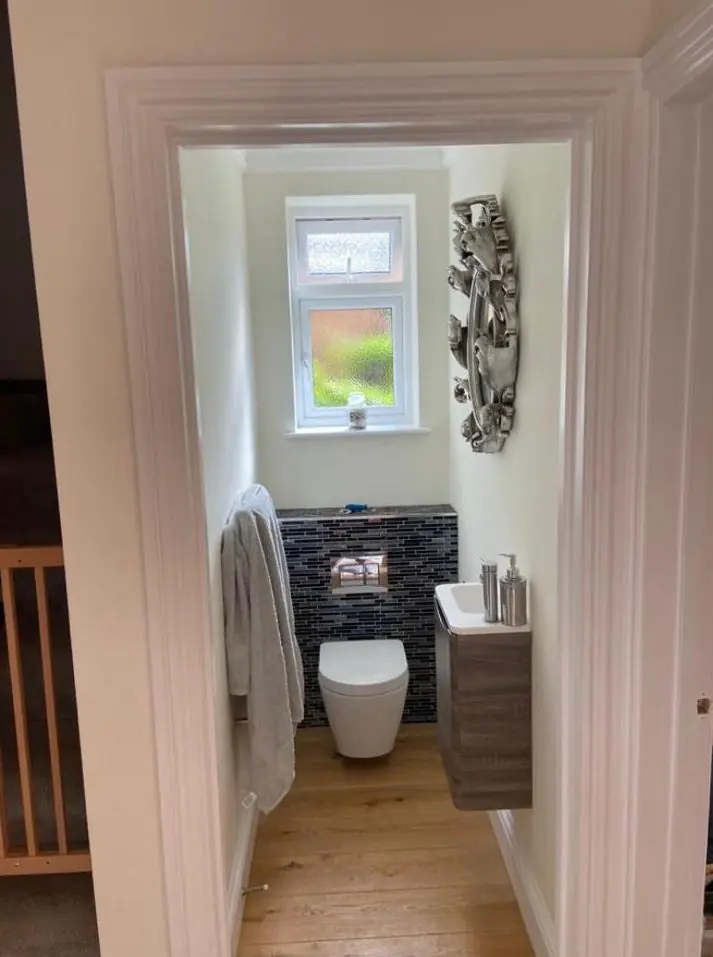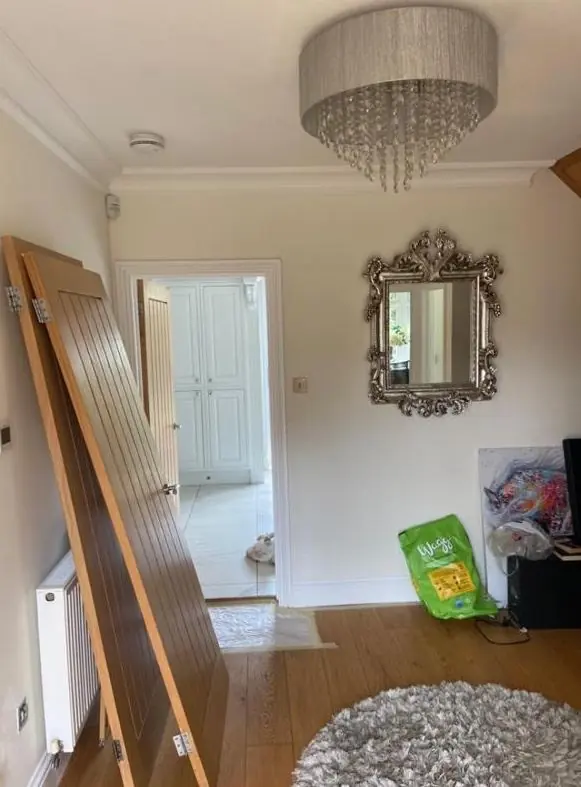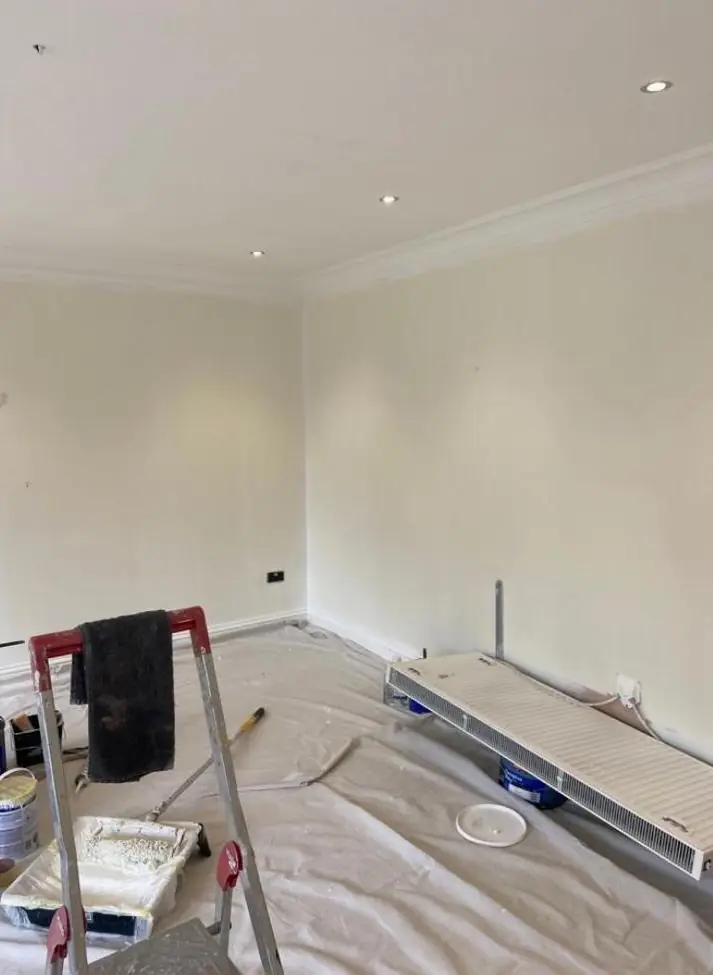
Dean gives colour and finish advice to Guilsborough homeowners as part of a decorating job, about 9.3 miles north-west of Northampton. On the listed High Street houses that starts with what may need consent; elsewhere it comes down to the stone or brick outside, the light and how the room is used.
Starting with the stone and brick
Outside, Guilsborough has two main building materials, and they suit different colours. Lias, used in Guilsborough House, Rose Manor, Manor House Farm, Nortoft House and the Old Grammar School, is a cool, grey-to-buff stone. Brick houses such as the Red House, the Old Manse, the Sun and the chequered-brick Glebe House are warmer, with orange and red in them.
That sets the palette for doors and windows. Against lias, off-whites with a hint of grey, soft stone colours, muted greens and dark blue-greys tend to look settled. A brilliant white can look stark against grey stone. Against red brick, warm creams, deeper greens and traditional dark colours on doors usually sit better than cold greys, which can make the brick look dull. Because these walls should stay bare, the colour choice is about the joinery, the railings and the front door.
Five homes behind one frontage
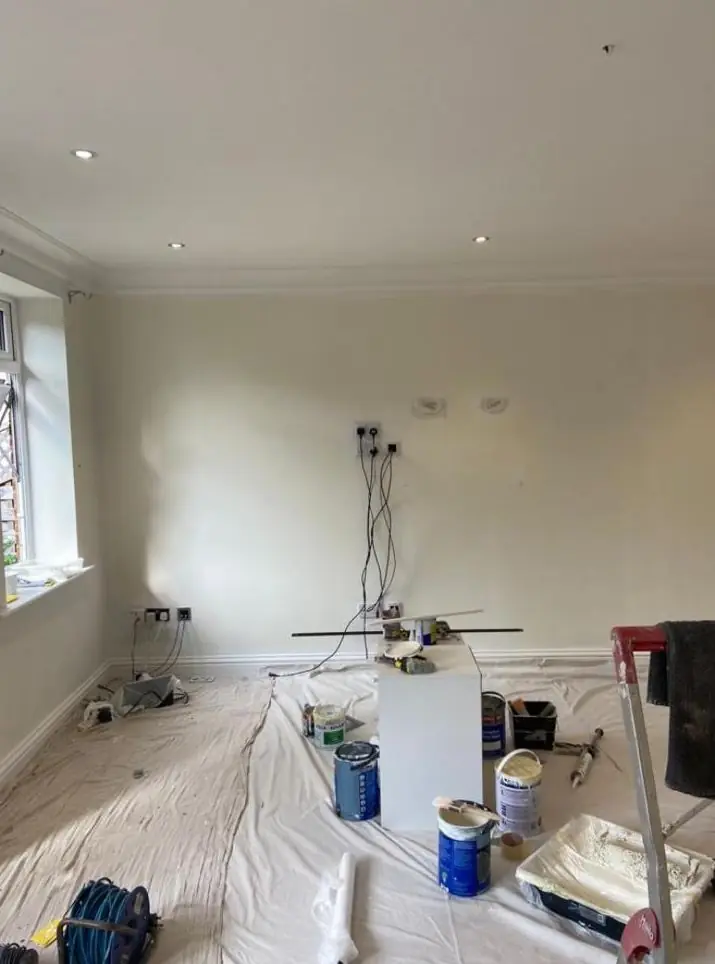
The Old Grammar School, built about 1688 and remodelled into five houses in the 20th century, is a useful example of colour as a shared decision. Five owners sit behind one listed lias front with its mullion-and-transom windows. If each household picks its own colour for windows and doors, the building stops reading as one piece. Where neighbours share a frontage like this, we suggest agreeing one window colour across all of it. A different door colour per house can work if the tones are related.
When a colour change needs a conversation with the council
Twelve buildings in the village are listed, from St Etheldreda’s Church to cottages such as Holly Cottage at Nortoft. On a listed house, repainting in the existing colour is maintenance. Changing to a noticeably different colour on the outside, or changing the type of finish on historic joinery, can count as an alteration that needs listed building consent from West Northamptonshire Council. Our advice is practical rather than legal, so on any listed house we suggest checking with the council’s conservation staff before committing to a change.
| Surface | What usually works | What to avoid |
|---|---|---|
| Sashes on lias or brick houses | Warm or grey-tinged off-white, in an oil-based or linseed system | Brilliant white plastic-look finishes |
| Front doors | Deep greens, blues, oxblood or black in eggshell or gloss | Bright modern brights on a listed frontage without checking first |
| Railings and gates | Black or very dark green | Silver or light metallic paints on old ironwork |
Inside: light across fields and under trees
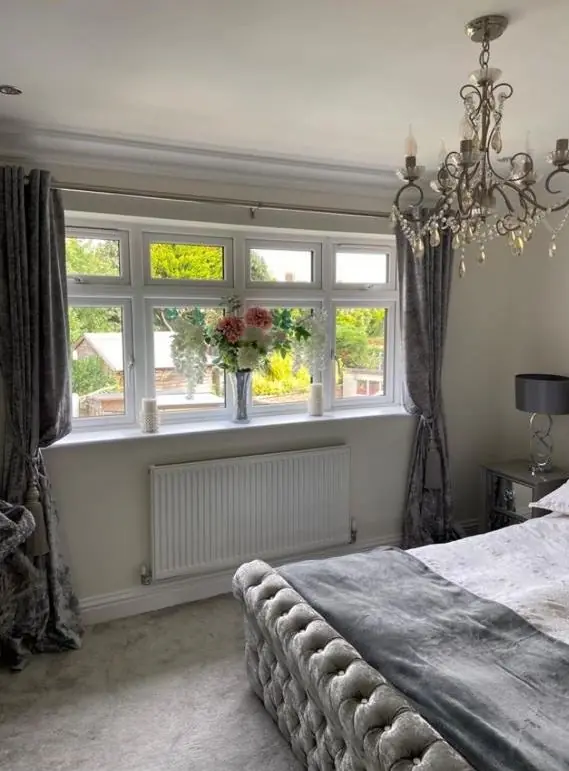
Indoors, colour behaves differently depending on where the house sits. Rooms facing out over the open farmland around the village get a lot of broad, even daylight. Rooms looking into the mature trees around Guilsborough Park get softer, green-tinted light that pulls blue out of many greys and can make them feel cold. Thick-walled older houses add another factor: small windows set in deep reveals let in less light, so very dark colours in those rooms can feel enclosed unless that is the aim.
In the later houses at Church Mount, with larger windows and flatter walls, there is more freedom, and finish matters as much as colour. A matt finish hides small marks on a busy family wall, while eggshell or satin is easier to clean in hallways.
Dean tests sample patches on your own walls and frames and looks at them at the times of day you use the room. The general method is on our colour and finish advice page, and the rest of our work in the village is on the Guilsborough area page.
Last updated by Dean, DH Painter & Decorator.