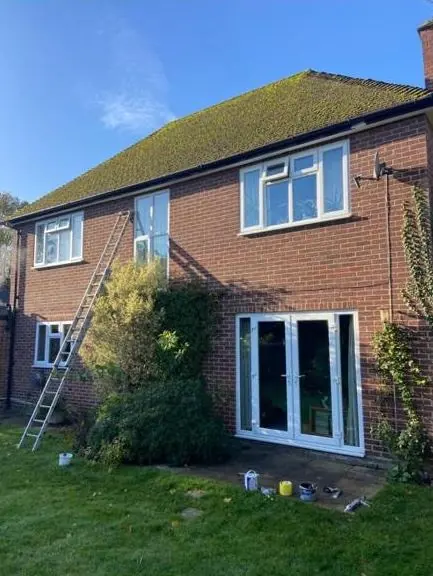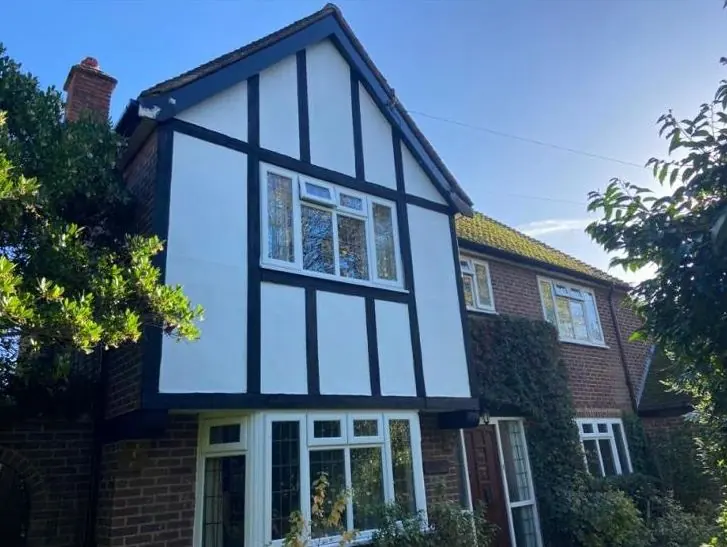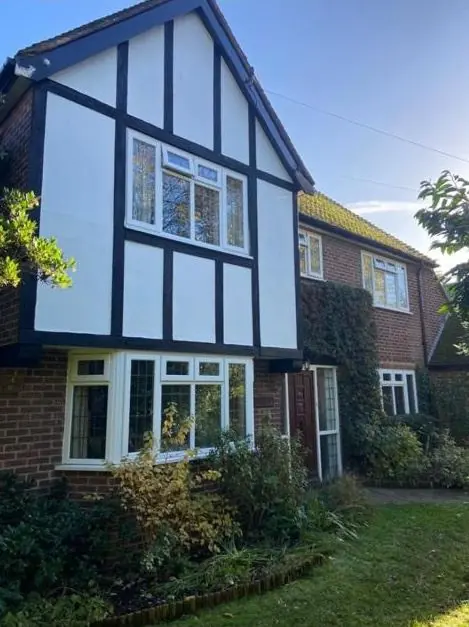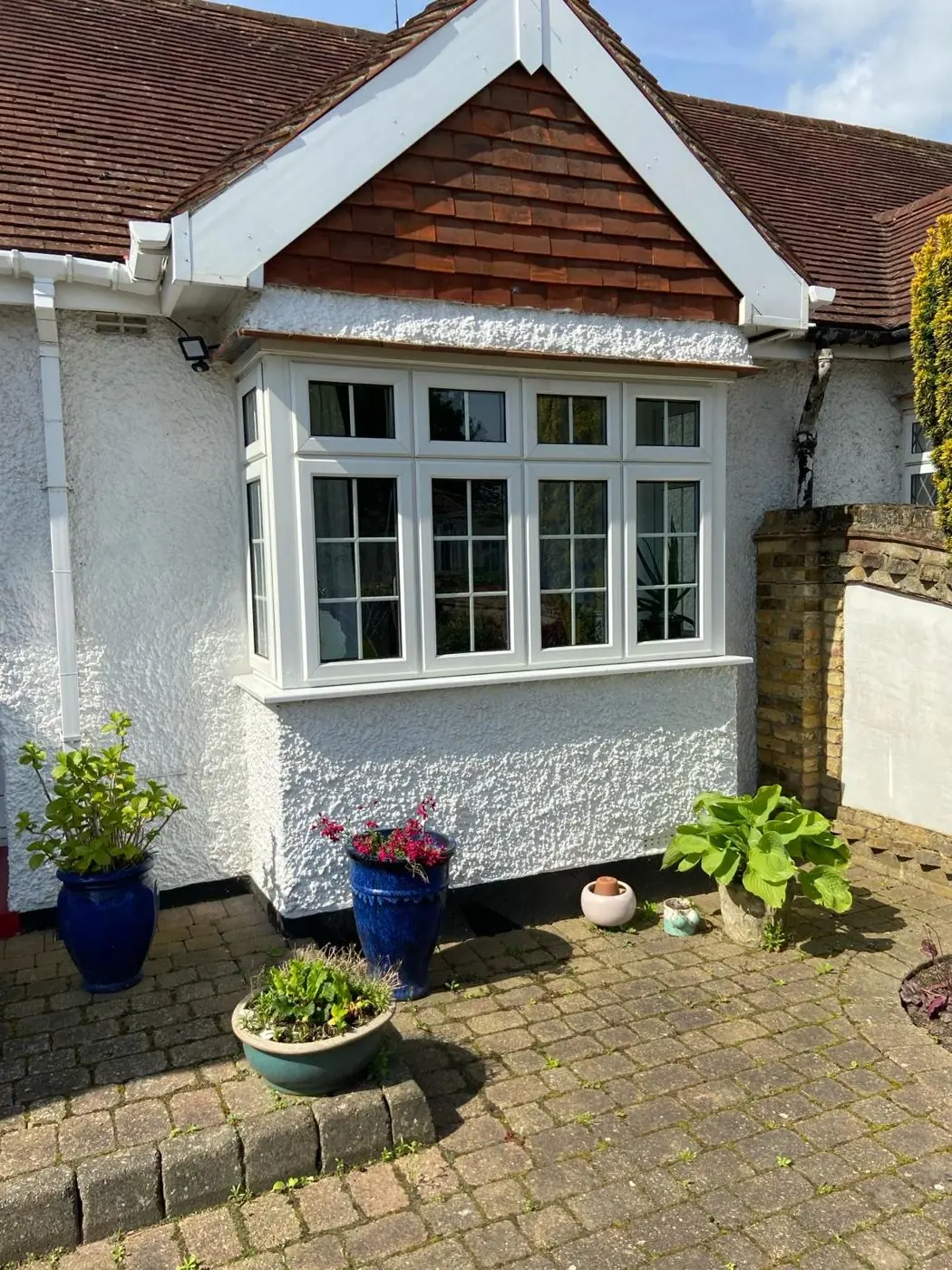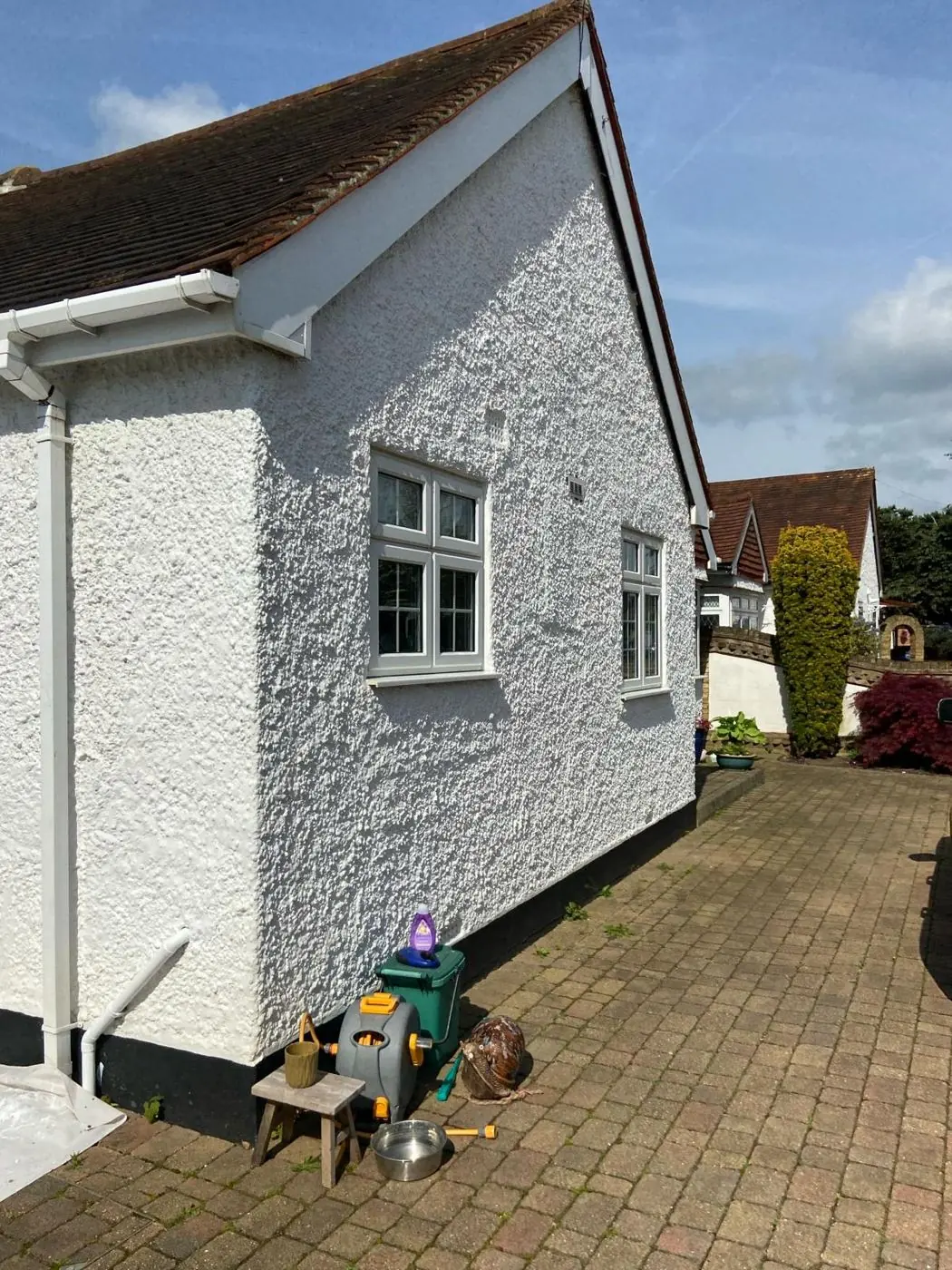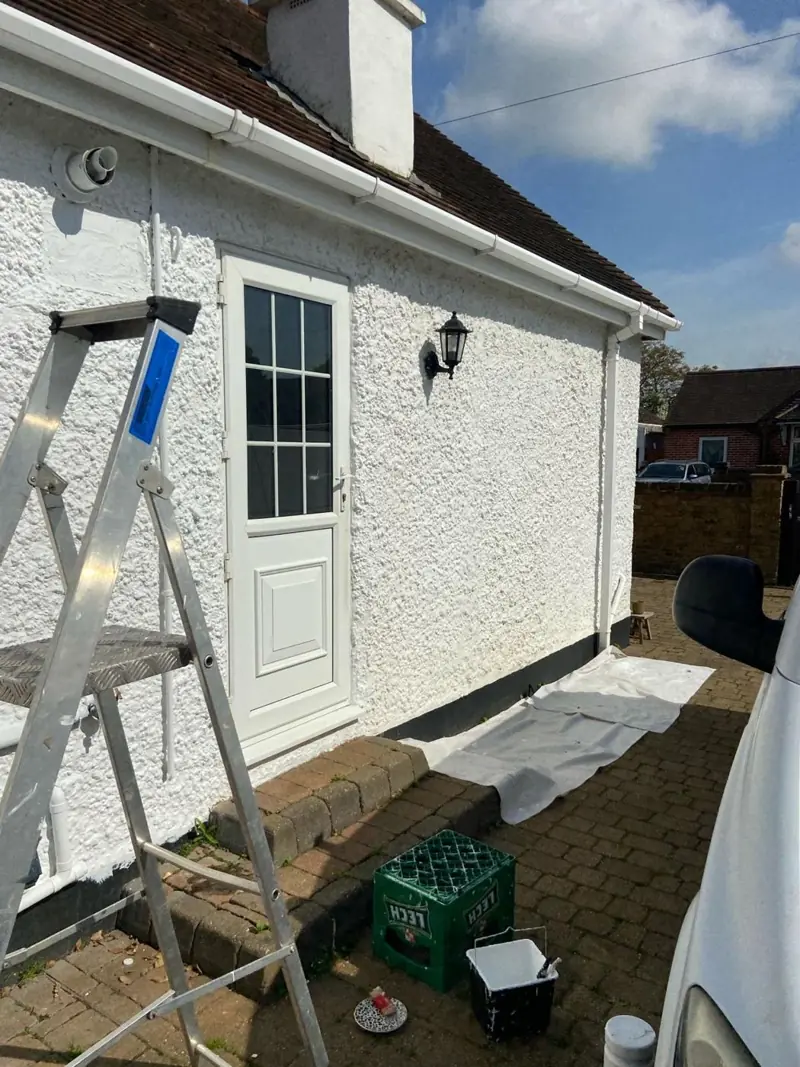
DH Painter & Decorator paints render and masonry in Guilsborough, about 9.3 miles north-west of Northampton in NN6. Most of the village's historic walls are bare lias or brick and should be left unpainted, so much of this service here is advice, lime finishes on cob and render, and repainting walls that were coated in the past.
Most Guilsborough walls should not be painted at all
It may seem odd for a painter to say it, but on many Guilsborough houses the right masonry job is no paint. The listed houses in the village are built from materials that were meant to show. Guilsborough House, Manor House Farm and Nortoft House are squared or coursed lias. The Old Grammar School and Rose Manor are lias ashlar. The Glebe House is mid-18th-century chequered brick, where the pattern of the bricks is the whole point, and The Red House and The Sun have gauged brick arches over their openings. Painting any of these would hide the detail, could need consent on a listed building, and would be very hard to undo.
So before we quote for coating a wall here, we ask whether it has been painted before and why. If it has not, we will usually tell you to spend the money on the joinery instead.
Why lias needs to breathe
Lias is a layered limestone. It takes on moisture from rain and from the ground and lets it out again through its face and through soft lime mortar. A modern acrylic masonry paint forms a skin that slows that drying. Water then collects behind the paint, freezes in winter and pushes the face of the stone off in flakes, with the paint still stuck to it. Where a lias or limestone wall in the village already carries old paint, or needs a coat for a good reason, we use a breathable mineral paint or a limewash rather than a plastic coating. Loose old acrylic paint should come off first, gently and without grit blasting.
Rendered cob, as at Holly Cottage
The listing for Holly Cottage at Nortoft describes 18th-century coursed ironstone rubble below rendered cob. Cob is earth mixed with straw, and it only survives if it can dry out. It needs a lime render and a lime-based, vapour-open finish such as limewash, built up in several thin coats. An acrylic masonry paint on cob is a real risk: it traps moisture in the wall, and the cob behind it can soften and slump unnoticed.
If you own a cob or part-cob building in or around the village, we will look at what is on it now. Where the existing coating is acrylic and failing, we may suggest removing it in stages and going back to lime. Repairs to the render itself are a job for a lime plasterer first, and we paint once it has cured.
| Wall in Guilsborough | What we would usually do |
|---|---|
| Bare lias or ironstone, never painted | Leave it unpainted |
| Brick with gauged arches or chequered pattern | Leave it bare and paint only the joinery |
| Lias or brick that already carries old paint | Remove loose paint and recoat in a breathable mineral paint or limewash |
| Rendered cob | Limewash or lime-compatible paint only |
| Cement render on later housing | Masonry paint suited to the render, after repairs |
Later houses, schools and modern render
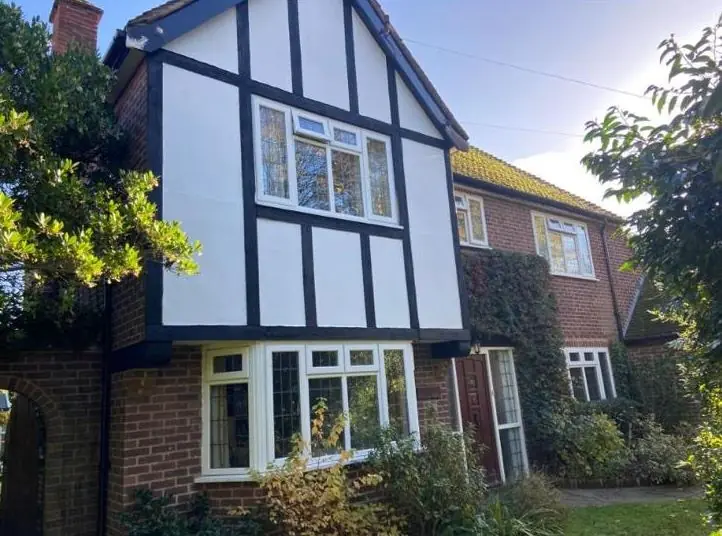
Church Mount, on the site of the old Guilsborough Hall, is later housing than the High Street, and the sources we use do not record what it is built from. If your house there has cement render, or a painted rendered panel or plinth, a standard system applies: repair cracks, treat any green growth, stabilise chalky surfaces and apply two coats of a masonry paint that suits the render. Guilsborough Academy on West Haddon Road has buildings from 1959 and the 1970s, and any masonry work there would be booked for the school holidays.
Weather on the edge of farmland
The village sits on the edge of open farmland, so walls facing the fields dry out in the wind but also take the rain head on. Limewash in particular hates frost and fast drying, so lime work here belongs in late spring and early autumn, with hessian cover on hot or windy days. Our guide to painting render and roughcast covers the modern render side in more depth, and the main render and masonry painting page explains our full preparation process. For other work in the village, see our Guilsborough page.
Last updated by Dean, DH Painter & Decorator.